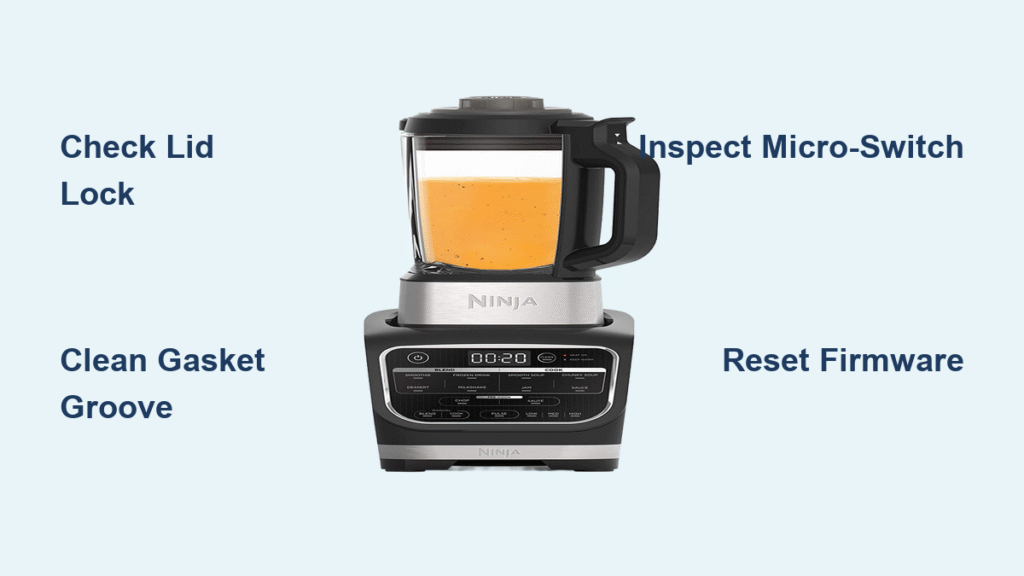
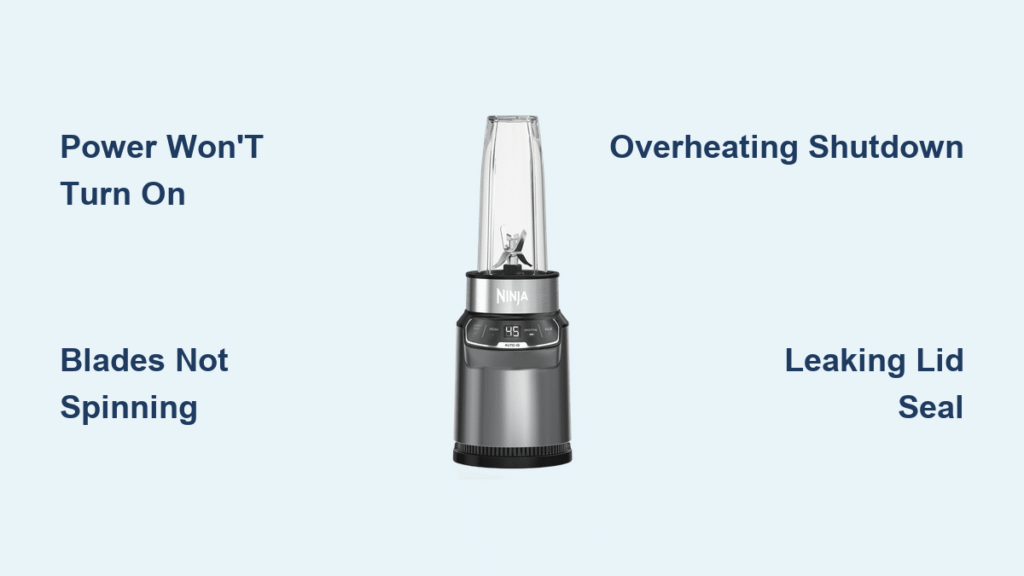
Your Ninja 1000 blender sputters to a halt mid-smoothie, leaving frozen fruit chunks swirling uselessly. Or worse—it won’t power on at all when you desperately need that morning protein shake. Before you replace your $100+ appliance, know this: 90% of Ninja 1000 blender troubleshooting problems stem from five preventable issues that take under 10 minutes to fix. This guide delivers precise, model-specific solutions using official Ninja part numbers and real-world fixes tested by repair technicians. You’ll diagnose electrical glitches, blade failures, and leaks with the confidence of a professional—no guesswork required.
Power Won’t Turn On? Fix These Critical Failures

When your Ninja 1000 blender refuses to power up, eliminate these three electrical failures before considering replacement. Start with the simplest solution: always test your outlet with a phone charger or lamp first. If other devices work, check if the Ninja cup is properly locked—your motor base requires a full clockwise twist until the cup’s handle arrow aligns perfectly with the pour spout. A common mistake is stopping after the first “click”; you need a second, deeper engagement of the tabs into the base grooves.
Thermal Cut-Off Reset Procedure
Overheating triggers an automatic shutdown that mimics electrical failure. Unplug the base for 15 full minutes—this resets the internal thermal breaker. While waiting, inspect the power cord (part 104KKU1000) for melted spots near the plug or base. Never use a damaged cord; replace it immediately to prevent fire hazards. If the unit still won’t power on after resetting, move to a different kitchen circuit—microwaves or coffee makers on the same line often cause voltage drops Ninja 1000 blenders can’t tolerate.
Stop Intermittent Power Loss Mid-Blend
Sudden shutdowns during nut butter or frozen fruit blending signal overheating protection kicking in. Your 1000W motor can’t sustain heavy loads beyond 60 seconds without adequate cooling. Critical fix: Reduce batch sizes to 12 oz max for frozen ingredients and always add at least 1 cup liquid to dissipate heat. After shutdowns, enforce a 30-minute cooldown period—rushing this step risks permanent thermal fuse damage.
Voltage Drop Diagnosis
If your blender flickers when the refrigerator compressor kicks on, you’ve found the culprit. Plug the Ninja directly into a dedicated kitchen circuit (not shared with high-draw appliances). Persistent flickering after this test indicates a weakening thermal fuse—contact Ninja support for out-of-warranty replacement (typically $45-$60). Attempting DIY fuse replacement voids safety certifications.
Blades Not Spinning? Diagnose Drive Failures
A roaring motor with stationary blades means your drive system has failed. Immediately unplug and inspect the silicone drive gear on the motor base and metal shaft under the blades. Stripped teeth or dried smoothie residue cause slippage—clean both components with hot water and a soft brush. If gear teeth appear rounded (part 322KKU1000, $8-$12), replacement is mandatory; continuing use destroys the motor coupling.
Emergency Seized Blade Repair
When blades feel frozen solid during manual rotation, skip disassembly. Fill the cup with hot soapy water, secure the lid, and pulse 3-4 times. Let it soak for 15 minutes, then scrub the shaft with a bottle brush. For stubborn jams, add one drop of food-grade mineral oil at the blade base—this restores smooth rotation without disassembly. Never force blades with pliers; you’ll crack the housing.
Grinding Noise Protocol
Metal-on-metal grinding requires immediate shutdown. Check for avocado pits, spoons, or oversized ice chunks jammed under blades. If noise persists after clearing obstructions, inspect blades for bends (part 110KKU1000, $18-$22). Critical warning: Rhythmic clicking means bent blades—continuing use will destroy motor bearings. Replace blades immediately; if grinding returns, the motor base (1000KKU1000) needs professional service.
Stop Leaks Before They Damage Your Countertop
Liquid shooting from the lid during blending means your seal has failed. First, verify the black silicone lid gasket (part 311KKU1000) isn’t stretched or cracked—replace if it doesn’t snap back when pinched. Then align the lid’s arrow with the cup handle arrow and twist clockwise until snug but not forced. Over-tightening warps the seal. Never exceed the 24 oz MAX fill line; expansion during blending forces liquid past compromised seals.
Base Leakage Emergency Response
If liquid pools under the motor base, unplug instantly and invert the unit to drain. Wipe thoroughly with a microfiber cloth, then air-dry for 24 hours before reuse. Inspect the blade assembly gasket (205KKU1000, $5-$7) for cracks—this part fails most often after dishwasher use. Never operate a wet base; moisture causes short circuits that trip GFCI outlets or melt internal wiring.
Fix Lumpy Smoothies in 30 Seconds
Poor blending almost always stems from incorrect ingredient layering. Follow this exact sequence: liquids first (minimum 1 cup), soft fruits, greens, frozen items last. For stubborn chunks, use this pro technique:
1. Pulse 1-second bursts 6-8 times to break large solids
2. Shake the cup to redistribute ingredients
3. Ramp speed from LOW to HIGH over 5 seconds
Exceeding 24 oz with frozen ingredients causes cavitation—air pockets that prevent downward mixing. Reduce batches and use the tamper through the lid to push ingredients into the vortex.
Decode Ninja 1000 Error Lights Immediately
A blinking red LED means your motor overloaded. Reset in 4 steps:
1. Unplug and remove the cup
2. Clear any blade obstructions
3. Wait 15 minutes for cooldown
4. Restart on LOW speed with extra liquid
If the LED stays solid red after resetting, internal electronics failed—service costs $45-$60 out of warranty. No LED response? Test outlet voltage first; if live, your PCB board likely fried (common after power surges).
Deep Cleaning Hacks That Actually Work
Stuck-on residue around blades requires more than rinsing. Fill the cup halfway with warm water and 2 drops dish soap, secure the lid, and pulse 5-6 times. Let it soak 5 minutes while you scrub the lid seal. Never submerge the motor base—water ingress voids warranties. For cloudy cups, blend 1 tbsp baking soda with 1 cup vinegar on HIGH for 30 seconds. Rinse thoroughly; abrasive scrubbers scratch surfaces, trapping future stains.
Replacement Parts You Need Now
Keep these Ninja 1000 blender troubleshooting essentials stocked:
– Blade assembly (110KKU1000): $18-$22 (replace every 12-18 months)
– Drive coupling (322KKU1000): $8-$12 (fixes 70% of “blades not spinning” cases)
– Gasket 2-pack (205KKU1000): $5-$7 (stops 95% of leaks)
Critical compatibility note: 1000W blades won’t fit 900W or 1200W models—the shaft height differs. Cups and lids swap with Nutri Ninja Pro (BL450 series), but motor bases are model-specific.
Prevent Costly Failures With These Habits
Clean within 5 minutes after blending—dried residue hardens into permanent gunk that seizes blades. Never blend liquids hotter than 180°F; thermal shock cracks cups. Store the motor base in open air—not under cabinets where heat builds. When blending thick mixtures like hummus, maintain a 1:1 liquid-to-solids ratio and pause every 45 seconds for motor cooling. Replace blade assemblies proactively; dull blades force the motor to work 30% harder, accelerating burnout.
When these Ninja 1000 blender troubleshooting steps don’t resolve your issue, contact Ninja support at 1-877-646-5288 with your model number (BL480/BL490) and serial number ready. For out-of-warranty units, weigh repair costs against new models—motor base replacements often approach 70% of a new blender’s price. Keep this guide handy; proper maintenance extends your Ninja 1000’s lifespan to 5+ years, turning frustrating breakdowns into rare exceptions.