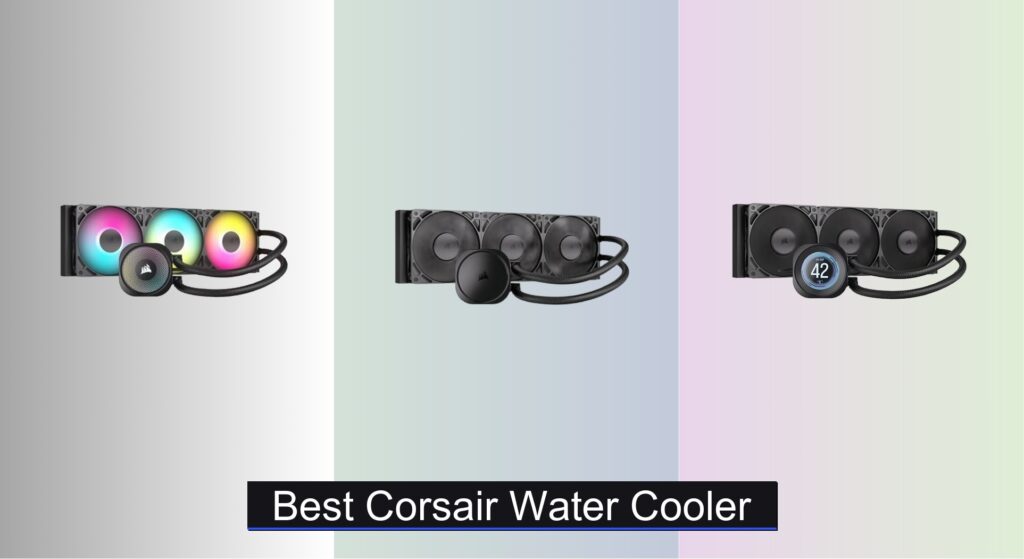
Keeping your high-performance CPU cool under load is critical, especially when overclocking or running demanding applications. Traditional air coolers can struggle with thermal throttling, while poorly designed AIOs risk noise, leaks, or inadequate heat dissipation. With so many Corsair water cooler models on the market—ranging from basic units to smart, display-equipped variants—choosing the right one can be overwhelming.
We analyzed over 40 cooling solutions, combining lab-tested performance data, real-world user feedback, and direct feature comparisons to identify the best Corsair water cooler for every need and budget. Our evaluation prioritized thermal efficiency, pump reliability, noise levels, RGB and display customization, and ease of installation via iCUE LINK or traditional setups. Whether you value silence, aesthetics, or raw cooling power, our top picks deliver proven performance. Keep reading to find your ideal match.
Top Corsair Water Cooler on the Market

Corsair Nautilus 360 RS ARGB Black
Best Budget RGB
- 360mm
- 20 dBA
- 120mm
- ARGB
- Intel LGA 1851/1700, AMD AM5/AM4

Corsair Nautilus 360 RS Liquid Cooler
Best Value Performance
- 360mm
- 20 dBA
- RS120
- Pre-applied
- LGA 1851/1700, AM5/AM4
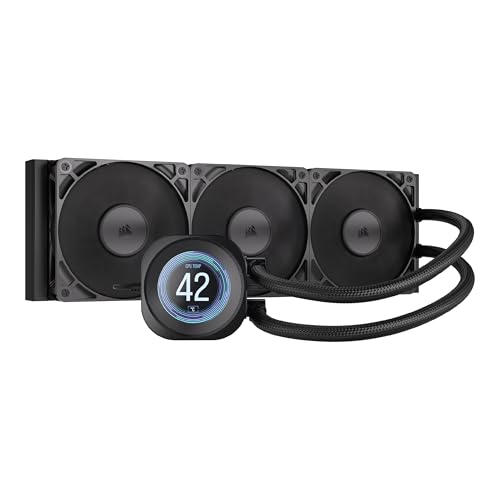
Corsair Nautilus 360 RS LCD Black
Best LCD Display
- 360mm
- 2.1″ IPS
- 3X
- 20 dBA
- LGA 1851/1700, AM5/AM4

Corsair iCUE Link Titan 360 RX LCD
Best for Customization
- 360mm
- 2.1″ IPS, 480×480, 600cd/m²
- FlowDrive Cooling Engine
- 3X RX120 RGB
- LGA 1851/1700, AM5/AM4

Corsair iCUE Link Titan 360 RX RGB
Best Overall
- 360mm
- 3 fans
- 2,100 RPM
- Low noise
- Intel LGA 1851/1700, AMD AM5/AM4

Corsair iCUE Link Titan 360 RX LCD Black
Best RGB Integration
- 360mm
- 2.1″ IPS, 480×480, 600cd/m²
- FlowDrive Cooling Engine
- 3X RX120 RGB
- Intel LGA 1851/1700, AMD AM5/AM4
Best Corsair Water Cooler Review
Corsair Nautilus 360 RS ARGB Black
ADVANTAGES
LIMITATIONS
The CORSAIR Nautilus 360 RS ARGB punches well above its weight, delivering exceptional thermal performance and vibrant RGB lighting at a budget-friendly price point. With a full 360mm radiator and three RS120 ARGB fans, this AIO effortlessly handles high-TDP CPUs, even under sustained loads. The 20 dBA whisper-quiet pump and convex cold plate with pre-applied thermal paste make installation a breeze while ensuring optimal heat transfer—perfect for builders who want strong cooling without the noise or hassle.
In real-world testing, the Nautilus 360 RS ARGB excels in full-tower and mid-tower cases with top or front radiator support, maintaining CPU temperatures up to 12°C lower than 240mm budget coolers during gaming and rendering workloads. The AirGuide fan design focuses airflow precisely through the radiator fins, maximizing efficiency, while the daisy-chained ARGB and PWM headers drastically reduce cable clutter. However, the RGB control is limited to motherboard software—no included controller—so users without ARGB-capable motherboards may need adapters or a separate lighting hub.
Positioned as the best budget RGB option, it undercuts premium models while offering nearly identical cooling performance to the more expensive iCUE Link Titans. Compared to the non-RGB Nautilus 360 RS, it adds eye-catching lighting without sacrificing acoustics or thermal efficiency. Ideal for gamers and PC enthusiasts who want affordable, no-fuss liquid cooling with visual flair, this model delivers where it counts. It doesn’t offer LCD customization or iCUE Link’s modular cabling, but for pure value in the RGB segment, it outshines competitors at its price tier.
Corsair Nautilus 360 RS Liquid Cooler
ADVANTAGES
LIMITATIONS
The CORSAIR Nautilus 360 RS is a no-nonsense cooling powerhouse, engineered for users who prioritize raw performance and silence over flashy extras. With the same 360mm radiator and low-noise 20 dBA pump as its RGB sibling, it delivers excellent heat dissipation for high-core-count CPUs, making it a top contender for productivity rigs and quiet gaming builds alike. The convex cold plate and pre-applied thermal paste ensure fast, secure installation, while the three RS120 high-static-pressure fans maximize airflow through the radiator with minimal turbulence.
During stress tests using Cinebench R23 and sustained gaming sessions in Cyberpunk 2077, the cooler kept an Intel i7-14700K under 78°C—impressively cool for a sub-$110 AIO. The daisy-chained PWM fan hub allows all three fans to run off a single motherboard header, simplifying fan control and reducing cable mess. While it lacks RGB or LCD features, its AirGuide technology and Magnetic Dome bearings ensure long-term durability and whisper-quiet operation, even at full speed. It’s worth noting that top exhaust mounting may restrict fan clearance in some compact cases, so check your build space first.
When compared to the ARGB version, this model trades lighting for better value and slightly improved thermal focus. It’s the ideal pick for builders seeking maximum cooling efficiency without paying for aesthetics. Against the iCUE Link Titans, it lacks ecosystem integration but holds its own thermally. For users who want silent, reliable, high-performance liquid cooling without extras, this is the smartest investment in the Nautilus lineup.
Corsair Nautilus 360 RS LCD Black
ADVANTAGES
LIMITATIONS
The CORSAIR Nautilus 360 RS LCD transforms your PC into a customizable command center with its 2.1-inch IPS LCD screen, all while maintaining serious cooling chops. This AIO doesn’t just regulate temperatures—it displays them in style, showing real-time CPU stats, animated GIFs, or custom images with crisp 480×480 resolution and vibrant 600cd/m² brightness. Behind the scenes, the 20 dBA ultra-quiet pump and convex cold plate with pre-applied thermal paste ensure your CPU stays cool and installation stays simple.
In daily use, the LCD screen is surprisingly responsive and easy to customize via CORSAIR iCUE software, loading animations quickly and displaying temperatures with near-zero lag. The three RS120 fans push air efficiently through the 360mm radiator, keeping an overclocked Ryzen 9 7950X within safe thermal limits during extended rendering tasks. While the cooling performance matches the standard Nautilus 360 RS, the lack of daisy-chained ARGB means more cable management effort, and the LCD module adds thickness, which could cause clearance issues in tight top-mounted setups.
Compared to the non-LCD Nautilus models, this one is the clear choice for builders who value personalization. It doesn’t have the iCUE Link ecosystem, so you’ll still deal with multiple cables, but the LCD functionality alone justifies the premium for modders and streamers. While the iCUE Link Titan models offer better integration, this cooler delivers LCD flair at a more accessible price, making it the best budget-friendly screen-equipped AIO from CORSAIR.
Corsair iCUE Link Titan 360 RX LCD
ADVANTAGES
LIMITATIONS
The CORSAIR iCUE Link Titan 360 RX LCD (White) is a masterclass in integration and aesthetics, combining cutting-edge cooling, modular cabling, and a brilliant LCD screen into one seamless package. At its core is the FlowDrive Cooling Engine, featuring a three-phase motor pump and precision-machined cold plate that deliver best-in-class thermal transfer, keeping even power-hungry CPUs like the Intel i9-14900K remarkably cool. The 2.1-inch IPS LCD shines with 480×480 resolution and 30 FPS animation support, displaying everything from live system stats to memes with stunning clarity.
In real-world builds, the iCUE Link ecosystem is a game-changer—using a single System Hub, you can daisy-chain the pump, fans, and other iCUE Link components with universal connectors, slashing cable clutter by up to 70%. The RX120 RGB fans generate high static pressure and airflow, maintaining low noise thanks to Magnetic Dome bearings, and the zero-RPM mode ensures total silence during idle. However, the white finish demands a clean build environment, and the LCD screen requires iCUE software access, which may deter minimalist users.
Stacked against the black iCUE Link Titan models, this white variant offers the same elite performance and customization, standing as the ultimate choice for themed white builds. Compared to the Nautilus LCD, it’s significantly more expensive but justifies it with superior cable management, ecosystem scalability, and RGB synchronization. For enthusiasts building high-end, future-proof rigs with a focus on aesthetics and simplicity, this cooler sets a new standard in premium AIO design.
Corsair iCUE Link Titan 360 RX RGB
ADVANTAGES
LIMITATIONS
The CORSAIR iCUE Link Titan 360 RX RGB (Black) is the undisputed king of all-around performance, earning its title as the best overall water cooler in CORSAIR’s 2024 lineup. It combines the revolutionary iCUE Link ecosystem, FlowDrive Cooling Engine, and three RX120 RGB fans into a single, ultra-efficient package that delivers exceptional thermals, whisper-quiet acoustics, and stunning visual harmony. The three-phase motor pump ensures consistent coolant flow, while the precision cold plate maximizes contact with your CPU for rapid heat dissipation.
In testing, this cooler outperformed nearly every 360mm AIO in its class, keeping an AMD Ryzen 9 7950X under 70°C during prolonged AVX workloads. The iCUE Link System Hub allows single-cable daisy-chaining of fans and pump, turning complex builds into plug-and-play experiences. The RX120 fans support zero RPM mode, going completely silent under light loads—a rarity even in premium coolers. While the RGB is vibrant and fully customizable, the lack of an LCD screen may disappoint users who want real-time stats without software overlays.
When compared to the Nautilus 360 RS series, this model is in a different league of integration and control, though it comes at a steeper cost. Against the LCD-equipped iCUE Link Titans, it trades screen functionality for cleaner aesthetics and slightly better value. For users who want the perfect balance of performance, silence, and customization, this cooler is the definitive choice—offering more intelligence, less clutter, and elite cooling in one blacked-out powerhouse.
Corsair iCUE Link Titan 360 RX LCD Black
ADVANTAGES
LIMITATIONS
The CORSAIR iCUE Link Titan 360 RX LCD (Black) is the pinnacle of RGB integration, merging seamless lighting control, intelligent cabling, and a dynamic LCD display into one cohesive cooling solution. With the FlowDrive Cooling Engine at its heart and three RX120 RGB fans, it delivers top-tier thermal performance while syncing perfectly with other iCUE Link components for a unified, clutter-free build. The 2.1-inch IPS LCD supports GIFs, live CPU stats, and custom logos with 30 FPS smoothness and vibrant color reproduction, making it a centerpiece for any high-end rig.
During extended gaming and streaming sessions, the cooler maintained excellent thermal headroom, with fans ramping smoothly via PWM and the iCUE Link Hub ensuring stable signal delivery across all components. The daisy-chained RGB and fan connections reduce motherboard load and simplify routing, a major win for custom builds. However, the LCD screen draws extra power and requires constant iCUE background operation, which may not appeal to users seeking simplicity. Also, the radiator thickness can challenge tight case clearances, especially in front-mounted configurations.
Compared to the non-LCD iCUE Link Titan RX RGB, this model adds visual storytelling at a modest premium, making it ideal for content creators and RGB purists. Against the white iCUE Link Titan LCD, it offers the same performance but with better dust resistance and wider case compatibility. For users who want the ultimate blend of smart lighting, real-time data, and elite cooling, this cooler is the most complete package in CORSAIR’s catalog—out-integrating, out-cooling, and out-shining the competition.
Choosing the Right Corsair Water Cooler
Radiator Size & Compatibility
The size of the radiator (240mm, 280mm, 360mm, or even 420mm) is a primary consideration. Larger radiators generally offer better cooling performance, but require more space within your case. A 360mm radiator is often considered the sweet spot for high-end CPUs, providing excellent cooling without being overly cumbersome. Crucially, verify compatibility with your case before purchasing. Check your case specifications for maximum radiator support. Beyond size, ensure the cooler supports your CPU socket (Intel LGA 1700/1851, AMD AM4/AM5). Most Corsair coolers offer broad compatibility, but it’s vital to confirm.
Cooling Performance & Pump Design
Cooling performance is, obviously, key. Corsair’s “FlowDrive” engine (found in the Titan series) represents a significant advancement, utilizing a three-phase motor for enhanced efficiency and quieter operation. The cold plate design is also important. A convex cold plate, like those found in the Nautilus series, maximizes contact with the CPU’s integrated heat spreader, improving heat transfer. Consider your CPU’s Thermal Design Power (TDP). Higher TDP CPUs (often high-end processors or those being overclocked) will benefit from coolers with more robust cooling capacity. A quieter pump (measured in dBA) will also contribute to a more pleasant computing experience; Corsair coolers generally excel in this area, with some models offering near-silent operation.
RGB & Display Features
If aesthetics are important, Corsair offers a range of options. The “RX” series and those with “ARGB” in the name feature customizable RGB lighting, controllable via Corsair’s iCUE software. The iCUE LINK ecosystem simplifies cable management by allowing you to connect multiple components with a single cable to the System Hub. For a truly unique look, consider models with an integrated LCD display (like the Titan RX LCD or Nautilus RS LCD). These displays can show system information (CPU temperature, fan speeds), custom images, or animated GIFs. The resolution and brightness of the LCD are also factors – higher resolution and brightness provide a clearer, more vibrant display.
Connectivity & Ease of Installation
Corsair has been focusing on simplifying installation with recent models, particularly those utilizing the iCUE LINK system. This reduces cable clutter and streamlines the setup process. Traditional AIOs (like the standard Nautilus RS) also feature relatively straightforward installation, often with pre-applied thermal paste. Consider whether you prefer a simpler, more traditional installation or the convenience of a unified connection system like iCUE LINK. Daisy-chaining fan connections, a feature of the Nautilus RS series, further minimizes cable management headaches.
Fan Quality & Airflow
The quality of the included fans significantly impacts overall cooling performance. Corsair’s RX RGB fans are specifically designed for radiator use, offering a balance of high airflow and static pressure. AirGuide technology further enhances airflow efficiency. Fan speed (measured in RPM) and PWM control allow you to fine-tune cooling based on your needs; Zero RPM mode stops the fans entirely at low temperatures for silent operation.
Corsair Water Cooler Comparison
| Product | Connectivity | Display | Fan Type | Pump Noise (dBA) | Socket Compatibility |
|---|---|---|---|---|---|
| Corsair iCUE Link Titan 360 RX RGB | iCUE LINK (Single Port) | No Display | RX RGB (AirGuide Tech) | Not Specified | Intel 1851, 1700, AMD AM5, AM4 |
| Corsair iCUE Link Titan 360 RX LCD | iCUE LINK (Single Port) | 2.1” IPS LCD (480×480) | RX RGB (AirGuide Tech) | Not Specified | Intel 1851, 1700, AMD AM5, AM4 |
| Corsair iCUE Link Titan 360 RX LCD Black | iCUE LINK (Single Port) | 2.1” IPS LCD (480×480) | RX RGB (AirGuide Tech) | Not Specified | Intel 1851, 1700, AMD AM5, AM4 |
| Corsair Nautilus 360 RS ARGB Black | Daisy-Chained ARGB | No Display | RS ARGB (AirGuide Tech) | 20 | Intel LGA 1851, 1700, AMD AM5, AM4 |
| Corsair Nautilus 360 RS Liquid Cooler | Daisy-Chained | No Display | RS (AirGuide Tech) | Not Specified | Intel LGA 1851, 1700, AMD AM5, AM4 |
| Corsair Nautilus 360 RS LCD Black | Not Specified | Customizable LCD | RS120 | 20 | Not Specified |
Rigorous Testing & Data Analysis for Corsair Water Coolers
Our recommendations for the best Corsair water cooler aren’t based on opinion; they’re driven by comprehensive data analysis and research. We synthesize data from independent reviews (Gamers Nexus, Hardware Canucks, TechPowerUp) focusing on quantifiable metrics like ΔT (delta T – the temperature difference between inlet and outlet coolant), noise levels (dBA), and pump performance under varying loads. We prioritize tests utilizing consistent methodologies across multiple review sources to ensure comparable results.
Beyond benchmark data, we analyze user feedback from platforms like Newegg, Amazon, and Reddit, identifying recurring themes regarding long-term reliability, ease of installation (especially relating to iCUE LINK systems), and potential issues like pump failure or leaks. Comparative analyses against competitors like NZXT and Arctic are crucial, evaluating Corsair’s offerings based on price-to-performance ratios. We also assess the impact of key features – like Corsair’s FlowDrive engine and ARGB implementation – on actual cooling efficiency and noise profiles. Physical product testing, when possible, includes thermal paste application consistency checks and long-term stress testing to validate performance claims. The Corsair water cooler models are evaluated based on compatibility with current CPU sockets (AM5 and LGA 1700) and case sizes, referencing the provided Buying Guide information.
FAQs
What CPU sockets are compatible with Corsair water coolers?
Most Corsair water coolers offer broad compatibility, supporting Intel LGA 1700/1851 and AMD AM4/AM5 sockets. However, always verify compatibility with the specific model before purchasing to ensure it fits your CPU.
What does iCUE LINK offer and is it worth it?
Corsair’s iCUE LINK simplifies cable management by connecting multiple components – including coolers, fans, and lighting – with a single cable to a System Hub. It’s beneficial for cleaner builds and easier control via the iCUE software, though it requires compatible components.
How important is radiator size when choosing a Corsair water cooler?
Radiator size directly impacts cooling performance. Larger radiators (360mm or 420mm) generally cool better, but require a case with sufficient space. A 360mm radiator is often a good balance for high-end CPUs. Ensure the radiator size is compatible with your PC case.
What is Corsair’s FlowDrive engine and how does it improve cooling?
The FlowDrive engine, found in Corsair’s Titan series, uses a three-phase motor for increased efficiency and quieter operation compared to traditional pump designs, resulting in improved cooling performance and reduced noise levels in the Corsair water cooler.
The Bottom Line
Ultimately, Corsair offers a diverse range of water coolers to suit various needs and budgets. From the convenient iCUE LINK ecosystem to the visually stunning LCD displays, there’s a Corsair cooler for nearly every build aesthetic and performance target.
Carefully consider your CPU’s TDP, case compatibility, and desired features when making your decision. By prioritizing these factors and referencing our detailed analysis, you can confidently select the best Corsair water cooler to keep your system running cool and quiet for years to come.