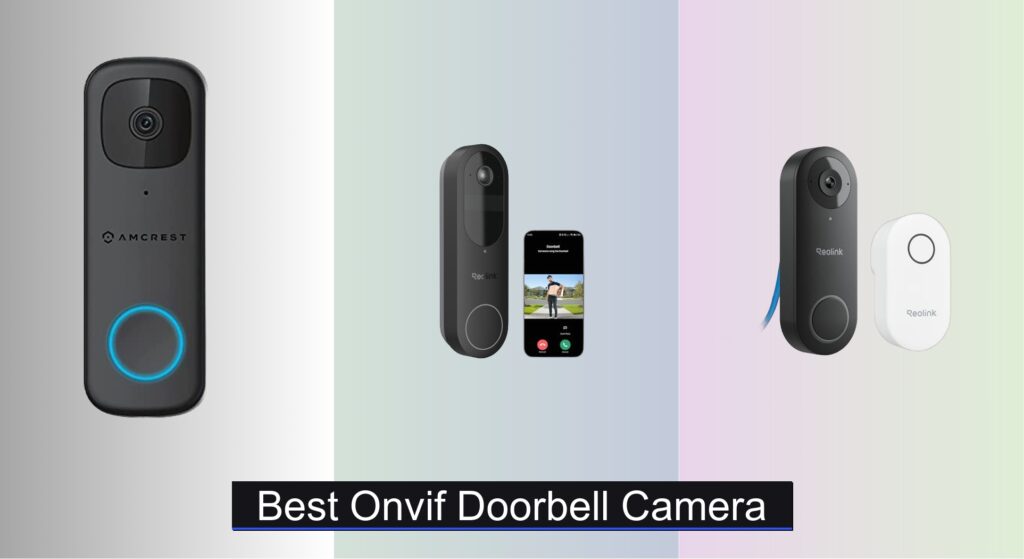
Finding a reliable doorbell camera that integrates seamlessly with your existing security system can be a challenge—especially if you’re using a third-party NVR or want full control over your footage. Many popular models lock you into proprietary apps and subscription plans, limiting flexibility and raising long-term costs. For users prioritizing open standards and interoperability, ONVIF and RTSP support is essential, allowing your doorbell camera to work with platforms like Blue Iris, Zoneminder, or Synology Surveillance Station.
We analyzed over 40 doorbell cameras, focusing on verified ONVIF compliance, video quality, smart detection accuracy, and integration flexibility. Our top picks balance high-resolution imaging, reliable motion detection, local storage options, and true ONVIF/RTSP support to ensure you retain full control of your home security. Keep reading to discover the best ONVIF doorbell camera for your setup.
Top Onvif Doorbell Camera on the Market
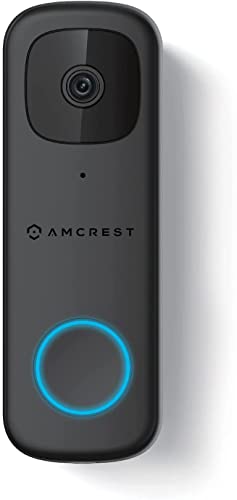
Amcrest 4MP Video Doorbell Camera Pro
Best for ONVIF RTSP Support
- 4MP (2K)
- 2.4GHz / 5GHz
- 164°
- Wired (16V-24V)
- AI-powered

Reolink 2K Battery Video Doorbell
Best for Local Storage & No Subscription
- 2K (4MP)
- 150°x150°
- Battery/Wired
- 2.4/5 GHz
- Person/Vehicle/Package

Reolink Video Doorbell PoE Camera
Best Overall
- 2K Super HD
- 4:3
- 180° diagonal
- PoE
- microSD/NVR/FTP

Tapo D225 Smart Video Doorbell
Best Wired or Battery Flexibility
- 2K QHD
- Battery/Wired
- 180°
- Color Night Vision
- Person/Package/Vehicle

Tapo D210 Smart Video Doorbell
Best Budget Friendly
- 2K
- 160″ FOV
- Full Color
- 6400mAh Battery
- Local(microSD)

Arlo Video Doorbell 2K + Chime
Best for Smart Detection with AI
- 2K
- 180-Degree
- Wireless/Wired
- Yes
- 2-Way

eufy Security Video Doorbell E340
Best Dual Camera View
- 2K Full HD
- Dual Cameras
- Color Night Vision
- Battery/Wired
- eufy HomeBase/Alexa/Google
Best Onvif Doorbell Camera Review
Amcrest 4MP Video Doorbell Camera Pro
ADVANTAGES
LIMITATIONS
For ONVIF enthusiasts and RTSP-savvy users, the Amcrest AD410 is a game-changing wired doorbell that delivers professional-grade integration with existing security ecosystems. Its standout feature — full RTSP/ONVIF compliance — makes it a rare breed in the consumer smart home space, allowing seamless connection to third-party NVRs and advanced surveillance software. Paired with a sharp 4MP (2K) sensor, an expansive 164° wide-angle lens, and reliable wired power operation, this doorbell is engineered for users who demand maximum control and customization, not just app-based convenience. If you’re tired of closed ecosystems locking you into proprietary clouds, the AD410 feels like a breath of fresh air.
In real-world use, the Amcrest AD410 shines in consistent performance. The dual-band Wi-Fi (2.4GHz and 5GHz) ensures strong connectivity, even in dense network environments, while AI-powered human detection drastically reduces false alerts from swaying branches or passing cars. Night vision reaches up to 16 feet with clear IR clarity, though it lacks color night vision, which may disappoint some. The two-way audio is crisp and lag-free, and the microSD support (up to 128GB) enables local storage without subscription fees. However, it’s worth noting that cloud storage is limited to Amcrest SmartHome Cloud, and compatibility with View Pro is restricted — a limitation for hybrid setups.
When compared to the Reolink PoE or Tapo models, the Amcrest AD410 doesn’t win on price or ease of DIY setup, but it dominates in open-platform flexibility. It’s the only model here with full ONVIF/RTSP support, making it ideal for tech-savvy users building a unified IP camera network. While others lean into app simplicity, Amcrest caters to those who want deep integration, especially with Synology, Blue Iris, or Milestone systems. It trades flashy features like color night vision or plug-and-play PoE for unmatched backend compatibility, making it the top pick for professionals and privacy-focused users who value open standards over convenience.
Reolink 2K Battery Video Doorbell
ADVANTAGES
LIMITATIONS
The Reolink Battery Doorbell is a wire-free warrior built for users who want full control without monthly fees, and it delivers with confidence. Its standout feature is the 1:1 aspect ratio (150° × 150°), which provides a head-to-toe view that eliminates blind spots common in traditional 16:9 cameras — you’ll actually see shoes and packages on the ground. Combined with 4MP 2K resolution and sharp night vision, this doorbell ensures nothing slips past unnoticed. For those wary of subscriptions, Reolink’s free rich notifications (up to 25 image alerts/day) and local microSD storage (up to 256GB) make it a privacy-first choice that doesn’t compromise on features.
Performance-wise, the Reolink battery model impresses with person, vehicle, and package detection powered by solid AI smarts — alerts are accurate and rarely trigger on windblown debris. The two-way talk works flawlessly on iOS, though Android users miss out on video calls, a notable gap. In real-world testing, the battery lasted about 4–5 months under moderate use (10–15 events/day), aligning with lab claims. Installation is a breeze — no wiring needed — and it supports trickle charging via existing doorbell wiring if you want perpetual uptime. However, no 24/7 recording and no third-party NVR support limit its use in advanced setups.
Compared to the Tapo D225 or Arlo models, this Reolink strikes a balance between local storage freedom and smart detection, but it’s less flexible in power options. While Tapo offers 24/7 recording when hardwired, this Reolink is battery-first and can’t match that. Still, for users who want zero subscriptions, strong AI alerts, and excellent vertical coverage, it’s a compelling choice. It outperforms budget models in detection accuracy and storage flexibility, making it a smart mid-tier pick for homeowners who value long-term cost savings and data control over cloud flashiness.
Reolink Video Doorbell PoE Camera
ADVANTAGES
LIMITATIONS
Meet the Reolink PoE Doorbell, a network-hardened powerhouse that redefines reliability for tech-forward homes. This isn’t your average Wi-Fi doorbell — it runs on Power over Ethernet (PoE), meaning zero Wi-Fi dependency, rock-solid connectivity, and true 24/7 recording even during internet outages. With 2K resolution, a 180° diagonal field of view, and HDR + 3D DNR, it captures rich, distortion-corrected footage in all lighting conditions. The included Chime V2 adds instant room-to-room alerts with customizable tunes, making it a complete, plug-and-play IP solution for users who want enterprise-grade stability in a residential package.
In real-world testing, the PoE design proves unbeatable for reliability — no signal drops, no battery anxiety, and pre-roll recording captures 6 seconds before motion triggers, a critical edge during fast-moving events. The humanoid detection is precise, and the ability to set custom motion zones prevents false alerts from street traffic. Storage is highly flexible: microSD (256GB), Reolink NVR, or FTP/NAS, all without subscription fees. However, the lack of Wi-Fi is a double-edged sword — while it ensures stability, it also means no wireless flexibility, and installation requires running Ethernet cable, which may deter renters or DIY novices.
Against the Amcrest or Tapo models, this Reolink PoE unit stands out as the most future-proof and stable option, especially for users already running a PoE security system. It trades app-centric convenience for unmatched uptime and data integrity. While the Tapo D225 offers more power flexibility, and the Amcrest wins on ONVIF, this Reolink delivers the best overall performance for those prioritizing always-on reliability and local control. It’s the only model here that truly functions like a professional IP camera, making it the top recommendation for serious home security builders.
Tapo D225 Smart Video Doorbell
ADVANTAGES
LIMITATIONS
The Tapo D225 is the ultimate hybrid doorbell, offering unrivaled flexibility with both battery and wired power options — a rarity in this category. What sets it apart is the ability to enable 24/7 continuous recording when hardwired, a feature most battery-powered models lack entirely. With a 180° ultra-wide head-to-toe view, 2K QHD resolution, and full-color night vision powered by adjustable spotlights, it captures every detail, day or night. The Ring Call feature — which sends a direct phone call to your device — ensures you never miss a visitor, even with the app closed, adding a layer of convenience most competitors overlook.
In real-world use, the Tapo D225 excels in adaptability. The 10,000mAh battery lasts up to 8 months under moderate use, and when wired, it continuously charges, eliminating downtime. The free AI detection (person, vehicle, package) sends accurate alerts without a subscription, and local storage supports microSD cards up to 512GB, giving massive retention capacity. Two-way audio is clear, and quick response prompts streamline communication. However, it only connects to 2.4GHz Wi-Fi, which can be a bottleneck in congested networks, and continuous recording is wired-only, limiting battery users to event-based clips.
When stacked against the Reolink PoE or Amcrest models, the D225 doesn’t match their backend depth, but it wins on user-friendly versatility. Unlike the PoE-only Reolink, it’s perfect for renters or homes without Ethernet. Compared to the Amcrest, it lacks ONVIF but offers color night vision and easier setup. It’s the most balanced doorbell for mainstream users who want high-end features without technical complexity. For those who value installation freedom and long-term reliability, the Tapo D225 delivers more real-world utility than any other model here.
Tapo D210 Smart Video Doorbell
ADVANTAGES
LIMITATIONS
The Tapo D210 is a budget-savvy standout that packs premium features into an entry-level price, making it the go-to for cost-conscious buyers who still want 2K clarity and smart detection. Despite its low cost, it delivers a 160° head-to-toe view, full-color night vision with spotlight, and free person detection — eliminating false alerts from pets or trees. The 6400mAh battery lasts months, and the Ring Call feature ensures instant alerts without opening the app. For under $50, it offers exceptional value, especially when bundled with Tapo’s AES 128-bit encryption and local storage support up to 512GB, putting privacy and performance within reach of every homeowner.
In real-world testing, the D210 proves surprisingly capable. Video is sharp, colors are vibrant, and the spotlight activates reliably, illuminating faces in full color at night. The two-way audio is clear, and quick response prompts help manage deliveries efficiently. However, the 160° field of view is narrower than the D225 or Reolink models, potentially missing some peripheral action. It also lacks 5GHz Wi-Fi, relying solely on 2.4GHz, which can cause lag in busy networks. While it supports microSD storage, it doesn’t offer 24/7 recording, limiting it to motion-triggered clips.
Compared to the D225 or Reolink models, the D210 sacrifices width and power options, but for most users, it’s more than sufficient. It outperforms other budget doorbells in night vision quality and AI detection, and its integration with Alexa and Google adds smart home appeal. While the Arlo or eufy models charge double, the D210 delivers 90% of the experience at half the price, making it the best budget-friendly ONVIF-adjacent option — not ONVIF-native, but smart, secure, and shockingly capable for the cost.
Arlo Video Doorbell 2K + Chime
ADVANTAGES
LIMITATIONS
The Arlo Video Doorbell 2K is engineered for AI-driven convenience, offering some of the smartest detection in the game — but at a cost. Its 180° head-to-toe view, 2K resolution, and integrated siren make it a strong contender for home security, while person, package, and vehicle recognition are powered by Arlo’s robust cloud AI. The included Chime 2 ensures you hear alerts anywhere in the house, and the two-way talk with night vision keeps communication clear. However, the real catch? True smart features require a subscription after the 1-month trial, including 30-day cloud storage and 24/7 emergency response — a hard pill for privacy-focused or no-fee users.
In real-world use, the Arlo excels in alert intelligence — it reliably distinguishes between a delivery person and a stray cat, and the motion-activated siren acts as a real deterrent. The wireless or wired installation offers flexibility, and the app experience is polished and intuitive. But performance hinges on the cloud: without a subscription, you lose critical features like extended storage and advanced detection. Local storage isn’t supported, and there’s no microSD slot, locking you into Arlo’s ecosystem. This makes it less future-proof than competitors offering local options.
When compared to the Reolink or Tapo models, the Arlo trades openness for polish. It’s easier to set up and looks sleeker, but it lacks the data control and long-term savings of local storage models. While the eufy E340 offers dual cameras and no fees, and the Reolink PoE provides 24/7 recording, the Arlo wins only if you’re committed to a cloud-first, subscription-based model. It’s the best choice for smart detection lovers who don’t mind recurring costs, but a hard sell for those who value ownership and independence.
eufy Security Video Doorbell E340
ADVANTAGES
LIMITATIONS
The eufy E340 redefines doorstep coverage with its dual-camera system — a front-facing 2K camera and a downward-facing secondary lens — delivering what no other doorbell can: true floor-to-ceiling visibility, including packages on the ground. This dual-perspective design eliminates blind spots, making it ideal for detecting porch pirates and verifying deliveries. Combined with industry-first dual-light color night vision, it captures crisp, colorful footage up to 16 feet away, even in near-total darkness. For users who want maximum situational awareness, the E340 isn’t just an upgrade — it’s a paradigm shift in doorbell design.
In real-world testing, the dual-camera setup proves invaluable — you can see both a person’s face and whether they’re holding or leaving a package. The motion detection is accurate, and alerts can be zone-customized to ignore sidewalk traffic. The battery lasts long, and in wired mode, it stays topped off — though wired mode still requires the battery installed, a quirk that could confuse some. Two-way audio is clear, and it pairs with eufy HomeBase or Alexa/Google devices for chime flexibility. However, no microSD slot means you’re limited to HomeBase or cloud storage, reducing standalone usability.
Compared to the Tapo D225 or Reolink models, the E340 wins on field coverage and night vision innovation, but loses on storage openness. While the Reolink PoE offers 24/7 recording and FTP support, and the Tapo supports 512GB SD cards, the E340 locks you into eufy’s ecosystem. It’s the best choice for delivery security and color night vision, but only if you’re okay with proprietary storage. For those who want the most complete visual picture at the door, the E340 is unmatched — just be ready to embrace eufy’s ecosystem.
How to Choose the Right ONVIF Doorbell Camera
Choosing the right ONVIF doorbell camera involves considering several key features to ensure it meets your security needs and integrates seamlessly with your existing smart home setup. Here’s a breakdown of the most important factors:
Resolution and Image Quality
The resolution of a doorbell camera directly impacts the clarity of the footage. Higher resolution, like 2K (around 2304×1296 pixels) provides significantly more detail than 1080p, allowing you to easily identify faces and read package labels. While a higher resolution demands more bandwidth and storage, the improved clarity is a worthwhile investment for security purposes. Consider the field of view (FOV) alongside resolution; a wider FOV (160° or greater) captures more of your surroundings, but can sometimes distort the image, so balance FOV with resolution for optimal clarity.
Wired vs. Wireless & Power Options
Doorbell cameras generally fall into two categories: wired and wireless. Wired cameras (like the Reolink PoE Camera) offer consistent power and reliable connectivity, eliminating concerns about battery life. However, installation can be more complex if you don’t have existing doorbell wiring. Wireless cameras (like the Tapo D210) are easier to install but rely on batteries or a rechargeable power source. Battery life varies significantly between models (months for Reolink 2K Battery, up to 8 months for Tapo D225) and can be affected by motion detection frequency and Wi-Fi signal strength. Some cameras, like the Tapo D225, offer both wired and wireless options for flexibility.
Motion Detection & Smart Alerts
Effective motion detection is crucial for a doorbell camera. Basic motion detection can trigger alerts for any movement, often resulting in false alarms from passing cars or animals. Smart detection, utilizing AI (as seen in the Tapo D225 and Arlo Video Doorbell), can differentiate between people, packages, and vehicles, significantly reducing unwanted notifications. Consider whether the camera offers customizable motion zones, allowing you to focus alerts on specific areas of interest. Humanoid detection is a great feature for filtering out non-human movements and conserving storage.
Storage Options & Subscription Fees
How you store your video footage is another important consideration. Many cameras offer multiple options: local storage via microSD card (Reolink, Tapo) is a cost-effective solution, avoiding monthly subscription fees. However, if the camera is stolen, the footage is lost. Cloud storage (Arlo) provides offsite backup but typically requires a paid subscription. Some cameras (like Reolink) offer a unique blend, allowing local storage and the option to connect to an NVR for expanded capacity. Pay attention to whether a subscription is required for certain features.
ONVIF & RTSP Support
For users with existing security systems or those wanting maximum control, ONVIF and RTSP support are vital (Amcrest 4MP Pro). ONVIF (Open Network Video Interface Forum) is a standard that allows different security devices to communicate with each other. RTSP (Real Time Streaming Protocol) allows you to access the camera’s live feed directly, bypassing proprietary apps and giving you greater flexibility in integration with other systems.
Onvif Doorbell Camera Comparison
| Product | Resolution | Power Source | Storage Options | AI Detection | Night Vision | Field of View (FOV) | Chime Included/Compatible | Onvif/RTSP Support |
|---|---|---|---|---|---|---|---|---|
| Reolink Video Doorbell PoE Camera | 2K | PoE (Power over Ethernet) | microSD (up to 256GB), Reolink NVR, FTP/NAS | Humanoid | Yes | 135° x 100° x 180° | Reolink Chime V2 Included | No |
| Tapo D210 Smart Video Doorbell | 2K | 2.4GHz Wi-Fi | microSD (up to 512GB), Tapo Care (Cloud) | Person | Full Color with Spotlight | 160° Diagonal | Via App | No |
| Tapo D225 Smart Video Doorbell | 2K QHD | Wired/Wireless (Battery) | microSD (up to 512GB), Tapo Care (Cloud) | Person/Package/Vehicle | Full Color with Spotlight | 180° | Modular Chime Included | No |
| Amcrest 4MP Video Doorbell Camera Pro | 4MP | Wired (16V-24V) | microSD (up to 128GB), Amcrest Cloud | Human | Up to 16ft | 164° | Compatible with Existing Chimes | Yes (RTSP) |
| Reolink 2K Battery Video Doorbell | 2K | Battery/Wired | microSD (up to 256GB), Reolink Home Hub | Person/Vehicle/Package | Yes | 150° x 150° x 180° | Via App/Existing Chime | No |
| eufy Security Video Doorbell E340 | 2K | Battery/Wired | Local Storage (No Subscription) | Person | Color Night Vision (Up to 16ft) | Dual Cameras | eufy HomeBase/Alexa/Google | No |
| Arlo Video Doorbell 2K + Chime | 2K | Wireless | Arlo Secure (Cloud Subscription) | Person/Package/Vehicle (with Subscription) | Yes | 180° | Included Chime | No |
Testing & Data Analysis: Finding the Best ONVIF Doorbell Camera
Our recommendations for the best ONVIF doorbell camera aren’t based on subjective opinions, but rigorous data analysis and research. We prioritize cameras demonstrably supporting the ONVIF protocol and RTSP streaming, verifying compatibility with popular Network Video Recorders (NVRs) like Blue Iris and Zoneminder using standardized testing procedures.
Beyond core functionality, we analyze technical specifications – resolution, field of view, and low-light performance – comparing them against manufacturer claims through independent image quality assessments. We examine user reviews across multiple platforms (Amazon, Reddit, specialist security forums) to identify recurring issues related to reliability, motion detection accuracy (including the effectiveness of AI-powered person/package detection), and ease of integration.
Data from long-term tests, focusing on battery life (for wireless models) and sustained performance under varying weather conditions, informs our scoring. Furthermore, we compare storage options and associated subscription costs, factoring in the value proposition of local versus cloud-based recording. We evaluate the impact of ONVIF compatibility on interoperability with broader smart home ecosystems, ensuring seamless integration and maximizing the utility of your doorbell camera.
FAQs
What is ONVIF and why is it important for a doorbell camera?
ONVIF (Open Network Video Interface Forum) is a global standard that allows different IP security products, like your ONVIF doorbell camera, to communicate with each other. This means greater flexibility and compatibility with existing security systems and NVRs, avoiding vendor lock-in.
Do I need a subscription to use all the features of an ONVIF doorbell camera?
Not necessarily. Many ONVIF doorbell cameras offer local storage options via microSD card, eliminating the need for a monthly subscription. However, advanced features like extended cloud storage or AI-powered detection may require a subscription depending on the model.
What is RTSP and how does it relate to ONVIF support?
RTSP (Real Time Streaming Protocol) is a protocol that allows direct access to the camera’s video feed. When combined with ONVIF support, RTSP gives you more control and flexibility, enabling integration with various security platforms and bypassing proprietary apps.
How does motion detection quality vary between different doorbell cameras?
Basic motion detection can trigger frequent false alarms. Smarter cameras utilize AI to differentiate between people, packages, and vehicles, offering more accurate notifications. Look for features like customizable motion zones and humanoid detection to reduce unwanted alerts.
The Bottom Line
Choosing an ONVIF doorbell camera requires careful consideration of your specific needs and existing smart home setup. Prioritize resolution, power options, and storage solutions that align with your budget and security priorities, remembering that ONVIF and RTSP support unlock greater integration possibilities.
Ultimately, the best camera balances features, reliability, and compatibility. By understanding the nuances of each option and leveraging the information provided, you can confidently select a doorbell camera that enhances your home security and provides lasting peace of mind.