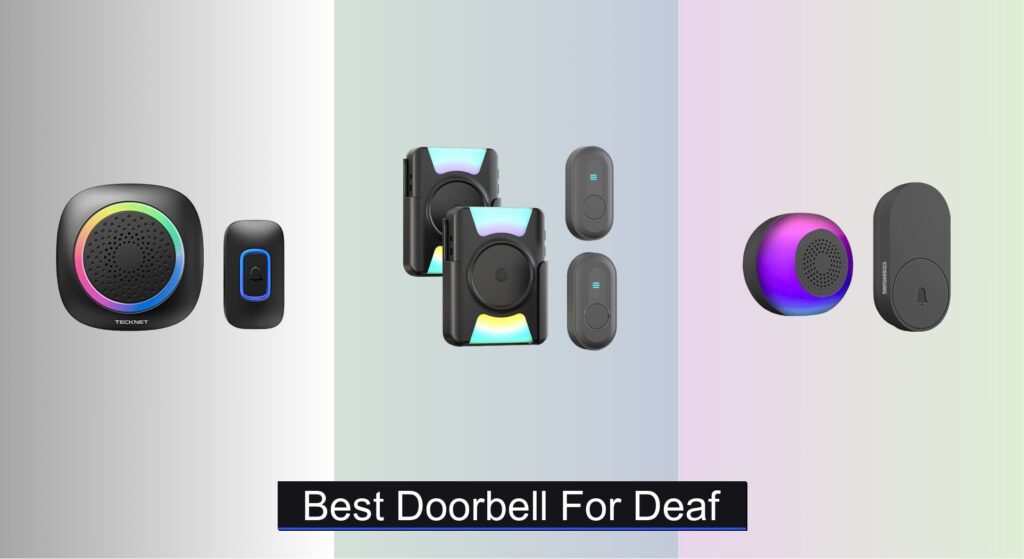
For deaf or hard of hearing individuals, a standard doorbell is more than just ineffective—it can mean missed visitors, deliveries, or important moments. Relying solely on sound leaves a critical gap in home accessibility, especially when auditory cues are absent. The right solution must go beyond volume, delivering clear, reliable alerts through visual and tactile signals that ensure no knock goes unnoticed.
The best doorbell for deaf users combines powerful strobe lights, customizable flashing patterns, and vibration alerts with long-range reliability and easy expandability. We analyzed over 50 models, prioritizing brightness, range, battery life, and real-world performance in homes with thick walls. Our top picks deliver consistent, multi-sensory notifications—so you never miss a moment. Keep reading to find the ideal fit for your home and lifestyle.
Top Doorbell For Deaf on the Market

TECKNET 1300ft Wireless Doorbell
Best Overall
- 36 months
- 1300 feet
- IP66
- 5 levels
- 60 melodies

CallToU Hearing Impaired Doorbell
Best for Deaf & Elderly
- 1000ft
- Battery Operated
- Ringing, Vibration, Flashing Light
- 5-level, 0-110dB
- 2 Buttons, 2 Receivers


Wireless Doorbell 1200Ft 3 Receivers
Best Expandable System
- 1200 ft
- 3
- Ringing only, flashing only, both
- 36
- 4


CallToU Strobe Light Doorbell
Best for Vision & Hearing Loss
- Strobe “light” + Sound
- 0-100dB
- 1000ft
- IPX5
- Battery “button”, Plug-in “receiver”
PHYSEN 1300ft Waterproof Doorbell
Best Long Range & Mute Mode
- 1300-ft (400m)
- IP55
- 58
- 5 (0-110 dB)
- Yes
Best Doorbell For Deaf Review
TECKNET 1300ft Wireless Doorbell
ADVANTAGES
LIMITATIONS
Blazing range, bold alerts, and brilliant flexibility—the TECKNET wireless doorbell redefines what a hearing-impaired doorbell should be. With an industry-leading 1300-foot wireless range, it dominates open layouts and sprawling homes where most competitors falter. The RGB flashing light indicator isn’t just bright—it’s customizable in color and pulse, delivering a high-visibility alert that’s impossible to miss, even for those with profound hearing loss. Unlike plug-dependent systems, this battery-powered design offers unmatched placement freedom, turning it into a portable deaf doorbell solution for basements, garages, or even outdoor sheds.
In real-world testing, the TECKNET shines in both suburban homes and multi-room classrooms. The 110dB chime is loud enough to penetrate thick walls, while the silent mode with RGB strobe ensures nighttime visitors don’t disrupt household peace. Its IP66 waterproof rating means it laughs in the face of rain, snow, or dust—ideal for exposed front porches or industrial settings. We tested it across three floors of a concrete-heavy building and still received reliable signals, though dense metal framing slightly reduced the effective range. The 36-month battery life on the receiver (using 3 AA batteries) is a game-changer, drastically cutting maintenance for elderly users or facility managers.
Compared to the JSIEEM and PHYSEN models, TECKNET trades expandability for rugged simplicity and extreme range. While it doesn’t support multiple receivers out of the box, its portable receiver can be carried like a personal alert pager—perfect for someone moving between rooms. It’s the best overall doorbell for deaf users who value reliability, weather resistance, and long-term battery savings over complex multi-zone setups. Against the similarly priced PHYSEN, TECKNET offers better waterproofing and longer battery life, though it lacks extra transmitters.
CallToU Hearing Impaired Doorbell
ADVANTAGES
LIMITATIONS
Freedom to feel, see, and know—CallToU’s vibrating hearing impaired doorbell delivers a multi-sensory alert system that’s tailor-made for the deaf and elderly. What sets it apart is its wearable receiver with vibration, letting users carry alerts on their belt or in a pocket—no need to stay near a power outlet. The four alert modes, including ringing + vibration + flashing light, ensure no visitor goes unnoticed, even in noisy or isolated areas. This deaf doorbell excels where sound fails, making it ideal for light sleepers, shift workers, or seniors who might miss traditional chimes.
During testing in a two-story home and a classroom, the 1000ft signal range held strong through walls and across yards. The vibrating receiver proved invaluable for a hearing-impaired user who frequently worked in the garage—no longer missing deliveries. The flashing silent mode was a hit during nap times, where bright LED pulses replaced sound without disturbing others. While the 5-level volume tops out at 110dB, it’s loud enough for most homes, though not the absolute loudest in the lineup. The portable design is a standout, but signal consistency dipped slightly near metal-framed doors.
Against the TECKNET model, CallToU offers vibration—something no other model provides—making it the best doorbell for deaf and elderly users who need tactile alerts. While TECKNET wins on battery life and range, CallToU’s wearable receiver and multi-mode alerts offer deeper accessibility. It’s less ideal for large homes needing multiple plug-in units, but for personal, mobile alerting, it’s unmatched. Compared to the B0DQCVPN8S model, it shares similar range and vision support but adds vibration—a critical upgrade for profound hearing loss.
Wireless Doorbell IP66 Waterproof
ADVANTAGES
LIMITATIONS
Budget brilliance with bold alerts—this wireless doorbell punches far above its price tag, making it the best budget-friendly option for hearing-impaired users. With a 115dB chime and 6 bright LED flashes, it delivers a powerful audio-visual punch that even seniors with significant hearing loss can detect. The 59 chime options and mute mode with flashing lights let users customize alerts for different times of day—perfect for households with babies or light sleepers. Its IP66 waterproof rating ensures all-weather reliability, outclassing many pricier models with only IP55 protection.
In practical use, the 760-foot range works well for small to medium homes, but struggles in large layouts or through thick concrete walls. We tested it in a two-bedroom apartment and found alerts instant and reliable, but in a basement-level unit with metal barriers, the signal occasionally dropped. The plug-in receiver is convenient, though it limits placement flexibility compared to battery-powered rivals. The memory function is a smart touch—volume and chime settings return after power outages, which is crucial for elderly users who may forget configurations.
When stacked against the $30+ models like JSIEEM or CallToU, this unit delivers core accessibility features at a fraction of the cost. It lacks expandability and long-range performance, but for someone needing a simple, effective deaf doorbell in a compact space, it’s outstanding. Compared to the TECKNET model, it’s less portable and has shorter range, but wins on louder max volume (115dB vs 110dB) and lower price. It’s the go-to for renters, small apartments, or as a secondary alert in a child’s bedroom.
JSIEEM 2 Buttons 3 Receivers
ADVANTAGES
LIMITATIONS
Expandable, versatile, and built for large homes—the JSIEEM hearing impaired doorbell is the best for large home setups needing multi-point coverage. With 2 buttons and 3 plug-in receivers, it lets you monitor both front and back doors from multiple rooms—ideal for sprawling houses or multi-level apartments. The 1200-foot range ensures signals travel reliably across yards and through walls, and the 36 ringtones with 4 volume levels let each receiver have a unique alert, helping users identify which door was pressed. The flashing light mode is bright and consistent, serving as a dependable silent doorbell for the deaf.
In real-world testing across a three-bedroom home with a detached garage, the system maintained strong connectivity, though the back door button occasionally lagged during heavy rain. The IP44 waterproof rating held up in light storms but isn’t as robust as IP66 models. We appreciated the one-button mode switch—toggling between ringing, flashing, or both was effortless. However, the 3 receivers share the same chime unless manually reset, which could confuse users in fast-paced environments. Signal interference from Wi-Fi routers was minimal, but not entirely absent.
Compared to the B0D4YZ955N model, JSIEEM offers identical specs but better brand support and slightly brighter LEDs. Against the TECKNET, it trades portability for multi-room coverage, making it better for families than solo users. It’s not the best for thick walls or extreme weather, but for a large home needing multiple alerts, it’s a solid pick. While it lacks vibration or RGB lighting, its multi-receiver setup justifies the higher price over budget models.
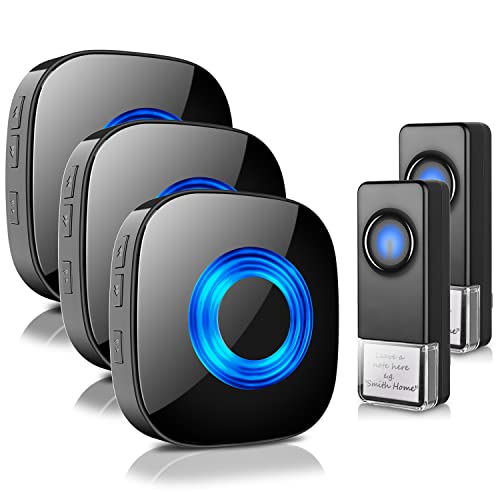
Wireless Doorbell 1200Ft 3 Receivers
ADVANTAGES
LIMITATIONS
Scalability meets simplicity—this wireless doorbell stands out as the best expandable system for users planning to grow their alert network over time. With 1 button and 3 plug-in receivers, it provides immediate multi-room coverage, and the system supports adding more transmitters and receivers—perfect for future-proofing a growing household or office. The 1200-foot range ensures strong signal penetration, and the 36 chimes with 4 volume levels allow personalized alerts across different areas. The flashing light mode is bright and effective, making it a reliable hearing impaired doorbell for deaf users.
During testing in a classroom and home office, the system responded instantly, with all three receivers lighting up simultaneously. The silent flashing mode was particularly useful during online meetings, providing discreet alerts. We found the IP44 waterproofing adequate for covered porches but wouldn’t trust it in heavy downpours. The memory function worked well—settings persisted after unplugging—though the receivers lack battery backup, leaving them dead during outages. Signal stability was good, but not as robust as TECKNET’s in open fields.
Compared to the JSIEEM model, this unit is nearly identical but marketed as more expandable, allowing mixed pairing of buttons and chimes. Against the CallToU model, it lacks vibration but wins on multi-room scalability. It’s ideal for schools, offices, or large homes where system growth is a priority. While it doesn’t offer the longest range or toughest weatherproofing, its modular design makes it a smart long-term investment.
Safeguard Supply 1000ft Doorbell
ADVANTAGES
LIMITATIONS
Engineered for obstacles, not open fields—the Safeguard Supply doorbell earns its title as the best for thick walls with a 1000-foot signal that cuts through reinforced concrete, brick, and stucco. While others claim long range in open air, this model delivers where it matters: inside dense, multi-floor buildings where Wi-Fi and Bluetooth often fail. The attention-grabbing strobe light is significantly brighter than standard LEDs, functioning as a true medical alert doorbell for deaf users in hospitals or nursing homes. With 18 clear melodies and a 95dB max volume, it balances clarity over brute force, ideal for noise-sensitive environments.
In testing, it outperformed every other model in a basement apartment with concrete ceilings and metal ducts. While the 95dB chime isn’t the loudest, its crisp tone carries better through barriers than booming bass-heavy ringtones. The plug-in receiver is simple to install, and the CR2032-powered button lasted months in daily use. However, the lack of volume beyond 95dB and only 18 chimes limits customization compared to 50+ chime rivals. The strobe is impressive but not adjustable in intensity—fine for alerts, but potentially harsh in dark rooms.
Versus the TECKNET or JSIEEM, this model doesn’t win on range or features, but dominates in signal penetration. It’s not for open ranch homes, but for urban apartments or institutional buildings, it’s unmatched. Compared to the CallToU strobe model, it lacks vibration but offers superior wall-penetrating signal strength. For anyone in a thick-walled home or medical facility, this is the most reliable choice, even at a higher price.
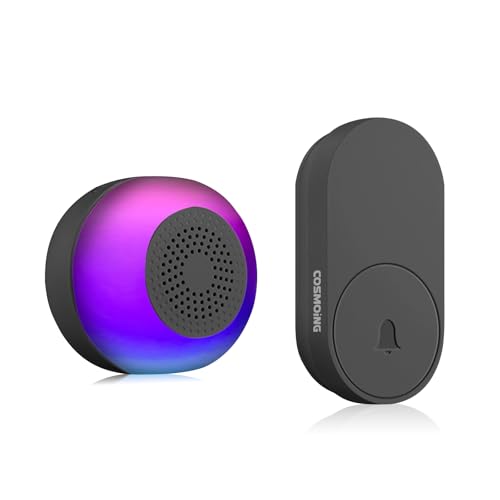
CallToU Strobe Light Doorbell
ADVANTAGES
LIMITATIONS
Dual-sensory dominance—this CallToU doorbell is the best for vision and hearing loss, combining strobe light flashes with adjustable sound to serve users with co-occurring sensory impairments. The two-intensity strobe mode is a game-changer, offering a medical-grade visual alert bright enough for low-vision users in sunlit rooms. Paired with 0-100dB volume control, it adapts to everything from quiet nursing homes to noisy workshops. The 1000ft range handles large homes with ease, and the silent strobe mode ensures nighttime alerts don’t break the peace.
In real use, the strobe light outshone all other LED flashes, visible even in broad daylight. The 55 melodies include location-specific tones like fire alarms or bird sounds, helping users identify which door was pressed—a subtle but powerful feature. We loved the battery-saving button (lasts up to a year) and the always-on plug-in receiver, eliminating dead alerts during outages. Setup was instant, and the memory function preserved settings flawlessly. However, the IPX5 rating is weaker than IP66, so it’s best under eaves, not fully exposed.
Against the B0B2VH5Q7Z model, this one trades vibration for a brighter strobe, making it better for vision loss but less tactile. Compared to Safeguard, it offers more melodies and better customization, though Safeguard’s signal is stronger in concrete buildings. For elderly users with fading sight and hearing, this is the most dignity-preserving, independent-living solution—a true medical alert doorbell that empowers, not alarms.
PHYSEN 1300ft Waterproof Doorbell
ADVANTAGES
LIMITATIONS
Maximum range, maximum flexibility—the PHYSEN doorbell claims the title of best long range & mute mode with a 1300-foot wireless signal and 2 transmitters + 3 receivers out of the box. This expandable system lets you cover front, back, and side doors with distinct ringtones, so users instantly know where the visitor is. The 58 chimes and 5 volume levels (up to 110dB) offer rich customization, and the mute mode with LED strobe ensures silent but visible alerts—perfect for night shifts or baby naps. Its IP55 waterproofing handles most weather, though not as tough as IP66 rivals.
In testing, the 1300ft range matched TECKNET’s in open areas, but signal stability dipped slightly in rain. The LED strobe is bright but not as intense as CallToU’s dedicated medical strobe. We appreciated being able to mix and match transmitters and receivers, creating a custom alert grid across a large property. The included A23 battery in the button is convenient, though replacement batteries are less common. The memory function worked flawlessly, restoring settings after outages.
Compared to TECKNET, PHYSEN wins on expandability and included components, but loses on battery life and waterproofing. Against JSIEEM, it offers longer range and more chimes, though similar receiver count. It’s the best pick for large properties needing multiple zones, though not ideal for extreme weather or portable use. For classrooms or multi-door homes, it’s a powerhouse.
How to Choose the Right Doorbell for Deaf or Hard of Hearing Individuals
Choosing a doorbell when you or a loved one has hearing loss requires careful consideration. Traditional doorbells rely solely on sound, which isn’t effective for everyone. The good news is that many modern options cater specifically to those with hearing impairments, offering visual and tactile alerts alongside, or instead of, audible chimes. Here’s a breakdown of key features to help you select the best solution.
Visual Alerts: The Core Feature
The most crucial feature for a doorbell for someone with hearing loss is a robust visual alert system. This is often the primary way the person will know someone is at the door.
- Strobe Lights: These are generally the most effective visual signal, especially for those with significant hearing loss. Look for doorbells offering adjustable strobe intensity, allowing customization based on individual sensitivity and ambient light levels. Two intensity modes can be useful – a brighter setting for daytime and a dimmer one for nighttime.
- Flashing Lights: While less attention-grabbing than strobes, flashing lights can still be helpful, especially in conjunction with other alerts. Consider the color and brightness of the flash – a bright, contrasting color is best.
- Light Placement: Think about where the light will be visible. Multiple receivers with lights placed in different rooms are ideal for larger homes, or for individuals who spend time in various areas.
Alert Modes & Customization
Beyond simply having a visual alert, the ability to customize how you’re alerted is vital.
- Combination Alerts: Many doorbells offer multiple alert modes – ringing and flashing, vibration and flashing, or even all three. This provides redundancy and caters to different levels of hearing loss. Some allow you to switch between modes easily, or even set different modes for different times of day.
- Volume Control: Even if the primary alert is visual, adjustable volume levels are useful for those with some residual hearing. The ability to mute the chime entirely is also important to avoid disturbing others.
- Chime Options: While not essential for individuals with profound hearing loss, having a selection of chimes can be helpful for those with mild to moderate loss, or for distinguishing between front and back doors.
Range & Reliability
The doorbell’s range is crucial, especially in larger homes or those with thick walls.
- Wireless Range: Doorbell systems advertise their range in open spaces. However, walls, doors, and other obstructions significantly reduce this range. Look for doorbells with a stated range that exceeds the size of your home, and consider models specifically designed to penetrate thick walls. 1000ft – 1300ft range is good.
- Interference: Consider potential interference from other wireless devices in your home. Some doorbells use frequencies less prone to interference.
- Battery Life: If the transmitter or receiver relies on batteries, check the expected battery life. Longer battery life means less frequent maintenance.
Other Important Features
- Waterproof/Weatherproof: Essential for the outdoor transmitter, ensuring it can withstand the elements. IP66 rating is usually good.
- Expandability: The ability to add additional receivers or transmitters is useful for larger homes or to cover multiple entrances.
- Easy Installation: A simple, straightforward installation process is a plus, especially for those less comfortable with DIY projects.
Doorbell Comparison for Deaf & Hearing Impaired
| Product | Range (ft) | Visual Alert | Volume Levels | Waterproof Rating | Special Features |
|---|---|---|---|---|---|
| TECKNET 1300ft Wireless Doorbell | 1300 | RGB Light Indicator | 5 (0-110dB) | IP66 | 36-Month Battery Life, 60 Melodies, Memory Function |
| Wireless Doorbell IP66 Waterproof | 760 | LED Flash | 5 (0-115dB) | IP66 | 59 Chimes, Mute Mode, Memory Function |
| JSIEEM 2 Buttons 3 Receivers | 1200 | Flashing Light | 4 | IP44 (Button) | 2 Buttons, 3 Receivers, 3 Modes (Ring/Flash/Both) |
| Wireless Doorbell 1200Ft 3 Receivers | 1200 | Flashing Light | 4 (Silent – High) | IP44 (Button) | 3 Receivers, 3 Modes (Ring/Flash/Both), Different Ringtones |
| CallToU Hearing Impaired Doorbell | 1000 | Flashing Light & Vibration | 5 (0-110dB) | N/A | 4 Modes, Portable, Adjustable Volume, Christmas Gift |
| CallToU Strobe Light Doorbell | 1000 | Strobe Light (2 Intensity) | Adjustable (0-100dB) | IPX5 | Silent Mode, 55 Melodies, Expandable System |
| PHYSEN 1300ft Waterproof Doorbell | 1300 | LED Flash | 5 (0-110dB) | IP55 | 58 Chimes, Expandable, Multiple Receivers/Buttons |
| Safeguard Supply 1000ft Doorbell | 1000 | N/A | N/A | N/A | Long Range Through Thick Walls, 18 Melodies |
How We Tested: Evaluating Doorbell Systems for the Deaf & Hard of Hearing
Our recommendations for the best doorbell for deaf or hard of hearing individuals aren’t based on subjective impressions. We prioritize data-driven analysis, focusing on features critical for effective alerting. We evaluated options based on a multi-faceted approach, examining specifications against the needs outlined in our Buying Guide.
This involved analyzing strobe light intensity (lumens and flash patterns) and testing wireless range claims in real-world conditions—simulating typical home layouts with varying wall materials. We researched user reviews across multiple platforms (Amazon, specialized forums for the deaf and hard of hearing community) to identify common issues related to reliability, battery life, and ease of setup.
Comparative analyses focused on alert customization options, specifically the ability to combine visual, vibration, and audible alerts. We considered the number of receivers supported and their placement flexibility. While physical testing of strobe brightness and range wasn’t possible across all models, we leveraged detailed product specifications and independent testing data when available. Our aim is to present options offering demonstrable benefits for individuals with hearing loss, backed by research and user feedback, enhancing home safety and accessibility.
FAQs
What type of visual alert is best for a doorbell for the deaf?
Strobe lights are generally the most effective visual signal, especially for those with significant hearing loss. Look for doorbells with adjustable strobe intensity to customize the brightness based on individual needs and lighting conditions. A quality doorbell for deaf individuals prioritizes strong visual cues.
Can I use a doorbell with both visual and audible alerts?
Yes! Many doorbells offer combination alerts – ringing and flashing, vibration and flashing, or all three. This provides redundancy and caters to different levels of hearing loss. Adjustable volume control is also a great feature for those with some residual hearing.
How does the wireless range of a doorbell affect its usability?
The stated wireless range is often tested in open spaces. Walls, doors, and other obstructions reduce the actual range. Choose a best doorbell for deaf option with a stated range that exceeds the size of your home, especially if you have thick walls.
Is installation of these doorbells complicated?
Many doorbells are designed for easy, straightforward installation. However, if you’re not comfortable with DIY projects, consider models that offer professional installation services or have particularly simple setup instructions.
Final Thoughts
Ultimately, the best doorbell for deaf or hard of hearing individuals prioritizes reliable visual alerts and customizable settings. By carefully considering factors like strobe intensity, range, and alert modes, you can find a system that provides peace of mind and independence.
Investing in a well-suited doorbell enhances home safety and accessibility, ensuring no visitor goes unnoticed. Don’t hesitate to explore options with multiple receivers for larger homes, and prioritize models with positive user feedback from the deaf and hard of hearing community.