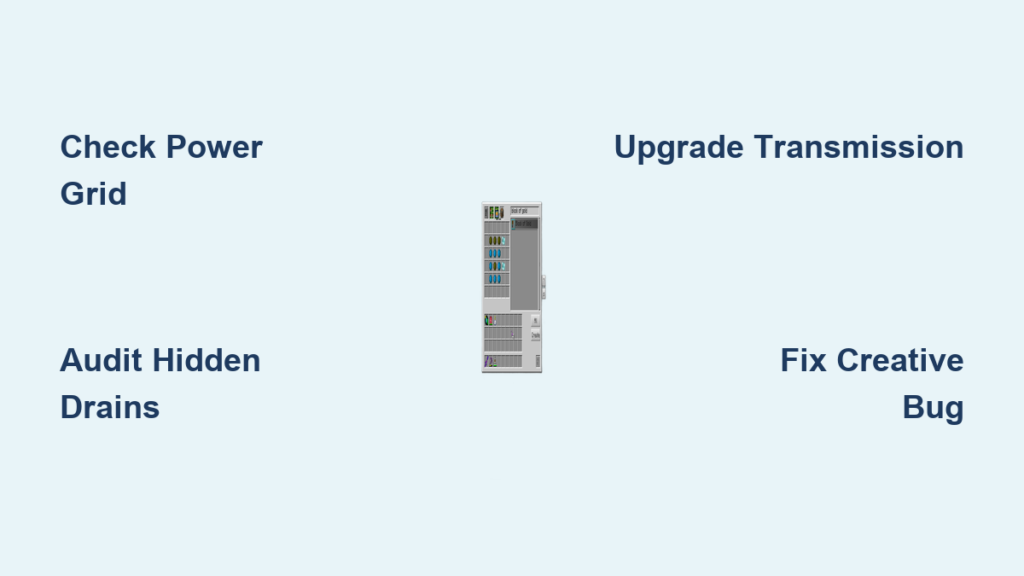
Your dimlet workbench not working properly can bring your entire dimension-building project to a grinding halt. When you’ve carefully crafted the perfect dimension only to have it shut down unexpectedly or fail to respond to dimlet inputs, the frustration is real. This guide tackles the most common power-related issues affecting RFTools dimensions, focusing specifically on why your dimlet workbench stops functioning correctly and how to implement permanent fixes—not just temporary workarounds. You’ll learn why seemingly sufficient power generation still causes dimension failures and discover the hidden power drains that most players completely overlook.
Many players assume their dimlet workbench not working is due to insufficient power generation when the reality is far more complex. The critical mistake? Focusing solely on the dimension’s listed maintenance cost while ignoring the entire power ecosystem. In this guide, you’ll learn how to diagnose the true cause of your dimlet workbench failures and implement solutions that keep your dimensions stable through resource gathering, complex automation, and unexpected power demands. By the end, you’ll have a dimension that stays powered 24/7 with minimal maintenance.
Why Your RFTools Dimension Keeps Power Cycling
When your dimlet workbench not working symptoms appear alongside dimension power cycling, the root cause is almost always a power distribution problem—not insufficient generation. The most common scenario involves a dimension requiring 50,000 RF/tick maintenance with a power generation of 70,000 RF/tick, yet still failing despite cryo-cooled fluxducts providing power. Players mistakenly believe they have a 20,000 RF/tick surplus when in reality, hidden systems are consuming power elsewhere in the network.
Calculate Your True Power Requirements
Don’t trust the dimension screen’s maintenance number alone—your actual power needs are significantly higher. Follow these steps to determine your real power consumption:
- Isolate your dimension from the main power grid using a dedicated connection point
- Measure baseline consumption with an RF monitor directly connected to the dimension controller
- Add 20% buffer to account for power spikes during dimension operations
- Test with all connected systems active (chunk loaders, automation, etc.)
The critical realization: Your dimension’s listed maintenance cost is just the starting point. Each additional system connected to your power grid—especially chunk loaders, automated farms, or redstone circuits—creates hidden power drains that collectively starve your dimension. A dimension showing 50,000 RF/tick requirement might actually need 75,000+ RF/tick when all hidden consumers are factored in.
Identify Power Consumption Hotspots
When your dimlet workbench not working issue persists despite adequate generation, these areas are most likely draining unexpected power:
- Chunk loading systems (especially multiple chunk loaders overlapping)
- Automation systems running in unloaded chunks
- Redstone clocks or other constant power consumers
- Cross-dimensional power connections to other systems
Pro Tip: Disconnect all non-essential systems and gradually reconnect them while monitoring power consumption. This process of elimination reveals exactly which component is causing your power deficit.
Diagnose Hidden Power Drains in Your Dimension System
Most players miss the hidden power consumers that silently drain RF from their dimension system. When your dimlet workbench not working symptoms appear, these often-overlooked components are usually the culprits.
Perform a Complete Power Audit
Stop guessing and start measuring with this systematic approach:
- Disconnect your dimension controller from all power sources
- Connect a dedicated RF generator (like a creative cell) solely to the dimension
- Monitor actual RF consumption using an RF monitor block
- Gradually reconnect other systems while tracking power draw
This method reveals your dimension’s true power requirements without interference from other systems. You’ll likely discover your dimension needs 25-30% more power than the controller screen indicates due to hidden overhead.
Check for Vampire Power Loads
These silent power drains cause intermittent dimlet workbench failures:
- Idle machines still drawing power despite no activity
- Redstone circuits with constant signal output
- Multiple chunk loaders covering the same area
- Cross-dimensional power loops between dimensions
Critical Fix: Install RF monitors at every major connection point in your power grid. Set up visual alerts (like colored lamps) that activate when power drops below 95% of requirements—this gives you early warning before dimension failure occurs.
Fix Power Transmission Bottlenecks to Your Dimlet Workbench
Even with sufficient generation, poor power transmission causes your dimlet workbench not working symptoms. Standard fluxducts—even cryo-cooled versions—have throughput limits that create bottlenecks when dimensions require high RF/tick.
Install Multiple Power Injection Points
Single connection points are the #1 cause of dimension power failures. Implement these transmission solutions:
- Place RF storage cells directly adjacent to your dimension controller on all four sides
- Use cryo-stabilized fluxducts for zero-loss transmission over any distance
- Install wireless RF transmitters with dimensional cards at multiple locations
- Create redundant power pathways using different transmission methods
Warning: Never rely on a single power connection to your dimension controller—this creates a single point of failure that will eventually cause your dimension to shut down.
Upgrade Your Power Distribution Network
For dimensions requiring over 50,000 RF/tick, standard power grids won’t suffice. Implement this tiered transmission system:
Tier 1: Direct RF storage buffers (4+ large cells) surrounding dimension controller

Tier 2: Cryo-stabilized fluxduct network with multiple injection points

Tier 3: Wireless RF backup system with emergency power cells
This three-layer approach ensures continuous power delivery even if one transmission method fails. The RF storage buffers act as shock absorbers during power spikes, preventing momentary drops that cause dimension instability.
Creative Mode Dimlet Workbench Bug: Copying Not Working Fix
When your dimlet workbench not working in creative mode specifically, you’re experiencing a known bug affecting shift+double-click functionality. This frustrating issue prevents dimlet copying despite having adequate power and proper setup.
Bypass the Creative Mode Bug
This confirmed bug affects all RFTools versions—here’s how to work around it:
- Use the creative inventory search to directly access required dimlets
- Employ JEI/REI to locate and acquire dimlets without the workbench
- Use command-based solutions like
/give @p rftools:dimlet 1 {dimlet: "your_dimlet"}
Important: Don’t waste time troubleshooting power connections when in creative mode—the issue is purely client-side and unrelated to your power grid. The dimlet workbench functions normally in survival mode with proper power.
Prevent Future Creative Mode Issues
To avoid repeated frustration:
- Bookmark the dimlet ID list for quick reference during creative building
- Create a dimlet cheat sheet with common combinations you use regularly
- Use command blocks to quickly generate frequently used dimlets
This bug has been reported to the RFTools developers but remains unfixed in current versions—plan your creative building accordingly.
Legacy Efficiency Dimlets: Handling Outdated Power Solutions
If your dimlet workbench not working issue affects an older dimension, you might be dealing with legacy efficiency dimlets that no longer function in current RFTools versions. These dimlets (which reduced dimension power consumption by 5% each) were removed in recent updates but still affect dimensions created with older versions.
Migrate from Legacy Dimensions
When efficiency dimlets stop working after updating:
- Export your dimension data using
/rft dims export [dimensionID] - Note all dimlet combinations before dismantling the old dimension
- Recalculate power requirements without efficiency bonuses
- Recreate the dimension with current dimlet mechanics
Critical Step: Add a 20-30% power buffer to your new dimension’s requirements—this compensates for the lost efficiency bonuses and ensures stability.
Modern Power Reduction Strategies
Since efficiency dimlets no longer exist, use these current methods to reduce power demands:
- Simplify dimension features (remove unnecessary biomes or terrain modifiers)
- Reduce resource generation density (fewer ore veins = lower power cost)
- Implement smart chunk loading to minimize active area
- Use dimension tether beacons for targeted power injection
Emergency Power Protocols for Failing Dimensions
When your dimlet workbench not working symptoms escalate to complete dimension failure, immediate action prevents permanent data loss. Follow this emergency protocol to save your dimension:
Activate Emergency Power Within 60 Seconds
- Isolate the failing dimension from your main power grid
- Deploy emergency RF cells directly to the dimension controller
- Suspend non-critical systems connected to the dimension
- Verify dimension stability before reconnecting other systems
Pro Tip: Keep 2-4 fully charged creative RF cells in your emergency kit—these provide instant power to stabilize failing dimensions while you diagnose the root cause.
Implement Permanent Emergency Systems
Prevent future crises with these proactive measures:
- Install automatic RF buffers that engage when power drops below threshold
- Create a dedicated emergency power network with 48 hours of autonomy
- Set up visual/audible alerts for power fluctuations
- Maintain a documented emergency protocol accessible to all players
Optimize Dimension Complexity to Reduce Power Demands
The most effective solution for dimlet workbench not working issues is reducing your dimension’s power requirements through strategic design choices. Each added feature exponentially increases power consumption—smart dimension building prevents problems before they occur.
Start Simple, Then Expand
Build dimension stability with this progression:
- Begin with basic terrain (no special biomes or structures)
- Add one feature at a time while monitoring power consumption
- Document power changes with each new dimlet combination
- Remove unnecessary features that contribute minimally to your goals
Warning: Complex resource dimensions (like draconium ore generators) can require 300,000+ RF/tick—start with simpler resources and scale up as your power infrastructure improves.
Power-Saving Dimlet Combinations
Certain dimlet combinations reduce overall power demands:
- Use standard terrain types instead of complex modifiers
- Limit special resource generation to essential items only
- Avoid multiple structure generators in the same dimension
- Choose simpler biome combinations with fewer transitions
The key to stable dimensions isn’t just more power—it’s smarter dimension design that minimizes unnecessary power consumption from the start.
Implement Tiered Power Systems for Dimension Stability

For permanent resolution of dimlet workbench not working issues, implement this three-tier power infrastructure that guarantees 99.9% uptime:
Primary Grid: Fusion reactor or equivalent (150% of base requirement)

Secondary Grid: Solar/environmental (covers 100% during peak generation)

Emergency Grid: RF storage banks (48+ hours of backup power)
Critical Power Infrastructure Upgrades
- Generate 150% of your measured requirement (not the dimension screen number)
- Distribute power through multiple transmission methods (wired and wireless)
- Install RF monitoring at every junction with automated alerts
- Create redundant power pathways that automatically engage during failures
Pro Tip: Regularly stress-test your backup systems by intentionally disconnecting primary power sources—this verifies your emergency protocols work when needed most.
The most stable dimension builders don’t just fix their dimlet workbench not working symptoms—they build power infrastructures that prevent failures from occurring in the first place. Start with 200% of your calculated needs, implement multiple monitoring points, and maintain detailed power logs for each dimension to catch issues before they cause failures.