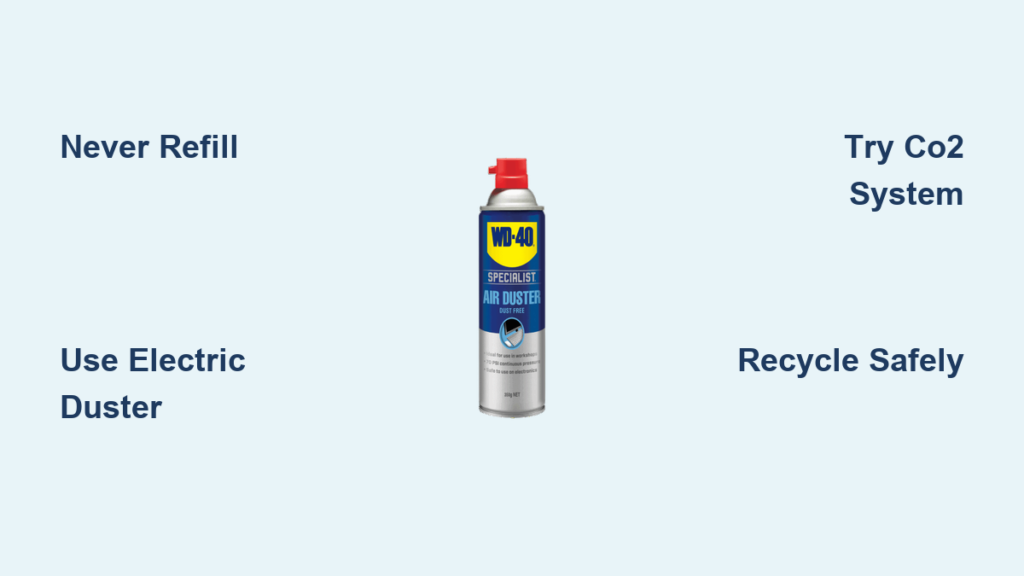
You’ve searched “how to refill air duster can” because disposable cans seem wasteful and expensive. Maybe you’re tired of buying new $10 cans every few months for computer cleaning. But here’s the critical truth: refilling standard disposable air duster cans is extremely dangerous and never safe for home users. These single-use containers lack the structural integrity for repeated pressurization, putting you at serious risk of explosion. The thin metal walls fatigue after first use, and attempting to refill them could send shrapnel flying at 100+ mph. Instead of risking injury, this guide reveals why professional refill systems cost thousands, exposes the hidden dangers DIY tutorials ignore, and details the three truly safe alternatives that actually save you money long-term. You’ll learn exactly how electric dusters outperform disposables, why CO₂ systems beat “refilling,” and how to safely use disposables until you make the switch.
Why Your Air Duster Can Refill Attempt Could Explode in Your Hands
Disposable air duster cans operate at 90-100 PSIG pressure when full—nearly double standard tire pressure. Their lightweight aluminum construction is engineered for one pressurization cycle only. When you attempt how to refill air duster can projects, you ignore critical physics: metal fatigue weakens the can after initial depressurization. A single refill cycle can create microscopic cracks that fail catastrophically under pressure.
Over-Pressurization: The Silent Killer in DIY Air Duster Refills
Home refill attempts using CO₂ cartridges or makeshift adapters often exceed safe pressure limits. Unlike professional systems with precision regulators, DIY methods lack pressure monitoring. Overfilling by just 10% can generate 150+ PSIG—enough to rupture the can. These explosions propel metal fragments like shrapnel, causing severe lacerations or eye injuries. Even “successful” refills create unstable pressure differentials; a slight temperature change (like leaving the can in a warm car) can trigger spontaneous detonation later.
Contamination Risks: How One Mistake Ruins Electronics and Safety
Moisture or oil entering the can during refill reacts violently with propellants like HFC-134a. This creates corrosive acids that eat through internal seals, leading to sudden valve failure. Worse, contaminated air dusters spray liquid propellant onto electronics—causing short circuits or frostbite on contact with skin. Standard disposable cans contain bitterants to prevent inhalation abuse; introducing foreign substances compromises this critical safety feature.
The Professional Air Duster Refill Process (And Why You Can’t Do It)
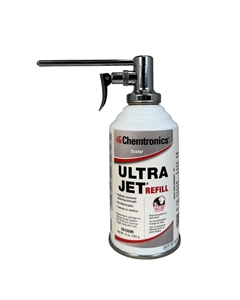
You might find YouTube videos claiming “easy” refill methods, but legitimate refilling requires industrial-grade infrastructure most users can’t access. Understanding why reveals why how to refill air duster can searches lead to dangerous shortcuts.
Equipment Required: Why $1000 Systems Aren’t for Home Use
True refilling demands:
– High-pressure gas cylinders (nitrogen or CO₂) with dual-stage regulators maintaining ±1 PSI accuracy
– Vacuum purge systems to remove all residual propellant and moisture
– Precision scales measuring to 0.1g increments (critical since 10oz cans hold just 300g propellant)
– Hydraulic crimper machines to reseal valves after filling
– Pressure testing chambers to verify integrity at 150% operating pressure
This $2,000+ setup requires commercial licensing, certified training, and explosion-proof facilities—far beyond garage capabilities. Even professionals rarely refill disposables because new cans cost less than the labor and gas.
Cost vs. Risk: Why Refilling Costs More Than 50 New Cans
Let’s crunch the numbers: A single 10oz can costs $6-12. Professional refill services (if available) charge $8-15 per can due to equipment overhead. Meanwhile, a quality electric duster costs $60—one-time—and pays for itself after avoiding 10 disposables. Attempting DIY refills risks $10,000+ in medical bills from an explosion versus simply buying a reusable system. The math is undeniable: searching how to refill air duster can is a false economy.
Electric Air Dusters: The $60 Solution That Ends Your Refill Searches
Forget refilling disposable cans—electric dusters deliver unlimited, safer cleaning at a fraction of the long-term cost. These aren’t glorified fans; they’re precision tools engineered for electronics maintenance with critical advantages disposables can’t match.
How Electric Dusters Deliver Unlimited, Frost-Free Air for Electronics
Unlike disposable cans that spray freezing -60°F propellant (risking thermal shock to components), electric dusters expel ambient-temperature air at 25-40 CFM. Models like the Metro DataVac feature HEPA filters that capture dislodged dust instead of redistributing it. With 100-200W motors, they maintain consistent pressure for continuous use—no “canned air hiss” as pressure drops. Crucially, they eliminate inhalation risks since they use no chemical propellants.
3 Top-Rated Electric Dusters for Home Users (2024)
- Metro 400-Watt DataVac ($75): The gold standard for PC cleaning. 35 CFM airflow, 5-foot cord, and a crevice tool kit. Its industrial motor lasts 10+ years.
- Opolar Cordless Duster ($55): Rechargeable lithium-ion battery (20-minute runtime), ideal for quick keyboard cleanings. Weighs just 1.2 lbs.
- XPOWER A-3 ($85): Dual-speed control (15/30 CFM) with washable pre-filter. Quieter (62 dB) for office use.
All three pay for themselves in 6-12 months versus disposables. For the average home user cleaning quarterly, that’s $120+ saved over five years.
CO2 Systems: When You Need Industrial Power in a Portable Package

For heavy-duty cleaning (like workshops or server rooms), portable CO₂ systems offer refillable convenience without the risks of modifying disposable cans. These use standardized refillable tanks—not disposable canisters.
Paintball Tank Hacks for Safe, Effective Air Duster Refills? (Spoiler: Not Really)
Forget modifying disposable cans—real solutions use 20oz paintball CO₂ tanks ($25) with dual-gauge regulators ($35). Attach a blowgun nozzle ($10), and you have 45+ minutes of cleaning per tank. Refills cost $5-8 at sporting goods stores. Crucially, these tanks are hydrostatically tested to 3,000 PSI—15x safer than disposable cans. Never attempt to refill a disposable can with a paintball adapter; mismatched threads cause leaks and explosions.
The Real Cost: CO2 Refills vs. Disposable Cans Over 2 Years
| System | Initial Cost | Annual Refill Cost | 2-Year Total |
|---|---|---|---|
| Disposable Cans | $0 | $120 (12 cans) | $240 |
| CO₂ Paintball System | $60 | $40 | $140 |
| Electric Duster | $75 | $5 (electricity) | $85 |
CO₂ systems save 40% over disposables, but electric dusters save 65%. For occasional users, CO₂ makes sense; for regular cleaning, electric is unbeatable.
How to Stretch Disposable Can Life Without Refilling (Safely)

If you haven’t switched yet, maximize safety and value with these pro-tested techniques. Never search how to refill air duster can—instead, use disposables correctly until you upgrade.
4 Rules to Prevent Frostbite and Electronics Damage
- Hold upright at all times: Tilting sprays liquid propellant (-60°F), freezing circuits or skin on contact.
- Use 2-second bursts: Continuous spraying cools the can below -40°F, reducing pressure and effectiveness.
- Warm cold cans in lukewarm water: Never use heaters or flames—this risks explosion.
- Shake minimally: Agitation causes liquid discharge. Tap gently if clogged.
The Right Way to Recycle Empty Air Duster Cans
Depressurize completely by holding the trigger until no hiss remains (may take 30+ seconds). Take to hazardous waste facilities—never regular recycling. Many office supply stores (Staples, Best Buy) accept them for proper disposal. This prevents landfill explosions and recovers aluminum.
Stop Searching “How to Refill Air Duster Can” – Do This Instead
The dangerous myth that you can safely refill disposable air duster cans persists because no one explains the physics of metal fatigue or the $2,000 professional equipment required. But the truth is clear: how to refill air duster can isn’t a DIY project—it’s a hazard with no safe home method.
The 12-Month Payback: How Reusable Systems Save $150+
Switching to an electric duster pays for itself after just 10 disposables avoided ($60 investment vs. $600+ in 5 years of disposables). For professionals using 20+ cans yearly, CO₂ systems save $200 annually. Even occasional users break even within 18 months. Plus, you eliminate explosion risks and reduce waste by 90%.
Your Action Plan: Switch Today and Never Worry About Empty Cans Again
- For home users: Buy a Metro DataVac ($75)—it handles 95% of cleaning needs.
- For portability: Get the Opolar Cordless ($55) for quick cleanings.
- For workshops: Pair a 20oz CO₂ tank ($25) with regulator ($35).
- Recycle existing disposables properly before switching.
Stop risking injury with dangerous “refill” hacks. Investing in a reusable system takes 5 minutes but protects you for decades. That empty air duster can in your drawer? It’s your last one—today’s the day to upgrade to safe, unlimited cleaning power.