
Rainy days or creative cravings hit hard when you’re stuck indoors. You need a quick, satisfying project that sparks joy without draining your wallet. Learning how to make a camping tent out of paper solves this perfectly—it’s a tactile escape that transforms ordinary cardstock into a miniature wilderness world. Forget flimsy printer paper disasters; with the right techniques, you’ll craft a sturdy A-frame or tepee that stands proudly on your desk. This guide cuts through guesswork with battle-tested methods from paper engineers, revealing exactly how to build, reinforce, and decorate a realistic tent model. Whether you’re crafting a diorama centerpiece, teaching kids geometry through play, or prepping for a scout-themed party, you’ll finish with a display-worthy creation in under 30 minutes.
Selecting Sturdy Cardstock and Precision Tools for Paper Tents
Your paper choice makes or breaks structural integrity. Cardstock between 65-110 lb weight is non-negotiable for free-standing tents—it bends crisply without tearing and resists buckling under its own weight. Avoid printer paper entirely; its 20-24 lb flimsiness guarantees collapse. For tepees or tiny models, heavyweight origami paper (70-100 gsm) works, but skip construction paper—it warps when glued.
Must-have tools transform frustration into finesse:
– Scoring essentials: A metal ruler and bone folder (or capped ballpoint pen) create razor-sharp folds by compressing paper fibers before bending.
– Adhesive strategy: Thin white PVA glue (like Elmer’s) for structural seams—apply with a toothpick for precision. Reserve glue sticks only for non-critical flaps.
– Cutting accuracy: Self-healing mat + sharp craft knife > scissors for straight edges. Dull blades cause jagged tears that weaken joints.
Pro Tip: Test your cardstock’s grain direction first. Fold a scrap with the grain (parallel to the paper’s long edge)—it bends smoothly. Folding against it causes cracking. Always align tent ridgelines with the grain.
Why Cardstock Weight Matters for Stability
Lightweight paper tents buckle under decoration weight or minor bumps. At 80 lb, cardstock provides the sweet spot: thick enough to hold shape when scored, thin enough to fold cleanly. For display pieces meant to last years, laminate two 65 lb sheets with perpendicular grains—this cross-hatching prevents warping.
Step-by-Step: Constructing a Free-Standing A-Frame Paper Tent

This iconic design mimics real camping tents using pure geometry. Start with an 8.5″ x 5.5″ cardstock rectangle—ideal for tabletop displays. Precision here prevents wobbly bases later.
Marking and Scoring the Ridgeline
- Find the exact center of the 8.5″ top edge (4.25″ from either side) and mark a dot.
- Draw lines from this dot to both bottom corners with a pencil—forming an “X” that divides your rectangle into two triangles and two side panels.
- Score firmly along these diagonal lines using a ruler and bone folder. Never skip this: un-scored folds create weak, rounded ridges that collapse.
Assembling the Prism Structure
- Apply a thin PVA glue line along one side panel’s vertical edge (not the diagonals).
- Bring the long edges together to form a tube, ensuring the “X” faces outward. The bottom points of the triangles should align perfectly with the base.
- Press the glued seam and clip with paperclips for 90 seconds. The tent must stand upright immediately—if it sags, you scored too lightly or used weak adhesive.
Adding a Functional Door Flap
Cut a 4″ x 2.5″ rectangle from scrap cardstock. Make a vertical slit halfway down its center to create two flaps. Glue only the top ¼” to the inside front panel—this lets doors swing open realistically. For authenticity, draw a zipper pull with a fine-tip marker before attaching.
Folding a No-Cut Paper Teepee Without Glue
When speed matters, this origami method delivers in 60 seconds flat. Use a 7″ x 7″ square of cardstock—no cutting, no glue, pure folding.
Inflating the Tepee Structure
- Fold the square diagonally into a triangle, then unfold to reveal a center crease.
- Fold top corners down to meet the center line, forming a smaller diamond shape.
- Flip the model over. Fold bottom corners up to create triangular flaps.
- Tuck these flaps into the front pockets, then gently blow into the base hole to inflate the 3D cone.
Securing the Base for Stability
Trim ¼” off the bottom edge with scissors so it stands level. For outdoor dioramas, glue the base to a 2″ cardboard circle—this prevents tipping when adding miniature campfires or figurines. Draw vertical “pole” lines with a brown marker for instant realism.
Installing Functional Doors and Realistic Tent Details
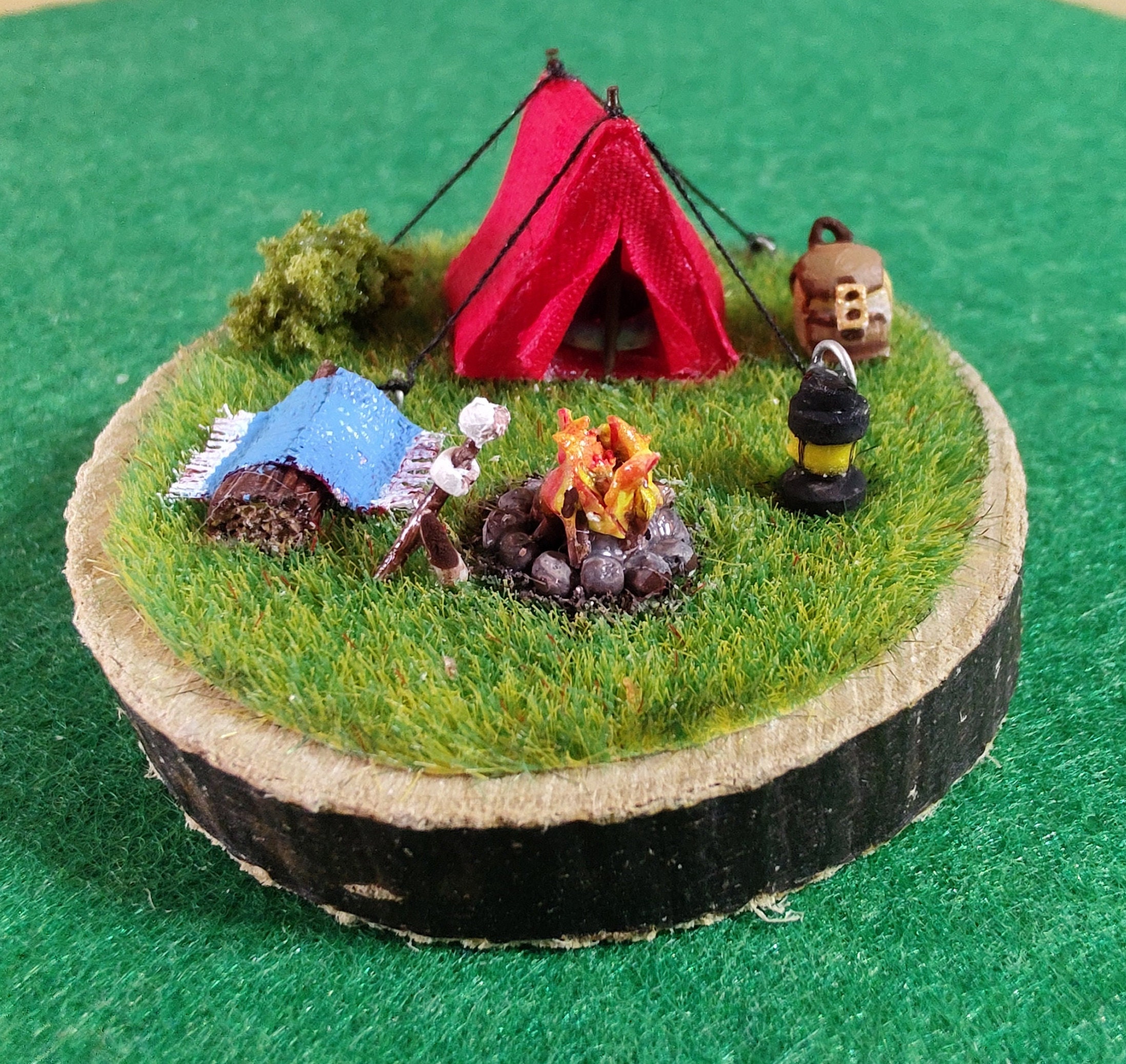
Pre-decoration prevents misaligned windows after assembly. Paint or draw details BEFORE folding—once glued, corrections are impossible.
Essential Realism Upgrades
- Zippers and seams: Use a 0.3mm black pen to trace stitching lines along edges. Add a tiny silver dot for the zipper pull.
- Guy lines: Punch micro-holes at each tent peak with a pin. Thread embroidery floss through, anchoring ends to toothpick “stakes” glued 2″ from the base.
- Ground cover: Glue a 1″ x 3″ strip of green felt along the interior base—it hides messy seams and mimics a footprint tarp.
Pro Tip: For weathered tents, dab watered-down brown paint along edges with a toothbrush. Let dry before final assembly—wet paper warps.
Preventing Collapse: Reinforcement Methods for Paper Tents

Flimsy tents frustrate 90% of beginners. These fixes take 2 minutes but double longevity.
Corner Gussets for Instant Rigidity
Cut two 1″ x 1″ cardstock triangles. Glue one inside each front/back corner where walls meet the base. This triangular bracing distributes weight like real tent poles. For heavy decorations, sandwich the gusset between two paper layers.
Weighted Base Solutions
- Tabletop stability: Glue the tent to a 3″ x 5″ matte board rectangle painted like grass.
- Diorama durability: Embed rice grains under the base glue—they add invisible weight without bulk.
- Critical warning: Never use hot glue—it warps paper. Thin PVA applied with a toothpick is the only safe adhesive.
Painting and Customizing Your Miniature Camping Scene
Transform your tent from basic to breathtaking with these pro techniques.
Creating Depth with Layered Details
- Base layer: Wash cardstock with diluted watercolor (e.g., tan for canvas, green for nylon).
- Mid layer: Add fabric texture using a dry-brush technique—lightly drag a nearly-dry brush sideways.
- Top layer: Accent seams and zippers with metallic pens for 3D pop.
Building a Complete Campsite
- Fire pit: Twist red/yellow tissue paper around a toothpick base.
- Trees: Dip pinecone tips in green paint for instant foliage.
- Pathway: Glue coarse sand between tents for a realistic trail.
Fixing Common Paper Tent Construction Mistakes Immediately
When Walls Won’t Stand Straight
Cause: Uneven scoring or off-center peak marking. Fix: Unfold gently, re-score along the ruler-guided line, then reassemble. Use a protractor to verify 90-degree base angles.
Glue Stains Ruining Your Finish
Cause: Excess adhesive seeping through paper. Prevention: Apply glue only to one surface with a toothpick. Wipe spills instantly with a cotton swab dipped in water.
Scaling Up: Building Larger Paper Tents for Displays
For centerpiece-sized tents (12″+ tall), upgrade to 110 lb cardstock and reinforce strategically.
Structural Upgrades for Big Models
- Internal skeleton: Glue 1/8″ balsa wood strips along ridgelines before assembly.
- Multi-panel design: Divide the tent into 3 sections (front, middle, back) for easier handling. Join with fabric tape hinges.
- Waterproof illusion: Spray finished tents with matte clear coat—it adds sheen like rainproof fabric.
Beyond Decoration: Practical Applications of Paper Camping Tents
These aren’t just crafts—they’re functional tools:
– Scout training: Teach knot-tying by attaching real paracord guy lines to paper stakes.
– Event decor: Line reception tables with tents holding place cards—add LED tea lights inside.
– STEM education: Demonstrate load distribution by testing how many coins each tent holds before collapsing.
Mastering how to make a camping tent out of paper blends artistry with engineering in the most satisfying way. You now have the exact blueprint to build A-frames that stand rock-solid, tepees that fold flawlessly, and dioramas that spark wanderlust. Remember the golden rules: score before folding, reinforce corners immediately, and decorate pre-assembly. Within an hour, you’ll transform humble cardstock into a miniature wilderness escape that holds memories (and maybe a few toy adventurers). Grab your bone folder and start crafting—your perfect paper campsite awaits. For next-level projects, try scaling up with corrugated cardboard or adding solar-powered micro-lights to your tent interior.