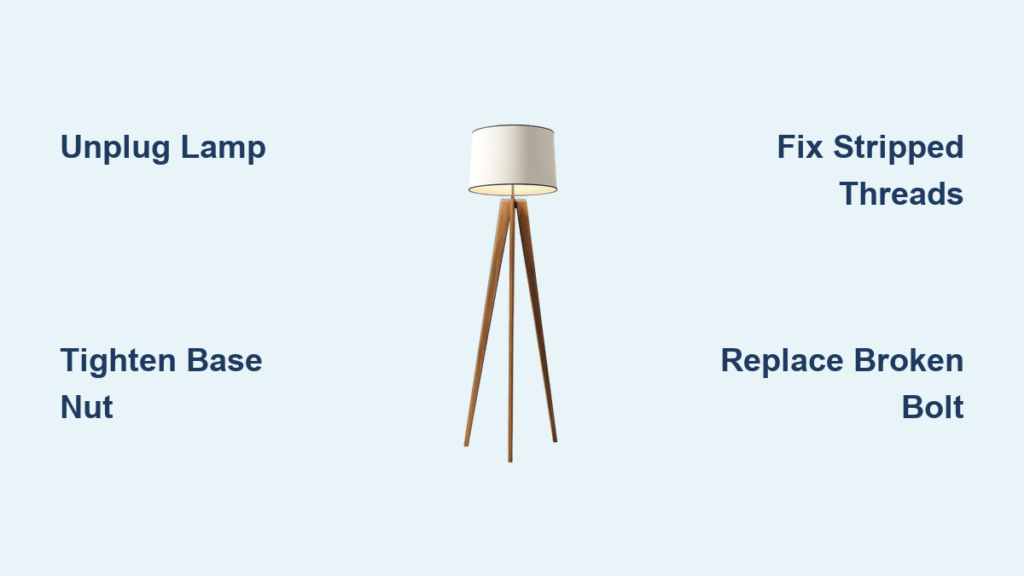
That annoying lean where your floor lamp lists like the Tower of Pisa isn’t just unsightly—it’s a safety hazard waiting to happen. When your once-sturdy lamp wobbles dangerously every time you adjust the shade or brush against it, you’re facing a critical structural failure. This how to fix leaning floor lamp guide delivers proven solutions from quick 5-minute fixes to permanent repairs, using tools you likely already own. I’ll show you exactly how to diagnose whether it’s stripped threads, a broken bolt, or loose connections causing the tilt—and most importantly, how to stabilize it safely without damaging your lamp or risking electrical hazards. By the end, you’ll have actionable steps to restore rock-solid stability whether you’re dealing with a $20 IKEA special or a vintage designer piece.
Why Your Floor Lamp Suddenly Started Leaning (Diagnosis)
Your floor lamp didn’t develop that dangerous tilt overnight—it’s the result of cumulative stress on its weakest point: the base-to-pole connection. This critical junction bears constant strain from accidental bumps, frequent adjustments, and gravity’s relentless pull. When you notice the lean, immediately unplug the lamp and remove the shade and bulb. Now test the connection: grip the pole firmly near the base and try to rotate it clockwise. If the pole spins freely while the base stays put, you’ve got stripped threads—the most common culprit. If the entire base wobbles on the floor, check for uneven surfaces or a warped base plate.
Spot these telltale signs:
– A loud click when tightening the base nut (indicates stripped threads)
– Visible gaps between the pole and base housing
– Metal shavings around the connection point
– The pole sinking lower into the base over time
Don’t waste time tightening further if the nut spins without resistance—that’s actively worsening the damage. Stripped threads occur when the original bolt or threaded rod can no longer “bite” into the base’s internal threads, usually from repeated assembly/disassembly or using incorrect tools. For lamps with set screws instead of threaded rods, check if the screw head is stripped or if the metal around the screw hole is deformed.
Critical Safety Steps Before Fixing a Leaning Floor Lamp
⚠️ Unplug the lamp immediately—this isn’t just advice, it’s non-negotiable. Electrical components become exposed during disassembly, and a single live wire contact could cause severe shock. Next, identify your lamp’s specific connection type since repair methods vary drastically. Most modern lamps use one of three systems: a central threaded rod with a large decorative nut, side-mounted set screws, or a bolt-through pole design.
For threaded rod lamps (most common), locate the nut where the pole meets the base—it’s usually hidden under a decorative cap. Gently pry off the cap with a flathead screwdriver to expose the hardware. For set-screw models, inspect the base collar for small hex screw heads spaced evenly around the pole. Never force connections—if a nut resists turning after light pressure, you’re likely dealing with stripped threads, not just tightness. Working on a soft surface like carpet or cardboard prevents scratches, and keeping all removed parts in a labeled container avoids frustrating “where did that tiny washer go?” moments mid-repair.
How to Tighten a Loose Floor Lamp Base Connection in 4 Steps
If your lamp merely needs tightening (no spinning nut or visible damage), this 5-minute fix restores stability immediately. Lay the lamp sideways on a towel to protect finishes. For threaded rod models, grip the pole firmly with one hand while turning the base nut clockwise with an adjustable wrench—never turn the pole alone, as this stresses internal wiring. If your lamp uses set screws, tighten each screw incrementally in a star pattern (like lug nuts on a car wheel) to distribute pressure evenly.
Critical technique: After initial tightening, stand the lamp upright and check stability. If it still wobbles slightly, apply gentle downward pressure on the pole while re-tightening—this seats the connection properly. For stubborn looseness, add grip by wrapping the nut with a rubber band before applying the wrench. Test stability by applying light pressure to the shade; if it holds firm without shifting, your quick fix succeeded. Never overtighten—excessive force cracks base housings or strips threads permanently.
Repairing Stripped Threads on Your Floor Lamp Base (With Epoxy)

When tightening does nothing because the threads are stripped, plumber’s tape provides a temporary fix, but epoxy creates permanent stability. Start by completely disassembling the connection: remove the pole from the base and clean both threaded sections with isopropyl alcohol to remove grease and debris. For the quick tape method, wrap 5-6 layers of PTFE tape clockwise around the male threads (pole end), then reassemble and tighten—this fills thread gaps for immediate stability.
For a guaranteed permanent fix: Mix steel-reinforced epoxy putty (like J-B Weld SteelStik) to a marble-sized portion. Apply a thin layer inside the base’s threaded socket, then coat the pole’s threads before reinserting. Screw the pole in slowly to its upright position—stop before full depth to avoid epoxy squeezing into the lamp’s interior. Wipe excess with a paper towel, then let cure 24 hours undisturbed. This creates custom-molded threads that outlast the original hardware. Pro tip: Insert a toothpick into the epoxy as an alignment guide so you can easily unscrew the pole after curing if future bulb changes are needed.
Replacing a Broken Floor Lamp Bolt: A Step-by-Step Guide
If the threaded rod snapped inside the base (leaving the pole detached), this repair replaces the entire bolt. First, extract the broken piece: clamp locking pliers onto any exposed rod stub and twist counterclockwise. For deeply embedded breaks, drill a small pilot hole into the rod fragment, then use an “easy out” extractor bit. Visit a hardware store with the broken piece to match bolt size—most lamps use 1/4″ or 5/16″ diameter rods.
Critical replacement steps:
1. Insert the new threaded rod through the pole’s center channel
2. Apply blue thread-locker (removable type) to the rod’s lower 1.5 inches
3. Screw the rod into the base by hand until snug
4. Tighten with pliers while holding the pole steady
5. Reattach the base nut and decorative cap
If the base threads are damaged during extraction, install a helical thread insert (Heli-Coil): drill out the damaged section to the insert’s size, tap new threads, then screw in the insert with the provided tool. This creates durable threads that outlast the original design. Always test stability before reassembling the shade—apply firm pressure to the top of the pole to simulate real-world use.
When Your Floor Lamp Base Is Cracked: Repair or Replace?

A cracked base compromises structural integrity beyond thread issues. Run your finger along the base’s bottom edge—any roughness or light showing through indicates a fracture. Small hairline cracks in metal bases can be stabilized with two-part epoxy: roughen the area with sandpaper, apply epoxy mixed with metal filings, then clamp until set. But stop immediately if you see these danger signs:
– Cracks radiating from mounting holes
– Base separation when lifted
– Visible bending or warping
– Electrical components exposed
For cracked plastic bases, replacement is usually cheaper than repair since epoxy won’t withstand long-term stress. Measure your base diameter and pole size to find compatible replacements online—many universal bases cost under $15. When installing a new base, wrap the pole’s connection point with electrical tape before epoxy application to prevent adhesive contact with wiring.
Preventing Future Floor Lamp Leans: 3 Maintenance Habits
A repaired lamp won’t stay stable without proactive care. Implement these habits to prevent recurrence: First, tighten connections every 3 months—not just annually—as vibrations from daily use gradually loosen fittings. Do this by gently rotating the pole clockwise while the lamp stands upright; if it moves more than 1/8 inch, tighten the base nut slightly. Second, always move lamps by the base, never the pole—lifting by the pole creates leverage that stresses threads. Third, place anti-slip pads under the base on hard floors; this prevents micro-movements that accelerate thread wear. For tall lamps, add weight to the base using hidden sandbags or steel washers secured with epoxy—this counters top-heaviness without altering aesthetics.
Final Checklist: Tools and Steps Before You Begin Repairing
- [ ] Lamp unplugged for at least 10 minutes (safety first!)
- [ ] Correct wrench size tested on base nut (usually 11/16″ or 3/4″)
- [ ] PTFE tape and steel-reinforced epoxy putty purchased
- [ ] Soft work surface prepared (towel or cardboard)
- [ ] Broken hardware brought to hardware store for matching
- [ ] Electrical tape on hand for wire protection during disassembly
When to Call a Professional Instead of DIY
Stop your repair attempt immediately if you encounter frayed wiring, cracked sockets, or base damage extending into electrical compartments—these require professional rewiring. Antique or high-value lamps (over $200) deserve specialist restoration to preserve value; search for “lamp restoration specialist” in your area. If your repair attempts failed twice using proper epoxy methods, the base material may be too degraded for adhesion—replace the entire lamp when repair costs exceed 40% of a new unit’s price. Remember: no lamp is worth risking electrocution or fire hazards. When in doubt, consult an electrician—most charge under $75 for a safety assessment.
A leaning floor lamp signals a fixable structural flaw, not a death sentence for your lighting. By diagnosing whether you’re facing loose connections, stripped threads, or broken components, you’ve already won half the battle. Implement the specific repair matching your symptoms—using the epoxy method for stripped threads or bolt replacement for snapped rods—and reinforce stability with quarterly maintenance. Within 30 minutes using common household tools, you can transform that wobbly hazard into a rock-solid fixture. Now that your lamp stands tall again, rotate the shade to your favorite angle and enjoy steady, reliable light without that nagging fear of an accidental topple.