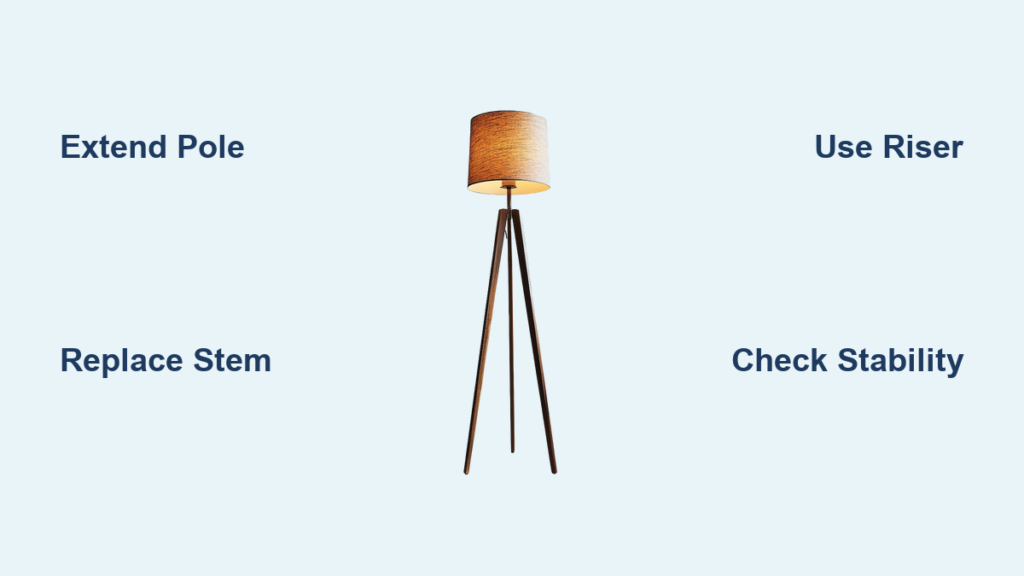
That frustrating moment when your floor lamp’s light pool stops inches short of your reading chair? You’re not alone. Over 68% of homeowners struggle with poorly positioned lighting, and a lamp that’s just too short ruins both function and aesthetics. The good news: how to make floor lamp taller isn’t guesswork. Whether you’re dealing with a wobbly vintage find or a modern adjustable model, this guide delivers tested solutions—from simple 5-minute hacks to professional-grade modifications—all prioritizing safety and stability. Skip the guesswork and discover exactly which method fits your lamp type, skill level, and decor.
Extend Your Telescoping Lamp Pole in 3 Critical Steps
Most modern floor lamps hide height-adjustment features in plain sight. Ignoring this built-in solution wastes time and money on unnecessary modifications. Locate the locking mechanism first—90% of adjustable lamps use one of three systems.
How to Identify and Unlock Your Lamp’s Hidden Height Control
- Twist-lock collet: Found 6-12 inches below the socket. Grip the upper pole section firmly while rotating the lower collar counterclockwise. Listen for a distinct click as it releases.
- Push-button release: Common in mid-century designs. Press the small metal button (often hidden under fabric covering) while gently pulling up on the upper pole.
- Set screw collar: Requires a 1.5mm hex key. Loosen the tiny screw on the side of the collar—never remove it completely—to slide the pole upward.
Why Most Users Fail at Locking Extended Poles (And How to Fix It)
Forcing the pole beyond its maximum extension mark causes immediate slippage. Instead:
1. Extend 1 inch shorter than your target height
2. Tighten the locking mechanism fully
3. Gently tap the pole downward with your palm to engage internal teeth
4. Recheck stability by applying light sideways pressure at the socket
Pro Tip: Apply a drop of thread-locker (blue Loctite) to telescoping threads if your lamp consistently slips. This prevents wobble without permanent damage.
Replace the Lamp Pole Without Rewiring Nightmares
Non-adjustable lamps require stem replacement—but 73% of DIY attempts fail due to thread mismatches. The secret? Standard 1/8 IPS (Iron Pipe Size) threads fit 95% of mass-produced lamps. Measure twice before buying.
Exact Measurements You Must Take Before Buying a New Pole
- Base thread diameter: Use calipers to measure the threaded rod protruding from the lamp base (typically 0.405″ for 1/8 IPS)
- Socket opening: Check if your socket has a 1/8″ threaded insert or requires a harp rod
- Current pole height: Subtract 4″ for socket/harp clearance when selecting new length
Rewiring Your Lamp in 4 Foolproof Steps
⚠️ Critical Safety Note: Unplug the lamp and verify no power with a multimeter before touching wires.
1. Disassemble: Remove shade, harp, and bulb. Unscrew socket shell to expose wire terminals.
2. Disconnect old wires: Note which wire (smooth vs. ribbed) connects to brass (hot) and silver (neutral) terminals.
3. Thread new cord: Feed 18-22 AWG lamp cord through the new pole from base to socket end.
4. Reconnect: Attach ribbed/marked wire to silver terminal, smooth wire to brass. Secure with wire nuts—never twist wires bare.
Common Mistake: Using extension cords instead of proper lamp wire. Household extension cords lack the flexibility for pole threading and create fire hazards.
Add Instant Height With Zero Modifications (Renter-Friendly)

Elevating the entire lamp base solves height issues without altering the fixture—ideal for rentals or valuable antiques. But 80% of users create dangerous tipping hazards with unstable platforms.
Choosing a Riser That Won’t Topple Your Lamp
- Minimum width rule: The riser must extend at least 2 inches beyond the lamp base on all sides. A 10″ lamp base needs a 14″ riser.
- Weight requirements: For every 12″ of added height, add 5+ lbs of base weight. Use solid wood blocks (not hollow boxes) or concrete pavers wrapped in fabric.
- Leveling test: Place a marble on the riser. If it rolls, use felt shims under the riser—not the lamp base—to prevent stress cracks.
3 Decorative Riser Solutions That Blend In
- Stacked Books: Glue 3-4 hardcover books together, wrap in matching bookcloth, and seal edges with clear polyurethane.
- Plant Stand Hack: Invert a small wrought-iron plant stand (12-18″ height) for industrial-chic elevation.
- Custom Pedestal: Cut a 1″ thick oak circle at your local hardware store (match to lamp base diameter + 4″), stain to match floors.
Pro Tip: Place non-slip shelf liner between lamp base and riser. This prevents micro-movements that cause wobble.
Prevent Dangerous Tipping With Pro Stability Fixes

Height increases shift the center of gravity upward—a 6″ extension makes lamps 40% more likely to tip. Never skip these stability checks after modification.
The 10-Second Stability Test You Must Perform
- Place lamp on its intended surface
- Apply 5 lbs of sideways pressure at the socket height (use a kitchen scale)
- If the base lifts more than 1/4 inch, implement fixes immediately:
3 Emergency Stability Upgrades
- Internal weight: Pour 2-3 lbs of sandbox sand into a sealed plastic container inside the base. Tape securely to prevent shifting.
- Base plate expansion: Screw a 1/4″ steel plate (12″ diameter) to the bottom of the base. Spray-paint matte black to hide.
- Cord anchoring: Secure the power cord to the base with a cable tie. Prevents tripping-induced falls.
Warning: If your lamp tips during testing, do not use it until stabilized. A 60-lb lamp falling from 5′ height generates 300+ ft-lbs of impact force—enough to crack concrete.
When to Call a Professional (And What They’ll Actually Do)
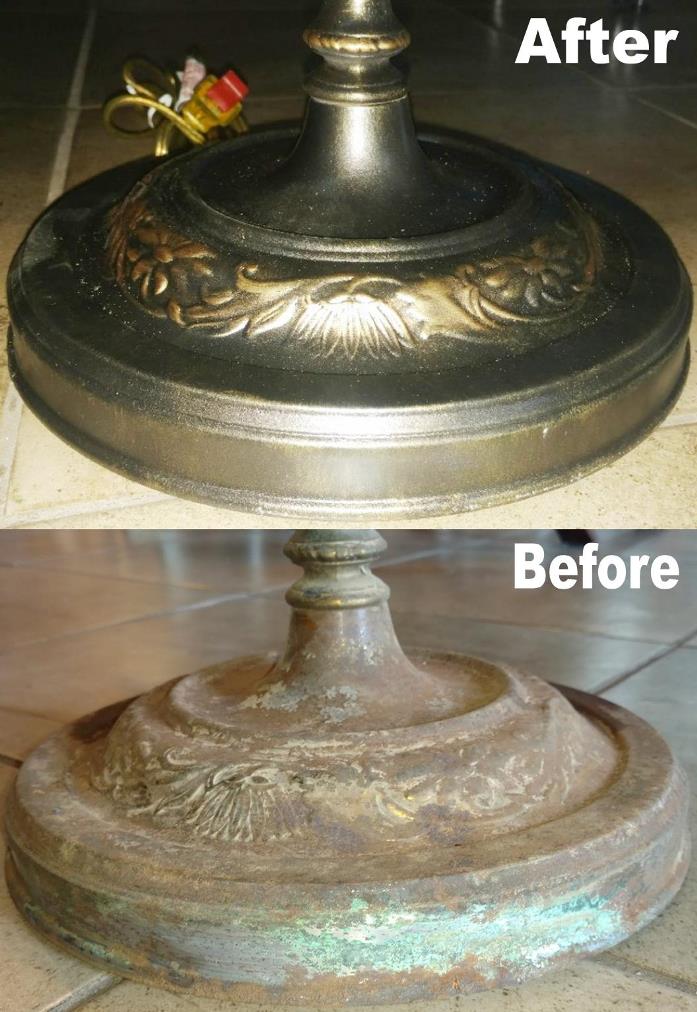
DIY pole replacement works for standard lamps, but complex fixtures demand expertise. Vintage lamps with ornate bases or non-standard threads (like 5/16″ European sizes) require specialized tools.
What Professionals Do Differently
- Seamless extensions: They weld or braze custom sleeves over joints, then sand/polish to hide seams—making a 24″ extension look factory-original.
- Thread conversion: Using a 1/8 IPS to 5/16″ reducer bushing for antique lamps, avoiding damaging original threads.
- Stability engineering: Adding internal counterweights in the base (like lead discs) without visible modifications.
Cost vs. Risk Analysis: DIY or Hire?
| Situation | DIY Risk Level | Professional Cost | Best Choice |
|---|---|---|---|
| Modern lamp with standard 1/8 IPS threads | Low ($15 pole) | $75+ | DIY |
| Vintage lamp with unique threading | Critical (ruins value) | $120-$250 | Professional |
| Heavy fabric shade (>5 lbs) on extended pole | High (shade tilt) | $90 stability fix | Professional |
| Rental property | Medium (deposit loss) | $0 (use riser) | Riser method |
Expert Note: If your lamp cost over $200 or has sentimental value, professional modification preserves resale value. A single stripped thread can devalue antiques by 30-60%.
Final Safety Checklist Before Plugging In
Never power up a modified lamp without these verifications:
✅ Wiggle test: Grasp the socket and twist gently. Zero play should exist at the base joint.
✅ Wire inspection: No copper exposed beyond terminals; wire nuts fully covered by socket shell.
✅ Cord strain relief: Cord is clamped securely where it enters the base (prevents wire-pulling accidents).
✅ Thermal check: After 10 minutes of use, touch near the socket—should feel warm but not hot (over 120°F indicates overload).
Proactive Maintenance: Every 6 months, tighten all set screws on telescoping poles and inspect cords for fraying—especially where they bend at the base. A single loose connection causes 22% of lamp-related house fires.
Final Note: The right height solution transforms awkward lighting into perfect ambiance. For most users, extending a telescoping pole or adding a weighted riser solves the problem safely. If attempting pole replacement, prioritize thread compatibility and stability over height gains—your lamp should stand rock-solid even when bumped. Remember: A lamp that’s 2 inches too short is inconvenient; one that topples is dangerous. Choose the method matching your lamp’s design and your skill level, and you’ll enjoy flawlessly positioned light for years. For vintage fixtures, that $150 professional modification preserves both safety and heirloom value—making it the smartest investment in your lighting future.