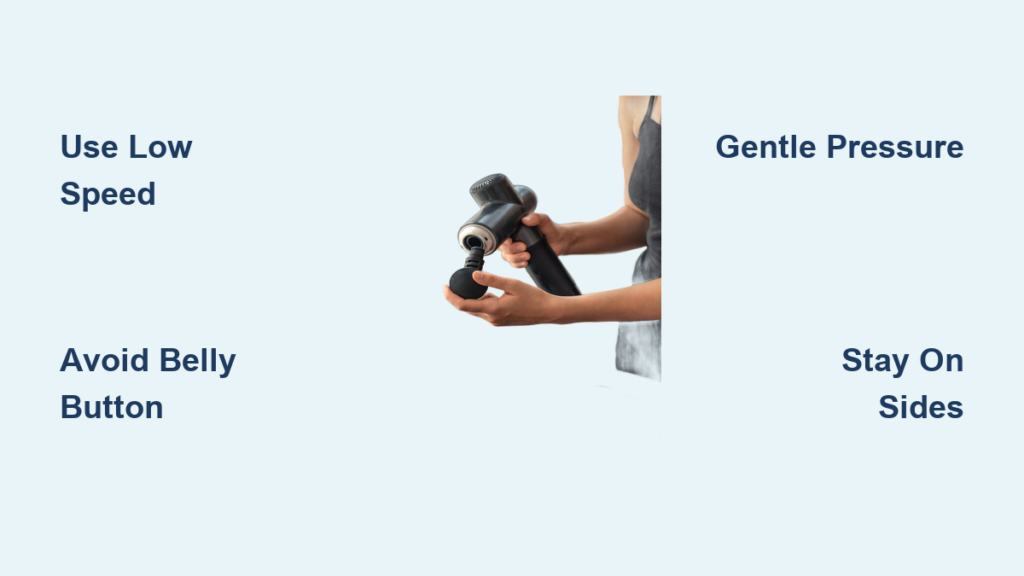
When your abdominal muscles feel tight after intense workouts or prolonged sitting, you might wonder if your massage gun can help relieve that stomach tension. Many fitness enthusiasts reach for their percussion massagers to soothe sore muscles, but the stomach area requires special attention due to its delicate nature and proximity to vital organs. Unlike targeting your quads or back, using a massage gun on stomach muscles demands a gentler approach with specific techniques to avoid discomfort or potential harm. This guide reveals the exact methods for safely applying percussion therapy to your core muscles while avoiding common mistakes that could turn relief into regret.
Most people mistakenly treat their stomach like any other muscle group, pressing too hard or using the wrong attachments. The reality is that your abdominal wall contains multiple layers of muscle surrounding sensitive organs, making improper technique potentially problematic. By following these precise steps, you’ll discover how to effectively release tension in your external obliques and rectus abdominis without risking injury—transforming your massage gun from a potential hazard into a valuable tool for core recovery.
Essential Safety Rules Before Using a Massage Gun on Stomach Muscles
Stop immediately if you experience nausea or sharp pain during abdominal massage—your body is signaling that something’s wrong. The stomach area isn’t designed for deep tissue work like your glutes or hamstrings, so understanding the boundaries is crucial before you even power on your device. Always consult with your healthcare provider before using a percussion massager on your abdomen if you have any pre-existing conditions, as this simple precaution prevents serious complications.
Why the Stomach Requires Different Treatment Than Other Muscle Groups
Your abdominal region contains vital organs protected by layers of muscle, making it fundamentally different from peripheral muscle groups. When you use a massage gun on stomach tissue, the percussion waves transmit through multiple layers before reaching your muscles, requiring significantly lighter pressure than elsewhere. The rectus abdominis (your “six-pack” muscles) and external obliques respond best to gentle, sweeping motions rather than the deep, focused pressure you’d apply to your quadriceps. Attempting deep tissue techniques on your core could cause internal discomfort or even bruising of delicate tissues.
Critical Conditions That Require Medical Clearance First
Never use a massage gun on your stomach if you have any of these conditions without explicit doctor approval:
– Pregnancy at any stage – The developing fetus needs protection from vibration
– Recent abdominal surgery (within 6 months) – Incisions need time to heal properly
– Active digestive disorders like Crohn’s disease or ulcerative colitis – Could trigger flare-ups
– Abdominal hernias – Increased pressure might worsen the condition
– Unexplained abdominal pain – Could indicate serious underlying issues
Step-by-Step Technique: How to Use Massage Gun on Stomach Safely
The correct approach transforms your massage gun from a potential hazard into a valuable recovery tool for your core muscles. Follow this exact sequence to maximize benefits while minimizing risks, whether you’re addressing post-workout soreness or general tension from daily activities.
Choosing the Right Attachment for Abdominal Work
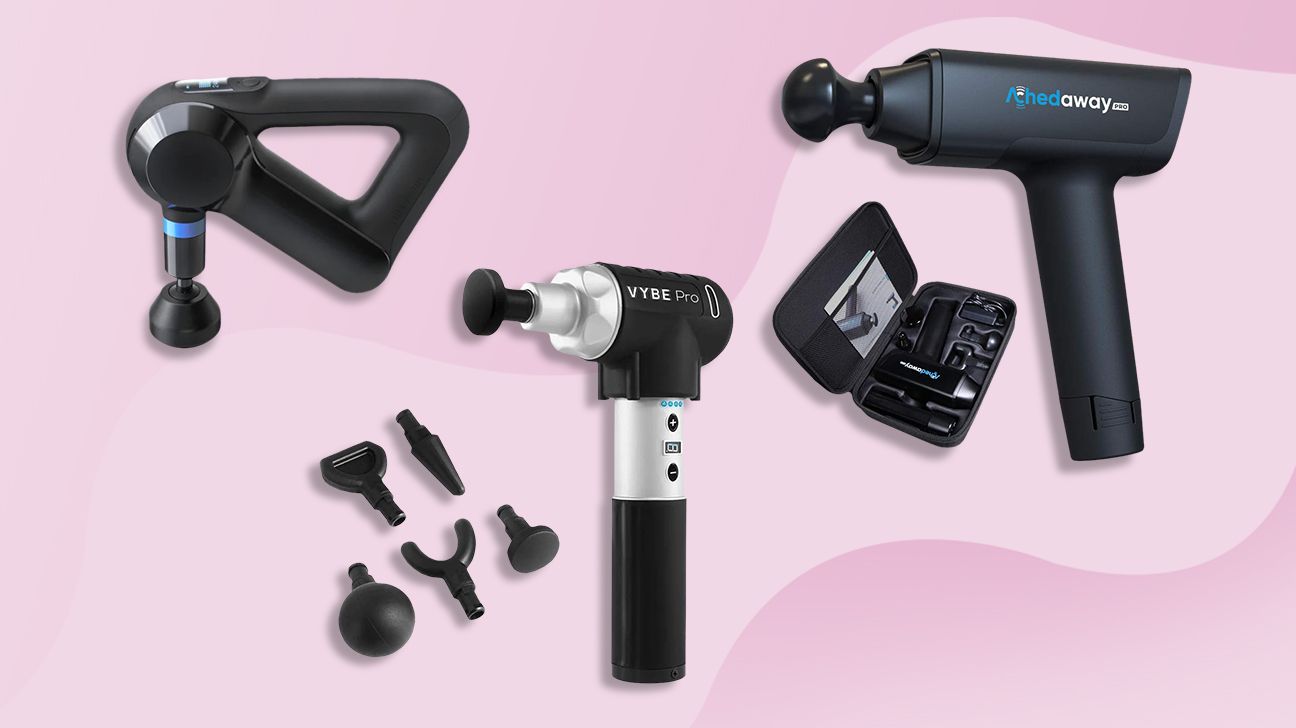
Your attachment selection makes or breaks the safety of stomach massage. The flat head or air cushion attachment provides the broad, gentle pressure distribution your abdominal muscles need. These wider surfaces spread the percussion force across more tissue, preventing concentrated impact that could cause discomfort. Never use bullet, ball, or fork attachments on your stomach—they’re designed for trigger points in thicker muscle groups and will be too intense for your core. If your device came with a soft silicone head specifically for sensitive areas, that’s your best option for stomach work.
Proper Positioning and Breathing Technique
Lie flat on your back on a firm surface with your knees bent and feet flat on the floor—this position relaxes your abdominal wall naturally. Place one hand on your chest and the other on your stomach to monitor your breathing. Begin with diaphragmatic breathing: inhale slowly through your nose for 4 seconds, feeling your stomach rise against your hand, then exhale through pursed lips for 6 seconds. Maintain this breathing pattern throughout your session, as relaxed muscles respond better to percussion therapy. Set your massage gun to the lowest speed setting before making contact with your skin.
Correct Hand Placement and Movement Patterns
Hold the massage gun at a 45-degree angle to your skin with minimal pressure—let the device’s weight do the work. Start on your right side, just above the hip bone where your external obliques begin. Use slow, circular motions about the size of a coffee mug, moving gradually toward your ribcage but stopping well short of your floating ribs. Spend no more than 30 seconds in this area before moving to your left side. Next, work along the upper portion of your rectus abdominis, staying at least two inches to either side of your belly button. Never target the centerline directly, as this area contains less muscle and more sensitive structures. Keep all movements fluid and broad—no stationary application on the stomach.
Common Mistakes That Turn Stomach Massage Into Discomfort
Over 70% of users make critical errors when first attempting abdominal massage with a percussion device. These mistakes often lead to nausea, cramping, or general discomfort that could discourage continued proper use. Recognizing and avoiding these pitfalls ensures your massage gun becomes a valuable recovery tool rather than something you avoid.
Pressing Too Hard on Abdominal Muscles
Your instinct might tell you to press firmly to “get to the muscle,” but this is precisely where most users go wrong. The stomach requires only light contact—imagine resting the device against your skin with the weight of a small paperback book. Excessive pressure transmits vibration directly to your internal organs, potentially causing nausea or cramping. If you see your skin dimpling significantly under the attachment, you’re pressing too hard. The massage gun should glide smoothly with minimal resistance, not dig into your tissue.
Targeting the Wrong Areas of the Stomach
Many users mistakenly focus on the center of their abdomen, right around the belly button. This area contains thinner muscle coverage over vital organs and should be avoided entirely. Instead, concentrate on the muscular areas along your sides (external obliques) and the upper sections of your rectus abdominis near your ribcage. Stay at least two inches away from your navel in all directions, and never apply direct pressure to your lower abdomen below the hip bones. Proper targeting ensures you work the muscle tissue without disturbing sensitive structures.
When to Absolutely Avoid Stomach Massage Gun Therapy
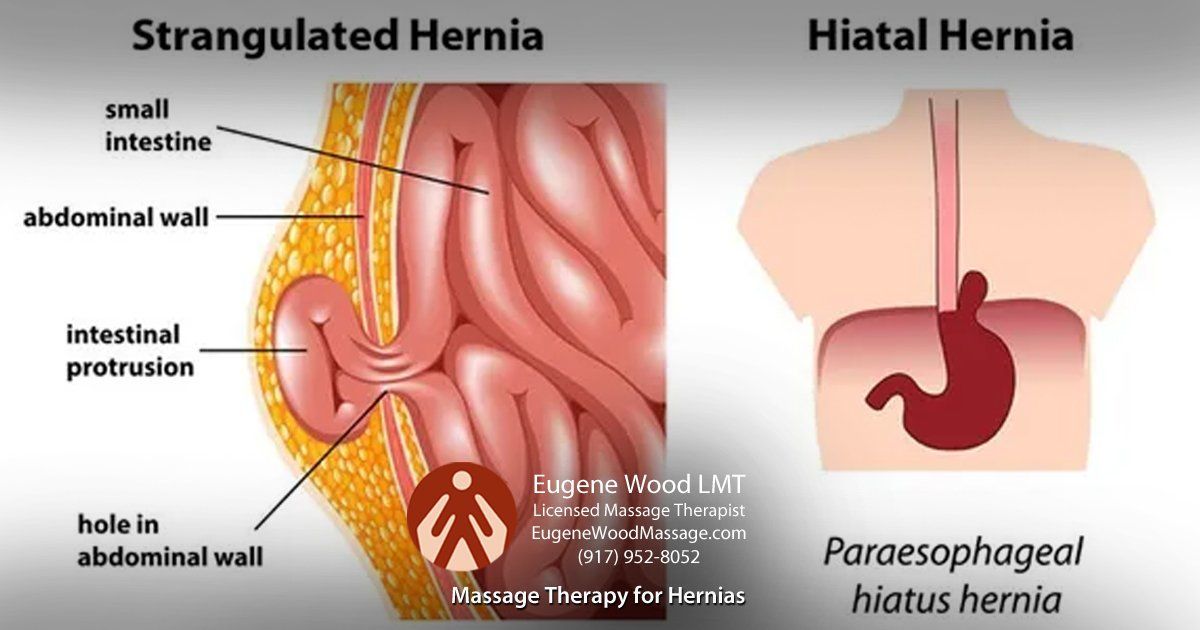
Knowing when not to use your device on your stomach prevents serious complications. These red flags indicate you should skip abdominal percussion therapy entirely or seek medical advice first.
Post-Meal Timing Considerations
Never use a massage gun on your stomach within 2-3 hours after eating. Your digestive system needs undisturbed time to process food, and percussion therapy can interfere with this process, potentially causing nausea or discomfort. The ideal time for abdominal massage is either first thing in the morning before breakfast or at least 3 hours after your evening meal when your stomach is relatively empty.
Warning Signs That Require Immediate Stopping
If you experience any of these symptoms during stomach massage, power off your device immediately and discontinue use:
– Nausea or feeling queasy
– Sharp or stabbing pain (not to be confused with normal muscle release)
– Increased heart rate or lightheadedness
– Visible skin redness or irritation
– Cramping that persists after stopping
Post-Massage Care for Optimal Stomach Recovery
What you do after your massage session determines how well your body integrates the benefits. Proper aftercare maximizes the positive effects while minimizing any potential side effects from percussion therapy on your core muscles.
Hydration Protocol After Abdominal Massage
Drink 8-16 ounces of water within 30 minutes after your session. The gentle percussion helps release metabolic waste from your muscle tissue, and adequate hydration supports your body’s natural elimination processes. Avoid carbonated beverages or sugary drinks immediately after, as these can cause bloating that counteracts your massage benefits. Room temperature or slightly warm water is ideal, as very cold water might cause your muscles to tighten again.
Integrating Stomach Massage Into Your Wellness Routine
For best results, limit stomach massage sessions to 2-3 times weekly, with at least 48 hours between sessions. Pair your massage gun work with gentle core activation exercises like pelvic tilts or diaphragmatic breathing drills to enhance the benefits. Never use percussion therapy as a replacement for proper nutrition, hydration, or medical care for abdominal issues. Consider it a complementary tool within a broader approach to core health that includes appropriate exercise, stress management, and professional healthcare when needed.
Final Note: Using a massage gun on stomach muscles can provide valuable relief when performed correctly, but demands respect for the area’s sensitivity. Always prioritize safety over intensity, listen to your body’s signals, and consult healthcare professionals when in doubt. By following these precise techniques, you’ll transform your percussion massager into an effective tool for core recovery that enhances rather than compromises your wellness routine. Remember that proper technique—not power—is the key to unlocking the benefits of stomach massage therapy.