That morning puffiness around your eyes, the stubborn swelling in your ankles after a long day, or the feeling of heaviness in your limbs—these could all signal sluggish lymphatic circulation. While massage guns are commonly associated with deep tissue recovery, their gentle application can actually support your body’s natural detoxification system when used correctly. The lymphatic system, a delicate network of vessels and nodes responsible for removing waste and toxins, responds best to specific light-touch techniques rather than aggressive percussion. Misusing a massage gun for lymphatic drainage could do more harm than good, potentially causing bruising or overwhelming your system. This guide reveals precisely how to harness your massage gun’s potential for lymphatic support with medically sound techniques that respect your body’s delicate fluid pathways.
Unlike traditional muscle recovery where deep pressure feels satisfying, lymphatic drainage requires a completely different approach that many massage gun owners unknowingly get wrong. By the end of this guide, you’ll know exactly which attachments to use, the precise pressure levels that stimulate rather than damage lymph vessels, and the directional techniques that actually move fluid toward your body’s natural drainage points. Most importantly, you’ll learn critical safety precautions that prevent potentially dangerous applications for certain medical conditions.
Why Standard Massage Gun Techniques Won’t Work for Lymphatic Drainage
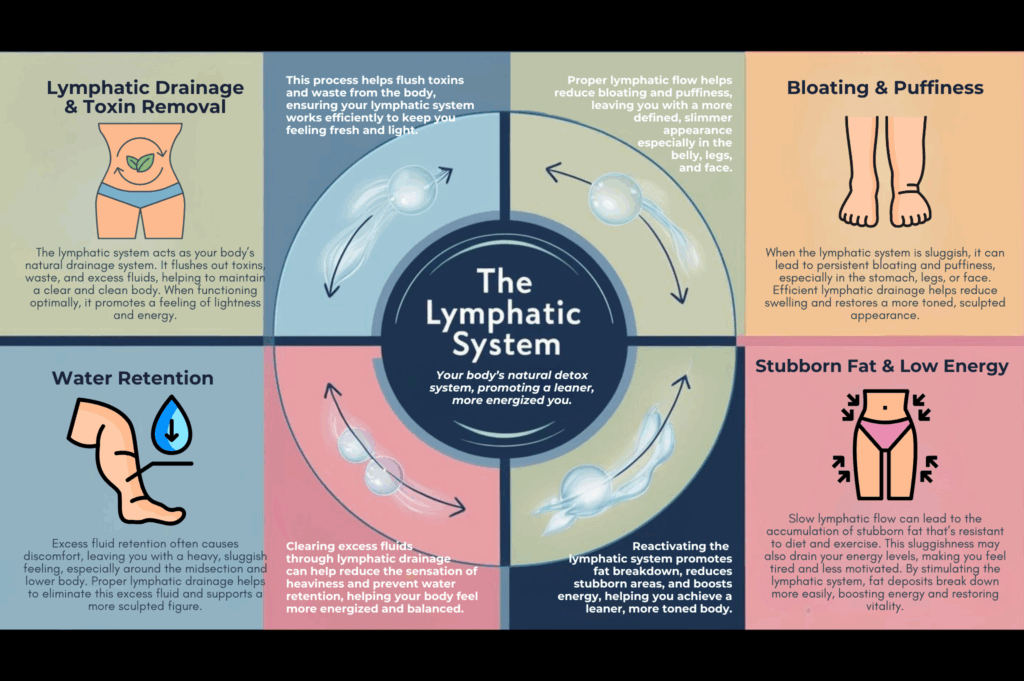
Many people mistakenly apply their massage gun to lymphatic issues with the same aggressive technique they use for sore muscles, not realizing they’re potentially causing harm. The lymphatic system operates just beneath the skin’s surface, not deep in the muscle tissue where standard massage gun therapy targets.
Critical Differences Between Muscle Recovery and Lymphatic Stimulation
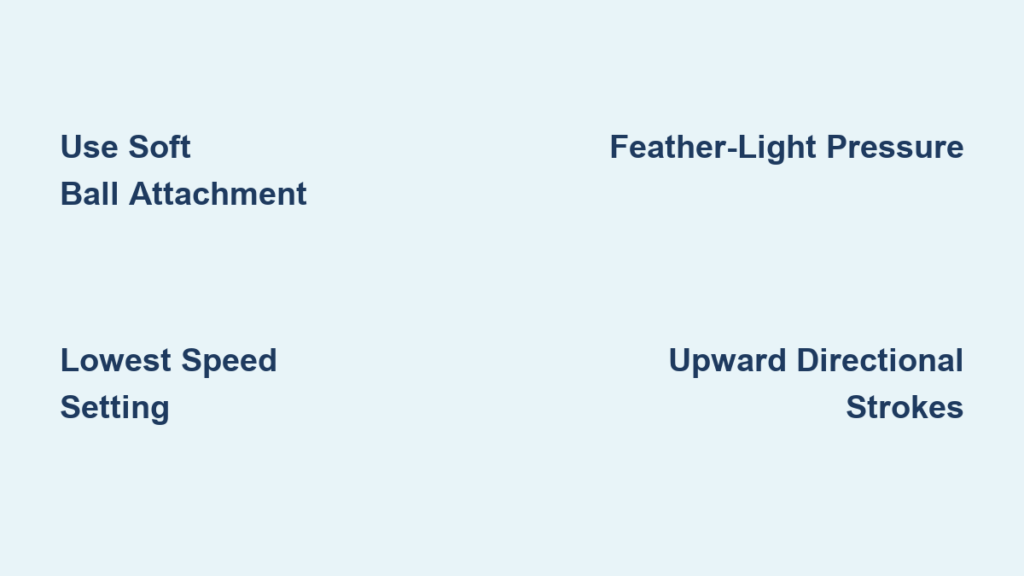
Lymphatic vessels are extremely delicate—thinner than a human hair—and respond only to gentle pressure. When you apply deep pressure with a massage gun, you’re actually compressing these fragile vessels shut rather than encouraging fluid movement. The ideal pressure for lymphatic work registers as barely noticeable, approximately 2-3 pounds of force—about the weight of a small apple resting on your skin. Standard massage gun attachments designed for muscle penetration (like bullet or fork heads) create localized pressure points that can damage lymph vessels, while the high-speed settings commonly used for muscle recovery move too rapidly to effectively stimulate lymph flow.
The Speed Mistake 90% of Users Make
Most massage gun users automatically select medium to high speeds for lymphatic work, not realizing this rapid vibration actually disrupts the one-way valves in lymph vessels. Research shows lymphatic fluid moves at approximately 1-2 centimeters per second under normal conditions, meaning your massage gun must operate at the absolute lowest speed setting to mimic natural lymph flow patterns. Higher speeds create chaotic vibration that confuses the lymphatic system rather than supporting it.
Proper Attachment Selection for Lymphatic Drainage

Choosing the wrong attachment is the most common mistake people make when attempting lymphatic drainage with a massage gun. The attachment you select directly determines whether you’re helping or harming your lymphatic system.
Why the Ball Attachment Is Your Only Safe Option
The large, soft rubber or foam ball attachment provides the broad, gentle surface area required for lymphatic work. Its rounded shape distributes pressure evenly across a wider area, preventing the pinpoint pressure that damages delicate lymph vessels. When selecting a ball attachment, choose the largest diameter option available (typically 2-3 inches) made from soft foam rather than firmer rubber. This creates the optimal pressure distribution for stimulating lymph flow without vessel compression.
Dangerous Attachments You Must Avoid
Never use pointed attachments like the bullet or fork heads for lymphatic drainage—these concentrate pressure on microscopic vessels, causing bruising and potential damage. Metal attachments are equally dangerous as they transmit vibration too intensely through the tissue. Even the standard flat head creates too much direct pressure for lymphatic work. If your massage gun lacks a large soft ball attachment, do not attempt lymphatic drainage with any other option.
Step-by-Step Lymphatic Drainage Technique for Each Body Area
Performing effective lymphatic drainage requires specific directional techniques that follow your body’s natural lymph flow pathways. Random application won’t produce results and could potentially move fluid in the wrong direction.
Neck and Facial Drainage Protocol
Begin with your head tilted slightly forward to relax neck muscles. Using the ball attachment at minimum speed, place the gun behind your ear and make slow, upward strokes toward the base of your skull—never downward. Complete 5-7 gentle strokes in this pattern before moving to the jawline. For under-eye puffiness, place your ring finger under your eye to create a barrier, then use the massage gun to make feather-light strokes from the inner to outer corner of your eye, always moving toward lymph nodes near your ears. Limit facial work to 60 seconds total to avoid overstimulation.
Arm and Hand Lymphatic Pathway
Start with your arm resting comfortably on a surface. Position the massage gun at your wrist using the lowest speed setting and lightest pressure. Make slow, continuous strokes from your wrist to your elbow, then from your elbow to your armpit—never in reverse direction. Spend 30 seconds on each forearm segment and 45 seconds on each upper arm segment. For hand drainage, place your hand palm-up and glide the gun from fingertips to wrist using circular motions rather than straight lines. Complete this sequence twice per arm for optimal results.
Leg Drainage Sequence That Actually Works
Begin with feet elevated slightly above heart level. Using the ball attachment at minimum speed, start at the top of your foot and make slow, upward strokes along the inner calf toward your knee. Never work downward—always move toward the groin where major lymph nodes reside. Spend 45 seconds on each calf before moving to the thigh. For thigh drainage, position yourself lying on your side and glide the gun from your knee up the inner thigh toward your groin using long, continuous strokes. Complete 60 seconds per thigh, always maintaining feather-light pressure that barely moves the skin.
Critical Safety Guidelines Most Guides Fail to Mention

While many online resources promote massage gun use for lymphatic drainage, few address the potentially dangerous contraindications that could put users at serious risk.
Medical Conditions That Absolutely Prohibit Use
Never use a massage gun for lymphatic drainage if you have any history of cancer, as stimulation could potentially encourage metastasis. Similarly, active infections (including cellulitis or even a mild fever) are absolute contraindications—massage could spread pathogens through the lymphatic system. If you have known or suspected blood clots (DVT), using a massage gun on your legs could dislodge the clot, causing a life-threatening pulmonary embolism. Individuals with kidney failure should also avoid lymphatic drainage techniques as their system cannot process the increased fluid load.
When to Stop Immediately During Your Session
During your massage gun session, stop immediately if you notice any of these warning signs: skin turning red or purple (indicating vessel damage), increased swelling in the treated area, sudden pain (lymphatic work should never hurt), or feeling lightheaded. Mild tenderness is acceptable, but sharp sensations mean you’re applying too much pressure or moving too quickly. If you experience any unusual symptoms after your session, consult a healthcare professional before attempting further lymphatic drainage.
Maximizing Results With Proper Hydration and Timing
The effectiveness of your lymphatic drainage session depends significantly on what you do before and after your massage gun treatment.
The Water Protocol That Makes or Breaks Results
Drink 16 ounces of water 30 minutes before your session to ensure your lymph fluid isn’t too viscous. Immediately after your session, consume another 16-24 ounces of water to help your body process the mobilized waste products. Without proper hydration, you’re simply moving thick, sluggish lymph around your body rather than facilitating actual drainage. For enhanced results, add a pinch of high-quality sea salt to your post-session water to support electrolyte balance and fluid movement.
Optimal Frequency and Duration for Real Results
Limit lymphatic drainage sessions to 5-7 minutes per body area, maximum. Longer sessions don’t produce better results and can actually overwhelm your system. For maintenance, perform lymphatic drainage 2-3 times weekly. If addressing specific swelling, daily sessions for 1-2 weeks may be appropriate, but always follow with extra hydration. Never perform lymphatic drainage immediately after intense exercise—wait at least 2 hours to avoid overloading your system with metabolic waste.
Final Note: Using a massage gun for lymphatic drainage requires precision, patience, and respect for your body’s delicate fluid systems. By following these medically informed techniques—using only the soft ball attachment at minimum speed, applying feather-light pressure in the correct directional patterns, and observing all safety precautions—you can harness your massage gun’s potential to reduce swelling and support your body’s natural detoxification processes. Remember that consistent, gentle application yields better results than aggressive, infrequent sessions. Always consult with a certified lymphedema therapist if you have persistent swelling or medical concerns before incorporating massage gun techniques into your routine.