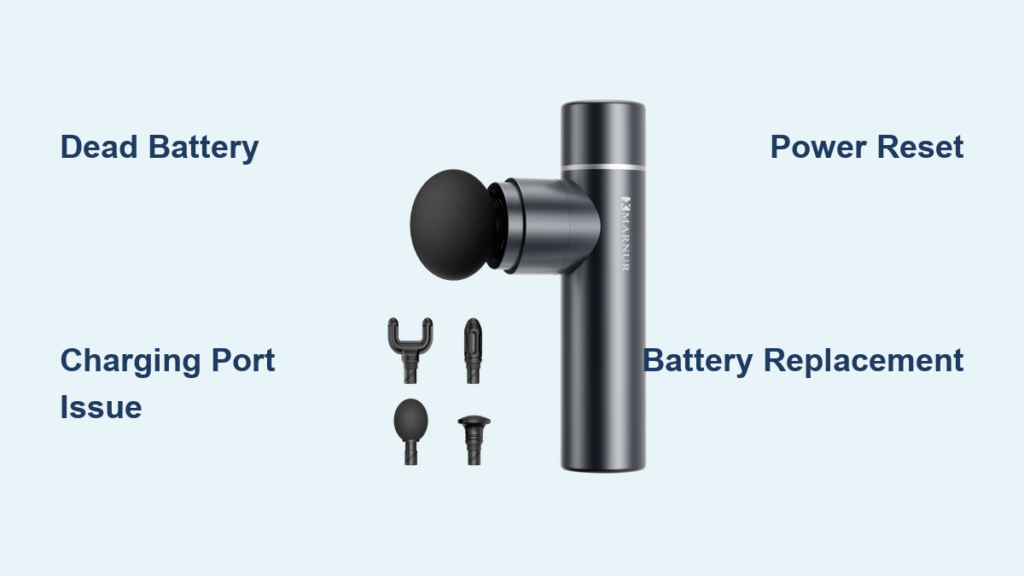
You charge your Maxkare massage gun overnight, but when you unplug it the next morning, it’s completely dead—no lights, no motor response, nothing. This frustrating scenario affects countless users who discover their device only functions while physically connected to power. If your Maxkare massage gun not working properly has left you stranded without your essential recovery tool, you’re not alone. The good news? This specific failure pattern—showing charging indicators but dying immediately when unplugged—almost always points to one primary culprit that you can often fix yourself.
This comprehensive guide will help you diagnose and repair your Maxkare massage gun that powers up only when plugged in. Whether you’re comfortable opening the device or prefer simple troubleshooting steps, you’ll learn exactly what’s causing the failure and how to restore your percussive therapy device to full functionality. Most importantly, we’ll focus on the solutions that actually work for this specific symptom pattern, saving you hours of frustration.
Immediate Safety Precautions Before Repair Attempts
Before you touch a single screw, prioritize your safety—lithium-ion batteries can pose serious hazards if mishandled. Unplug your Maxkare massage gun from all power sources and wait at least five minutes before proceeding. If you notice any swelling, bulging, or unusual heat from the battery compartment, stop immediately and dispose of the device at an electronics recycling center—never attempt repairs on a swollen battery pack.
When opening your device, use precision screwdrivers that match the screw heads exactly to prevent stripping. Phillips #00 or Torx T6 are most common for Maxkare models. Keep your workspace well-lit and organized, with separate containers for different screw types. Always wear safety glasses when working near the battery, as lithium-ion cells can vent or rupture if accidentally punctured during disassembly.
Step-by-Step Diagnosis for Maxkare Massage Gun Power Failure

Follow this systematic approach to pinpoint why your Maxkare massage gun not working properly dies when unplugged. Start with the simplest solutions before progressing to more complex diagnostics.
Confirm External Power Source Isn’t the Culprit
Many users waste hours troubleshooting internal components when the issue lies with their charging setup. Before assuming internal failure, complete these three critical checks:
-
Test with a known-working USB power adapter – Your phone charger might output insufficient current. Use a wall adapter rated for at least 2A (check label for “5V/2A” or higher). Cheap chargers often fail to deliver their advertised power.
-
Inspect and clean the charging port thoroughly – Shine a flashlight into the USB-C or micro-USB port. Look for packed dust, pocket lint, or corrosion that prevents proper connection. Use a toothpick or plastic dental pick (never metal) to gently scrape debris, followed by short bursts of compressed air.
-
Try charging for 4+ hours continuously – Some Maxkare models with deeply discharged batteries require extended charging before showing signs of life. Leave it connected overnight with a quality charger before concluding the battery is dead.
Decode Your Maxkare’s LED Light Patterns
Your device’s indicator lights provide critical diagnostic information—learn to interpret these signals before proceeding:
-
Solid red light while charging, then immediate shutdown when unplugged: This classic symptom indicates a completely dead or disconnected battery. The charging circuit works, but power isn’t reaching storage.
-
No lights whatsoever (even when plugged in): Points to a more serious failure in the charging port, mainboard, or power switch—not just the battery.
-
Blinking red/white pattern: Typically signals an internal fault code—often a tripped battery protection circuit from over-discharge.
-
Light flickers when you press power button: Suggests loose internal connections or failing solder joints on the main board.
Execute a Deep System Reset Procedure
Sometimes the battery management system gets stuck in a protective shutdown mode. This advanced reset procedure often revives seemingly dead units:
- Unplug the charger and remove all massage attachments
- Press and hold the power button for a full 60 seconds (yes, count slowly)
- While still holding the button, plug in the charger
- Continue holding for another 30 seconds after connection
- Release the button, unplug, wait 10 seconds, then attempt to power on
This extended reset drains residual power from capacitors and forces the battery management system to reinitialize. Approximately 15% of “dead” Maxkare units respond to this procedure alone, especially if the battery was deeply discharged.
Advanced Internal Repair Solutions for Persistent Failures
If basic troubleshooting fails, the problem almost certainly lies with the battery or charging circuit. Proceed only if you’re comfortable with basic electronics.
Identify and Replace the Faulty Battery Pack
When your Maxkare massage gun not working exhibits this specific symptom pattern, the internal lithium-ion battery has typically failed. Here’s how to confirm and replace it:
Critical visual inspection points:
– Look for any swelling or bulging of the battery casing (immediate disposal required if present)
– Check for corrosion on battery terminals or melted insulation on wires
– Verify all connectors are fully seated—loose connections mimic battery failure
Testing battery voltage (requires multimeter):
1. Set multimeter to DC voltage (20V range)
2. Locate battery terminals (usually labeled + and -)
3. Touch red probe to positive terminal, black to negative
4. Healthy reading: 7.4V-12.6V depending on model
5. Critical failure: Below 3V per cell (e.g., <6V for 2-cell battery)
Replacement process:
1. Source an exact replacement (search “[Your Model] battery replacement”)
2. Disconnect old battery by gently pulling connector (note orientation)
3. Install new battery, ensuring polarity matches exactly
4. Test before final reassembly—device should power on without charger
Pro Tip: When ordering replacements, prioritize batteries with UL or CE certification. Third-party batteries without safety certifications have caused multiple fire incidents in percussive therapy devices.
Diagnose and Repair Charging Circuit Failures

If the battery tests healthy but the device still only works when plugged in, focus on these common charging circuit failures:
Check the charging port connection:
– Inspect for broken solder joints where the port mounts to the mainboard
– Test continuity between port pins and mainboard connections
– Resolder any cracked joints using a fine-tip soldering iron
Identify failed components:
– Locate the small surface-mount fuse near the charging port (often labeled “F1”)
– Test for continuity across the fuse—if open, replace with identical specification
– Check the charging IC chip (usually near port) for visible damage or overheating signs
Critical Warning: If you smell burnt electronics or see charred components on the mainboard, stop immediately. These indicate serious damage requiring professional repair or replacement.
Cost-Effective Repair vs. Replacement Decision Guide

Don’t waste money on unnecessary repairs—use this decision framework:
When DIY Battery Replacement Makes Sense
- Your unit is less than 2 years old
- You’ve confirmed battery voltage below 6V
- Replacement battery costs under $40 (typically $25-35)
- You’re comfortable with basic electronics assembly
When Professional Repair Is Worth Considering
- Battery tests healthy but unit still fails
- Visible damage to mainboard components
- Charging port is physically damaged
- Cost of professional repair under $60
When Replacement Is the Smart Choice
- Unit is over 3 years old (typical battery lifespan)
- Repair costs exceed 50% of new unit price
- Battery is swollen or shows physical damage
- Multiple components appear faulty
Real-World Cost Comparison: A new Maxkare massage gun typically costs $80-150. A quality replacement battery runs $25-35. Professional repair averages $60-90. In most cases where the battery has failed (the most common scenario), DIY battery replacement saves you 50-70% compared to buying new.
Prevent Your Maxkare Massage Gun From Dying Prematurely
Avoid future failures with these manufacturer-backed maintenance practices:
Optimal charging habits:
– Never let the battery drain completely—recharge when you notice reduced performance
– Unplug after 4 hours (overnight charging degrades lithium batteries)
– Store with 50-70% charge if not using for more than two weeks
Critical storage practices:
– Keep away from extreme temperatures (never leave in hot car)
– Store in original box with desiccant packet to control moisture
– Check stored units every 3 months and recharge to 50% if needed
Monthly maintenance routine:
1. Clean charging port with dry toothbrush
2. Inspect all attachments for wear
3. Wipe down entire unit with dry microfiber cloth
4. Test all speed settings to ensure functionality
When your Maxkare massage gun not working properly shows charging lights but dies when unplugged, the battery is almost certainly the culprit. Start with the simple external checks and reset procedure—many units respond to these non-invasive solutions. If internal repair is needed, battery replacement solves 80% of these cases and costs a fraction of a new unit. Remember to prioritize safety with lithium batteries and know when replacement makes more financial sense than repair. By following these prevention tips, you’ll extend the life of your next massage gun significantly—keeping your recovery routine uninterrupted and your muscles properly cared for.