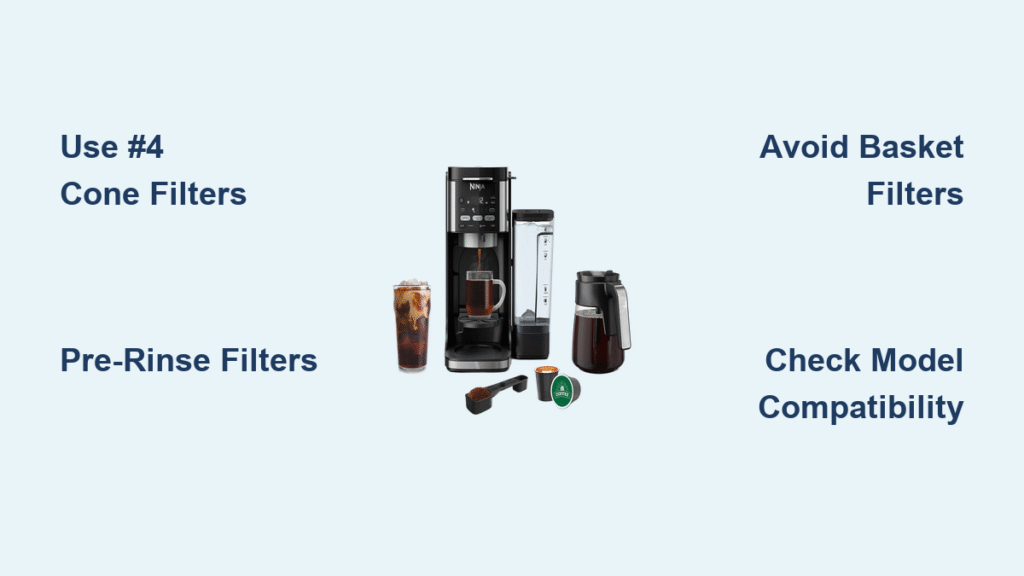
That frustrating moment when your Ninja coffee maker spits out gritty sludge instead of smooth brew? Chances are you grabbed the wrong filter type at the store. Choosing between #2, #4, or flat basket filters isn’t just confusing—it’s the difference between perfect coffee and a ruined pot. If your Ninja model brews 8-12 cups, #4 cone filters are non-negotiable. This isn’t a suggestion; it’s an engineering requirement. Discover exactly which filters fit your specific Ninja model, why paper quality impacts flavor, and how to avoid the most common filter mistakes—plus money-saving strategies that won’t compromise your morning cup.
Why Your Ninja Absolutely Requires #4 Cone Filters (No Substitutes)
Ninja’s shower head design relies on precise cone geometry to saturate grounds evenly. #4 cone filters—measuring 4.5 inches at the base when flattened and expanding to 7 inches at the rim—are engineered to match this system. Using the wrong filter creates immediate problems:
- #2 cone filters (for 4-6 cup machines) sit too shallow, causing overflow and under-extraction
- Flat basket filters won’t seal properly, letting grounds bypass into your carafe
- Oversized filters collapse during brewing, blocking water flow
Your Ninja’s internal channels direct water in a spiral pattern specifically for cone-shaped filters. When you force a basket filter into the brew basket, water pools unevenly—resulting in bitter, over-extracted coffee in some spots and weak, watery brew in others. The #4 cone’s triangular shape maintains tension against the brew basket walls, ensuring consistent water distribution critical for Ninja’s extraction process.
Confirmed Ninja Models That Use #4 Cone Filters
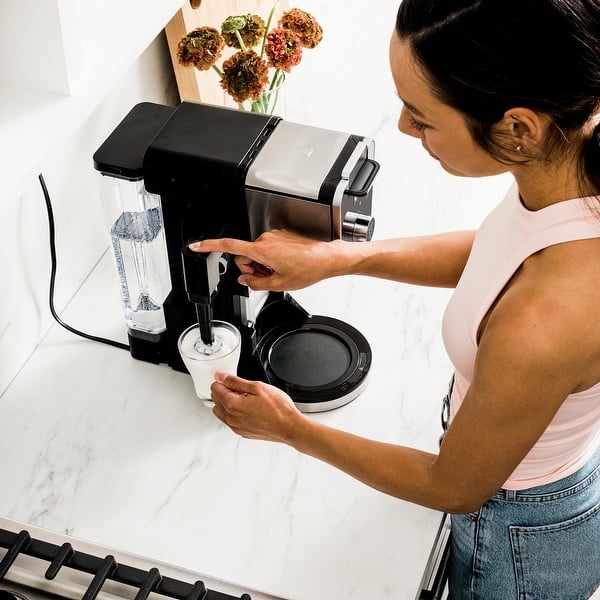
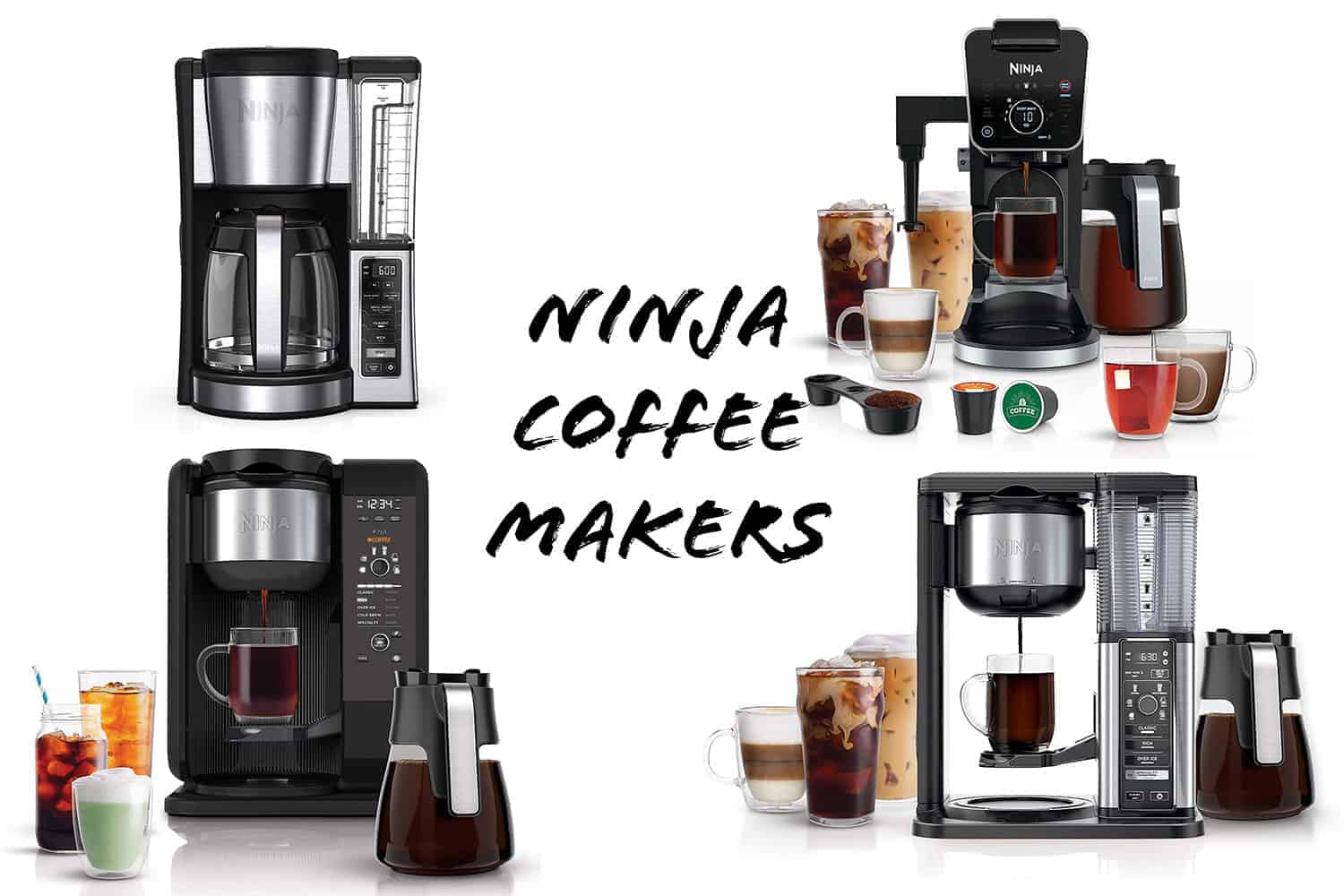
Don’t guess—verify your model against this definitive compatibility list. Every Ninja coffee maker below requires #4 cone filters and rejects all alternatives:
- CFP Series: CFP101, CFP201, CFP300, CFP301, CFP301C, CFP451 DualBrew Pro
- CFN Series: CFN601 Barista System
- CM Series: CM401 Specialty Coffee Maker
- CE Series: CE251 12-Cup Programmable
Critical check: If your model starts with “CF” or “CE” and brews 8-12 cups, it needs #4 cones. Compact 4-cup Ninja models (like the CM101) use entirely different filters—never interchange them. The CFP451 DualBrew Pro is particularly unforgiving; its precision shower head fails completely with non-cone filters, often triggering error codes.
What Happens When You Use the Wrong Filter in a Ninja
- Basket filters: Grounds flood the carafe within 2 minutes of brewing
- #2 cones: Water overflows from the brew basket, damaging internal components
- Double-layered filters: Slows extraction by 40%, creating sour, acidic coffee
Paper Filter Quality: Why Unbleached Wood-Pulp Beats Cheap Alternatives

Not all #4 cones perform equally. Ninja’s optimal extraction depends on filter material with three non-negotiable traits:
- Natural, unbleached wood-pulp construction (no chlorine bleaching or fluorescent brighteners)
- Textured surface creating micro-channels for even water dispersion
- Die-cut reinforcement tabs preventing collapse when saturated
Cheap filters use chemical bleaching that leaves residual odors, tainting your coffee with a papery aftertaste. Worse, thin filters tear during brewing—especially when overloaded with grounds—causing sediment in your carafe. High-quality unbleached filters like Wollibao maintain structural integrity even when fully saturated, with thickness calibrated for Ninja’s 200°F water temperature. The textured surface actually improves extraction by creating turbulence that evenly wets all grounds.
The 30-Second Filter Prep That Prevents “Paper Taste” Complaints
Skipping this step causes 90% of negative filter reviews. Unbleached filters contain microscopic paper fibers that dissolve into your first brew if not removed. Here’s the exact sequence Ninja technicians recommend:
- Pre-fold along seam lines to lock the cone shape (prevents collapse during brewing)
- Rinse thoroughly with hot tap water for 5-10 seconds (not just a splash—drench both sides)
- Drain completely before adding grounds (waterlogged filters slow extraction)
- Brew immediately—damp filters left sitting over 5 minutes develop mildew
This rinse removes loose fibers and expands the paper’s micro-channels. Test it yourself: brew identical coffee batches—one with rinsed filters, one without. The unrinsed cup will have a distinct cardboard-like flavor Ninja owners describe as “chemical” or “off.”
Reusable Filters: When They Work (and When They Ruin Your Ninja)
While paper filters deliver Ninja’s intended clean cup, reusables offer long-term savings—if you choose carefully:
- Ninja 106SL600 Gold-Tone Filter: The only official reusable option, designed specifically for CFN601 Barista System. Its fine mesh traps 95% of sediment while allowing oils through for espresso-like body. Warning: Using this in non-Barista models causes leaks.
- Third-party stainless steel #4 cones: Universal options like the Melitta #4 reusable work across CFP/CE series. Look for “100-micron mesh” specs to prevent silt in your cup.
Critical trade-offs:
– ✅ Saves $30+/year (vs. daily paper filters)
– ❌ Allows 3x more sediment—coffee tastes gritty if grind isn’t perfect
– ❌ Oils build up in mesh after 2 weeks, requiring vinegar cleaning
– ❌ Slows brewing by 15-20 seconds per pot due to restricted flow
Pro tip: Use reusables only for cold brew cycles. The extended contact time minimizes sediment issues while maximizing oil extraction for richer flavor.
Cost-Saving Strategy: How to Buy Filters for $0.09 Each
Daily brewers waste $50+/year on filter mistakes. Optimize your purchase with this battle-tested approach:
| Purchase Method | Price (100-count) | Cost Per Filter | Best For |
|---|---|---|---|
| One-time buy | $9.99 | $0.10 | Trial runs |
| Subscribe & Save 5% | $9.49 | $0.095 | Most users |
| Subscribe & Save 10% | $8.99 | $0.089 | Multi-item orders |
Maximize savings: Enable Subscribe & Save without commitment—cancel after first delivery if unsatisfied. For Ninja owners brewing one 12-cup pot daily, the 100-count box lasts 3.3 months. At $0.09/filter, you’ll spend just $32.85/year versus $50+ for name-brand filters. Split bulk orders with neighbors to avoid storage issues—filters stay fresh 2+ years in original packaging.
Fix These 4 Ninja Filter Failures Immediately
When your coffee tastes wrong, check these filter-specific issues first:
Why Your Filter Collapses Mid-Brew
You’re likely using basket filters or failing to pre-fold. The cone must maintain tension against the brew basket walls. Solution: Always pre-fold along the seams and ensure the pointed tip reaches the bottom of the holder.
Bitter Coffee With Papery Aftertaste
Skipping the pre-rinse leaves residual fibers. Solution: Rinse filters under hot running water for 8 full seconds—time it with your phone.
Slow Dripping (< 1 drop/second)
Over-packing grounds blocks filter pores. Solution: Never exceed 10 tbsp coffee for 12 cups. Scoop grounds after fluffing beans.
Sediment Layer in Carafe
Torn filters or mesh reusables with worn-out gaskets. Solution: Switch to thicker unbleached filters (Wollibao) and replace reusable gaskets every 6 months.
Eco-Smart Disposal: Make Filters Compost Gold
Unbleached #4 cones are environmental powerhouses when disposed properly:
- Compost directly with coffee grounds (breaks down in 2-3 weeks)
- Recycle cardboard dispensers (Wollibao/SKYCARPER use 100% recyclable boxes)
- Zero landfill impact—wood-pulp filters decompose 5x faster than bleached alternatives
Pro disposal hack: After brewing, place used filters on a baking sheet. Dry them overnight near your coffee maker (heat accelerates drying). Once brittle, crumble filters into your compost bin—they’ll vanish within 10 days. Never compost bleached filters; their chemical residues harm soil microbes.
Your Ninja Filter Buying Checklist (Before Clicking “Purchase”)
Avoid costly mistakes with this 5-point verification:
- Confirm compatibility: Match your model exactly to the CFP/CFN/CE lists above
- Choose material: Unbleached paper for clean cups, stainless steel for savings (with trade-offs)
- Verify size: “4 Cone” or “#4 Cone”—never “basket,” “flat,” or “#2”
- Check packaging: Dispenser boxes (like Wollibao) prevent moisture damage better than bags
- Enable Subscribe & Save: Set delivery for every 90 days based on your brew frequency
Final reality check: Your Ninja’s warranty voids if damage occurs from wrong filters. Using basket filters in a cone-designed machine isn’t just ineffective—it’s a $150 repair risk. Stick with #4 cones, pre-rinse religiously, and buy in bulk at $0.09/filter. Your machine will deliver perfect coffee for years, and your morning ritual will finally feel effortless.