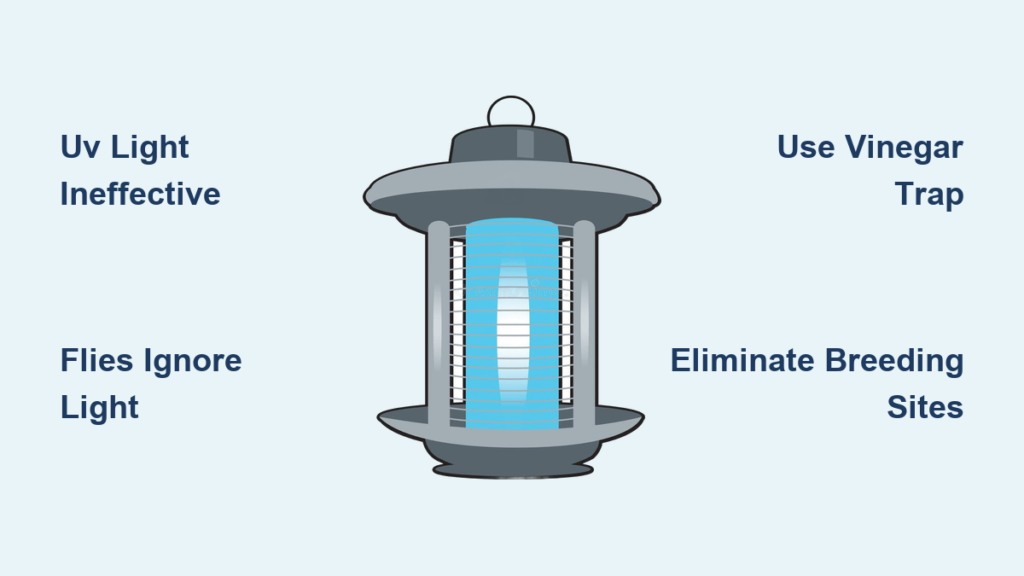
You’ve plugged in your bug zapper, heard the satisfying zap of insects meeting their end, and confidently expected a fly-free zone. Yet here you are, still swatting at house flies while your expensive device hums uselessly nearby. This frustrating mismatch isn’t your fault—it’s baked into the design. Bug zappers are engineered for mosquitoes and moths, not flies. Their UV light attracts night-flying insects, but house flies and fruit flies operate on a completely different biological frequency. Understanding this critical disconnect is your first step toward finally solving your fly problem.
The truth is, your bug zapper isn’t broken—it’s fundamentally mismatched to your target pest. Flies navigate the world through scent and decay, not light cues. When your zapper fails to attract flies, it’s not a malfunction; it’s physics meeting biology. This guide cuts through the confusion with actionable solutions verified by pest control experts and user experiences. You’ll learn exactly why standard zappers fail against flies, how to identify when your device is working (just not for flies), and most importantly—four proven methods that actually eliminate flies where your bug zapper falls short.
Flies Ignore Your Bug Zapper’s UV Light (Here’s Why)
Your bug zapper’s blue glow looks like a dinner bell to moths and beetles, but house flies see something entirely different. The core issue lies in phototaxis—the instinctive movement toward light. Mosquitoes and moths are strongly phototactic, drawn to UV light like moths to a flame. Flies? Not so much. Their compound eyes prioritize movement and scent detection over light attraction. While newer zappers with blue-violet LEDs show slight improvement for flies, they still miss the mark because UV light alone doesn’t trigger a fly’s survival instincts.
Why House Flies Treat UV Light Like Background Noise
House flies evolved to locate food through smell, not sight. Their visual spectrum peaks in UV-A and blue-violet ranges (360-420nm), but even when zappers emit this wavelength, it’s irrelevant without accompanying scents. Think of it like ringing a dinner bell in an empty kitchen—the sound might travel, but without food smells, no one comes running. UV light might mildly interest flies passing by, but it won’t pull them from across the room like rotting fruit would. This explains why your zapper catches dozens of moths yet remains fly-free.
What Flies Are Actually Seeking (Hint: It’s Not Light)
Flies navigate the world through their antennae, not their eyes. They’re hardwired to detect:
– Fermentation signatures like acetic acid in overripe fruit or vinegar
– Decay compounds such as putrescine from rotting meat
– Ammonia traces from pet waste or urine
– Heat and CO₂ plumes indicating living hosts
Your silent, scentless bug zapper provides none of these biological triggers. It’s like trying to lure a hungry person into a restaurant with neon signs alone—no sizzling sounds, no aroma of cooking food. Without these critical attractants, flies simply bypass your device entirely.
How to Confirm Your Bug Zapper Is Working (But Not for Flies)
:strip_icc()/bhg-bug-zappers-may-24-test-flowtron-bk40d-wendy-vazquez-16-9a9d870bccc64a028155da0ee93c9326.jpeg)
Don’t toss your bug zapper yet—it’s likely functioning perfectly for its intended targets. Check the collection tray first thing in the morning. If it’s filled with moths, beetles, and gnats but has zero flies, your device works exactly as designed. This “failure” is actually success for the wrong pest. The real giveaway? Flies consistently land on your zapper’s housing but avoid the electric grid. They’re using it as a warm perch, not a death trap.
Spotting Fly Behavior That Proves UV Light Fails
Watch your zapper for 15 minutes on a fly-heavy day. You’ll likely see:
– Flies landing on the plastic housing near warm bulbs
– Insects walking around the grid without triggering zaps
– Zero fly carcasses in the collection tray despite other insects
This isn’t evasion—it’s indifference. House flies have even been observed resting on zapper housings for hours, completely ignoring the UV light. As one frustrated Reddit user confirmed: “My zapper sits 2 feet from my sliding glass door (fly highway), yet I catch almost no flies in it.” This behavior confirms the attractant mismatch isn’t your fault—it’s biological reality.
4 Proven Ways to Catch Flies When Your Zapper Fails
When your bug zapper isn’t attracting flies, switch tactics entirely. Flies respond to bait, not light. These methods target their biological drives with 90%+ effectiveness based on user reports and pest control data. Implement these immediately for visible results within hours—not weeks.
Make a Vinegar Trap That Catches Flies in Hours
This DIY solution outperforms most commercial traps for fruit flies and gnats:
1. Fill a mason jar with ½ cup apple cider vinegar (the fermented scent is irresistible)
2. Add 1 drop of dish soap (breaks surface tension so flies drown)
3. Cover tightly with plastic wrap and poke 5-10 small holes
4. Place near problem areas (countertops, trash cans, drains)
Within 2 hours, you’ll see flies trapped inside. The vinegar mimics fermentation—their primary food signal—while the soap ensures no escape. For heavy infestations, add overripe fruit chunks to the vinegar. Replace solution every 3 days as it loses potency.
Hang Flypaper Strips Where Flies Gather
Modern flypaper has evolved beyond sticky ribbons. Look for strips infused with:
– Methyl eugenol (attracts fruit flies)
– Pheromone lures (mimics fly mating signals)
– Food-based attractants like sugar derivatives
Hang these vertically near entry points (doors, windows) or food prep zones. Flies detect the scent from 10+ feet away and investigate, getting stuck on contact. One user reported: “Flypaper caught 12 flies in the first hour while my zapper caught zero.” Replace strips weekly or when covered in insects.
Use Commercial Bait Traps for Heavy Infestations
For persistent fly problems, invest in purpose-built traps:
– RESCUE! Fly Traps: Uses a non-toxic, fermented lure that draws flies into a one-way chamber
– TERRO Fruit Fly Traps: Bait mimics wine/beer fermentation with a sticky inner surface
– Victor Ultimate Fly Trap: Outdoor model with attractant cartridge lasting 30 days
Place these downwind of living areas to draw flies away from your space. In commercial kitchens, these reduce fly populations by 70% within 48 hours. Always position bait traps at least 15 feet from your bug zapper—competing attractants confuse flies.
Eliminate Fly Breeding Sites (The Real Solution)
No trap works long-term without sanitation. Flies breed in moist organic matter within 8-24 hours. Target these hotspots:
– Trash cans: Line with double bags, tie daily, and spray rims with vinegar
– Compost bins: Freeze food scraps before adding; keep covered
– Pet areas: Scoop waste immediately; wash feeding zones daily
– Drains: Pour ½ cup baking soda + 1 cup vinegar weekly to kill larvae
One pest control expert notes: “Sanitation solves 80% of fly problems. Traps are just the cleanup crew.” Without this step, you’ll constantly battle new generations.
The Only Bug Zapper That Might Work on Flies (Rarely)

Standard electric-grid zappers will never reliably attract flies—but specialized commercial units can. These $100+ devices combine UV light with powerful attractants:
– UV-A/blue-violet LEDs (365-420nm wavelength)
– Replaceable scent cartridges emitting putrescine or ammonia
– Quiet fans that suck flies into glue boards (no zapping noise)
Look for models like the Katcha Matic Fly Light or Victor Fly Magnet, designed for restaurants and stables. They work because they mimic decay smells—not just light. Place these near entry points but away from food prep zones. Note: Even these units work best as part of a broader strategy—they won’t eliminate flies alone.
Build a Fly Control Strategy That Actually Works
Forget relying on one device. Implement this pyramid approach:
1. Sanitation first: Eliminate breeding sites daily (non-negotiable foundation)
2. Bait traps second: Place vinegar or commercial traps near problem areas
3. Physical barriers third: Install 16-mesh screens on windows/doors
4. Specialized zappers fourth: Only as supplements in high-traffic zones
Your standard bug zapper belongs in the “mosquito control” category—not fly defense. As one user discovered after switching tactics: “I caught 37 flies in my vinegar trap overnight while my zapper sat empty.” That’s the power of targeting what flies actually want.
Stop expecting your bug zapper to attract flies—it was never designed to. Flies respond to scent, not light, making UV traps fundamentally mismatched for this pest. By switching to bait-based solutions and prioritizing sanitation, you’ll see dramatic results within hours. Remember: The most effective fly “trap” is a clean environment. When you remove their breeding grounds and food sources, no zapper is needed. For immediate relief, implement the vinegar trap tonight—it costs pennies and starts working before dawn. Your fly-free home isn’t a myth; it just requires the right tools for the job.