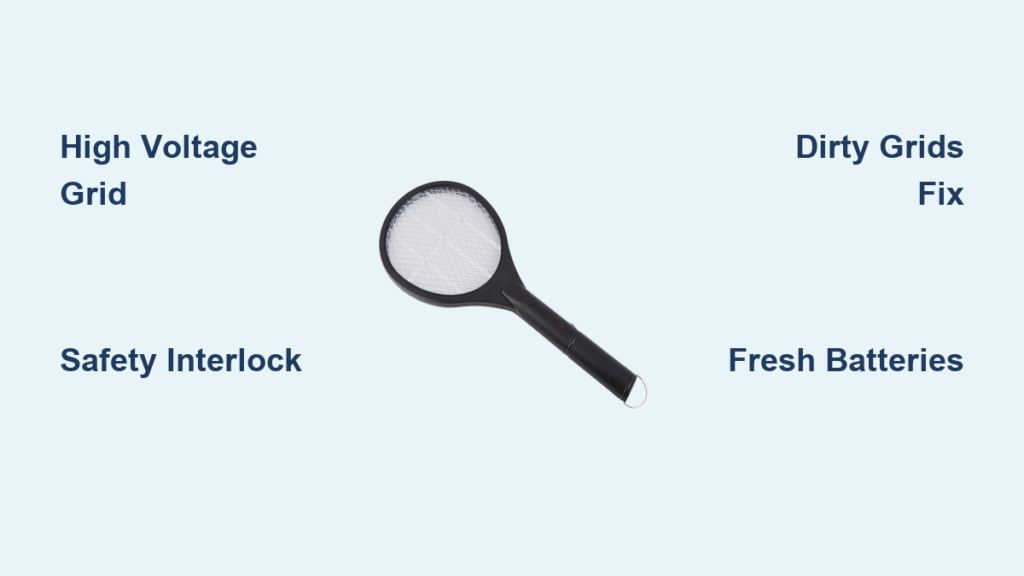
That unmistakable ZAP when you swat a mosquito with an electric bug zapper racket isn’t magic—it’s pure physics in action. In less than a millisecond, your handheld device transforms humble AA batteries into a 2,000–4,000-volt lightning bolt capable of vaporizing insects mid-air. But how does this backyard hero convert 3 volts of battery power into a bug-frying force field? The answer lies in a brilliant cascade of electrical engineering that’s both deadly to pests and safe for humans. If you’ve ever wondered why that satisfying pop happens only when a bug bridges the grids—or why you won’t get electrocuted holding the handle—you’re about to discover exactly how your bug zapper racket works, step by shocking step.
Dissecting Your Bug Zapper Racket: 4 Critical Components That Make It Zap
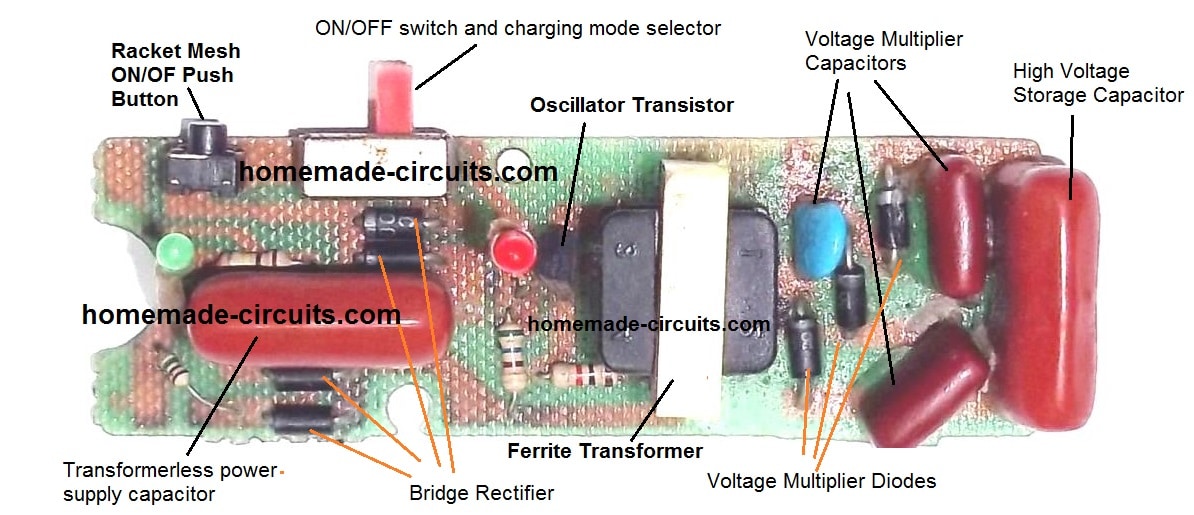
Forget vague “anatomy” descriptions—your bug zapper’s power comes from four precisely engineered parts working in concert. The outer grid isn’t just metal; it’s the grounded return path (0V), while the inner grid carries the lethal high-voltage charge. Between them sits the real star: a palm-sized circuit board powered by two AA batteries. This PCB houses the oscillator, transformer, and voltage multiplier that turn weak battery current into insect-incinerating power. Crucially, the mesh spacing (typically 8–12mm) is calibrated so human fingers can’t bridge the gap—but a mosquito’s legs slide right through. Peel back the handle casing, and you’ll find the safety interlock—a dual-trigger system requiring you to press both the main power switch and a separate trigger to activate the grid. Without this, accidental zaps would be inevitable.
Why the Inner Grid Carries the Deadly Charge (Not the Outer One)
Ever notice the flash originates from the inner wires? That’s because the voltage multiplier pumps 2,000+ volts exclusively into the inner grid mesh, while the outer grid stays grounded. When a bug’s wings touch both grids simultaneously, it creates a conductive shortcut between high voltage and ground. Your body’s natural resistance (about 100,000 ohms dry) prevents current flow if you touch only the outer grid—like birds on power lines. But insects? Their tiny bodies offer minimal resistance, completing the circuit in microseconds.
How the Safety Interlock Prevents Painful Accidents
That two-stage trigger isn’t just for show. Pressing the main power button (B1) wakes the oscillator circuit, but the grid stays dead until you squeeze the secondary trigger. This physical separation ensures no accidental discharge if the racket tumbles from a table. Inside, a 1 MΩ resistor across the output capacitor bleeds stored charge within seconds of releasing the trigger—making it safe to handle immediately after zapping. Never bypass this system; some users try to “hot-wire” rackets for stronger zaps, risking painful shocks.
The Voltage Multiplier Cascade: How 3 Volts Becomes 4,000 Volts

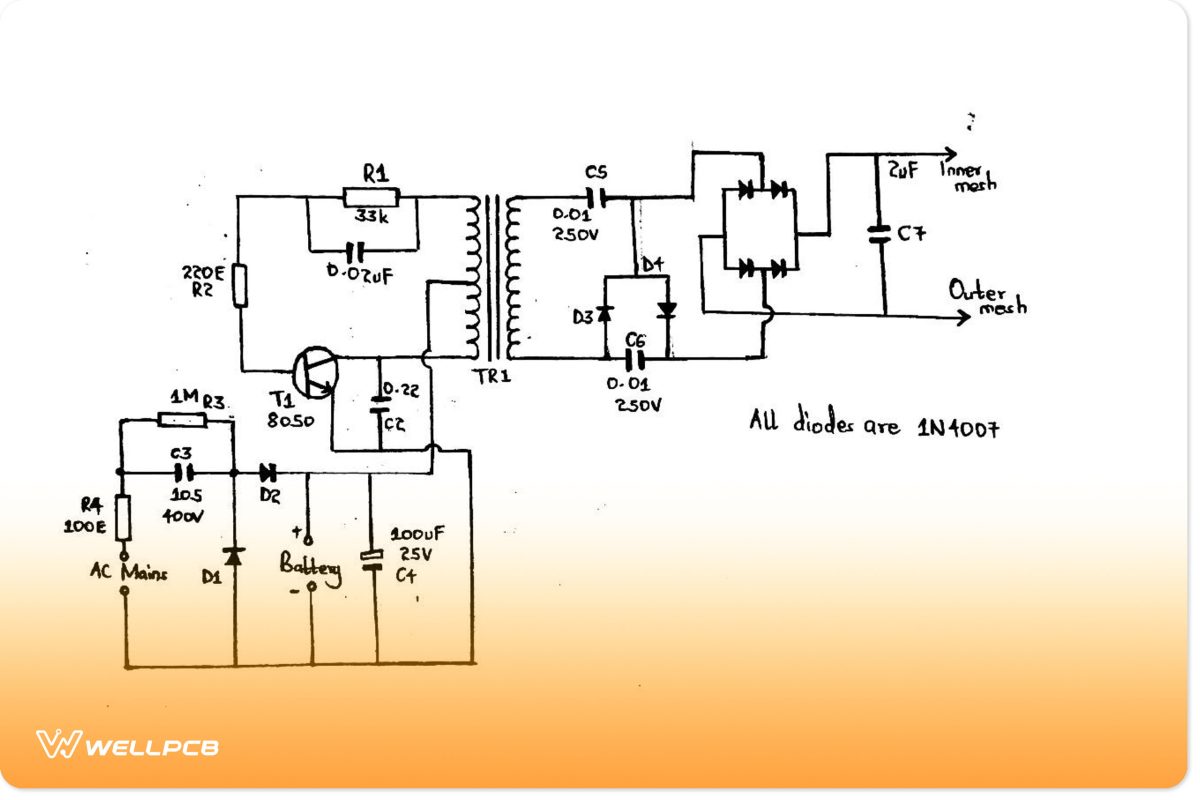
Your bug zapper’s secret weapon is a Cockcroft-Walton multiplier—a diode-and-capacitor ladder that “stacks” voltage like a hydraulic press. Here’s the blow-by-blow transformation:
- Oscillator Ignition: A transistor (like the 2N5609) or NE555 IC chops 1.5–4.5V DC from batteries into 20–50 kHz AC pulses—turning steady current into rapid on/off bursts.
- Transformer Boost: A ferrite-core transformer amplifies these pulses to 400–500V AC. Think of it as an electrical gearshift: low voltage/high current in, medium voltage/low current out.
- Multiplier Magic: The AC pulses hit the voltage ladder. Diodes act as one-way valves, while capacitors store and “stack” each voltage peak. In a 3-stage tripler circuit:
- Stage 1: Doubles input to ~1,000V
- Stage 2: Adds another 500V → ~1,500V
- Stage 3: Final boost → 2,000–4,000V DC
- Capacitor Storage: The multiplied voltage charges a 0.1–1µF capacitor, storing enough energy (typically 1–5 millijoules) to vaporize insects—but far below the 10+ joules needed to harm humans.
Why the Voltage Doesn’t Jump the Gap Without a Bug
Air is an excellent insulator at low voltages, but 4,000V can arc across gaps. So why doesn’t your racket spark constantly? The grid spacing is deliberately wider than the “breakdown distance” for 4kV in air (~3mm). Without a bug bridging the gap, resistance is too high for current to flow. Only when an insect’s body (with its conductive fluids and salts) connects both grids does resistance plummet, triggering the discharge.
The Physics of the Zap: What Happens in 0.001 Seconds
When a mosquito completes the circuit, three explosive events occur almost simultaneously:
- Plasma Channel Formation: Current surges through the bug’s body at 2,000+ volts, superheating its internal fluids to 20,000°F—hotter than the sun’s surface. This ionizes the air, creating a conductive plasma channel.
- The Flash: Visible light erupts from this plasma (like a miniature lightning bolt), lasting 0.1–1 millisecond. The brighter the flash, the larger the insect—moths create blinding bursts!
- The Crackle: Rapid air expansion from the heat wave creates a sonic boom—the iconic ZAP. The smell? Ozone (O₃) from split oxygen molecules plus vaporized bug proteins.
Pro Tip: Weak zaps often mean dead batteries. Fresh AAs deliver 3V; drained ones drop to 1.2V, crippling the multiplier’s output. If your racket’s flash dims or loses its pop, replace batteries immediately.
Safety Engineering: Why You Won’t Get Electrocuted
Despite 4,000 volts coursing through the grids, bug zappers are Class II electrical devices—meaning no lethal risk under normal use. Here’s why:
- Current Starvation: The circuit limits output to 20–100 microamps (µA). Compare this to a lethal shock (100+ milliamps)—your zapper delivers 1/1,000th the danger.
- Skin Resistance Saves You: Dry human skin resists 100,000+ ohms. Ohm’s Law (I=V/R) means 4,000V / 100,000Ω = 0.04A (40mA)—still below lethal levels, but enough to cause a painful jolt if you bridge the grids.
- Pulse Duration Matters: Discharge lasts <1ms—too brief for nerves to fully register pain or for heart disruption.
Critical Warning: Never test the grid with wet fingers or metal objects. Water reduces skin resistance 100x, potentially allowing painful shocks. And never use near gasoline fumes—the spark can ignite vapors.
Why Some Bugs Survive (And How to Guarantee a Kill)
Not all zaps are equal. Mosquitoes often die instantly due to their high water content, but resilient pests like cockroaches or beetles may survive weak discharges. Why? Two factors:
- Contact Points: If a bug only touches one grid (e.g., landing on the outer mesh), no circuit forms. Aim to swing through swarms so insects bridge both grids.
- Energy Delivery: A 1mJ zap kills mosquitoes but may only stun larger insects. Ensure full trigger depression—the safety interlock cuts power if not fully engaged.
Field-Tested Fix: For stubborn pests, swing vertically upward. Gravity pulls insects into the grid gap, maximizing contact. Horizontal swings let bugs bounce off.
Troubleshooting Weak Zaps: 3 Fixes That Work
When your racket loses its bite, skip disassembly—most issues are user-fixable:
- Dirty Grids Cause Silent Shorts: Buildup from dead bugs creates conductive paths that drain voltage. Fix: Power off, then scrub grids with a dry toothbrush. Never use water—it leaves conductive residues.
- Battery Contact Corrosion: Alkaline leaks create insulating crusts. Fix: Remove batteries, clean contacts with isopropyl alcohol, and replace corroded springs.
- Worn-Out Trigger Switches: Intermittent power often stems from oxidized trigger contacts. Fix: Press the trigger 20–30 times rapidly to “burn off” oxidation.
Never attempt high-voltage repairs. If cleaning and new batteries don’t restore the zap, retire the racket—internal capacitors can retain lethal charges for hours.
Maximizing Your Bug Zapper’s Lifespan: Pro Maintenance Secrets
Extend your racket’s life beyond 50–100 hours of runtime with these habits:
- Store Batteries Separately: Remove AAs during off-seasons to prevent leakage.
- Avoid Rain Exposure: Even “waterproof” models degrade faster when wet. Dry thoroughly after outdoor use.
- Check Grid Alignment: Bent wires can create accidental contact points. Gently realign with needle-nose pliers.
- Use in Darkness: Mosquitoes are less active at night, but the visible flash helps confirm grid function.
The Bottom Line: Why This Simple Tech Still Dominates
Bug zapper rackets endure because they solve a universal problem with elegant physics: high voltage, critically limited current, and intelligent grid design. Unlike chemical repellents, they leave no residue; unlike UV traps, they target pests actively. Every ZAP proves that sometimes, the simplest solutions—transforming pocket change into pocket-sized lightning—are the most satisfying. Now that you know exactly how your bug zapper racket works, you’re not just swatting pests—you’re conducting a miniature thunderstorm. Just remember: respect the spark, keep it dry, and always let the safety interlock do its job. Your next mosquito won’t stand a chance.