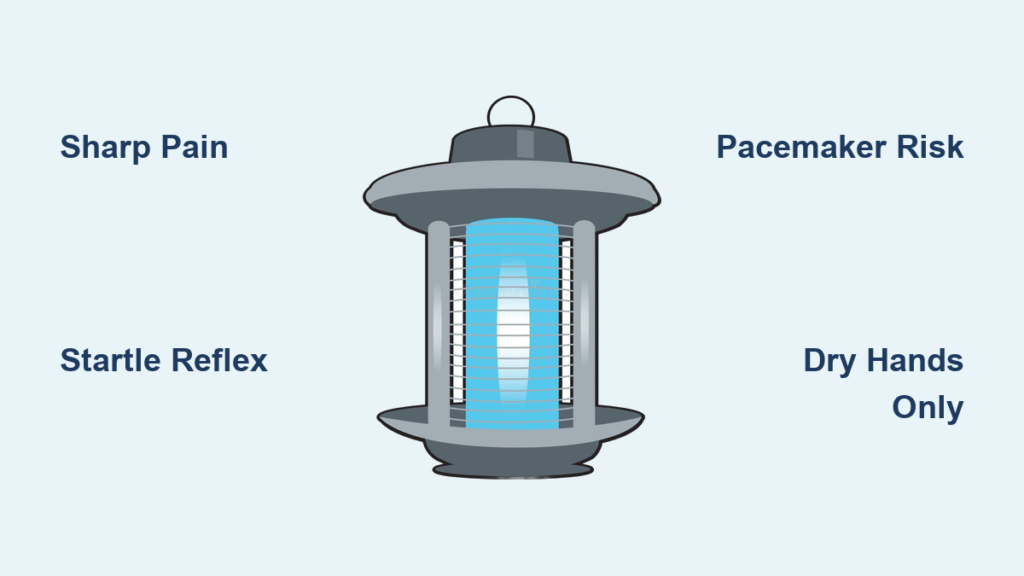
That sharp crack as you zap a mosquito is summer’s soundtrack. But when your finger accidentally bridges the grid of your electric bug zapper racket, panic hits: How bad does this actually hurt? Will it burn? Could it stop your heart? For healthy adults, the shock delivers a jolt that’s intensely painful and startling—but not dangerous. Think of it as the world’s most memorable static shock: over in a flash with no lasting damage. Yet the real risks hide in your involuntary reactions and specific health conditions. Let’s cut through the fear with facts about what happens when you get zapped and how to stay safe.
Why Bug Zapper Shocks Pack a Punch (Without Killing You)

Electric bug zappers work by creating a lethal circuit for insects—but they’re engineered to be non-lethal for humans. Your racket uses just 2–4 AA batteries to charge a capacitor, storing enough energy for a high-voltage (2,000–4,000V) zap. Crucially, the amperage—the current that determines lethality—stays extremely low. This combination lets the electricity arc across tiny insect bodies while keeping human shocks survivable.
How the Protective Grid Prevents Severe Injury
Every consumer bug zapper has a dual-layer safety cage. An outer plastic grid blocks fingers from touching the live inner mesh. For a shock to occur, you must simultaneously bridge the gap between inner and outer grids—exactly what insects do. If your finger only touches the outer grid? Nothing happens. But press against both layers while the trigger’s engaged? That’s when the jolt hits.
Why Voltage Alone Doesn’t Determine Danger
Don’t panic at the “4,000V” label. Voltage is just electrical pressure; amperage (current) causes tissue damage. Household outlets deliver 15–20 amps—enough to kill. Bug zappers output less than 0.005 amps—thousands of times weaker. This explains why the shock stings but won’t cook your organs. It’s why static shocks from doorknobs (20,000V!) rarely harm you: minuscule current duration and amperage make the difference.
What a Bug Zapper Shock Actually Feels Like on Your Skin
If you’ve ever shuffled on carpet and grabbed a metal railing, you’ve felt nature’s version of this zap. But a bug zapper shock amplifies that sensation significantly—without lasting consequences.
The Instant-by-Instant Pain Experience
Your first reaction will be pure surprise. The shock hits as a sharp, stinging jolt—like:
– A red-hot needle piercing your skin for 0.2 seconds
– A rubber band snapped hard against your fingertip
– A crab’s pinch combined with a static shock’s bite
The pain peaks instantly then vanishes, leaving only a tingling numbness at the contact point. Unlike a bee sting (which throbs for hours), this fades within 60 seconds.
Why It’s More Startling Than Damaging
Most users describe the sensation as “unpleasant but forgettable.” Why? The shock’s microsecond duration prevents nerve damage. You might see a tiny red dot where the current entered—similar to a mild static shock burn—but it won’t blister or scar. No muscle contractions occur (unlike wall outlet shocks), so you won’t be “locked” onto the device. Your biggest physical symptom? A throbbing fingertip for 2–3 minutes.
The Real Danger: Startle Reflex Injuries from Bug Zapper Shocks
Forget Hollywood-style electrocution. For healthy adults, the shock itself isn’t the threat—it’s what your body does next.
How Your Startle Reflex Causes Secondary Injuries
That involuntary jerk when zapped is your nervous system’s panic response. In 80% of reported accidents, this causes:
– Dropping the racket onto feet (causing bruises or sprains)
– Stumbling backward into furniture (resulting in head bumps or falls)
– Spilling hot drinks if holding a cup near the bug zapper
One user reported fracturing their wrist after falling off a step ladder post-zap. This is why safety experts emphasize that the shock’s pain is just the warning sign—not the main hazard.
Why Kids and Pets Face Higher Risks
A child’s smaller body mass means the same shock feels 2–3x more intense. Their startle reflex could make them:
– Drop the device on bare feet
– Run blindly into sharp objects
– Experience prolonged distress (some develop insect-zapping phobias)
Pets often get zapped when investigating the racket’s glow. Their yelp and retreat usually prevent serious injury, but the trauma can trigger anxiety around outdoor spaces.
Who Should Never Touch a Bug Zapper (Pacemakers & Heart Conditions)

While healthy adults face minimal risk, certain medical conditions turn bug zappers into legitimate threats.
Pacemaker Interference: A Hidden Life-Threatening Risk
The electrical pulse from a bug zapper can disrupt pacemakers within 6 inches. Even brief contact might:
– Cause temporary pacing failure (heart skips beats)
– Trigger inappropriate shocks from ICD devices
– Induce ventricular fibrillation in vulnerable hearts
If you have a pacemaker, implanted defibrillator, or history of arrhythmia: NEVER handle an active bug zapper. The American Heart Association confirms these devices require avoiding all high-voltage sources—even “low-risk” ones like zappers.
Pregnancy and Neurological Vulnerabilities
Pregnant users face dual risks: the shock’s stress could trigger contractions, and amniotic fluid conducts electricity more efficiently. Those with epilepsy or nerve disorders may experience prolonged muscle spasms. When in doubt, choose chemical repellents or manual swatters instead.
6 Critical Safety Steps to Avoid Bug Zapper Pain
Most shocks happen during careless handling—not while zapping bugs. These steps eliminate 95% of accidents:
Always Engage the Dual-Safety System
Your racket’s two-step activation (safety switch + trigger button) isn’t optional. Treat every bug zapper like a loaded gun:
1. Flip the safety switch OFF immediately after zapping
2. Store it with batteries removed during off-seasons
3. Test functionality away from your body (point at ground)
The Dry-Hand Rule for Summer Use
Water slashes skin resistance by 1,000x, turning a mild zap into a severe shock. Never use your zapper:
– After swimming or sweating heavily
– In rain or high humidity (above 70%)
– Near sprinklers or pools (mist creates conduction paths)
Childproofing Tactics That Actually Work
Assume kids will find your racket. Prevention beats regret:
– Store in locked cabinets (not just high shelves—kids climb)
– Tape batteries shut with electrical tape
– Choose models with auto-shutoff (30+ seconds of inactivity)
– Teach the “zap zone” rule: Only adults operate it outdoors
Immediate Actions After an Accidental Bug Zapper Shock
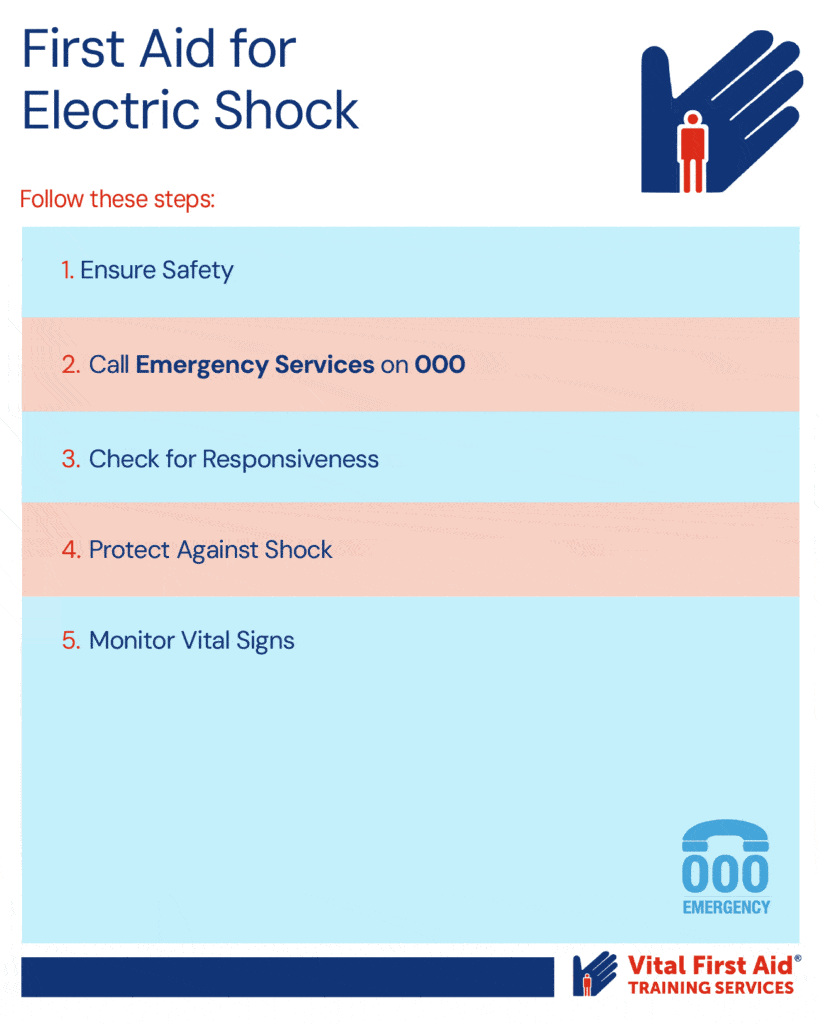
If you get zapped, follow this protocol to rule out hidden risks:
First 10 Seconds: Control Your Reaction
- Drop the racket—don’t fight muscle contractions
- Shake your hand to dissipate residual tingles
- Check contact points for red marks (normal; disappears in 5 mins)
When to Seek Medical Help (Rare but Critical)
Visit urgent care only if you experience:
– Chest pain or palpitations lasting >2 minutes
– Numbness spreading beyond the shock site
– Dizziness that doesn’t resolve after sitting down
– Visible burns (unlikely with store-bought models)
Note: 99% of users need no medical intervention—these symptoms indicate underlying conditions.
How Bad Does a Bug Zapper Hurt? The Final Verdict
Let’s cut through the hype: A bug zapper shock hurts like hell for 2 seconds—but won’t harm healthy adults. It’s the electrical equivalent of stubbing your toe: intensely painful in the moment, then forgotten. The sting serves its purpose—it’s an unforgettable deterrent against careless handling. Yet the real danger lies in your stumble after the zap, not the zap itself.
For maximum safety, treat your racket like a power tool, not a toy. Always use safety locks, keep it dry, and store it locked away from kids. If you have a heart condition or pacemaker, choose non-electric alternatives—this one zap isn’t worth gambling with your health. Remember: That sharp crack you hear when zapping bugs? It’s nature’s warning system. Respect it, and you’ll enjoy bug-free evenings without becoming the victim of your own weapon.
Pro Tip: Test new rackets by zapping a dead fly first. If you feel any vibration in the handle, the safety grid is faulty—retire it immediately. Your skin deserves better than a “learning experience” shock.