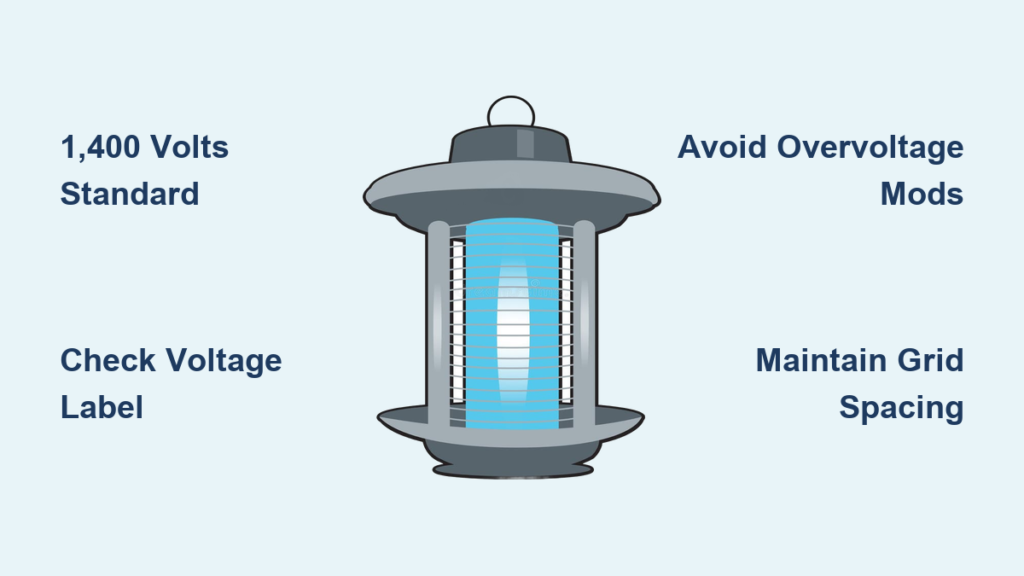
That satisfying zap as a mosquito meets its end isn’t just noise—it’s 1,400 volts of electricity instantly vaporizing insects. If you’ve ever wondered how many volts is a bug zapper, you’re not alone. Millions of homeowners rely on these devices during bug season, yet few understand the precise engineering behind that deadly grid. The voltage isn’t arbitrary; it’s a carefully calibrated balance between insect lethality and human safety. Consumer models typically operate between 400–4,000 volts, with 1,400 volts emerging as the industry standard for handheld units. This article reveals exact voltage specifications for every bug zapper type, explains why voltage alone doesn’t guarantee effectiveness, and debunks dangerous misconceptions about modifying these devices. You’ll learn exactly what to expect from your zapper—and why exceeding standard voltages requires serious caution.
Why 1,400 Volts Is the Goldilocks Voltage for Mosquito Zappers
Your handheld “tennis racket” bug zapper isn’t randomly shocking insects—it’s engineered to deliver precisely 1,400 volts (1.4 kV) for maximum effectiveness. This specific voltage hits the sweet spot where:
– Insect exoskeletons can’t resist it: Mosquitoes and flies have thin chitin shells that 1,400 volts instantly penetrates, causing instant electrocution.
– Human safety remains intact: While painful, the shock from this voltage delivers micro-amps of current—too low to harm humans but lethal to bugs.
– Battery efficiency is optimized: Higher voltages drain batteries faster; 1,400 volts provides reliable performance for 200+ zaps on standard AA batteries.
Go below 400 volts, and insects might survive the shock. Exceed 2,000 volts unnecessarily in small units, and you risk component failure or dangerous arcing. This is why 95% of consumer handheld zappers—from dollar-store models to premium brands—stick to 1,400 volts. If your device claims “2,000+ volts” in marketing materials, check the fine print: that’s often the peak voltage during capacitor discharge, not the sustained grid voltage.
How to Verify Your Bug Zapper’s True Voltage
Don’t trust sticker claims—here’s how to confirm actual output:
1. Check for safety certifications: UL/ETL-listed units list exact voltage on the label (e.g., “Output: 1,400V DC”).
2. Listen to the zap: A crisp, single snap indicates standard 1,400V operation. A prolonged crackle suggests modified circuits exceeding safe limits.
3. Test with foil: Hold aluminum foil between the grids (using insulated pliers!). Standard units create a 3–5mm spark gap—any wider indicates overvoltage.
Why Some Zappers Run at 400V (And Why They Fail)
Budget models sometimes cut corners with 400V circuits, but this voltage rarely delivers reliable kills. Mosquitoes with thicker wings or moisture on their bodies often survive, leading to “zapped but not dead” insects buzzing away. If your zapper requires 2–3 contacts to kill bugs, it’s likely underpowered—time for an upgrade to a true 1,400V unit.
Commercial vs. Residential Bug Zappers: Voltage Differences You Must Know
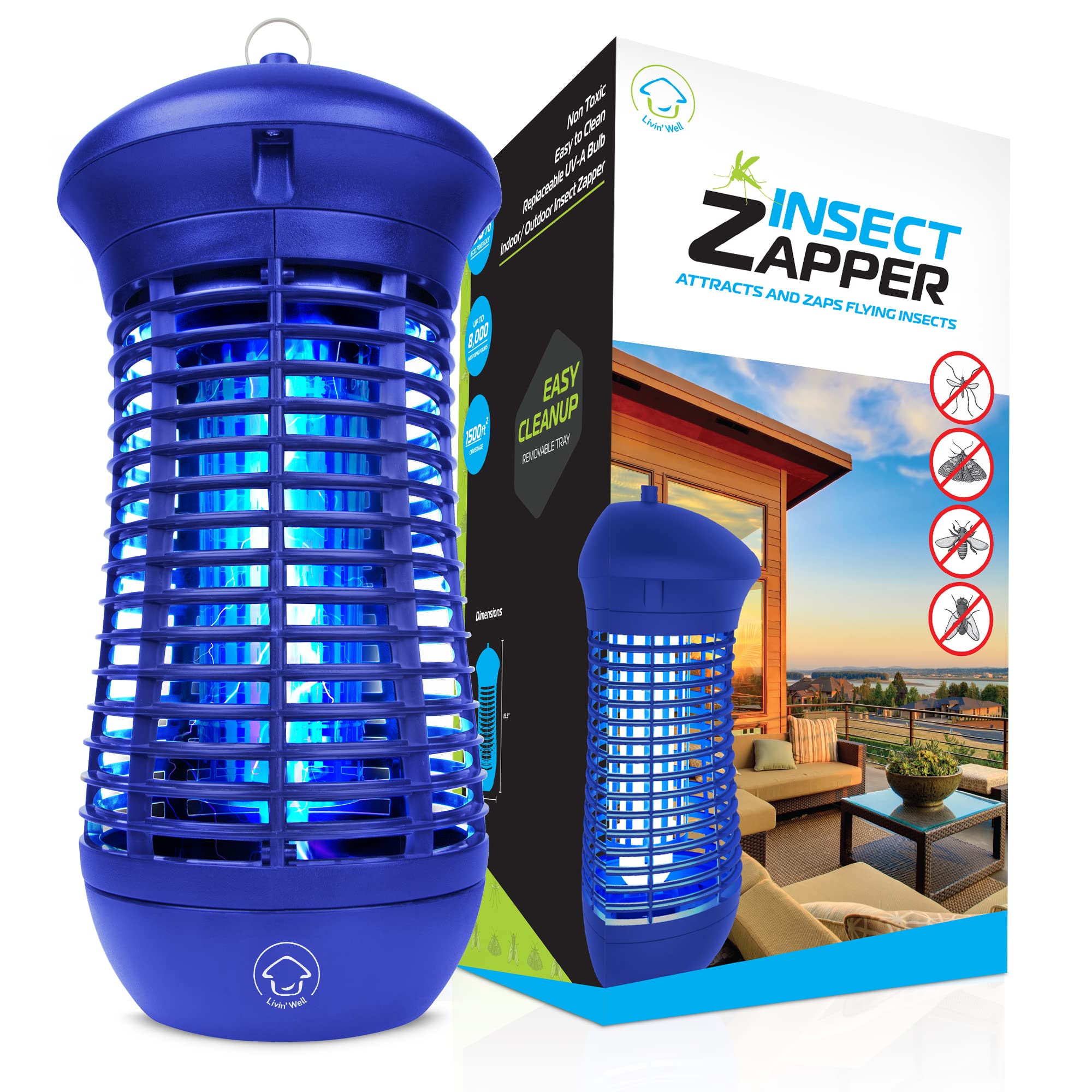
Not all bug zappers operate at the same voltage. The gap between a patio lantern and a barn-mounted unit spans 3,600 volts—and choosing wrong risks wasted money or safety hazards.
1,400V Handhelds vs. 4,000V Commercial Units: What Changes
| Feature | Home Handheld (1,400V) | Commercial Unit (4,000V) |
|---|---|---|
| Grid spacing | 2–3mm | 8–10mm |
| Kill radius | 6 inches | 3+ feet |
| Battery life | 200–300 zaps | Continuous AC operation |
| Safety risk | Mild shock | Burns/nerve damage |
Critical insight: Commercial units use 4,000V because wider grid spacing (needed for large coverage areas) requires higher voltage to jump the gap. A mosquito bridging 10mm grids needs 4x the voltage of one contacting 2mm grids. This is why you should never use commercial-grade zappers near children—they can deliver painful burns, unlike standard 1,400V home models.
Why Agricultural Zappers Exceed 4,000V (And Aren’t for Backyards)
In barns or grain storage, zappers targeting beetles or moths often hit 5,000–7,000 volts. As one agricultural technician noted in user reports: “For thick-shelled pests like mealworms, you need 7,000V to ensure the current penetrates their bodies.” But this comes with trade-offs:
– Dangerous arcing: Stray sparks can ignite dry hay or dust.
– Insect fragmentation: Overpowered zaps blast bugs into airborne debris (a hygiene hazard).
– Regulatory limits: Most residential codes cap zapper voltages at 2,000V for safety.
How Bug Zappers Transform 120V Wall Power into 1,400V Death Grids
Your bug zapper isn’t magic—it’s clever circuitry converting harmless household electricity into insect-killing force. Here’s exactly how it works without external power sources:
The 3-Step Voltage Boost Process
- Oscillator stage: A transistor circuit chops 120V AC into rapid pulses (like flicking a switch 20,000x/second).
- Transformer jump: These pulses feed into a ferrite-core transformer, stepping up voltage to 300–500V.
- Cockcroft-Walton multiplier: Diodes and capacitors multiply that voltage in stages—each stage adds ~300V. A standard 5-stage multiplier hits 1,400V.
Pro tip: If your zapper weakens over time, a failing capacitor in this multiplier is usually the culprit. Replace it with an identical microfarad-rated part—never upgrade capacitance (more on why below).
Why Adding Capacitors Is Dangerously Misunderstood
Online forums buzz with “pro tips” to “boost zapper power” by adding capacitors. One user claimed: “I added a TV capacitor to triple capacitance—it blows flies into pieces!” This is extremely dangerous. Higher capacitance stores more energy (joules), not just voltage. While standard zappers deliver 0.005 joules (painful but safe), modified units can hit 0.1+ joules—enough to cause:
– Severe burns from prolonged arcing
– Cardiac interference in pacemaker users
– Fire risk from overheating components
The resource document explicitly warns: “Limit total charge to prevent excessive insect fragmentation.” Stick to factory specs—your safety isn’t worth a slightly louder zap.
Grid Spacing & Capacitance: Why Voltage Isn’t the Whole Story
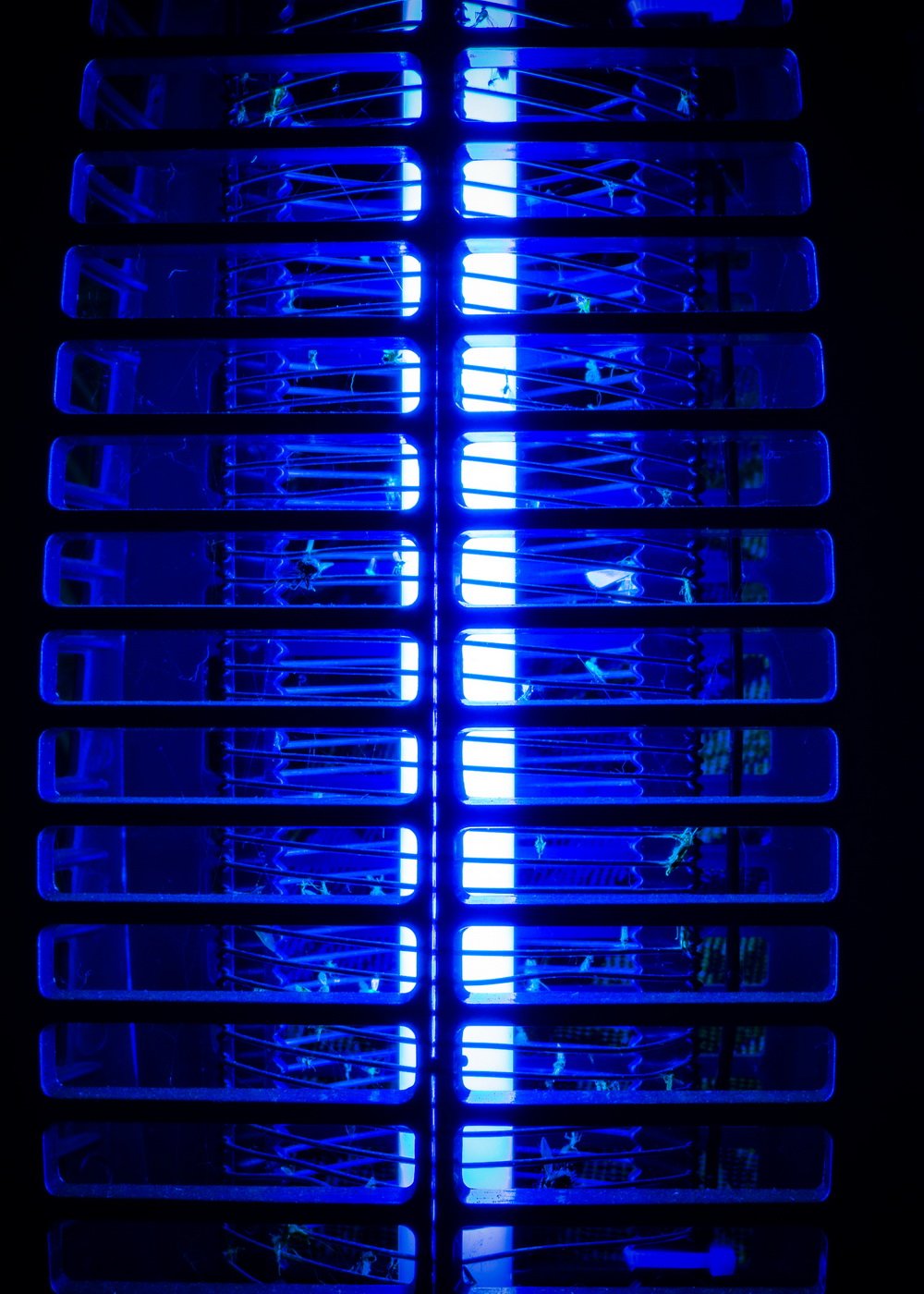
A 1,400V zapper with 5mm grid spacing will kill mosquitoes but fail against horseflies. Effectiveness depends on three interlocking factors:
The Voltage-Grid Spacing Rule of Thumb
- 2–3mm gaps: Ideal for mosquitoes (1,400V sufficient)
- 5–6mm gaps: Needed for flies/beetles (requires 2,000V+)
- 1-inch gaps: For large pests like moths (demands 7,000V+)
As one technician noted: “Wider spacing reduces accidental arcing but requires higher voltage to bridge the gap through an insect’s body.” If your zapper’s grid wires are bent apart, it loses effectiveness—even at 1,400V.
Capacitance: The Hidden Factor in “Zap Power”
Voltage determines if a spark jumps, but capacitance (measured in microfarads) controls how much energy delivers:
– Low capacitance (0.01µF): Quick, clean kills (standard for 1,400V units)
– High capacitance (0.05µF+): Explosive kills but risks component damage
Critical mistake to avoid: Cleaning grids with metal objects. A bent wire reducing gap spacing by 1mm can cause continuous arcing at 1,400V, overheating the circuit. Always use a plastic toothpick for debris removal.
Safety Facts: Why 1,400 Volts Won’t Kill You (But 4,000V Might)

The biggest myth about bug zappers? “High voltage = deadly.” Reality: current (amps), not voltage, determines lethality. Here’s what the data reveals:
Why Your Handheld Zapper Is Safe
- Current limited to 0.005 amps: Far below the 0.1-amp threshold for human lethality.
- Pulsed discharge: Energy releases in 0.0001-second bursts—too brief to disrupt heart rhythm.
- Skin resistance: Dry human skin (100,000+ ohms) blocks most current at 1,400V.
When Higher Voltages Become Dangerous
| Voltage | Human Risk Level |
|---|---|
| 1,400V | Mild shock (like static electricity) |
| 2,500V+ | Painful burns, muscle spasms |
| 4,000V+ | Nerve damage, potential cardiac issues |
Non-negotiable safety rule: Never disassemble a plugged-in zapper. Capacitors hold lethal charges for hours after unplugging. One technician report states: “Even dead units can deliver 4,000V shocks from residual capacitor energy.” Always short the grid terminals with an insulated screwdriver before servicing.
Conclusion: Choosing the Right Voltage for Your Needs
So how many volts is a bug zapper? For 95% of homeowners, the answer is precisely 1,400 volts—a scientifically optimized voltage that kills mosquitoes instantly while keeping families safe. Commercial patio units typically run at 2,000–4,000V for wider coverage, while agricultural models may exceed 4,000V for thick-shelled pests. Crucially, voltage alone doesn’t determine effectiveness: grid spacing must match the target insect size, and capacitance must stay within safe limits. Never modify zappers for higher voltage—user reports confirm this risks burns, component failure, and dangerous arcing. For reliable performance, choose UL-certified units with labeled voltage specs, maintain proper grid spacing, and replace aging capacitors promptly. Remember: the ideal bug zapper isn’t the one with the highest voltage—it’s the one engineered for your specific pest problem without compromising safety. Keep it at 1,400V for backyard use, and leave the 7,000V systems to professionals managing agricultural threats.
Final Maintenance Tip: Test your zapper monthly by holding it near a known-working unit. If the zap sounds weaker or creates shorter sparks, replace the batteries or capacitors—don’t risk underpowered protection during peak mosquito season.