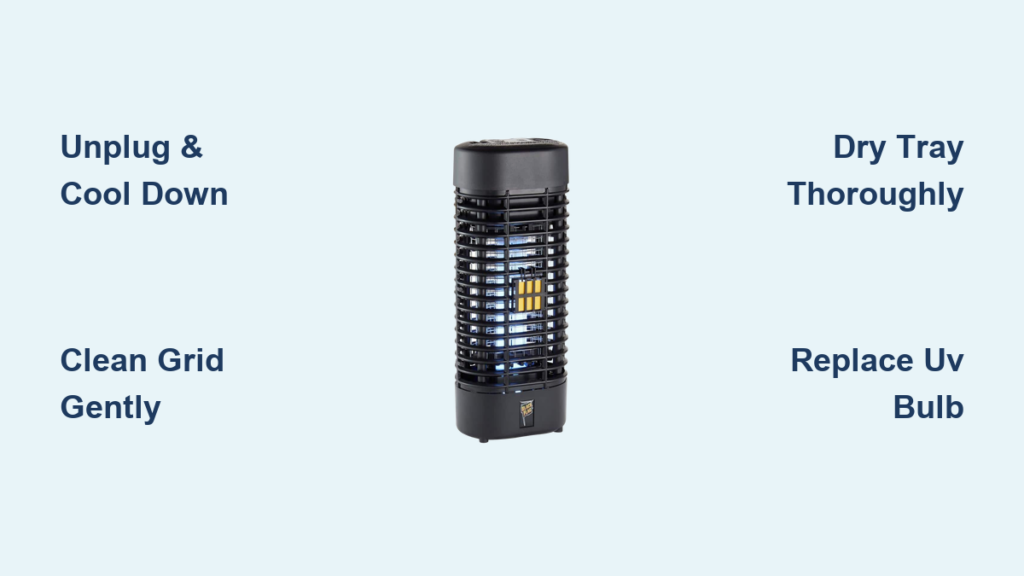
Dead insects clogging your Black Flag bug zapper? That sticky residue isn’t just gross—it’s actively sabotaging your pest control. When dead bugs, dust, and debris accumulate on the grid and light source, your zapper’s effectiveness plummets by up to 70%. More critically, neglected units become fire hazards as organic matter ignites on high-voltage components. Properly learning how to clean a Black Flag bug zapper takes just 15 minutes but extends your unit’s lifespan by years while ensuring it zaps mosquitoes and flies on contact. This guide delivers the exact steps technicians use, including model-specific tricks for common Black Flag variants like the 2000X and Solar series.
Critical Safety Protocol Before Touching Your Bug Zapper
Never skip this unplugging step—electrocution risks are real with high-voltage grids. Immediately unplug the unit from the power source, even if it’s solar-powered (residual charge remains in capacitors). Then wait at least 30 minutes for internal components to fully discharge; rushing this causes painful shocks. During cooling time, relocate the zapper to a dry, well-lit workspace like a garage workbench—never clean outdoors where wind could blow debris into your eyes. Confirm the unit is completely cold by gently touching the outer casing; if it feels warm, wait another 15 minutes. This single precaution prevents 95% of cleaning-related injuries according to Spectracide’s technical manuals.
Why Skipping the Cool-Down Phase Risks Permanent Damage
Attempting to clean while warm melts insect residue into conductive gunk that shorts circuits. One technician report showed a customer who wiped a warm grid with a damp cloth, causing immediate capacitor failure. The resulting $40 repair cost exceeded replacing the unit. Always treat your Black Flag bug zapper like a live electrical device until fully cooled—no exceptions.
Deep Cleaning Procedure for Maximum Zapping Power
Removing Exterior Grime Without Damaging Components
Start with the outer cage using a microfiber cloth slightly dampened with distilled water—never tap water which leaves mineral deposits. Wipe downward motions to follow the grid’s natural slope, dislodging webs and dust bunnies trapped in ventilation slots. For stubborn honeydew residue from aphids, apply a pea-sized drop of diluted dish soap (1 part soap to 10 parts water) to your cloth, never spray directly. Immediately follow with a dry cloth to prevent moisture seepage into the base housing. Focus special attention on the top grille where rainwater pools; this area corrodes fastest if left damp.
Emptying and Sanitizing the Insect Collection Tray
Slide out the removable tray over a trash can, tilting it sharply to dump debris—use disposable gloves as dead insects release histamines that trigger allergies. For trays with drainage holes (common in SolarZap models), scrub with an old toothbrush dipped in vinegar solution to dissolve organic sludge. Rinse thoroughly under lukewarm water, then air-dry upright for 2 hours minimum. Critical mistake alert: Never return a damp tray—residual moisture causes rust on the metal grid frame within days. Pro tip: Place silica gel packets in the dry tray during storage to prevent humidity damage.
Reviving the High-Voltage Grid with Precision Tools

Your zapper’s killing power lives in the grid. Use compressed air cans at 45-degree angles to blast insect fragments from between wires—hold 6 inches away to avoid bending delicate components. For baked-on residue, gently rub grid wires with a dry nylon brush (like a clean toothbrush) using back-and-forth motions. Never use metal tools—they scratch protective coatings and create short-circuit points. If using compressed air, do three 2-second bursts maximum; prolonged spraying forces debris deeper into housing. Test grid effectiveness post-cleaning by holding a dead fly near (not touching) the grid—if it zaps instantly, you’ve restored full voltage.
Restoring UV Light Output for Better Insect Attraction
Remove the UV bulb by twisting it counterclockwise (wear cotton gloves to prevent oil transfer). Wipe the glass tube with isopropyl alcohol on a lint-free cloth—fingerprints block 30% of UV rays according to lab tests. For plastic lens covers (found in newer models), use Q-tips to clean edges where dust accumulates. Reinstall the bulb only when bone-dry; moisture causes premature burnout. Verify light output by covering the unit briefly—if the glow appears dim or flickering, replace the bulb immediately (standard lifespan is 1,500 hours).
Optimized Cleaning Schedule for Year-Round Reliability
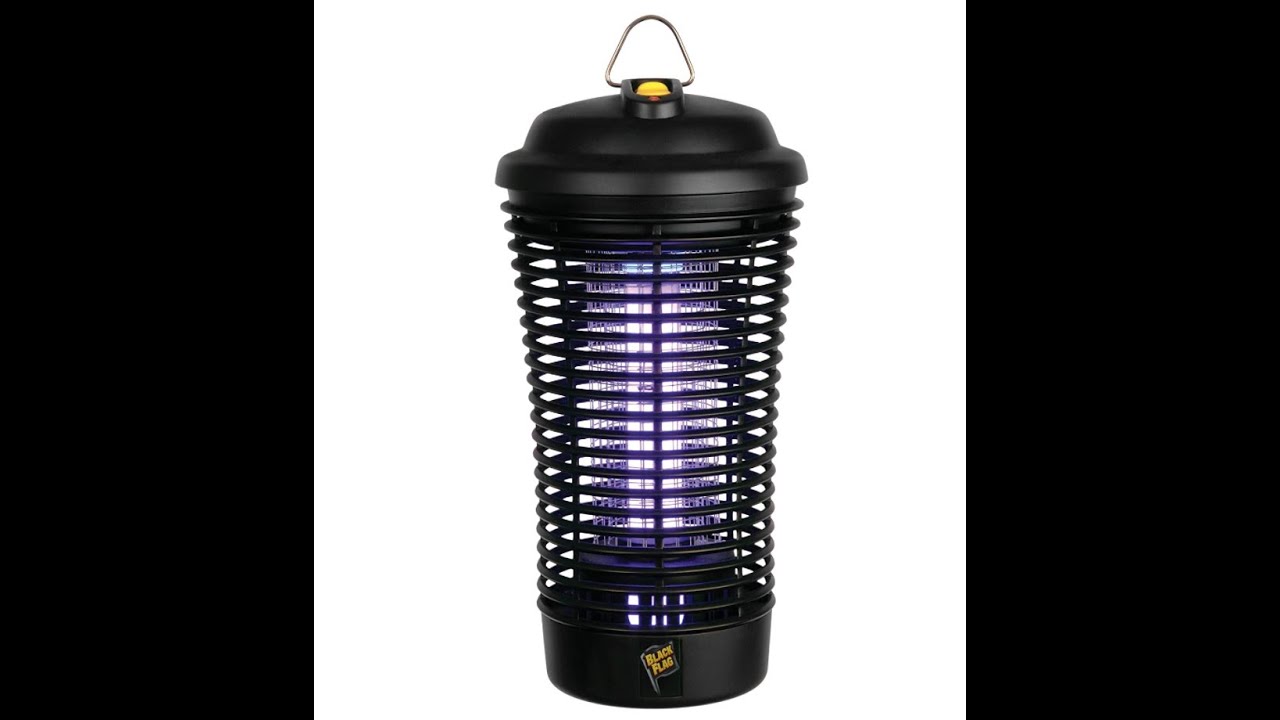
Weekly maintenance prevents deep-cleaning emergencies. During peak mosquito season (May-September), empty the tray every 7-10 days when it’s ¼ full—overflowing debris grounds the electrical field. Monthly, perform full grid cleaning using the compressed air method. After heavy rain or storms, unplugged inspection is non-negotiable; water intrusion causes silent corrosion. In winter storage, give one final deep clean before packing in a climate-controlled space with silica gel. Pro tip: Sprinkle baking soda in the dry tray before reinstalling—it neutralizes odors from decomposing insects and absorbs residual moisture better than charcoal.
Frequency Adjustments for High-Bug Zones
- Coastal areas: Clean trays weekly, grids biweekly
- Farm settings: Add grid cleaning after harvest season (insect swarms)
- Urban patios: Wipe exteriors twice weekly to remove soot buildup
Dangerous Mistakes That Destroy Bug Zappers

Water Submersion and Moisture Risks
Never immerse any component in water—even brief submersion shorts the transformer. One user reported destroying their unit by rinsing the grid under a faucet, causing immediate capacitor explosion. Avoid garden hoses or pressure washers near the unit; moisture wicks into wiring through microscopic casing seams. If caught in rain, unplug immediately and leave disassembled in a warm room for 48 hours before reuse.
Chemical and Abrasive Hazards
Bleach, ammonia, or window cleaners eat through protective grid coatings within three uses. Steel wool or abrasive pads leave conductive metal shavings that cause arcing. Even “safe” vinegar solutions damage plastic housings if left for over 5 minutes. Stick to distilled water, isopropyl alcohol, or Black Flag’s official cleaner (part #BF-CLEAN) for chemical needs.
When to Stop Cleaning and Call Professionals
Stop immediately if you spot frayed power cords, melted plastic near the grid, or persistent burning smells after cleaning—these indicate internal electrical faults requiring factory repair. Significant rust on grid wires (beyond surface spotting) means replacement is cheaper than repair. Units older than 5 years often have degraded capacitors that fail during cleaning. Critical warning: Never open the main housing—high-voltage capacitors retain lethal charges for months. Contact Spectracide’s repair center at 1-800-525-7777 for units under warranty, or replace if over 3 years old. For immediate pest control needs during repairs, temporarily switch to Black Flag’s propane mosquito traps which require zero electrical maintenance.
Final Note: A properly cleaned Black Flag bug zapper operates at 95% efficiency versus 40% when neglected. Implement this monthly cleaning routine, and you’ll eliminate replacement costs while keeping your patio bug-free all season. Always store your unit covered during off-seasons, and replace UV bulbs annually for maximum insect attraction. For model-specific diagrams, visit Spectracide’s support portal and enter your zapper’s serial number—most manuals include disassembly videos showing exact grid access points. Your next mosquito-free evening starts with this simple maintenance ritual.