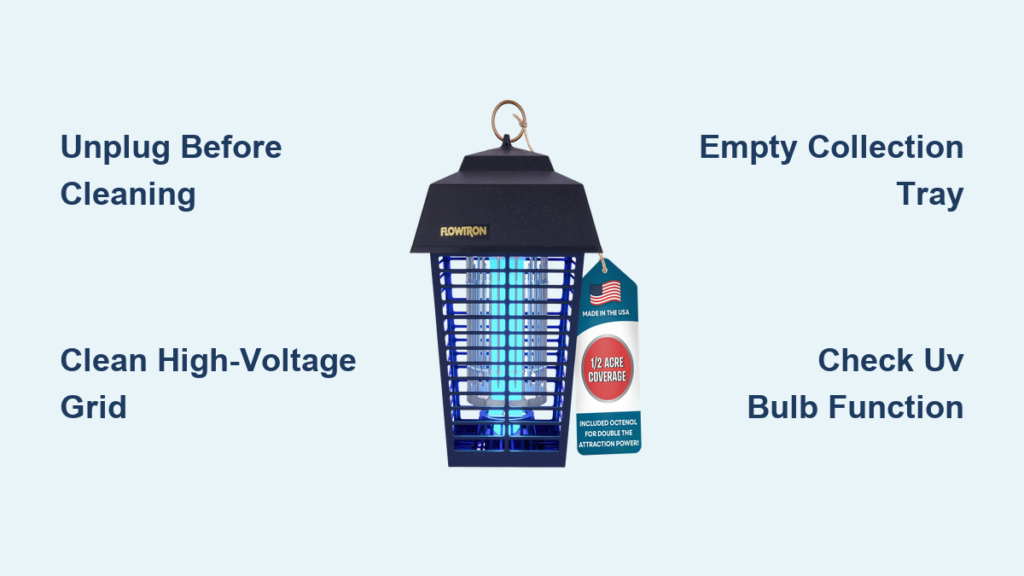
Your Flowtron bug zapper has been working hard to protect your backyard from mosquitoes and other flying pests, but suddenly you notice it’s not zapping as effectively as before. Maybe you’re hearing loud popping sounds or seeing blue flashes that weren’t there last week. This is your sign that it’s time to clean your Flowtron bug zapper. A properly maintained unit can last for years, while a neglected one becomes inefficient and potentially unsafe. In this guide, you’ll discover exactly how to clean Flowtron bug zapper units safely and effectively—without risking electrical hazards or damaging your investment.
When bug ash (the powdery residue left after insects are zapped) builds up on the high-voltage grid, it creates conductive pathways that cause electricity to arc to the frame instead of across the grid. This not only reduces killing efficiency but can permanently damage the transformer. Most homeowners don’t realize that regular cleaning is the single most important maintenance task for their Flowtron bug zapper. By the end of this guide, you’ll know precisely when to clean your unit, the right tools to use, and a step-by-step process that takes less than 20 minutes.
Why Your Flowtron Bug Zapper Stops Zapping Effectively
How Bug Ash Causes Electrical Arcing and Grid Failure
The distinctive zap sound you hear from your Flowtron unit comes from electricity jumping across the grid wires to electrocute insects. When the fine, conductive residue from zapped bugs accumulates between these wires, it creates unintended pathways for the current. This causes electricity to arc to the housing instead of maintaining the proper gap between grid wires.
You’ll notice performance issues when your Flowtron bug zapper starts making loud snapping or popping sounds, shows visible blue flashes outside the grid area, or simply fails to kill insects as effectively as before. These are all indicators of excessive bug ash buildup. Left unaddressed, this arcing can permanently damage the high-voltage transformer, which is the most expensive component to replace.
Signs Your Flowtron Bug Zapper Needs Immediate Cleaning
Don’t wait until your bug zapper stops working completely—watch for these early warning signs that indicate it’s time for how to clean Flowtron bug zapper maintenance:
- Unusual sounds: Loud popping, snapping, or continuous buzzing instead of the normal faint hum
- Visible arcing: Blue electrical sparks appearing outside the main grid area
- Reduced effectiveness: More flying insects in your yard despite the zapper running
- Diminished UV light: Blackened bulbs or reduced purple glow from the UV tubes
- Physical buildup: Visible accumulation of insect remains on the grid wires
Ignoring these warning signs leads to progressively worse performance and eventually complete failure. A simple cleaning session can restore your Flowtron to peak efficiency in under 20 minutes.
Essential Safety Steps Before Cleaning Your Flowtron Bug Zapper
Critical Pre-Cleaning Safety Protocol
ALWAYS UNPLUG YOUR FLOWTRON BUG ZAPPER FROM THE ELECTRICAL OUTLET BEFORE BEGINNING ANY MAINTENANCE. This cannot be overstated—the high-voltage grid retains a lethal charge even when turned off if still connected to power. Wait at least 15 minutes after unplugging before handling internal components to allow capacitors to discharge fully.
Work in a dry, well-ventilated area away from flammable materials. Never attempt to clean your Flowtron bug zapper while it’s plugged in or damp. Water and high voltage are a deadly combination. If you’ve recently used the unit, allow it to cool completely before starting your cleaning process.
Required Tools for Flowtron Bug Zapper Cleaning
You’ll need just a few basic tools for effective cleaning:
- Medium-stiffness brush: An old toothbrush (dedicated to this purpose) works perfectly
- Compressed air canister: For blowing debris from hard-to-reach areas
- Small flat-head screwdriver: For carefully scraping stubborn deposits
- Tweezers or needle-nose pliers: For removing larger insect carcasses
- Soft microfiber cloth: For wiping down housing and bulbs
- Mild all-purpose cleaner: Only for external surfaces (never on electrical components)
Avoid using metal brushes, water directly on electrical components, or harsh chemical cleaners that could leave conductive residues.
Step-by-Step Flowtron Bug Zapper Cleaning Process
Power Down and Complete Disassembly Checklist
Start by unplugging your Flowtron unit and moving it to your cleaning area. Most Flowtron models feature a simple latch system for accessing the grid—consult your owner’s manual for model-specific instructions. For common models like the ULV-1500 or MK-65D, you’ll typically:
- Remove the outer protective cage by pressing the release tabs
- Take out the collection tray from the bottom
- Carefully lift out the inner grid assembly
- Remove the UV bulbs by gently twisting them counterclockwise
Place all components on a clean surface in the order you remove them to simplify reassembly. Take photos during disassembly if you’re unsure about reassembly steps.
Collection Tray Cleaning and Maintenance
The collection tray catches most dead insects, preventing them from reaching the grid area. Remove this tray and dispose of the contents in your outdoor trash can—never indoors! Wash the tray with mild soapy water and a soft brush, being careful not to scratch the surface. Rinse thoroughly and allow it to air dry completely before reinserting.
For persistent odors, sprinkle baking soda in the tray before reinserting it. A clean collection tray prevents insects from being drawn back into the grid area, reducing future buildup.
High-Voltage Grid Deep Cleaning Technique

This is the most critical step in how to clean Flowtron bug zapper units properly. With the grid assembly removed, use your dry toothbrush to gently dislodge bug ash between the wires. Work methodically from top to bottom, using short, firm strokes between each wire pair.
For stubborn deposits:
– Use compressed air at a 45-degree angle to blow debris loose
– For caked-on residue, carefully scrape with a plastic dental pick (never metal)
– Rotate the grid periodically to access all angles
Never bend or force the grid wires—they must maintain precise spacing for proper operation. If wires are already bent, consult Flowtron customer service before attempting to straighten them.
Housing and UV Bulb Cleaning Protocol

Wipe the interior housing with a dry microfiber cloth to remove loose debris. For persistent grime, lightly dampen the cloth with isopropyl alcohol (never water) and wipe carefully—avoiding electrical contacts.
UV bulbs lose effectiveness when coated with dust and bug residue. Remove each bulb and wipe gently with a soft, dry cloth. Check for blackening at the ends—this indicates the bulb needs replacement. Reinstall bulbs firmly but don’t overtighten.
Flowtron Bug Zapper Maintenance Schedule for Maximum Longevity
Weekly and Monthly Cleaning Routine
Establish this simple maintenance routine to keep your Flowtron performing optimally:
- Weekly: Empty collection tray and remove large debris from grid
- Monthly (peak season): Full cleaning as described above
- Seasonal: Replace UV bulbs (typically last 3,000-5,000 hours)
- Before storage: Complete cleaning and ensure all components are dry
During heavy bug seasons (summer months), you may need to clean your Flowtron bug zapper every 2-3 weeks instead of monthly. Units placed near standing water or in humid environments require more frequent attention.
Post-Cleaning Testing and Performance Verification
After reassembly, perform these checks before returning your Flowtron to service:
- Visual inspection: Ensure all components are properly seated
- Dry run test: Plug in and operate for 5 minutes away from flammable materials
- Listen for: Consistent transformer hum (not popping or snapping)
- Look for: Even blue glow across grid (no localized bright spots)
If you notice continued arcing after proper cleaning, the high-voltage transformer may be damaged and require professional service.
Troubleshooting Common Flowtron Bug Zapper Problems After Cleaning

Why Your Cleaned Bug Zapper Still Isn’t Working Properly
If your Flowtron unit shows issues after cleaning, check these common problems:
- Loose bulb connections: UV bulbs must be fully seated to activate the grid
- Moisture in components: Allow additional drying time if humidity is high
- Bent grid wires: Even slight misalignment prevents proper arcing
- Dirty electrical contacts: Clean terminal points with isopropyl alcohol
Never operate a unit that continues to arc excessively after proper cleaning—this indicates internal damage that requires professional attention.
When to Replace Rather Than Repair Your Flowtron
Consider replacement if:
– The transformer emits burning smells after cleaning
– Grid wires are significantly bent or broken
– The unit is more than 5 years old with multiple issues
– Replacement parts cost approaches new unit price
Most Flowtron models have 2-3 year warranties covering electrical components—check your documentation before attempting complex repairs.
A clean Flowtron bug zapper operates at peak efficiency, zapping insects effectively while minimizing electrical waste and safety risks. By following this precise how to clean Flowtron bug zapper routine every 4-6 weeks during active seasons, you’ll extend your unit’s lifespan by years while maintaining optimal pest control. Remember that regular maintenance takes less time than troubleshooting a failed unit—just 15 minutes of prevention saves hours of frustration. Your backyard deserves reliable protection from flying pests, and now you have the exact process to keep your Flowtron performing like new season after season.