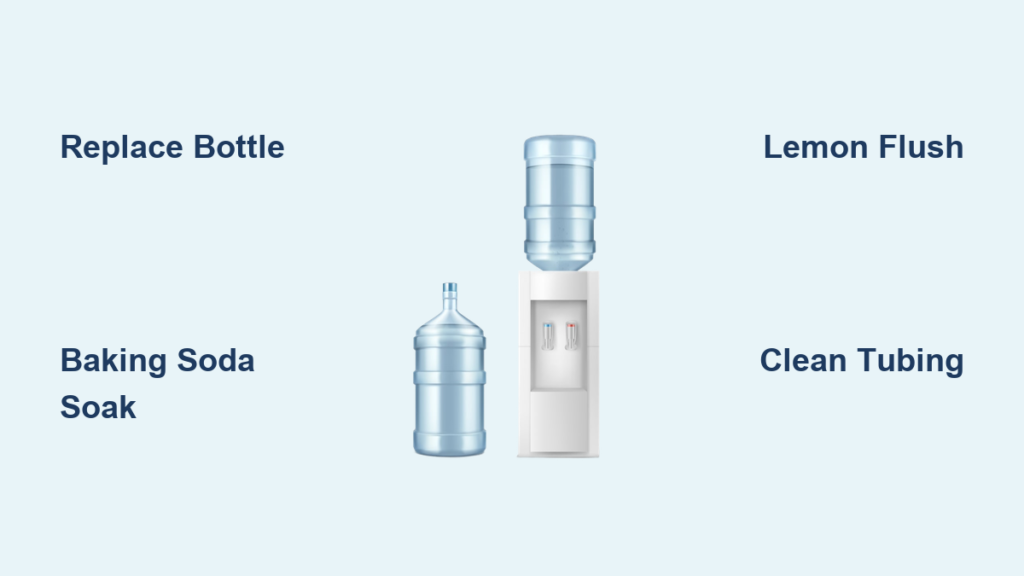
That chemical-like plastic aftertaste ruining your water cooler experience? You’re not alone. Millions of users report this frustrating issue—especially with new coolers—where water develops an unpleasant “new plastic” or chemical flavor that makes hydration feel like a chore. This taste typically stems from volatile compounds leaching from plastic components, stagnant water absorbing odors, or low-quality water bottles. While usually harmless, it transforms your refreshing drink into something you’ll avoid. The good news? With targeted cleaning methods and precise troubleshooting, you can eliminate this problem permanently. In this guide, you’ll discover exactly where plastic taste originates, how to diagnose it in minutes, and proven cleaning protocols that deliver crisp, clean water—no guesswork required.
Why Your New Water Cooler Has Plastic Taste (and How Long It Takes to Go Away)
New coolers often release volatile organic compounds (VOCs) from reservoirs, tubing, and seals—a process called off-gassing. These compounds dissolve into water, especially when it sits stagnant overnight, creating that signature chemical aftertaste. Heat accelerates this: if your cooler has a hot-water function, the reservoir temperature can increase leaching by up to 300%. Most users experience peak plastic taste during the first 1–2 weeks, but it shouldn’t persist beyond 3 weeks of regular use. If it does, aggressive cleaning is needed immediately—don’t wait for it to “wear off.”
How Off-Gassing Creates Immediate Plastic Taste
When water contacts new plastic parts (like the reservoir tank or internal tubing), VOCs migrate into the liquid within hours. You’ll notice this strongest when:
– Drawing water first thing in the morning after overnight stagnation
– Using hot water (where heat speeds up compound transfer)
– The cooler is placed near heat sources like radiators or sunny windows
Why Plastic Taste Returns After Water Sits Overnight
Stagnant water acts like a sponge for plastic compounds. If your cooler sits unused for 8+ hours, taste returns even after cleaning. To prevent this:
– Flush 1 cup of water from both taps before first use each day
– Use a smaller 3-gallon bottle if household consumption is low
– Store the cooler in a cool room (below 75°F/24°C) to slow leaching
Fix Plastic Taste From Water Bottles: 3 Immediate Steps
The 3- or 5-gallon bottle is the culprit 60% of the time—especially with low-quality plastics or improper handling. Don’t assume your water source is clean; diagnose and fix this first before deep-cleaning the cooler itself.
Step 1: Switch to a Fresh, High-Quality Water Bottle
Immediately replace your current bottle with a new one from a different brand. Key checks:
– Verify BPA-free certification (look for “BPA-Free” stamped on the bottle base)
– Check manufacturing dates—water stored over 6 months develops plastic taste
– Pour water directly from the new bottle into a glass—no cooler involved. If taste persists, the bottle is the problem.
Step 2: Ensure Proper Bottle Venting to Prevent Stagnation
An unremoved safety seal or improper cap placement traps air, creating vacuum pressure that concentrates plastic compounds. Always:
1. Remove the entire bottle cap (not just puncturing the seal)
2. Wipe the bottle neck with vinegar before mounting
3. Listen for hissing when placing the bottle—this confirms proper airflow
Step 3: Clean the Bottle Saddle and Spike Area
Residue here taints every bottle. Weekly, unplug the cooler and:
– Soak the spike assembly in 1:1 vinegar-water for 20 minutes
– Scrub the saddle with a baking soda paste using an old toothbrush
– Rinse thoroughly before reinstalling
Deep Clean Your Water Cooler Reservoir With Baking Soda Overnight

The reservoir tank is the #1 cause of persistent plastic taste in coolers over 3 months old. When water sits here for hours, plastic compounds absorb deeply into the tank walls. Baking soda’s alkaline properties neutralize these odors where vinegar falls short.
How to Perform the Reservoir Baking Soda Soak
- Unplug the cooler and drain all water through taps
- Mix 2 tablespoons baking soda into 1 gallon warm water
- Fill the reservoir completely and let sit 8–12 hours (overnight)
- Drain fully, then flush with 5+ gallons of fresh water
– Critical: Run water until it tastes neutral—never skip this step!
Eliminate Plastic Taste With Lemon Juice Flush (Step-by-Step)
Lemon juice’s citric acid breaks down plastic residues without harsh chemicals. Whirlpool’s engineering team confirms this method outperforms vinegar for taste removal—plus, it leaves zero odor. Use this for new coolers or post-bottle replacement.
Whirlpool-Approved Lemon Flush Protocol
- Juice 4–6 fresh lemons (or use 4 tsp bottled juice per gallon)
- Combine with 1 gallon cool water—hot water degrades effectiveness
- Fill reservoir and wait 30 minutes (no longer—citric acid can etch plastic)
- Drain through both hot and cold taps
- Flush with 3 gallons clean water minimum
How to Clean Internal Tubing Causing Persistent Plastic Taste

Cloudy or yellowed tubing leaches taste even after reservoir cleaning. This is common in coolers over 2 years old where plastic degrades. You’ll know tubing is the issue if plastic taste appears immediately after flushing (no stagnation needed).
Tubing Cleaning Checklist
✅ For accessible tubing:
– Disconnect lines and soak in lemon solution for 1 hour
– Flush with 1:3 vinegar-water mix using a turkey baster
– Replace kinked or discolored sections ($5–$15 online)
✅ For sealed systems:
– Run baking soda solution through taps for 10 minutes
– Let sit 2 hours before flushing
– Repeat if taste lingers after first attempt
Stop Plastic Taste From Water Filters: Bypass and Replace Guide
Saturated filters trap plastic compounds and bacteria that create secondary tastes. If your cooler has a filter, it’s likely contributing—especially if replaced less than every 6 months.
Filter Troubleshooting Flow
- Bypass the filter using the manual override (consult your manual)
- Draw 2 cups of water—if taste vanishes, the filter is faulty
- Replace immediately with a carbon-block filter (not granular)
- Flush 2 gallons through the new filter before use
Warning: Never reuse old filters—even “lightly used” ones harbor plastic-absorbing biofilm.
Prevent Plastic Taste With Monthly Water Cooler Maintenance
Prevention beats cure. Dedicate 15 minutes monthly to avoid recurring taste issues. This routine stops 90% of plastic taste cases before they start.
Your Monthly Maintenance Routine
| Task | Frequency | Critical Tip |
|---|---|---|
| Wipe drip tray | Weekly | Use vinegar-soaked cloth to prevent mold |
| Sanitize taps | Bi-weekly | Soak aerators in lemon juice for 15 min |
| Full vinegar flush | Monthly | 1:3 vinegar-water mix; flush 5+ gallons after |
| Filter replacement | Every 6 months | Set phone reminders—don’t guess! |
The Lemon Test: Diagnose Plastic Taste Source in 5 Minutes
Pinpoint the exact origin in under 5 minutes—no tools needed. This method isolates whether the bottle, reservoir, or tubing is to blame before you clean unnecessarily.
Step 1: Bottle Isolation Test
Fill a glass directly from a new bottle (no cooler). If plastic taste exists, replace the bottle source.
Step 2: Immediate Tap Test
Run water from the cold tap into a glass right after flushing. If taste appears instantly, tubing is degraded.
Step 3: Stagnation Test
Let flushed water sit in a glass for 1 hour. If taste develops, the reservoir needs replacement.
When to Replace Your Water Cooler Reservoir Tank (LG Models)

For LG refrigerator dispensers (models LFXS28968S, LMXS28626S), the internal reservoir (Part # AJL72911502) is notorious for retaining plastic taste after 18 months. Cleaning rarely works—replacement is the only fix.
Reservoir Replacement Signs
- Plastic taste persists after 3+ deep cleans
- Water develops film after sitting 4+ hours
- Reservoir walls feel slimy despite cleaning
Pro Tip: Check warranty coverage—LG often replaces this part free within 2 years.
When to Call a Professional for Built-In Dispenser Plastic Taste
If plastic taste remains after exhausting all steps, internal components may be failing. Call a technician immediately for:
– Refrigerator dispensers with persistent hot-water taste (indicates heating element issues)
– Commercial coolers showing cloudy tubing or leaks
– Any unit under warranty—manufacturers often cover reservoir replacements
Never attempt internal repairs on sealed systems—electrical risks outweigh benefits.
Final Note: Plastic taste disappears permanently when you target the exact source—whether it’s a cheap water bottle, neglected reservoir, or degraded tubing. Start with the lemon test to diagnose, then apply the baking soda soak or bottle replacement specific to your issue. Crucially, flush with 5+ gallons after every cleaning—this step fails 70% of DIY attempts. For new coolers, run 10 gallons through the system before first use to prevent problems. Within 48 hours of proper cleaning, your water should taste crisp and neutral. If not, replace the reservoir or call your manufacturer—most issues are warrantable. Stay hydrated with confidence!