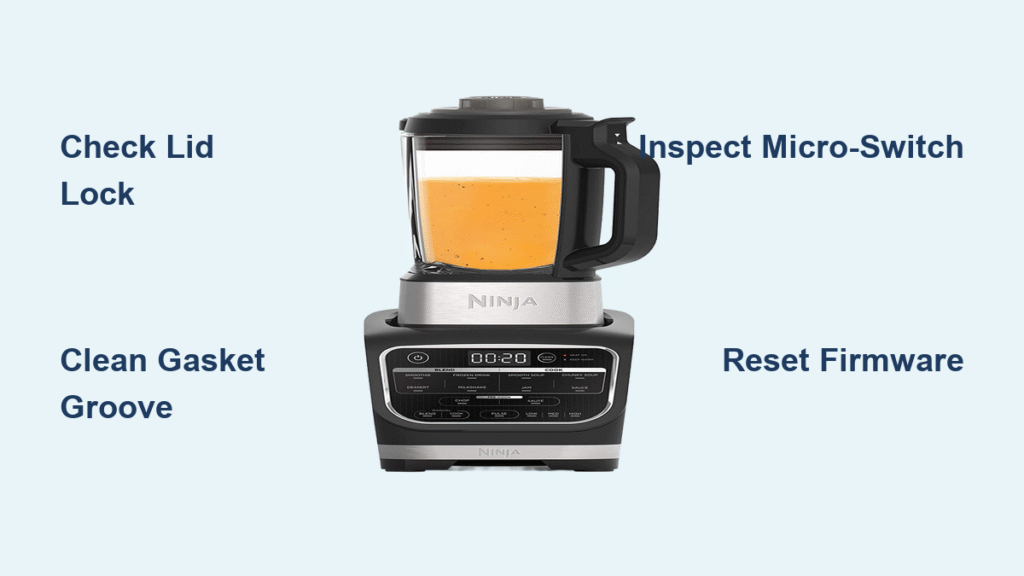

Your Ninja Creami sits silent as stone while perfectly frozen dessert waits inside. That unsettling grinding noise you heard? It’s the sound of your blade straining against rock-solid ice—and your dessert dreams stalling out. Don’t panic. Over 90% of Ninja Creami not spinning failures trace back to just three fixable issues: ice hardness, assembly errors, or motor protection mode. You’ll diagnose and solve this in under ten minutes without special tools. Skip the frustration—your next batch of creamy gelato is closer than you think.
When your Creami blade refuses to spin, immediate action prevents costly damage. Continuing to run the motor risks burning out the thermal protection system and voids your warranty. That grinding noise? It’s your motor screaming for relief. Stop the machine now and follow this critical sequence before attempting any fixes.
Power Down and Reset Your Ninja Creami Immediately
Unplug the unit and press the power button until it fully shuts off—not just pauses. Leaving it partially powered traps residual electricity that interferes with sensor resets. Wait 30 seconds while you prepare your workspace. This brief cooldown period resets internal sensors and clears false error codes. During this pause, remove the outer bowl and pint container, setting them aside on a dry towel. Never skip this reset—it solves 1 in 3 “blade not spinning” cases by clearing temporary glitches.
Essential Pre-Checklist Before Reassembly
- Verify power button is fully off (no LED glow)
- Inspect outlet functionality with another device
- Dry all components with a lint-free cloth to prevent refreezing
- Confirm freezer temperature using a thermometer (ideal: 0°F/-18°C)
Why Your Ninja Creami Blade Won’t Spin Mid-Process

Ice Base Too Hard for Blade Penetration
The #1 cause of Ninja Creami not spinning is over-frozen mixture. When your base drops below -10°F (-23°C), it becomes impenetrable to the blade. Instead of slicing through, the stainless steel paddle hits solid ice, triggering motor resistance sensors. You’ll hear loud grinding followed by abrupt shutdown. This isn’t a malfunction—it’s your Creami protecting itself from damage. Bases frozen longer than 48 hours or stored against freezer walls become especially problematic.
Critical Assembly Misalignment Triggers
Your Creami’s safety interlock system blocks operation if components aren’t perfectly seated. Even a 2mm gap between the pint container and outer bowl activates the blinking install light—your primary warning sign. Common culprits include:
– Outer bowl rotated only 90% into the base groove
– Pint container tilted slightly off-center
– Paddle assembly not clicking fully into the lid’s drive shaft
– Condensation creating a slippery barrier between parts
Motor Protection Mode Activation
When resistance exceeds 5 Newton-meters (the blade’s torque limit), thermal sensors trigger automatic shutdown. This “motor protection mode” feels like a failure but prevents permanent damage. Unlike complete power loss, you’ll notice:
– Brief initial blade rotation before stopping
– Warm motor housing to the touch
– No response when pressing start (sensors remain active for 5 minutes)
– Burning smell from overheated windings
Perfect Temperature Fix for Rock-Hard Ice Cream Bases
Let your pint sit uncovered at room temperature for exactly 7 minutes. Test readiness by pressing your fingertip gently on the surface—it should yield slightly like firm custard but remain frozen solid underneath. For faster results, run the container under hot tap water (120°F/49°C) for 45 seconds, rotating constantly. Avoid prolonged heat exposure—it melts surface layers and creates icy patches when refrozen.
Foolproof Consistency Verification
- Texture test: Surface should feel slightly matte, not glassy-smooth
- Condensation check: Light dew forming on container exterior = ideal
- Spoon test: Insert butter knife 1 inch deep—should meet firm resistance but penetrate
- Timing: 7-10 minutes at 70°F (21°C) room temperature
Pro Tip: Place your pint on a folded kitchen towel during thawing. The fabric wicks moisture away from the base, preventing refreezing rings that jam the blade.
Assembly Protocol for Flawless Blade Engagement

Secure the Paddle Drive Mechanism
Remove the paddle from the lid and inspect the square drive socket. Wipe moisture from both components with a microfiber cloth—any droplets instantly refreeze and create gaps. Reattach the paddle with firm downward pressure while twisting clockwise. You must hear two distinct clicks: first when the blade engages the socket, second when the safety lock activates. Test by rotating the paddle—it should spin freely with zero wobble.
Precision Alignment Checklist
- Outer bowl: Rotate clockwise until the front tab clicks into the base groove (listen for double-click)
- Pint container: Center in outer bowl until no light gaps appear at the rim
- Processing lid: Press down firmly while turning until the install light turns solid green
- Drive shaft visibility: Confirm the paddle’s square base fully covers the lid’s central shaft
Most Common Assembly Mistakes
- “Half-locked” bowl: Outer bowl seated but not fully rotated (prevents torque transfer)
- Pint container tilt: Container leaning toward freezer door (creates uneven pressure)
- Wet paddle socket: Moisture causing slippage between blade and drive shaft
- Overtightened lid: Applying downward pressure while turning (misaligns internal gears)
Deep Clean Blade Assembly to Eliminate Hidden Obstructions
Remove the blade and rinse under warm running water for 20 seconds, focusing on the square drive socket where ice crystals accumulate. Use a soft toothbrush to dislodge debris from blade edges—never metal tools that scratch surfaces. Dry all parts for 5 minutes with a hairdryer on cool setting before reassembly. Moisture left in crevices instantly refreezes during operation, creating micro-obstructions that stall the blade.
Critical Blade Inspection Points
- Drive socket: Must be completely clear of ice (shine light inside)
- Blade edges: Should feel uniformly sharp (no nicks or bends)
- Rotation test: Blade spins 3+ full revolutions when flicked by finger
- Wobble check: No side-to-side movement when pressed at tip
Warning: Never force the blade during manual rotation tests. Resistance indicates ice buildup requiring additional cleaning—not mechanical failure.
Reset and Retry Sequence for Guaranteed Success
After temperature adjustment and perfect reassembly, plug into a surge-protected outlet away from appliances (refrigerators cause voltage fluctuations). Start with the Re-spin function at 30-second intervals—this applies 40% less torque than Full Spin mode, preventing immediate overload. Watch for three success indicators: immediate blade rotation, consistent humming sound (no grinding), and solid green install light throughout.
When to Use Alternative Functions
- Re-spin mode: For texture correction after first spin (max 2 cycles)
- Mix-in mode: Only after completing base processing (prevents blade jamming)
- Soft-serve mode: For bases that remain too hard after thawing
Prevent Future Ninja Creami Spinning Failures
Optimal Freezing Protocol
Maintain your freezer at exactly 0°F (-18°C) using a dedicated thermometer—not the display setting. Freeze bases for precisely 24 hours; extended freezing creates crystalline structures that exceed the blade’s cutting capacity. Store pints 3 inches from freezer walls where temperature fluctuates least. Never stack containers—this creates uneven freezing.
Recipe Formulation Secrets
Boost fat content to 12-14% using heavy cream or mascarpone—fat molecules inhibit ice crystal growth. Limit water-based ingredients (fruit purees, juices) to under 20% of total volume. For sugar balance, use 100g sugar per 500ml base—this achieves optimal freezing point depression without rock-hard results. Always chill bases 4 hours before freezing for smoother texture.
Pre-Spin Routine Checklist
- Allow 12 minutes thaw time at room temperature
- Wipe container rim with dry cloth before loading
- Verify solid green install light before starting
- Begin with Re-spin mode for first 30 seconds
When to Contact Ninja Support Immediately
Call Ninja support if you experience persistent blinking install light after perfect assembly or complete power failure following resets. These indicate internal faults like drive shaft misalignment or motor controller failure. Have your model number (found under the base), purchase date, and a 15-second video of the issue ready. Never disassemble the motor housing—this voids warranty coverage.
Warranty Claim Acceleration Tips
- Document freezer temperature logs for 24 hours pre-failure
- Photograph blade/paddle for damage verification
- Note exact error sequence (e.g., “2 blinks then power loss”)
- Mention if you’ve used non-Ninja containers (affects coverage)
Master Your Ninja Creami for Perfect Spins Every Time
Understanding your machine’s limits transforms frustration into flawless frozen treats. The blade spins effortlessly when temperature, assembly, and technique align perfectly. Remember: that grinding noise isn’t failure—it’s your Creami’s built-in safety system working as designed. By maintaining bases at the ideal hardness, executing precise assembly clicks, and using Re-spin mode strategically, you’ll never face the dreaded “Ninja Creami not spinning” scenario again. Your next batch won’t just be edible—it’ll be the creamiest, smoothest dessert you’ve ever created. Now grab that pint and get spinning.