On a blistering summer afternoon, your water air cooler provides that first refreshing blast of cool air the moment you walk through the door. But have you ever wondered how this relatively simple machine accomplishes what seems like magic—turning hot outdoor air into a cooling breeze without the complex machinery of traditional air conditioning? Understanding how does a water air cooler work reveals an elegant natural process that’s been cooling spaces for centuries, now refined into the efficient units we use today. This guide will walk you through the precise mechanics behind evaporative cooling, showing you exactly what happens inside your unit to transform sweltering heat into comfortable relief.
Unlike energy-hungry air conditioners with their refrigerants and compressors, water air coolers harness a fundamental principle of physics that you’ve likely experienced yourself—when sweat evaporates from your skin, you feel cooler. By the end of this explanation, you’ll know exactly how your cooler’s components work together, why it performs best in certain conditions, and what makes it such an energy-efficient alternative for beating the heat.
Breaking Down the Evaporative Cooling Process: How Heat Becomes Cool Air
The core mechanism that answers “how does a water air cooler work” centers on evaporative cooling—a natural heat transfer process that requires no chemical refrigerants. When dry air passes through water-saturated material, the air’s heat energy converts liquid water into vapor. This phase change from liquid to gas consumes significant thermal energy, which is drawn directly from the passing air stream, lowering its temperature dramatically.
Why Evaporation Creates Cooling: The Physics Explained
The cooling effect occurs because water molecules need energy to break free from their liquid state and become vapor. This energy, called the “latent heat of vaporization,” comes directly from the surrounding air. As the air loses this heat energy to the evaporation process, its temperature drops noticeably—sometimes by as much as 30°F (17°C) in ideal conditions. You experience this same principle when stepping out of a swimming pool on a windy day; the evaporation of water from your skin creates that sudden cooling sensation.
Humidity’s Critical Role in Cooling Efficiency
For your water air cooler to work effectively, the incoming air must have sufficient capacity to absorb additional moisture. This is why these units perform best in hot, dry environments where relative humidity is below 60%. In humid conditions, the air is already saturated with moisture, leaving little room for additional evaporation—and therefore minimal cooling effect. Understanding this relationship between temperature and humidity explains why evaporative coolers excel in arid climates but struggle in tropical environments.
Essential Water Cooler Components: Fan, Pump, and Cooling Pad Explained
:max_bytes(150000):strip_icc()/parts-of-a-swamp-cooler-2718628-a477e6f0787b4f8bb62ddf2def31d495.png)
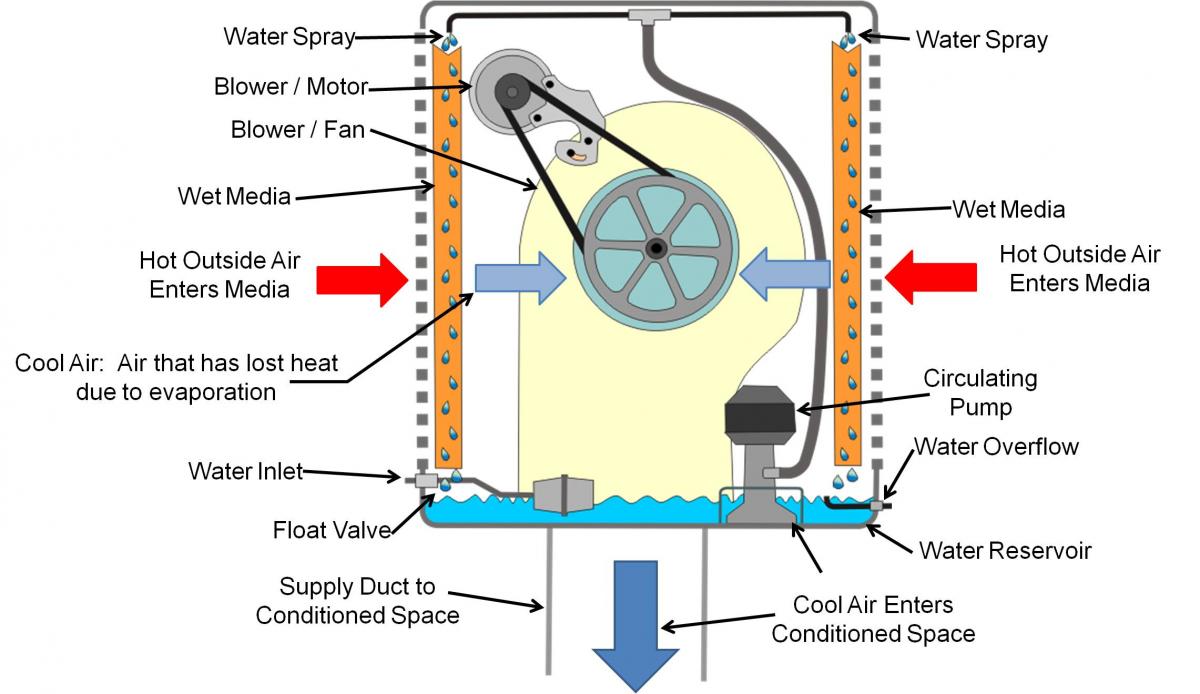
Your water air cooler contains just three primary components working in harmony to create that refreshing breeze. Each part plays a critical role in the evaporative cooling cycle, and knowing how they function helps you maintain optimal performance.
The Water Pump System: Keeping Pads Saturated
Inside your unit, a small submersible pump continuously draws water from the reservoir and delivers it to the top of the cooling pads. This constant water flow ensures the pads remain thoroughly saturated, providing the moisture necessary for the evaporation process. Without this steady water supply, the pads would dry out, and your cooler would simply blow hot air—answering why a properly functioning pump is essential to understanding how does a water air cooler work.
Cooling Pad Technology: The Heart of Evaporation
Modern water coolers use specialized cellulose or aspen fiber pads designed with microscopic channels that maximize water retention and surface area. As hot air passes through these wet channels, water molecules adhere to the pad fibers while the airflow creates the perfect conditions for rapid evaporation. The thickness and density of these pads directly impact cooling efficiency—thicker pads provide more contact time between air and water, yielding greater temperature reduction.
Following the Air Path: From Hot Outside Air to Refreshing Indoor Breeze
Every minute, your water air cooler processes dozens of cubic feet of air through a precise sequence that transforms oppressive heat into comfortable coolness. Understanding this airflow journey reveals exactly how does a water air cooler work in practical terms.
Air Intake and Pre-Filtration: Capturing Dust Before Cooling
Your cooler’s fan first pulls hot, dry outside air through an intake grille and pre-filter designed to capture large dust particles and debris. This preliminary filtration protects the cooling pads from clogging with contaminants that would reduce efficiency. In dusty environments, checking and cleaning this pre-filter weekly can prevent significant performance drops—many users don’t realize that a clogged filter can reduce cooling capacity by up to 25%.
The Critical Evaporation Stage: Where Cooling Actually Happens
As the filtered air moves into the cooling chamber, it encounters the saturated pads. Here’s where the magic happens: the air’s heat energy draws moisture from the pads, causing evaporation that simultaneously cools the air and increases its humidity. This stage typically reduces air temperature by 15-30°F (8-17°C), depending on initial conditions. You can often see this process visually—when operating correctly, the pads should appear uniformly wet with no dry spots indicating uneven water distribution.
Distribution of the Cooled Air: Creating Effective Room Circulation
The cooled, moistened air then passes through the fan assembly, which propels it forcefully into your living space. Unlike air conditioners that recirculate indoor air, evaporative coolers constantly introduce fresh, filtered outside air—providing better ventilation while cooling. For optimal performance, position your cooler near an open window or door opposite your desired airflow direction to create a continuous cross-breeze throughout the room.
Water Cooler vs. AC: Understanding the Critical Operational Differences
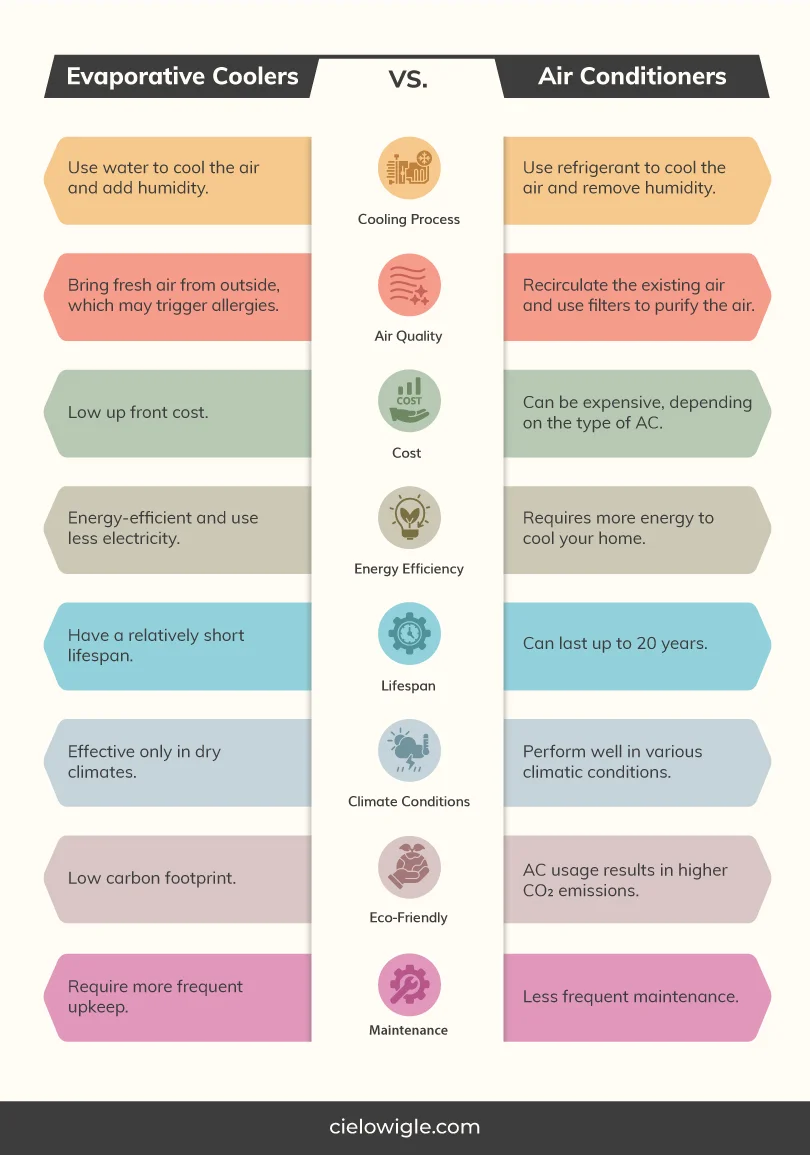
Many people mistakenly treat water coolers as “mini air conditioners,” but their fundamental operating principles differ completely. Recognizing these distinctions explains why your evaporative cooler behaves differently than a traditional AC unit.
Humidity Creation vs. Removal: The Core Functional Difference
While air conditioners actively remove moisture from the air (acting as dehumidifiers that also cool), water air coolers add moisture as they cool. This makes evaporative coolers ideal for dry climates where added humidity improves comfort, but problematic in already humid environments where they might make conditions feel muggier rather than cooler. If you live in a coastal area with high humidity, understanding how does a water air cooler work might help you realize it’s not the optimal solution for your climate.
Energy Consumption Comparison: Why Water Coolers Save Significant Power
Water coolers typically use 70-80% less electricity than comparable air conditioners because they eliminate the energy-intensive compressor cycle. A standard window AC unit might consume 500-1400 watts, while an equivalent evaporative cooler uses just 100-300 watts—primarily for the fan and small water pump. This dramatic difference explains why water coolers have become popular energy-saving alternatives in appropriate climates.
Why Your Evaporative Cooler Needs Dry Air to Work Effectively
The performance of your water air cooler directly correlates with the humidity level of the incoming air—a relationship that’s crucial to understanding how does a water air cooler work in real-world conditions.
The Wet Bulb Temperature Limitation
Evaporative coolers cannot cool air below its “wet bulb temperature”—the lowest temperature achievable through evaporation alone. In practical terms, this means your cooler’s maximum cooling potential depends entirely on current humidity levels. On a 100°F (38°C) day with 20% relative humidity, your cooler might deliver 70°F (21°C) air, but on the same temperature day at 60% humidity, it might only reach 85°F (29°C).
Climate Suitability Guide: Where Water Coolers Excel
For optimal performance, evaporative coolers work best in regions where:
– Average summer humidity stays below 50%
– Daytime temperatures regularly exceed 85°F (29°C)
– Natural ventilation is possible (open windows)
– Water is readily available for the reservoir
In these conditions, understanding how does a water air cooler work reveals why it’s often the most efficient cooling solution available.
Maximizing Your Water Cooler’s Performance: Ideal Setup and Maintenance
Getting the most from your evaporative cooler requires proper setup and regular maintenance—simple steps that significantly impact how effectively your unit can answer the question of how does a water air cooler work in your specific environment.
Optimal Placement Techniques for Better Airflow
Position your cooler where it can draw the driest, hottest air available—typically on the shaded side of your house. Ensure at least 2 feet of clearance around all intake vents, and open windows or doors on the opposite side of your space to create cross-ventilation. This setup maximizes the cooler’s ability to replace warm indoor air with freshly cooled outdoor air.
Essential Maintenance Tasks for Peak Efficiency
- Weekly: Clean and replace water to prevent mineral buildup and algae growth
- Monthly: Inspect and clean cooling pads for mineral deposits
- Seasonally: Deep clean the water reservoir and check pump operation
- Annually: Replace cooling pads if they’ve become hardened or discolored
Neglecting these simple maintenance steps can reduce cooling efficiency by up to 40%—making regular care essential to maintaining optimal performance.
Troubleshooting Common Water Cooler Issues: When Cooling Fails to Happen
When your water air cooler isn’t performing as expected, understanding how does a water air cooler work helps you quickly diagnose and fix common problems.
Why Your Cooler Might Be Blowing Warm Air
If your unit is circulating air that isn’t noticeably cooler, check these common issues:
– Dry cooling pads: Verify the water pump is operational and reservoir is filled
– Clogged water distribution system: Clean nozzles or tubing that feed water to pads
– High humidity conditions: Recognize when ambient humidity exceeds your cooler’s capability
– Insufficient ventilation: Ensure adequate airflow through the space being cooled
Addressing Water Leaks and Mineral Buildup
Hard water deposits can clog your cooler’s water system over time. If you notice leaks or reduced water flow, disassemble and clean the distribution channels with a vinegar solution. For severe mineral buildup, consider using distilled water or installing a water softener attachment to extend your unit’s lifespan and maintain optimal cooling capacity.
By understanding the precise mechanics of evaporative cooling, you can make informed decisions about when and how to use your water air cooler effectively. This natural cooling method offers substantial energy savings and environmental benefits when matched to the right climate conditions. Remember that how does a water air cooler work depends entirely on the physics of evaporation—so when dry, hot air meets water-saturated pads, you get that refreshing, energy-efficient cooling breeze that’s made these units a popular choice for centuries. With proper setup and maintenance, your evaporative cooler can provide reliable, cost-effective comfort throughout the hottest months.