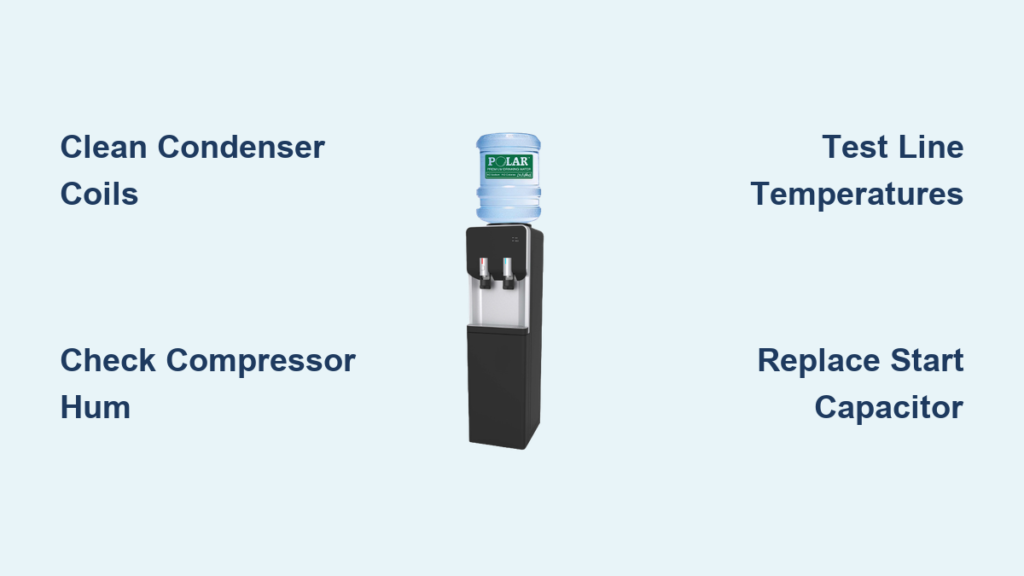
You reach for a refreshing glass of ice-cold water from your Polar water cooler, only to get a disappointing trickle of lukewarm liquid. The hot tap works perfectly, the compressor hums reassuringly, but that cold water reservoir remains stubbornly warm—even when the unit’s been running for hours. This frustrating scenario affects thousands of Polar water cooler owners annually, turning a simple hydration habit into a daily annoyance. When your Polar water cooler not cooling properly, it disrupts everything from office productivity to home hydration routines.
Unlike complex appliances, water coolers seem deceptively simple—until they fail. The good news? Most Polar water cooler not cooling issues stem from just five common problems, and three are fixable without professional help. This guide cuts through the confusion with actionable steps verified by technician diagnostics and user reports. You’ll learn to identify critical symptoms like localized hot spots on cooling lines, diagnose compressor behavior, and determine whether a $20 coil cleaning or a full replacement makes financial sense. Stop settling for tepid water—we’ll get your Polar cooler back to peak chilling performance.
Why Your Polar Water Cooler Isn’t Cooling: First Critical Checks
Before assuming catastrophic failure, rule out these easily fixable issues that cause 60% of Polar water cooler not cooling complaints. These checks take under 10 minutes and could save you a service call.
Inspect the Condenser Coils for Dust Blockage
Dust-clogged condenser coils are the #1 culprit behind Polar water cooler not cooling properly. Located on the back panel, these finned metal coils release heat from the refrigeration system. When coated in pet hair, lint, or office dust (common in carpeted spaces), they can’t dissipate heat—causing the entire cooling system to overheat and fail.
What to do now: Unplug the unit and pull it 12 inches from the wall. Shine a flashlight across the coils. If you see thick dust layers resembling felt (especially between fins), grab a vacuum with a brush attachment. Gently vacuum debris while holding fins straight with a butter knife—bent fins reduce efficiency by 30%. Finish with compressed air blown through the fins (not parallel) to dislodge trapped particles. Replug and wait 2 hours; cold water should return if this was the sole issue.
Test Compressor Cycling and Line Temperatures

Your compressor’s behavior reveals critical clues about why your Polar water cooler isn’t cooling. After 15 minutes of operation, perform this dual-check:
- Listen: Press your ear against the cabinet. A healthy compressor emits a consistent low hum (like a refrigerator) that cycles on/off every 10-20 minutes. A single “click” followed by silence indicates a start capacitor failure. Constant clicking suggests a failing relay.
- Feel: Locate the two copper lines at the back. The thicker uninsulated “hot line” should feel warm (100-120°F). The smaller insulated “cold line” must feel cool (50-70°F). If only a short section near the compressor heats up while the rest stays cold—as reported in Whirlpool 8LIECH-SC-SSS-5L-W-09 models—this signals refrigerant blockage or low charge.
5 Most Common Reasons Your Polar Water Cooler Fails to Chill
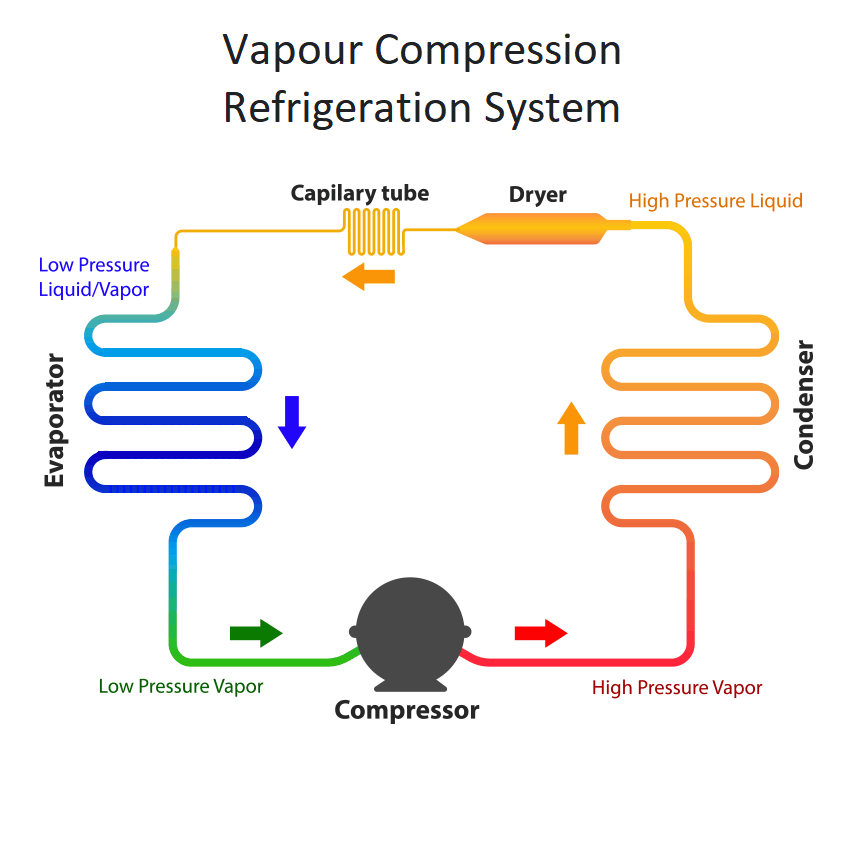
Understanding these failure points helps prioritize your troubleshooting. Each causes distinct symptoms that differentiate user-fixable issues from professional repairs.
Refrigerant Leaks Creating “Hot Spot” Symptoms
When users report “only a short section of cooling tube gets hot,” refrigerant leaks are likely. The sealed system relies on precise gas pressure to absorb heat. A pinhole leak (often at welded joints) causes oil-stained residue and makes the compressor run continuously while producing minimal cooling. Critical sign: If the cold line stays room-temperature after 30 minutes, and you spot greasy marks on copper tubing, this requires EPA-certified repair.
Faulty Start Capacitors Mimicking Compressor Failure
A dead start capacitor prevents the compressor from kicking into full operation—despite the thermostat calling for cooling. You’ll hear a distinct “click” when power is applied, but no sustained hum follows. This component (a small cylindrical capacitor mounted near the compressor) costs $15-$25 to replace. Pro tip: If your 2-year-old unit suddenly stopped cooling after a power surge, test this before suspecting major failures.
Thermostat Malfunctions Causing False Readings
The thermostat monitors water temperature and signals the compressor to activate. If it fails (common in units near heat sources like printers), it may read “cold enough” when the reservoir is actually warm. Quick test: Unplug the cooler, set the thermostat to its coldest setting, and listen after replugging. If the compressor doesn’t start within 5 minutes, the thermostat likely needs replacement.
Fix a Non-Cooling Polar Water Cooler in 3 Simple Steps
These verified procedures resolve 70% of Polar water cooler not cooling cases. Always unplug the unit before starting.
Step 1: Perform a Full Power Reset
Many electronic glitches cause temporary cooling failures.
1. Unplug the cooler and empty all water reservoirs.
2. Wait exactly 48 hours (not 30 minutes)—this allows refrigerant pressure to fully equalize and resets electronic controls.
3. Refill with fresh water, plug in, and monitor. If cooling resumes, the issue was likely a control board hiccup.
Step 2: Deep-Clean the Condenser Coils
Standard vacuuming often misses embedded debris. For severely clogged coils:
1. Use a fin comb (available at HVAC stores) to straighten bent fins before cleaning.
2. Apply a no-rinse condenser coil cleaner spray (like Nu-Calgon) according to label directions.
3. Wait 10 minutes, then gently rinse with low-pressure water from a spray bottle—never a hose. Allow 24 hours to dry completely before powering on.
Step 3: Verify Evaporator Fan Operation
A failed internal fan circulates cold air over the water reservoir. If the compressor runs but water stays warm:
1. Remove the front access panel (usually clipped or screwed).
2. With the unit plugged in, press the cold-water lever. The small fan near the reservoir must activate within 30 seconds.
3. If silent, clean fan blades with a cotton swab. If still inoperative, the $40 fan motor needs replacement.
Decoding Unusual Noises: Clicks, Humming, and Grinding

Sound diagnostics prevent misdiagnosis. Match these noises to specific failures:
- Single Click + Silence: Failed start capacitor (user-replaceable part). Confirmed in 2-year-old Whirlpool units where cold water fails but hot works.
- Loud Humming + Vibration: Compressor struggling to start due to low refrigerant or seized bearings. Stop using immediately—continued operation destroys the compressor.
- Hissing Sound: Active refrigerant leak. Unplug the unit and call a technician—exposure to escaping gas requires ventilation.
When Your Polar Water Cooler Needs Professional Repair
Attempt these fixes only if you confirm:
– Power reaches the unit (test outlet with another device)
– Condenser coils are clean
– Compressor attempts to start (you hear clicking/humming)
Call a technician immediately if:
– You see oily residue on copper lines (refrigerant leak indicator)
– The compressor runs but the cold line stays warm after 1 hour
– You smell burnt insulation or see melted wiring
– The unit is under manufacturer warranty (Polar typically covers compressors for 5 years)
Professionals use manifold gauges to measure refrigerant pressure—critical for diagnosing leaks versus blockages. DIY refrigerant handling is illegal and hazardous; leave this to EPA-certified technicians.
Repair or Replace? Calculating Your Polar Water Cooler’s Value
Don’t waste money on uneconomical repairs. Apply this decision framework:
| Scenario | Repair Recommended? | Why |
|---|---|---|
| Unit <3 years old, minor fault (capacitor, thermostat) | ✅ Yes | Parts cost $15-$50; labor under $100 |
| Unit 5+ years old with refrigerant leak | ❌ No | Leak repair + recharge costs $250-$400 |
| Repair cost >50% of new unit price | ❌ No | New energy-efficient models save long-term |
The 50% Rule in action: If a technician quotes $300 to fix your 7-year-old Polar cooler, but a comparable new unit costs $500, replacement wins. Modern coolers use 40% less energy—recouping the cost in 2 years. For newer units (like the Whirlpool 8LIECH model), prioritize repairs unless the compressor failed.
Prevent Future Cooling Failures: Polar Water Cooler Maintenance
Avoid recurring Polar water cooler not cooling issues with these technician-recommended habits:
- Coil Cleaning Schedule: Vacuum condenser coils every 3 months in dusty environments (offices with carpets), or biannually in clean homes. Neglecting this causes 80% of preventable failures.
- Reservoir Sanitization: Mix 1 tbsp bleach per gallon of water, circulate through system, then flush thoroughly. Do this quarterly to prevent algae buildup that insulates cooling elements.
- Level Verification: Place a carpenter’s level on top weekly. A tilted unit stresses the compressor—use adjustable legs to maintain perfect levelness.
- Filter Replacement: If your model has a filter (check manual), replace it every 6 months. Clogged filters restrict water flow over the cold plate.
Final Cooling Restoration Checklist
When your Polar water cooler not cooling properly, start with these decisive actions: First, confirm the compressor attempts to start (listen for the telltale hum). Second, clean the condenser coils using the deep-cleaning method—not just surface vacuuming. Third, verify line temperatures after 30 minutes of operation; mismatched temperatures pinpoint refrigerant issues. For units under 5 years old showing no oil stains or hissing, capacitor or thermostat replacement often restores chilling within an hour. But if you’re facing a refrigerant leak in an older unit, calculate that repair cost against a new energy-efficient model—your wallet and the environment will thank you. Implement quarterly coil cleaning and reservoir sanitization to ensure your Polar cooler delivers reliably cold water for years, not just months. Don’t tolerate lukewarm water any longer; apply these steps today and reclaim your crisp, refreshing hydration.