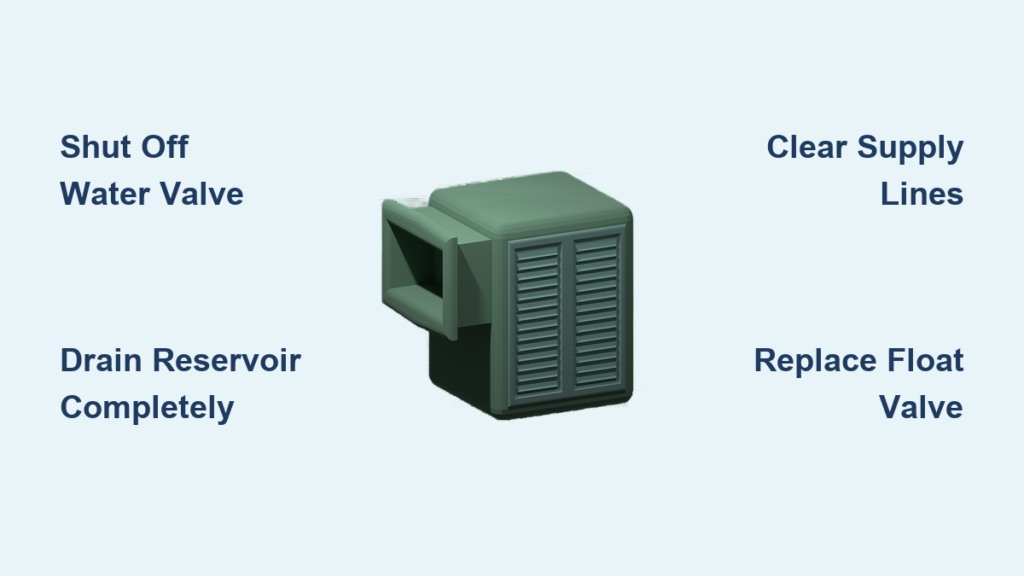
That final summer heatwave has passed, but your swamp cooler could be silently setting up your home for disaster. When temperatures drop below freezing, any water left in your evaporative cooler expands violently as ice, cracking reservoirs, bursting pipes, and flooding your home with thousands in water damage. Homeowners regularly face $5,000+ repair bills from neglected winterization – all preventable by mastering how to turn off water to swamp cooler systems correctly. This critical shutdown step stops water flow before cold weather hits, eliminating the #1 cause of catastrophic cooler failure. You’ll learn exactly where to find hidden valves, how to drain every drop of water, and why skipping one step could leave you with a flooded attic or ruined ceilings when spring arrives.
Essential Tools and Safety Prep Before Shutting Off Water
Gather these items before touching any valves to avoid mid-process emergencies or injuries from mineral deposits. Working with swamp cooler plumbing requires basic protection since decades of mineral buildup create sharp edges and slippery surfaces.
- Adjustable Wrench or Channel-Lock Pliers: Needed for stubborn drain plugs on older units (avoid pipe wrenches that can damage fittings)
- Heavy-Duty Gloves and Safety Glasses: Non-negotiable for protecting against calcium scale shards and mold spores inside reservoirs
- 5-Gallon Bucket and Absorbent Rags: Place directly under drain points – residual water often gushes unexpectedly
- Flashlight or Work Light: Crucial for spotting valve locations inside dark attic installations
- Your Cooler’s Manual: Locate model-specific drain valve positions (if unavailable, assume standard locations)
Critical Safety Check: Always shut off electrical power at the circuit breaker before starting. Swamp coolers combine water pumps and 110V wiring – skipping this risks electrocution during drainage. Verify power is off by testing the unit’s fan switch.
How to Find Your Swamp Cooler’s Hidden Water Shut-Off Valve
:max_bytes(150000):strip_icc()/parts-of-a-swamp-cooler-2718628-a477e6f0787b4f8bb62ddf2def31d495.png)
Most homeowners waste hours searching for this critical valve because it’s rarely near the cooler itself. Your swamp cooler uses a dedicated water line branching from your main plumbing, and its shut-off valve hides in one of three trouble spots:
- Attic Installations: Trace the copper or PEX supply line from the cooler backward. The valve typically sits within 3 feet of where the pipe enters the attic, often behind insulation batts. Look for a small quarter-turn ball valve (lever handle) or older gate valve (round knob).
- Roof-Mounted Units: Check inside the nearest interior wall access panel – usually in a closet or hallway. The valve connects to the vertical pipe rising to the roof.
- Garage or Crawlspace Lines: Follow the supply pipe downward from the cooler. The valve often sits 12-18 inches above floor level near a water heater or main supply line.
Pro Tip: If you can’t locate a dedicated valve, your cooler might connect directly to an outdoor faucet. Turn off the hose bib’s internal valve and disconnect the supply line there. Never rely on the cooler’s float valve alone – it fails frequently.
Step-by-Step: Turning Off the Water Supply Valve Correctly
Forcing valves incorrectly damages them permanently, creating leaks that require emergency plumbing. Follow these exact steps based on valve type:
Ball Valve Shut-Off Procedure (Most Common)
- Locate the lever handle on the valve body
- Rotate the lever 90 degrees clockwise until it’s perpendicular to the pipe
- Verify position: Lever should form a “T” shape with the pipe (not parallel)
- Test: Gently try to rotate back – it should stop firmly
Gate Valve Shut-Off Procedure (Older Homes)
- Grip the round knob firmly
- Turn clockwise slowly (righty-tighty) until it stops
- Never force it: If resistance increases suddenly, stop – you’ve hit the seat
- Back off ¼ turn to prevent seizing (a pro trick for gate valves)
Warning: If the valve leaks during shutdown, immediately turn off your home’s main water supply. A dripping valve means internal damage requiring replacement before winter.
How to Drain Your Swamp Cooler Reservoir Completely

Shutting off water isn’t enough – residual water in the reservoir causes 80% of freeze damage. Mineral deposits often block drain paths, so follow this sequence:
- Locate the Primary Drain: Find the petcock valve or threaded plug at the absolute lowest point of the reservoir pan (usually center-bottom). Don’t confuse it with overflow drains higher up.
- Position Your Bucket: Slide a 5-gallon bucket directly beneath the drain. Place towels around it – initial gushes often miss the target.
- Open the Drain Slowly: For petcocks, turn counter-clockwise ¼ turn. For plugs, unscrew 1-2 threads then back off. Let pressure equalize before full opening.
- Tilt for Complete Drainage: Have a helper lift the cooler’s front edge 2-3 inches while draining. This channels trapped water toward the drain.
- Check for Hidden Pools: Shine a light into corners – water often pools behind pump mounts. Use a shop vac for stubborn remnants.
Time Saver: Add 1 cup of white vinegar to the reservoir before draining. It dissolves mineral crusts blocking drainage paths.
Draining Water Lines and Pump to Prevent Internal Damage
Ignoring these components leaves “invisible” water that expands inside pipes. Distribution lines and pumps are frequent freeze-failure points:
Supply Line Drain Procedure
- Disconnect the supply line at the cooler’s inlet valve (use wrench on compression nut)
- Hold the open end over your bucket
- Briefly open the shut-off valve you turned off earlier
- Close valve immediately after water stops flowing
Pump and Distribution Line Drain
- Unplug the water pump (critical safety step!)
- Disconnect inlet/outlet hoses from pump
- Tilt pump vertically with outlet down – shake gently
- Blow through distribution tubes by mouth (wear mask) to clear pads
- Wipe pump dry with rags – moisture causes corrosion
Visual Cue: If you see white mineral crystals inside lines, they’re partially blocked. Use a pipe cleaner to clear before winter.
Why Your Swamp Cooler Still Leaks After Shutting Off Water
Water dripping hours after shutdown means your float valve failed – the #1 reason coolers flood homes mid-winter. This toilet-tank-style mechanism gets stuck open by mineral buildup, allowing continuous flow even with supply valves closed. Symptoms include:
- Water pooling in the reservoir overnight
- Dripping from the overflow tube on cold mornings
- Ice formation inside the unit during freezes
Urgent Fix Required: This isn’t a minor drip – a stuck valve can dump 5+ gallons hourly, saturating ceilings below.
Fixing a Faulty Float Valve Causing Continuous Leaks
Replace this $15 part before winter to avoid catastrophe. The repair mirrors toilet fill valve replacement:
- Shut Off Main House Water: Locate your home’s primary shut-off (usually basement or garage)
- Drain Reservoir Completely: Follow earlier drainage steps
- Remove Old Valve: Disconnect supply line, unscrew mounting nut under reservoir
- Install New Valve: Match model to your cooler (universal kits work for most)
- Test Before Winterizing: Turn water on briefly – valve should shut off at 1″ depth
Pro Tip: Lubricate the new valve’s float arm with silicone grease to prevent future sticking.
Confirming Your Swamp Cooler Water Is Fully Shut Off
Never assume valves work perfectly. Verify with this 2-step test:
- Dry Run Test: Turn on the cooler’s fan (with water supply off). Run for 5 minutes – you should hear absolutely no water sloshing.
- Leak Check: Place paper towels around all connections. Check after 24 hours – any dampness indicates a valve failure needing immediate repair.
Red Flag: If towels stay dry but water appears later, your shut-off valve is leaking internally – replace it now.
Critical Winterization Steps After Water Shut-Off
Shutting off water is only step one. Complete winterization prevents secondary damage:
- Remove and Store Pads: Pull out cellulose pads – drying them prevents mold. Store vertically in cardboard boxes.
- Clean Reservoir Thoroughly: Scrub with 3:1 water/vinegar mix to remove scale that traps moisture.
- Seal Air Intakes: Tape plastic sheeting over louvers to block cold, dry air that cracks pads.
- Apply Pump Preservative: Coat pump impeller with food-grade mineral oil to prevent corrosion.
- Cover Strategically: Use breathable fabric covers only – plastic tarps trap moisture causing rust.
Never Skip: Running the fan for 30 minutes after drainage evaporates hidden moisture in insulation.
When to Call a Pro for Swamp Cooler Water Shut-Off Issues
Some situations demand professional help to avoid dangerous mistakes:
- Stuck Main Shut-Off Valves: Forcing them can break pipes, requiring slab excavation
- Electrical Concerns: If pump wiring looks damaged during disconnection
- Persistent Leaks: After replacing float valves, indicating hidden reservoir cracks
- Attic Access Problems: If ladders or flooring can’t safely support your weight
Cost Reality: A $150 pro service prevents $5,000+ water damage – worth every penny for complex installations.
Common Mistakes That Cause Swamp Cooler Water Damage
Avoid these critical errors that undermine your shutdown efforts:
- Skipping Drainage: Assuming “just turning off the valve” is sufficient (causes 70% of freeze breaks)
- Ignoring Supply Lines: Leaving water in disconnected lines that freeze back toward the house
- Using Plastic Tarps: Trapping moisture accelerates rust in metal housings
- Forcing Valves: Creating micro-fractures that leak under pressure
Proven Fix: Photograph each step during your first shutdown. This visual guide prevents next-year mistakes.
How to Restart Your Swamp Cooler Next Season Safely
Prevent springtime disasters by reversing shutdown correctly:
- Inspect All Components: Check pads for mold, valves for leaks, wiring for rodents
- Flush Lines First: Open supply valve briefly before connecting to cooler to clear debris
- Test Float Valve: Manually lift float arm – should stop water flow immediately
- Gradual Startup: Run on low fan for 1 hour before full cooling mode
Key Insight: If water doesn’t shut off when float rises, replace the valve immediately – don’t wait for leaks.
Turning off water to your swamp cooler isn’t just seasonal maintenance – it’s essential home insurance. By following these precise steps, you’ve eliminated the single biggest threat to your evaporative cooler’s survival. Remember that float valves fail silently, so always verify complete drainage and valve function before covering the unit. Come spring, your properly winterized cooler will fire up instantly without costly repairs or replacement. For ongoing protection, set a calendar reminder 2 weeks before your first expected freeze – that small effort saves thousands in potential water damage. Your cooler worked hard all summer; give it the shutdown it deserves for reliable cooling next season.