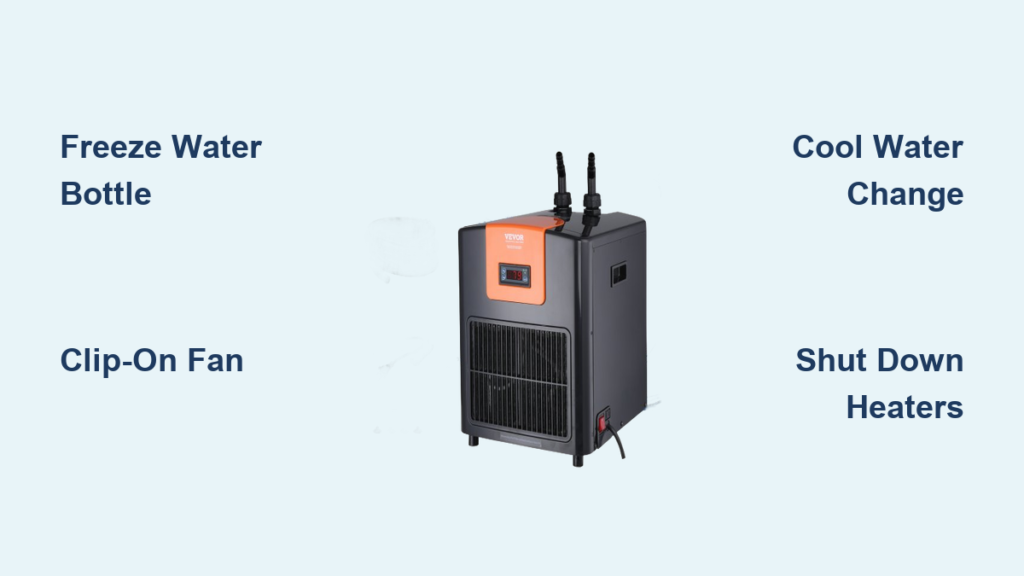
Your aquarium thermometer just hit 85°F—dangerous territory for most tropical fish. Before panic sets in, know this: you can safely drop that temperature by 3-4 degrees in under an hour using methods already in your home. This guide reveals exactly how to make aquarium water cooler without risking your fish’s health, starting with the frozen water bottle trick that works in 30 minutes flat. Overheated water suffocates fish by slashing oxygen levels, and every degree above 82°F stresses immune systems. Whether you’re battling a heatwave or an overpowered heater, these vetted solutions will rescue your tank—no chiller required for most emergencies.
Why 82°F Water Kills Oxygen Levels in Your Tank
Fish suffocate in warm water long before you see them gasping. At 86°F, dissolved oxygen drops 20% compared to 78°F—like trying to breathe at high altitude. This invisible crisis triggers chain reactions: stressed fish stop eating, beneficial bacteria die off, and ammonia spikes become deadly. Tropical species like neon tetras or guppies tolerate brief warmth, but discus or hillstream loaches need cooler conditions. Critical threshold: Never let temps exceed 84°F for more than 4 hours. If your thermometer reads above 82°F, implement cooling immediately while monitoring fish for rapid gill movement or surface gasping.
Freeze a Water Bottle: The 30-Minute Emergency Fix

This is your fastest lifeline when temperatures spike unexpectedly. A single frozen bottle lowers water temperature 3-5°F within 30 minutes without shocking fish.
How to Freeze Bottles Without Contaminating Your Tank
- Fill ¾ full: Use a clean 16-20oz plastic bottle (soda or water) filled only 75% with dechlorinated water. This prevents cracking during freezing.
- Seal tightly: Double-check the cap—any leak introduces contaminants.
- Float strategically: Place the bottle near filter output where water movement circulates cooled water evenly.
Pro Tip: For larger tanks (55+ gallons), use two bottles spaced 18 inches apart. Check temperature every 15 minutes—remove bottles once you hit your target (max 2°F drop per hour). Never reuse bottles that contacted tank water due to bacterial growth.
Clip-On Fan Method: Drop 4°F Overnight Without Cost
This evaporative cooling technique exploits physics: as water evaporates, it pulls heat energy from remaining water—exactly how sweat cools your skin. In dry climates, it achieves 4-8°F reductions; humid areas see 2-4°F.
Position Your Fan for Maximum Cooling Effect
- Surface coverage: Angle a $10 clip fan (like a 4-inch desk model) to blow across the water surface—not down into it. Aim for ripple creation without splashing.
- Humidity hack: If room humidity exceeds 60%, run a dehumidifier nearby. Effectiveness plummets above 70% humidity.
- Lid modification: For covered tanks, cut a 2×2 inch hole in the hood directly above the fan airflow path.
Time estimate: 1-2 hours for noticeable cooling. Warning: Evaporation lowers water levels—check daily and top off with dechlorinated water to maintain salinity/stability.
Cool Water Change Protocol: Avoid Fatal Temperature Shock
Replacing warm water with cooler water seems obvious—but done wrong, it kills fish faster than heat. This method requires military precision.
Step-by-Step Safe Water Replacement
- Prepare water: Fill a bucket with tap water treated with conditioner. Agitate with an airstone until it’s exactly 2°F cooler than your tank (use two thermometers).
- Siphon slowly: Remove only 10-15% of tank volume over 10 minutes to avoid disturbing substrate.
- Add gradually: Pour new water down a plate held just above the surface to diffuse flow. Takes 5+ minutes per 5% volume.
Critical mistake: Using refrigerator-chilled water. Sudden drops below 3°F cause cardiac arrest in sensitive species. Always match temps within 1-2°F.
Shut Down Heat-Generating Equipment Now
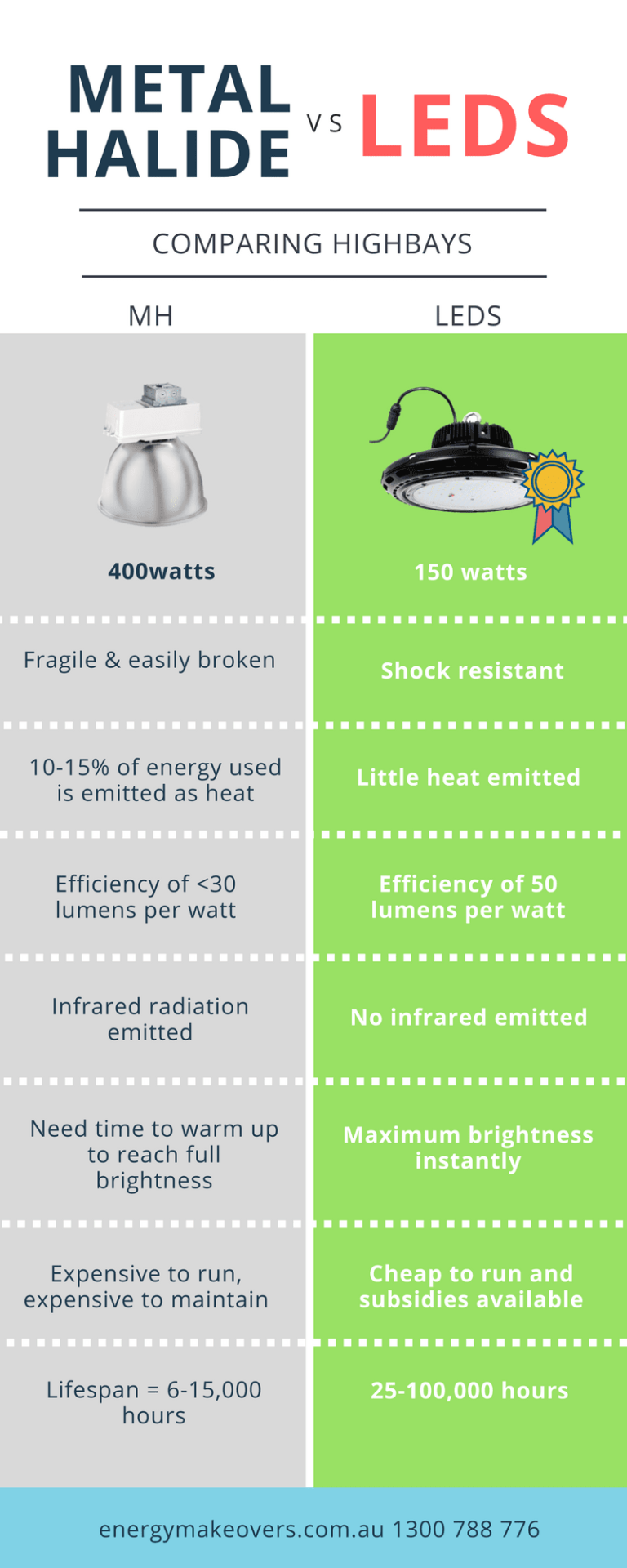
Your tank’s own gear often causes overheating. A standard 250W metal halide light can raise water 5°F—equivalent to leaving an oven door open.
Immediate Equipment Adjustments
- Lights: Switch to LEDs and reduce photoperiod by 2 hours. Tape a small PC fan (120mm) to blow across light fixtures—lowers heat transfer by 40%.
- Pumps: Submersible filters add 1-3°F. Temporarily move canister filter pumps away from the tank stand. If temps exceed 84°F, run pumps on lowest setting.
- Heaters: Unplug all heaters during heatwaves—even “off” units can malfunction.
Pro Tip: Run a temp gun over equipment surfaces. If lights/pumps feel warm to the touch, they’re heating your water.
Open Hood Tactics: Double Evaporation Without Jumpers
Removing your tank lid boosts cooling but turns your aquarium into a fish launchpad. This modification solves both problems.
Safe Lid Removal Procedure
- Install mesh cover: Stretch fine plastic mesh (like window screen) over the tank opening before removing glass/acrylic lids.
- Maximize surface area: Position filter returns to create gentle ripples across 70% of the surface.
- Monitor closely: Check for jumping species (gobies, hatchetfish) every 30 minutes for the first 4 hours.
Effectiveness: Increases evaporation cooling by 50% versus a closed tank. Warning: Never leave unattended for >1 hour—mesh covers can sag if wet.
What NOT to Do: 3 Emergency Mistakes That Kill Fish
Avoid these lethal shortcuts even in crisis situations:
- Ice cubes directly in tank: Causes localized 10°F+ drops that freeze fish gills. One angelfish owner lost 7 fish in 20 minutes using this method.
- Combining 3+ cooling methods: Running fans + ice bottles + water changes simultaneously risks 5°F/hour drops—deadlier than heat.
- Ignoring humidity: In 80%+ humidity, fans become useless. Check your weather app before relying on evaporation.
Real consequence: Sudden temperature shifts trigger osmotic shock—fish literally leak fluids from cells. Stability beats perfection.
When to Buy an Aquarium Chiller: Cost vs. Crisis

For tanks in consistently hot climates (above 80°F ambient) or saltwater setups, chillers become essential. But they’re overkill for most freshwater emergencies.
Chiller Decision Checklist
| Scenario | DIY Cooling Enough? | Chiller Recommended? |
|---|---|---|
| 75°F room, 82°F tank | ✓ (Fans + bottle) | ✗ |
| 85°F room, 86°F tank | ✗ (Fails in humidity) | ✓ |
| Reef tank above 80°F | ✗ (Corals die at 82°F) | ✓ |
| Discus tank at 84°F | ✗ (Stress causes disease) | ✓ |
Pro Tip: A 1/10 HP chiller (like the JBJ Arctica) handles 50-75 gallons but costs $300+. Only invest if temps exceed 82°F for >6 hours daily.
Emergency Cooling Kit Checklist: Be Heatwave-Ready
Prepare this $20 kit before temperatures rise:
– 2 sealed bottles pre-filled with dechlorinated water (freeze on standby)
– Battery-powered fan (for power outages)
– Thermometer with high-temp alarm
– Extra water conditioner (for frequent top-offs)
Store it near your tank. During heatwaves, check temps twice daily—early intervention prevents disasters. Remember: the goal isn’t “perfect” 78°F but stable conditions. A consistent 81°F beats wild 78°F→84°F swings.
Final Tip: After cooling, run carbon for 24 hours to absorb stress hormones released by fish. Within 48 hours, your tank should stabilize—proof you’ve successfully made aquarium water cooler without casualties. For ongoing prevention, install a thermostat-controlled fan (like the Hydrosun 100) that auto-activates above 80°F. Your fish’s vibrant colors and active feeding will thank you.