That wobbling step ladder on your shoulder isn’t just awkward—it’s a hidden danger waiting to turn a simple DIY task into a hospital visit. Every year, thousands suffer back injuries or falls because they didn’t know how to carry a step ladder correctly. Whether you’re moving a lightweight 4-foot model for painting trim or hauling a heavy-duty 10-footer across a construction site, improper handling risks spinal strain, crushed toes, or dropped equipment. This guide cuts through the guesswork with field-tested techniques that keep you balanced and your ladder intact. You’ll learn exactly how to carry a step ladder without twisting your spine, why shoulder positioning prevents fatigue, and the critical pre-move checks most DIYers skip. Stop gambling with gravity—master these methods to move ladders efficiently while protecting your body and tools.
Critical Pre-Carry Safety Checks for Step Ladders
Skipping ladder inspections is like driving with bald tires—you won’t notice the danger until it’s too late. Before lifting, dedicate 30 seconds to verify structural integrity. Start with a slow visual sweep of both side rails, checking for hairline cracks near hinges where metal fatigue hides. Run your fingers along weld points; any roughness indicates weakening metal. For wooden ladders, tap steps firmly—hollow sounds reveal hidden rot. Next, inspect spreader bars (the X-shaped braces locking the ladder open) by wiggling them side-to-side; excessive play means worn pins. Finally, test non-slip feet by pressing thumbs into the rubber—they should rebound, not stay indented. If feet are slick from oil or caked mud, clean them immediately with a stiff brush. One compromised component turns your ladder into a collapse hazard during transport.
Clearing your path isn’t just about avoiding tripping—it prevents catastrophic chain reactions. Stand at your starting point and scan 10 feet ahead, then glance upward. That dangling extension cord you ignored? It could yank your ladder sideways when your foot catches it. Notice overhead pipes or low-hanging branches—they’ll knock the ladder from your grip if you misjudge clearance. For indoor moves, check floor transitions; carpet edges or tile seams can snag ladder feet mid-carry. Pro contractors use the “two-step rule”: walk the route empty-handed first, noting hazards at knee and shoulder height. If moving through doorways, open them fully and remove protruding handles. This 15-second ritual eliminates 90% of transport accidents by ensuring your focus stays on balance, not obstacles.
Step Ladder Carrying Techniques That Prevent Injury
Positioning Your Ladder for Safe Transport
How you prepare the ladder determines whether your carry feels effortless or exhausting. Never attempt to move an open step ladder—it’s unstable and blocks your vision. Start by ensuring spreader bars are locked in the open position (yes, fully open), then lift the spreader bars slightly to release them from their sockets. Fold the ladder closed by bringing both sides together until the locking mechanism engages with a solid click. If your model has a transport strap, thread it through both side rails and secure the buckle firmly. Test stability by lifting one end 6 inches off the ground; if it wobbles, the latch isn’t fully seated. For heavier ladders, position the folded unit so the top cap faces your dominant shoulder—this aligns the center of gravity with your strongest lifting muscles. Skipping this setup invites sudden shifts that strain your back mid-carry.
Shoulder Carry for Standard 6-8 Foot Ladders
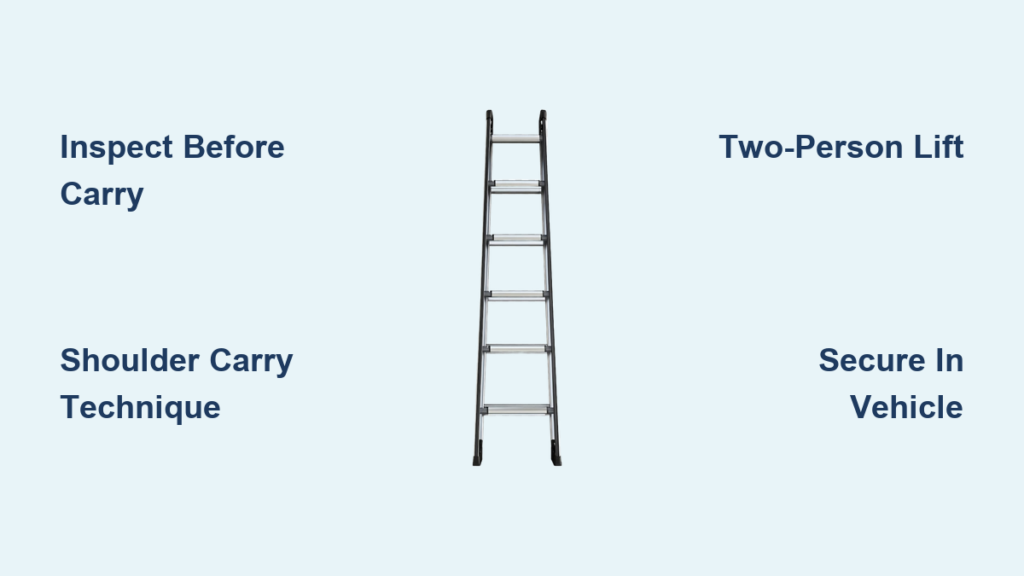
This method transforms ladder transport from a chore to a controlled glide when done correctly. Stand facing the closed ladder with feet shoulder-width apart. Grip the lower step with your left hand and the opposite side rail near the base with your right. Bend knees deeply while keeping your back straight—never round your spine. Lift smoothly, rolling the ladder onto your right shoulder so the top cap rests just below your neck. Your head should nestle between two steps, not under the top rung. Tilt the ladder 15 degrees forward so the base clears your heel, and you can see ahead clearly. Walk with short, deliberate steps, holding the base lightly with your left hand. If you lose balance, drop the base end first—it absorbs impact better than the top. For ladders over 6 feet, rotate your lead foot slightly outward to widen your stance; this reduces sway on uneven surfaces. Most strains happen during the first 10 steps—pause if you feel wobbling to reposition.
Two-Person Carry for Heavy or Tall Ladders
Ladders exceeding 10 feet or 40 pounds demand coordinated teamwork—attempting solo lifts causes 70% of serious transport injuries. Assign roles before lifting: the taller person takes the top end (shoulder position), while the shorter person handles the base. The top carrier must be the “eyes,” calling out hazards and setting the pace. Stand on opposite sides of the ladder, feet staggered for stability. On a three-count (“Lift on three—one, two, three!”), both bend knees and lift simultaneously using leg muscles. Keep the ladder vertical during movement; tilting it horizontally strains spotters’ backs. When navigating corners, the base carrier pivots slowly while the top carrier walks backward, maintaining eye contact. For stair descent, the top carrier walks down first, guiding the ladder’s top against the wall while the base carrier controls the feet. If communication breaks, stop immediately—mismatched movements can twist the ladder violently.
Safe Stair Navigation with Step Ladders

Moving Upstairs Without Losing Control
Ascending stairs with a ladder requires counterintuitive body mechanics. The base carrier (person at the bottom) leads while the top carrier walks backward up the steps. Before starting, test each stair for debris—loose gravel underfoot causes instant slips. Keep the ladder tilted 10 degrees backward so the base hugs your shins, preventing forward tipping. Move one step at a time: base carrier steps up first, then top carrier follows. Never let the ladder rest on stair edges; center the feet fully on each tread. For carpeted stairs, drag the base slightly to avoid catching fibers. If fatigue hits, stop and reset—never “power through” as balance fails. Contractors use the “knee lock” trick: press your knee against the ladder’s base for stability during pauses. Remember, speed kills here; allow 5 seconds per step for safety.
Smart Storage and Vehicle Transport Solutions

Securing Ladders in Vehicles Without Damage
Haphazard vehicle transport ruins ladders and risks deadly road debris. Start by padding contact points: wrap foam tubes around roof rack crossbars where the ladder rests. Position the ladder parallel to your vehicle’s direction of travel, never sideways. For trucks, center the ladder over the axle and secure both ends with ratchet straps—not bungee cords, which stretch and fail. Tighten straps until the ladder can’t shift more than 1 inch in any direction. If the ladder overhangs the truck bed by 4+ feet, attach a bright orange 12×12 inch flag to the rear tip; this isn’t just legal compliance—it prevents rear-end collisions from drivers misjudging your vehicle’s length. For SUVs with roof racks, load the ladder base-first so wind resistance pushes it downward, not upward. Never secure ladders through open windows—vibration can shatter glass.
Dangerous Step Ladder Carrying Mistakes to Eliminate Now

Why the Horizontal Carry Causes Catastrophic Falls
Holding your ladder horizontally at waist height seems intuitive but creates three unavoidable hazards. First, your peripheral vision can’t detect overhead obstacles like door frames or tree branches, leading to sudden impacts that wrench your spine. Second, the ladder’s weight pulls your shoulders forward, forcing you into a hunched posture that strains lumbar discs within minutes. Worst of all, the base swings unpredictably with each step—you’ll instinctively overcorrect, often tripping over your own feet. I’ve seen this “easy” method cause ladders to spear through drywall or knock coworkers unconscious. If you must carry horizontally (e.g., through narrow spaces), keep it below knee height with elbows locked, and move backward so the base leads. But seriously—just shoulder-carry it properly.
Ignoring Weight Limits During Transport
Your ladder’s duty rating isn’t just for climbing—it dictates safe carrying capacity too. A Type III household ladder rated for 200 pounds becomes unstable if you add 50 pounds of tools while moving it. The hidden danger? Weight shifts during transport. That paint can swinging from the top rung creates torque that twists the ladder in your grip. Always offload tools before moving—carry them separately in a tool belt. For metal ladders, remember corrosion adds hidden weight; a rusty 8-foot model can gain 15+ pounds. When in doubt, use the two-person carry method. If you feel the ladder pulling sideways or notice rail flexing during transport, stop immediately—this indicates overloading that could cause joint failure.
Mastering how to carry a step ladder transforms a risky chore into a seamless part of your workflow. Remember the three non-negotiables: always inspect for cracks and secure feet before moving, shoulder-carry standard ladders with your head between steps, and never attempt solo carries for units over 10 feet. These techniques prevent the slow-motion injuries that sideline DIYers for months—like micro-tears from improper grip or cumulative spinal compression. Store ladders flat indoors away from humidity, and when transporting, treat overhangs like live wires requiring bright flagging. Next time you grab your ladder, pause for that critical 30-second safety scan; it takes less time than treating a sprained back. For ongoing safety, bookmark OSHA’s ladder guidelines and inspect hardware quarterly with a torque wrench. Your future self will thank you when you’re still lifting ladders pain-free years from now.