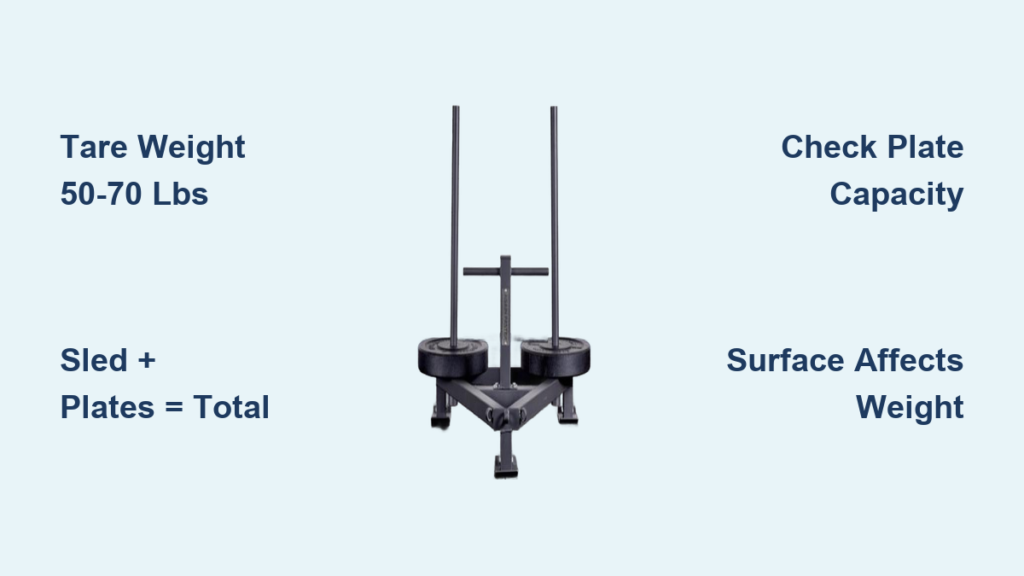
You’re ready to blast through a conditioning circuit, but there’s one critical question you can’t ignore: how much does a prowler sled weigh empty? That base weight—often called “tare weight”—is the silent partner in every push, pull, or sprint. Ignore it, and your carefully programmed resistance becomes guesswork. Most athletes discover too late that the sled itself adds significant resistance before a single plate clanks onto the posts. Understanding this foundational weight (typically 50-70 lbs) transforms your training from random effort to precision programming. In this guide, you’ll unlock exactly how to calculate total working weight, match loads to your goals, and avoid the costly mistakes that undermine your sled sessions.
The prowler sled’s empty weight isn’t just trivia—it’s the baseline for every rep. When you step up to push, that 50-70 pound frame creates immediate resistance against inertia. This base load fundamentally shapes your workout’s intensity, whether you’re building explosive power for football starts or grinding through metabolic conditioning. Get this number wrong, and you’ll either under-deliver on training stimulus or wreck your form trying to move excessive total weight. Let’s break down exactly what contributes to that weight and how to leverage it for maximum results.
What Exactly Is a Prowler Sled’s Base Weight (50-70 lbs Explained)
Your prowler sled’s empty weight—the resistance you face with zero plates loaded—is its tare weight. This isn’t optional knowledge; it’s your training foundation. Heavy-duty steel construction creates this base resistance, with most commercial models landing between 50 and 70 pounds (23-32 kg). This weight comes from three critical components working together:
- Frame & Skis: The welded steel chassis and sliding surfaces form the bulk of the weight. Thicker steel (like PRx models) leans toward 70 lbs, while lighter designs hit 50 lbs.
- Handle System: Adjustable push/pull handles add 5-10 lbs depending on configuration complexity.
- Hardware: Pins, collars, and attachment points contribute the final few pounds.
Why Ignoring Tare Weight Ruins Your Programming
Many athletes make this critical error: they load plates without accounting for the sled’s base weight. If your sled weighs 60 lbs and you add two 45-lb plates, you’re actually pushing 150 lbs total—not 90 lbs. This miscalculation leads to:
– Underestimated resistance causing failed sets during power work
– Overloaded conditioning circuits that destroy running mechanics
– Inconsistent progress tracking since total weight fluctuates unknowingly
Always verify your specific model’s tare weight—manufacturers like EliteFTS and PRx publish these specs. When in doubt, drag an empty sled across turf: if it feels like moving a heavy couch, you’re in the 60+ lb range.
Calculate Total Prowler Weight: Sled + Plates Formula

Your actual training resistance combines the sled’s base weight and added plates. This isn’t theoretical—it’s physics you feel in your quads on rep three. Use this battle-tested calculation method:
Total Working Weight = Sled Tare Weight + Weight of All Loaded Plates
Real-World Weight Scenarios
| Training Goal | Sled Weight | Plates Added | Total Weight | Why It Works |
|---|---|---|---|---|
| Max Power Development | 60 lbs | 2×45 lb plates | 150 lbs | Heavy enough to demand explosive triple extension without compromising form |
| Metabolic Conditioning | 55 lbs | 1×45 lb plate | 100 lbs | Challenging but sustainable for 60-second intervals |
| Acceleration Drills | 50 lbs | Empty sled | 50 lbs | Minimal resistance for max speed over 10 yards |
Pro Tip: Plate count matters more than you think. Olympic plates (2″ hole) are standard, but if your sled uses 1″ holes (like some budget models), plate weight differs. Always confirm plate compatibility—wobbling plates create dangerous instability.
Max Weight Capacity: How Much Plate Load Can You Add?
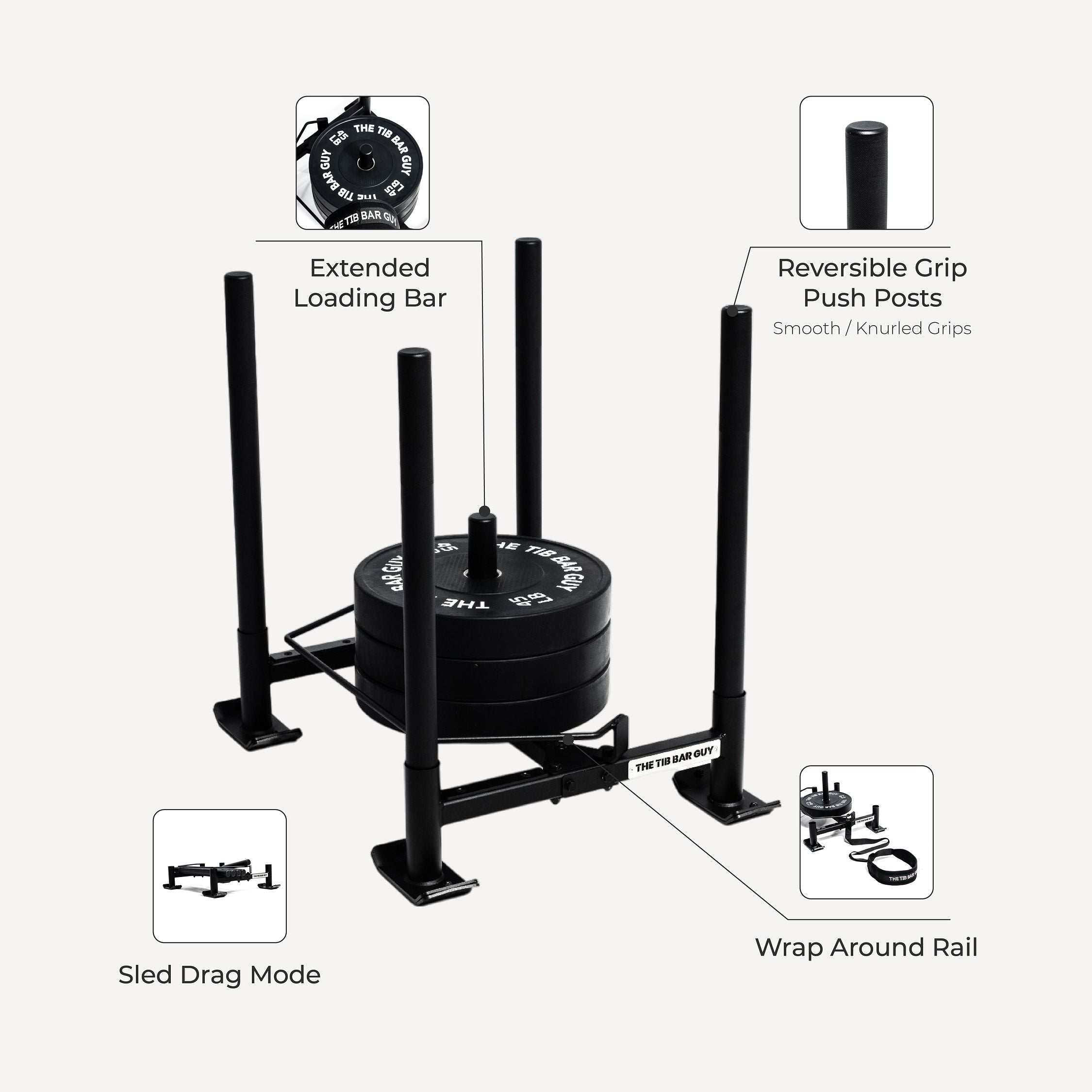
Don’t assume all sleds handle equal weight. Your prowler’s plate capacity determines how heavy you can realistically go. Most commercial sleds (PRx, EliteFTS E-Series) support up to 225 lbs of added plates—equivalent to five 45-lb Olympic discs. But here’s what manufacturers won’t shout from rooftops:
- Total load limit = Sled weight + plates. A 60-lb sled with 225 lbs of plates hits 285 lbs total resistance.
- Critical failure point: Steel posts can bend if plates aren’t secured with collars. Always use locking collars on both sides.
- Surface multiplier: Grass or turf increases effective resistance by 15-25% versus smooth concrete.
When Heavy Loads Backfire
Pushing 300+ lbs total weight seems impressive until:
– Your hips rise and back rounds (killing power transfer)
– Stride length collapses into shuffling
– Knee valgus occurs under extreme load
Elite athletes rarely exceed 250 lbs total weight. If you’re straining to move the sled in the first 5 yards, you’ve overshot your current capacity.
How Surface Type Changes Your Effective Sled Weight
Concrete might seem ideal for smooth sliding, but it’s a trap for most prowlers. The surface you choose dramatically alters how heavy that 50-70 lb base feels:
Turf vs. Concrete: The Weight Illusion
- On artificial turf: That 60-lb sled feels like 70-75 lbs due to higher friction. Ideal for building starting strength—football linemen thrive here.
- On smooth concrete: Same sled feels like 50-55 lbs. Lets you push faster with moderate loads for sprint work.
- Grass wildcard: Wet grass can make a 60-lb sled feel like 80+ lbs. Always test empty sled movement first.
Warning: EliteFTS explicitly prohibits concrete use—it shreds standard steel skis in weeks. Only use UHMW (polyethylene) skis on hard surfaces, and verify your model supports them.
Training for Power: Optimal Prowler Weight for Explosive Starts
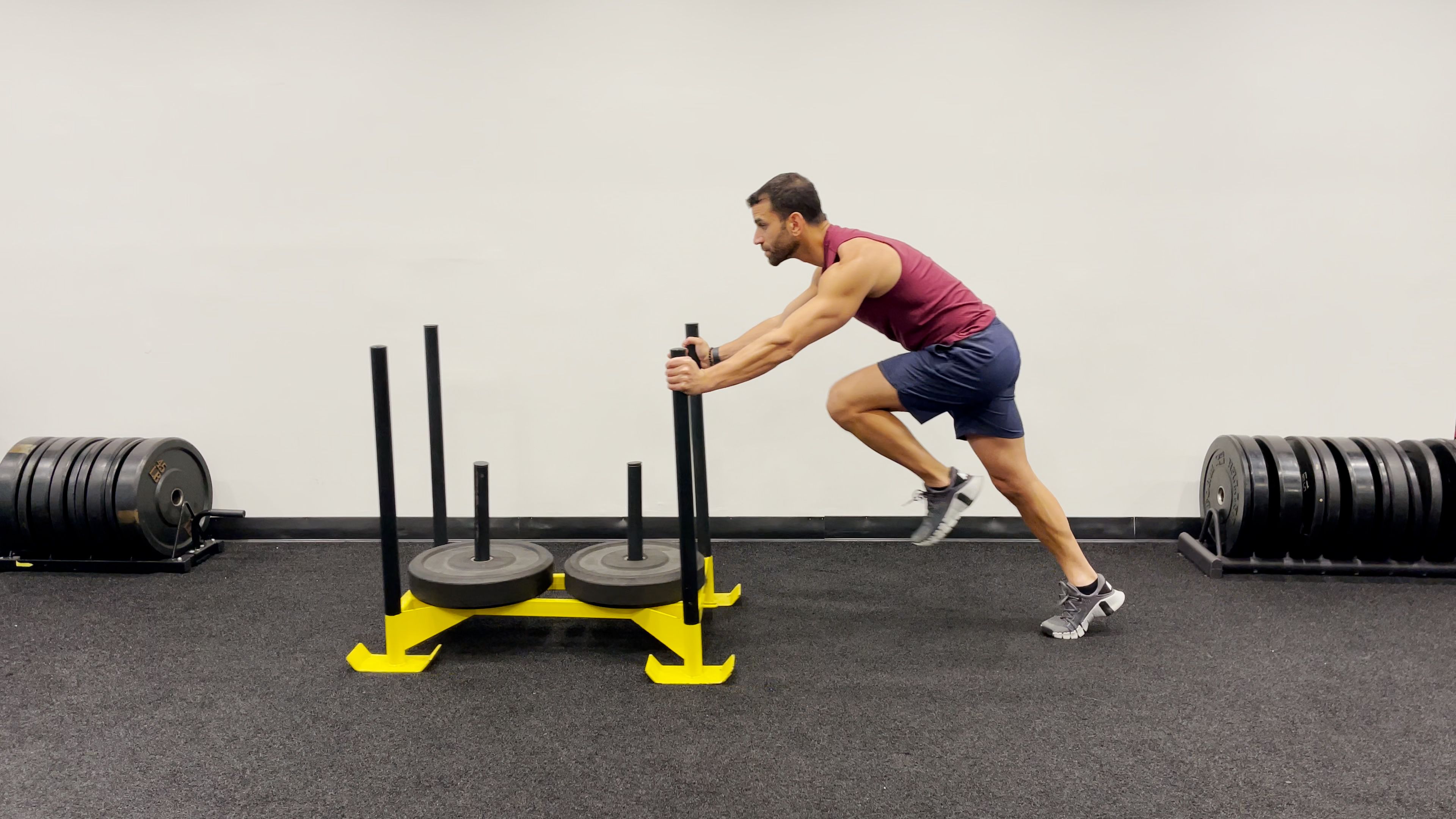
Heavy prowler pushes build the explosive starts that win games. But “heavy” is relative to your base sled weight. Here’s how to nail it:
The 10-Second Power Rule
For maximal power development:
1. Start with sled weight + 50% of bodyweight in plates (e.g., 60-lb sled + 90 lbs plates for 180-lb athlete = 150 lbs total)
2. Sprint 20-40 yards in under 10 seconds
3. Rest 90 seconds between sets
If you complete the distance in >12 seconds, the load is too light. If form breaks before 5 yards, it’s too heavy. Adjust plates—not base sled weight—to fine-tune.
Conditioning Workouts: Best Sled Weight for Endurance
Metabolic conditioning demands a different weight strategy. Forget chasing max loads; here the base sled weight becomes your anchor:
The 60-Second Sweet Spot
- Total weight target: Sled weight + 20-30% bodyweight in plates
- Work interval: 45-60 seconds of continuous pushing
- Key visual cue: You should maintain 70-80% max sprint speed
Example: With a 55-lb sled, a 200-lb athlete uses 40-60 lbs of plates (total 95-115 lbs). If you’re walking after 30 seconds, reduce plates. If you’re cruising easily, add weight.
Choosing a Sled: How Base Weight (50-70 lbs) Affects Your Decision
That 20-lb difference between light and heavy sleds isn’t trivial—it dictates where and how you train:
Steel Frame Weight Tradeoffs
| Sled Weight Range | Best For | Watch Out For |
|---|---|---|
| 50-55 lbs (light steel/aluminum) | Garage gyms, frequent transport, speed-focused athletes | Can tip sideways under heavy plate loads on turf |
| 60-70 lbs (heavy-duty steel) | Outdoor turf fields, power athletes, max load training | Requires two people to move; won’t fit in compact cars |
Critical question: Will you push on turf or concrete? Heavy 70-lb sleds stabilize better on grass, but only UHMW-skied models survive concrete. If storing in a garage, prioritize break-down frames like EliteFTS E-Series.
Avoid These Common Prowler Weight Mistakes
Even experienced lifters sabotage sled work with these errors:
The Plate-Only Fallacy
Assuming “90 lbs on the sled” means total resistance. Reality: 90 lbs of plates + 60-lb sled = 150 lbs. Always state total working weight in your programming.
The Concrete Trap
Using standard steel-skied sleds on asphalt/concrete (despite EliteFTS warnings). This shreds skis in 3-5 sessions and makes the sled feel 20% heavier due to erratic sliding.
The Collar Catastrophe
Skipping locking collars. Plates shift mid-sprint, causing dangerous wobble that forces you to overcorrect with your spine. Always secure both sides.
Safety First: Proper Form for Heavy Sled Pushes
That 50-70 lb base weight becomes dangerous when form fails. Protect your spine with these non-negotiables:
The 3-Point Power Position
- Feet: Shoulder-width, toes pointed straight ahead
- Hips: Below shoulders (deep athletic stance)
- Spine: Neutral—eyes 10 feet ahead, not at ground
Red flag: If your butt rises during the drive phase, the total weight exceeds your current capacity. Drop plates immediately.
Harness Pulling Safety
When using included cross-back harnesses (like PRx models):
– Keep harness straps taut against hips
– Drive through heels, not toes
– Stop if lower back rounds—the base sled weight multiplies leverage on your spine
Knowing how much a prowler sled weighs empty (50-70 lbs) transforms your training from guesswork to precision. That base resistance isn’t static—it interacts with your plates, surface, and goals to create your actual workload. Always calculate total working weight (sled + plates), respect surface limitations, and prioritize form over ego-loading. Start each session with the empty sled to recalibrate your feel for the surface, then add plates incrementally. For ongoing progress, log both plate weight and total resistance—your future self will thank you when programming power development cycles. Remember: the prowler rewards patience. Master that foundational 50-70 lb weight, and you’ll build unstoppable acceleration that translates straight to the field.