The deafening roar of a 2,000-horsepower tractor straining against its limits, tires spinning furiously as it fights for every inch of dirt—this is the heart-pounding drama of tractor pulling. But what exactly brings these mechanical monsters to their knees? The answer lies in the tractor pull sled, a precision-engineered behemoth designed to test the absolute limits of power. If you’ve ever wondered how heavy is a tractor pull sled, you’re not alone. This isn’t just a matter of static weight—it’s a sophisticated system where 27,000 to 40,000 pounds of steel and concrete become the ultimate judge of raw horsepower.
Unlike conventional weights, the tractor pull sled operates on dynamic principles that make its effective weight increase dramatically as the pull progresses. What starts as a challenging resistance transforms into an impossible burden within mere feet, creating that signature “stop” that separates champions from contenders. Understanding the true weight mechanics of these machines reveals why tractor pulling remains one of the most technically fascinating motorsports.
For competitors and fans alike, grasping the exact specifications of sled weight isn’t just trivia—it’s essential knowledge that determines competition fairness, machine preparation, and strategic decisions. Let’s break down exactly what gives these sleds their legendary stopping power and how weight variations affect performance across different tractor classes.
Why Tractor Pull Sleds Weigh More Than They Appear: The Weight Transfer Secret
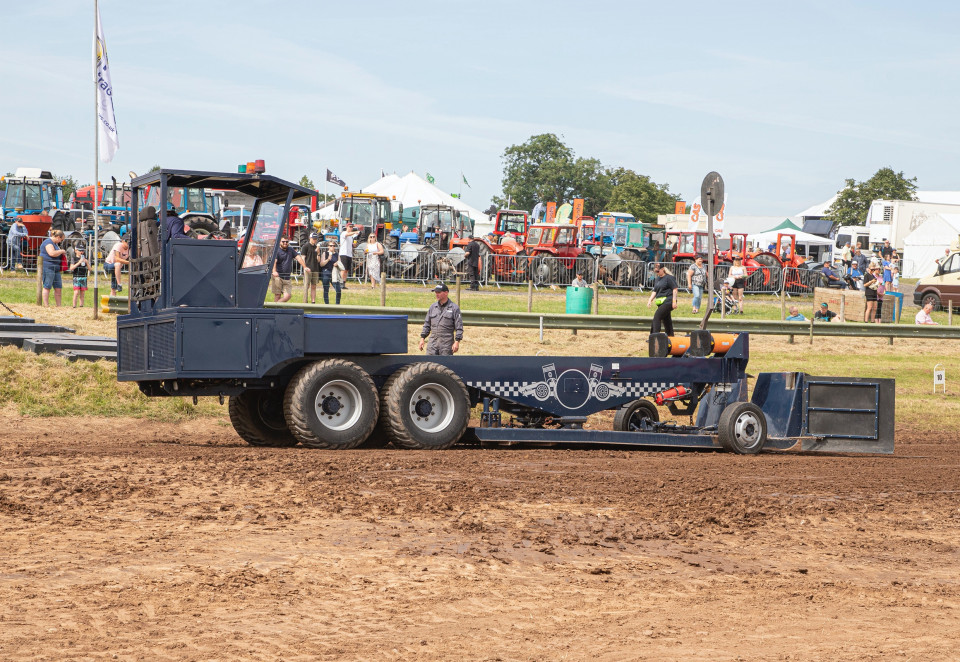
The most critical misunderstanding about how heavy is a tractor pull sled lies in thinking of it as a static weight. In reality, the sled’s effective weight increases dramatically during the pull through an ingenious mechanical system. As your tractor begins pulling, only a portion of the sled’s total mass creates resistance. But within 50 feet, that resistance can double or triple as thousands of pounds shift forward onto the pan.
This progressive resistance is why even the most powerful tractors eventually succumb. The sled’s weight transfer mechanism—whether mechanical or hydraulic—moves ballast from the rear of the sled toward the front pan. By the 200-foot mark, up to 70% of the sled’s total weight may be pressing the pan into the dirt, transforming what was a challenging pull into an impossible task.
How to Identify Proper Weight Transfer During Competition
Watch for these visual cues that indicate correct weight transfer:
– Initial pull: Smooth movement with minimal wheel spin
– Mid-pull (100-200 feet): Increasing wheel spin as resistance builds
– Final stop: Dramatic digging of the pan into the dirt with the tractor’s front end lifting
When weight transfer is miscalibrated, you’ll notice either an immediate stop (too much initial resistance) or a “runaway” pull where the tractor reaches the end without significant struggle (insufficient resistance buildup).
27,000 vs 37,000 lbs: Choosing the Right Sled Base Weight for Your Class
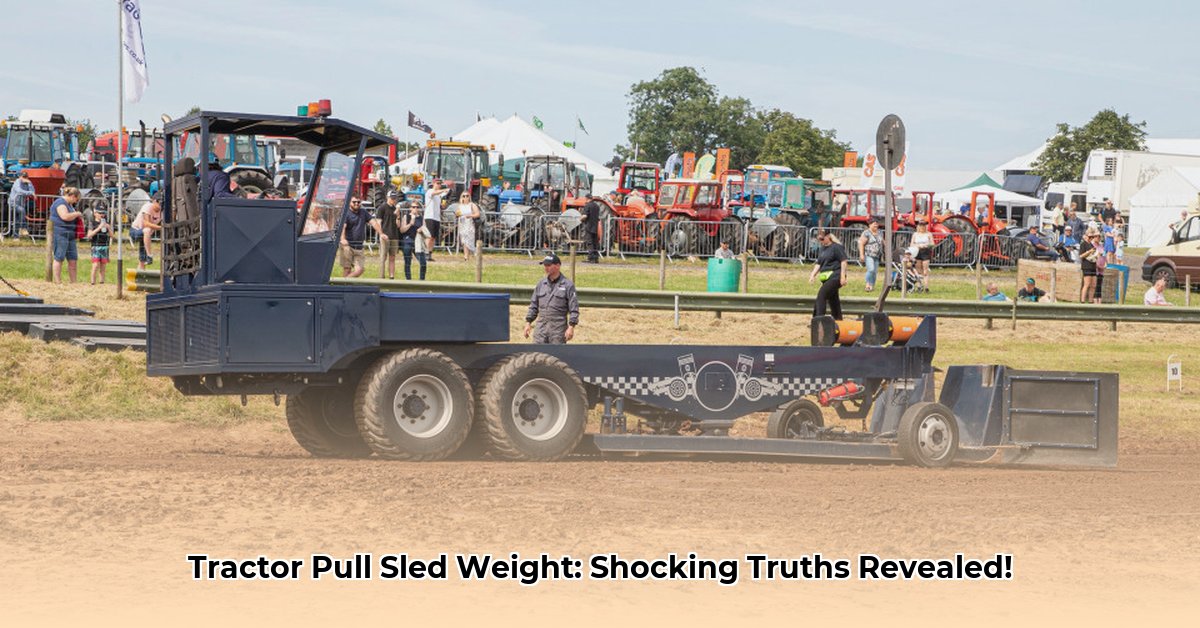
The foundation of every competition begins with selecting the appropriate sled base weight. This isn’t arbitrary—each class has specific requirements that determine which sled configuration you’ll face down the track.
Light Class Sleds (2,500-4,500 lb Tractors): The 27,000 lb Standard
For two-wheel drive trucks and lighter modified tractors, clubs typically deploy smaller sleds with a 27,000 lb base weight. These provide sufficient resistance without overwhelming lower-horsepower machines. If you’re competing in this class, expect to face:
- Approximately 27,000 pounds of base sled weight
- Additional 2,000-5,000 pounds of adjustable ballast
- Total moving weight ranging from 29,000-32,000 pounds by the finish line
Pro tip: If your 3,000 lb tractor struggles to move even the initial 50 feet, the club may be using too heavy a sled configuration—ask about switching to the lighter sled option.
Heavy Class Sleds (5,000+ lb Tractors): The 37,000 lb Power Test
Super Stock and Unlimited classes demand the heavyweight champion of sleds—a 37,000 lb base model that becomes nearly unstoppable as weight transfers forward. For these competitions:
- Base sled weight starts at 37,000 pounds
- Ballast additions typically range from 3,000-5,000 pounds
- Final moving weight often exceeds 40,000 pounds by the 250-foot mark
Critical mistake to avoid: Assuming all heavy classes use maximum ballast. Progressive clubs adjust ballast based on field strength—don’t be caught unprepared when facing a “hot” sled configuration.
Adding Ballast: Precise Weight Adjustments That Make or Break Fair Competition
The art of sled operation lies in ballast calibration—those massive steel plates and concrete blocks that transform a standard sled into a class-specific challenge. Getting this wrong doesn’t just affect one pull; it compromises the entire competition’s integrity.
Step-by-Step: How Sled Operators Calibrate Ballast for Fair Pulls
- Determine base requirements: Consult class specifications for minimum/maximum tractor weights
- Measure initial resistance: Use test pulls to establish baseline sled movement
- Add incremental ballast: Start with 500-pound increments until target resistance is achieved
- Verify weight transfer rate: Ensure resistance builds appropriately across the full pull distance
- Document configuration: Record exact ballast placement for consistency across all competitors
Expert note: Ballast placement matters as much as total weight. Improperly distributed weight can cause erratic pulling behavior that unfairly disadvantages certain tractor configurations.
Super Stock Class Reality: Why 40,000+ Pounds Is Standard for 5,000+ lb Tractors
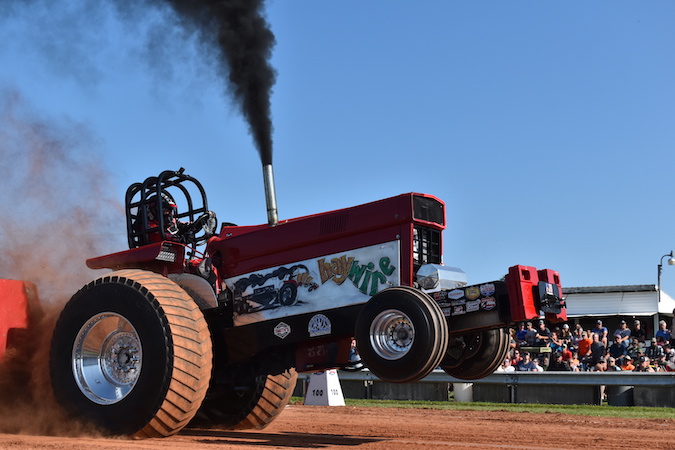
When you’re piloting a 5,500-pound Super Stock machine producing 2,500+ horsepower, the sled you face will likely weigh more than seven standard automobiles combined. This isn’t exaggeration—it’s engineering necessity.
What Happens When Your Tractor Meets a 40,000 lb Sled
- First 50 feet: You’re pulling approximately 30,000 pounds of resistance
- 150-foot mark: Weight transfer increases effective resistance to 35,000+ pounds
- 250-foot zone: The full 40,000+ pound force engages, with the pan digging 6+ inches into the track
Visual indicator of proper setup: At the stopping point, the sled’s pan should have created a distinct trench in the dirt surface—shallow trenches indicate insufficient weight transfer, while excessively deep trenches suggest too-rapid resistance buildup.
Light Tractor Classes: How 2,500-4,500 lb Machines Handle 27,000 lb Sleds
Many competitors mistakenly believe smaller tractors face proportionally lighter resistance. The reality is more nuanced—while the base sled weight is lower (27,000 lbs vs 37,000 lbs), the relative challenge remains extreme.
The Physics of Light Class Pulling
A 3,000-pound tractor pulling a 27,000-pound sled faces a 9:1 weight ratio—meaning the machine must overcome resistance nearly ten times its own weight. This explains why even modest horsepower gains yield dramatic performance improvements in lighter classes.
Common mistake: Overlooking tire configuration when facing lighter sleds. With less absolute resistance, traction becomes the limiting factor more quickly than in heavy classes—don’t neglect tire preparation thinking the sled “isn’t that heavy.”
The Pan Drag Effect: How Surface Area Multiplies Sled Weight Resistance
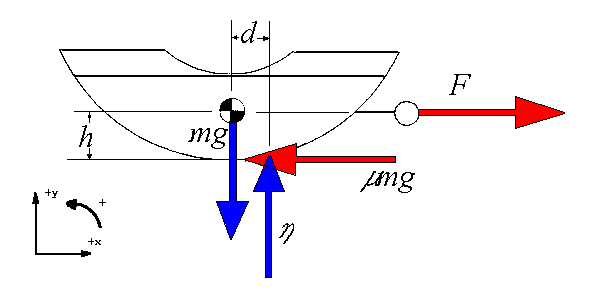
The true stopping power of a tractor pull sled isn’t just about weight—it’s about how that weight interacts with the track surface. This is where the pan design becomes critical.
Why a 40,000 lb Sled Feels Like 60,000+ Pounds
The sled’s pan creates resistance through friction, calculated as:
Normal force (weight on pan) × coefficient of friction
With typical dirt track coefficients around 0.6-0.8, that 25,000 pounds of transferred weight creates 15,000-20,000 pounds of actual drag force. This explains why the effective resistance often feels 50% greater than the sled’s physical weight.
What to watch for: A properly set sled will create increasingly deep ruts as it progresses down the track. Shallow, inconsistent ruts indicate poor weight transfer calibration that undermines competition fairness.
Common Sled Weight Mistakes That Ruin Tractor Pull Competition Fairness
Even experienced clubs sometimes miscalibrate sled weight, turning what should be a test of skill and machine preparation into a lottery. Recognizing these errors helps competitors advocate for fair conditions.
The Three Most Damaging Sled Weight Errors
- Inconsistent ballast between competitors: Using different configurations for early vs late pulls
- Excessive initial resistance: Too much starting weight prevents proper acceleration
- Insufficient weight transfer rate: Creates “runaway” pulls where multiple tractors reach the end
Pro tip: If three or more tractors in your class reach the full pull distance, the sled almost certainly needs more ballast or adjustment to the weight transfer mechanism.
Sled Operator Secrets: Calibrating Weight Transfer for Maximum Drama and Fairness
The best sled operators function as performance artists and engineers combined—setting the “stop” precisely where competition drama peaks. This requires understanding exactly how heavy is a tractor pull sled at every point in the pull.
How Top Operators Set the Perfect Stop
- For evenly matched fields: Set weight transfer to stop most competitors between 275-290 feet
- When one machine significantly outperforms others: Gradually increase ballast for subsequent pulls
- For antique tractor classes: Reduce transfer rate to accommodate lower horsepower
Expert insight: The most skilled operators adjust sled settings based on track conditions—wet dirt requires less weight than dry, hard-packed surfaces to achieve equivalent resistance.
Maintaining Proper Sled Weight: Critical Checks Before Competition Day
Sled weight isn’t just about ballast—it’s about mechanical integrity. A malfunctioning weight transfer system can render even perfectly calibrated ballast ineffective.
Essential Pre-Pull Sled Inspection Checklist
- Verify hydraulic fluid levels (for hydraulic transfer systems)
- Check mechanical linkage for wear or binding
- Confirm ballast plates are securely locked in position
- Test weight transfer mechanism through full range of motion
- Measure pan surface area for consistent contact with track
Critical safety note: Never stand behind the sled during operation—a malfunctioning transfer mechanism can cause sudden, uncontrolled movement even without a tractor attached.
Final Takeaway: The Dynamic Weight That Defines Tractor Pulling’s Essence
So, how heavy is a tractor pull sled? The answer spans from 27,000 to over 40,000 pounds, but the true significance lies in how that weight functions during competition. Unlike static weights, the sled’s progressive resistance creates the dramatic tension that makes tractor pulling unique among motorsports—transforming what might seem like a simple strength contest into a sophisticated dance of physics, engineering, and human skill.
For competitors, understanding these weight dynamics isn’t academic—it directly impacts machine setup, tire selection, and driving strategy. For fans, appreciating the engineering behind the sled deepens the spectacle, transforming each pull from mere spectacle into a showcase of mechanical precision. Whether you’re behind the wheel or in the stands, recognizing how sled weight operates elevates your entire experience of this extraordinary sport.
Maintenance tip: After each competition, inspect the sled’s weight transfer mechanism for wear. Even minor binding can significantly alter the effective weight profile, compromising future competition fairness. Properly maintained, these 37,000-pound engineering marvels can deliver consistent, thrilling performances for decades.