Have you ever watched footage of the Iditarod and wondered exactly how many miles can sled dogs run before needing rest? This question plagues both new mushing enthusiasts and seasoned spectators alike. The answer isn’t straightforward, as sled dogs’ endurance capabilities depend on multiple factors including breed, conditioning, weather, and trail conditions. What’s certain is that these canine athletes routinely accomplish what would be impossible for humans—covering astonishing distances through some of the world’s harshest environments.
Sled dogs aren’t just working animals; they’re elite endurance athletes genetically engineered for performance. When properly conditioned and managed, these dogs can maintain incredible paces over multiple days. The question of how many miles can sled dogs run reveals a complex interplay between biology, training, and strategy that separates successful mushers from the rest. Whether you’re curious about recreational sledding or professional racing, understanding these limits is crucial for both performance and animal welfare.
Sprint Race Limits: Maximum Speed Over Short Distances
Professional sprint mushers push their teams to cover impressive distances at remarkable speeds, but these runs are intentionally brief to preserve canine health.
4-30 Mile Sprint Capabilities
Top sprint teams routinely complete 4-30 mile courses at average speeds of 19-20 mph, with bursts reaching 25 mph on straightaways. These high-intensity runs demand peak physical condition but rarely exceed 30 miles in a single outing. Critical limitation: Even world-class sprint dogs can’t maintain this pace beyond 30 miles without risking injury—muscle fatigue and paw damage become significant concerns beyond this threshold.
Why Sprint Teams Can’t Maintain Long Distances
Sprint dogs possess different physiological adaptations than distance runners. Their muscle fiber composition leans more toward fast-twitch fibers optimized for explosive power rather than endurance. Attempting to run sprint dogs beyond their 30-mile limit often results in:
– Sudden refusal to pull
– Visible limping from paw pad damage
– Dramatic drop in speed after the first 15 miles
– Recovery periods lasting 3-5 days instead of the usual 24-48 hours
Mid-Distance Endurance: The 100-350 Mile Threshold
Mid-distance races represent the sweet spot where speed meets serious endurance, revealing what most recreational mushers can realistically expect from their teams.
CopperDog 150 and Yukon Quest 300 Performance Metrics
Teams in these 150-300 mile races typically maintain 7-10 mph average speeds over multiple days. The winning CopperDog 150 teams complete the course in approximately 18-22 hours, while Yukon Quest 300 champions finish in 2.5-3.5 days. Pro tip: Successful mid-distance mushers implement strategic 4-hour rest periods every 40-50 miles—this schedule prevents cumulative fatigue while maintaining competitive pace.
Daily Mileage Sweet Spot for Mid-Distance Teams
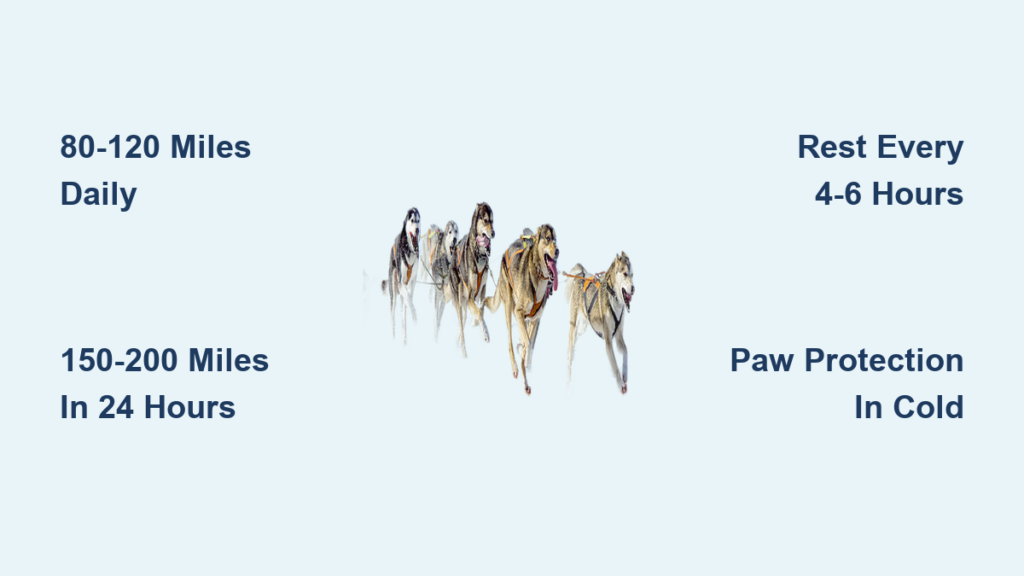
After analyzing multiple race results, the optimal daily distance for mid-distance teams emerges as 80-120 miles. Pushing beyond 120 miles daily leads to:
– Noticeable speed decline on subsequent days
– Increased veterinary stops for minor injuries
– Higher dropout rates before race completion
Teams maintaining 90-100 mile daily averages consistently outperform those attempting 130+ mile days in multi-day mid-distance events.
Long-Distance Records: What the Iditarod Reveals About Maximum Endurance
The Iditarod provides the most comprehensive data on sustained sled dog endurance, with decades of race statistics revealing what’s truly possible.
24-Hour Distance Records in Professional Racing
Top Iditarod teams have covered 150-200 miles in single 24-hour periods under ideal conditions. Dallas Seavey’s 2016 record-setting run saw his team average 10.4 mph for 33 consecutive hours, covering approximately 340 miles. However, these extraordinary efforts are strategically deployed only once during the race—attempting this daily would destroy the team.
Sustainable Daily Mileage for 1,000-Mile Races
Contrary to popular belief, winning Iditarod teams don’t rely on marathon running days. Analysis of recent champions shows:
– Average daily distance: 83-111 miles
– Typical run/rest pattern: 4-6 hours running followed by 4-8 hours rest
– Peak mileage days rarely exceed 125 miles
Mushers who attempt more than 125 miles daily typically experience catastrophic team breakdowns by the race’s midpoint.
Sled Dog Physiology: Why These Canines Outperform All Other Mammals
The secret to sled dogs’ extraordinary endurance lies in their unique biological adaptations—evolutionary advantages that make them nature’s perfect endurance machine.
Metabolic Superpowers Revealed by Science
Research from the University of Utah shows sled dogs can burn 10,000-12,000 calories daily while maintaining or even gaining weight during races. Their digestive systems process fat with 90% efficiency—double that of humans. Critical insight: During multi-day events, their bodies switch to burning fat almost exclusively, preserving precious muscle tissue that would otherwise be metabolized.
The Paw Advantage: Nature’s Perfect Traction System
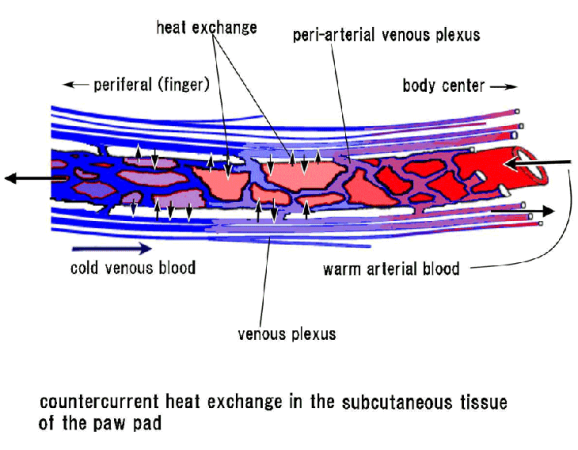
Sled dogs’ paws contain specialized tissues that remain flexible in extreme cold (-40°F) while providing remarkable grip. Unlike humans whose extremities constrict blood flow in cold conditions, sled dogs maintain circulation to their paws through a counter-current heat exchange system. This biological feature allows them to run hundreds of miles without frostbite—a capability no other mammal possesses at these temperatures.
Trail Conditions: How Terrain Dictates Real-World Mileage Limits

The same team that covers 100 miles on packed trails might manage only 40 miles through deep snow—a reality that dominates race strategy.
Hard Trail vs. Breakable Trail Performance
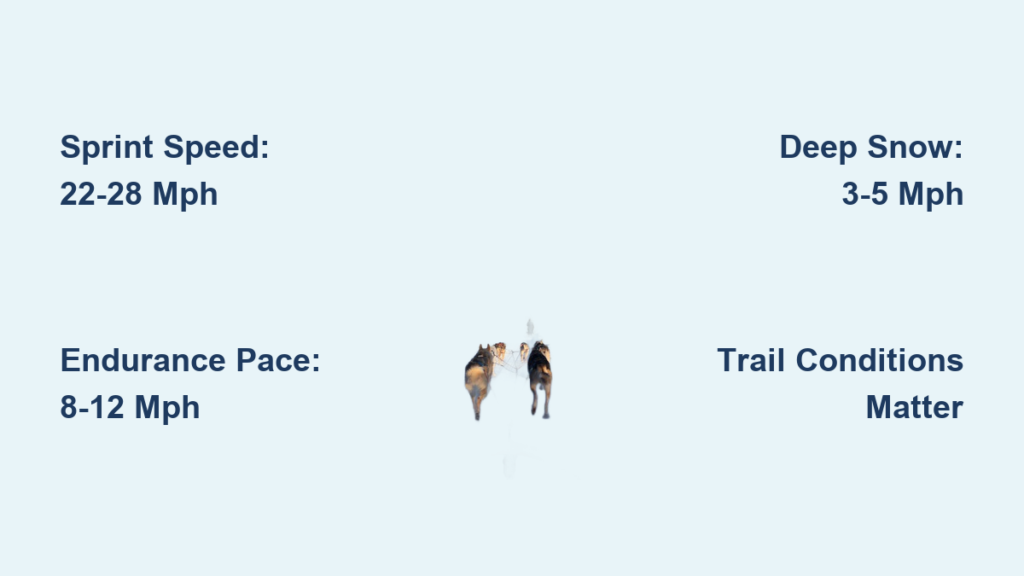
On hard-packed snowmobile trails, teams maintain 8-12 mph with minimal effort. The same team breaking trail through fresh snow drops to 3-5 mph, reducing daily mileage by 50-60%. Warning: Many novice mushers underestimate this factor, pushing dogs too hard on difficult terrain and causing preventable injuries. Always adjust daily mileage expectations based on trail conditions.
Temperature Extremes and Their Impact on Distance
The optimal temperature range for maximum mileage is -20°F to 15°F. Outside this range:
– Below -20°F: Paw ice balling increases, requiring frequent stops for boot changes
– Above 20°F: Risk of overheating forces significant speed reduction
Teams regularly lose 20-30% of potential daily mileage when temperatures fall outside this ideal range.
Musher Strategy: The Hidden Factor Determining Daily Mileage
The most conditioned team will fail without proper management—successful mushers treat distance planning like a chess match against the elements.
Run/Rest Cycle Optimization
Elite mushers employ precise run/rest ratios calibrated to their specific team:
– 5/5 pattern: 5 hours running, 5 hours resting (ideal for early race stages)
– 4/6 pattern: 4 hours running, 6 hours resting (better for mountain sections)
– 6/4 pattern: 6 hours running, 4 hours resting (used on fast, flat sections)
Teams using data-driven rest patterns consistently outperform those following rigid schedules.
Reading Your Dogs: When to Push and When to Rest
Experienced mushers monitor subtle signs indicating when to adjust pace:
– Head position: Lowered heads signal fatigue
– Tail carriage: Tucked tails indicate discomfort
– Team spread: Widening gaps between dogs show weakening
Ignoring these signals while pushing for extra miles often results in multiple dogs needing veterinary care.
Realistic Mileage Expectations for Recreational Mushers
Most enthusiasts will never compete in the Iditarod, but understanding practical limits prevents overexertion of beloved canine partners.
Weekend Trip Planning Guidelines
For recreational mushers on weekend trips, follow these evidence-based limits:
– Well-conditioned teams: 30-40 miles daily
– Moderately conditioned: 20-30 miles daily
– Beginner teams: 10-20 miles daily
Pro tip: Always plan your route with bailout points every 10-15 miles—conditions can change rapidly, making your planned distance unsafe.
Warning Signs That You’ve Exceeded Safe Mileage
Your dogs will tell you when you’ve gone too far. Stop immediately if you observe:
– Reluctance to start after rest breaks
– Excessive panting while stationary
– Visible limping or favoring limbs
– Refusal to eat at rest stops
Pushing through these signs risks serious, long-term health consequences.
Post-Run Recovery: The Secret to Consistent Daily Mileage

What happens after the run determines tomorrow’s performance—professional mushers treat recovery as critically as the run itself.
Immediate Post-Run Protocol
Top teams implement this recovery sequence within minutes of stopping:
1. Remove harnesses immediately to prevent chafing
2. Administer electrolyte supplement in warm water
3. Apply paw balm to prevent cracking
4. Provide small, frequent meals rather than one large feeding
Skipping these steps can reduce the next day’s potential mileage by 25% or more.
The Critical 48-Hour Recovery Window
For teams covering 50+ miles, the two days following a long run require special attention:
– Day 1: Light walking only, no pulling
– Day 2: Short 5-10 mile jog to maintain circulation
– Full recovery before next substantial run: 72-96 hours
Ignoring proper recovery leads to cumulative fatigue that progressively reduces daily mileage capacity.
Understanding exactly how many miles can sled dogs run transforms from theoretical curiosity to practical necessity for anyone working with these incredible athletes. Whether you’re planning your first recreational run or dreaming of the Iditarod, respecting these biological limits ensures both performance and canine welfare. The most successful mushers don’t push the absolute maximum—they find the sustainable sweet spot that allows their teams to perform consistently day after day. Remember, the goal isn’t just to cover distance today, but to ensure your dogs can do it again tomorrow and for seasons to come.