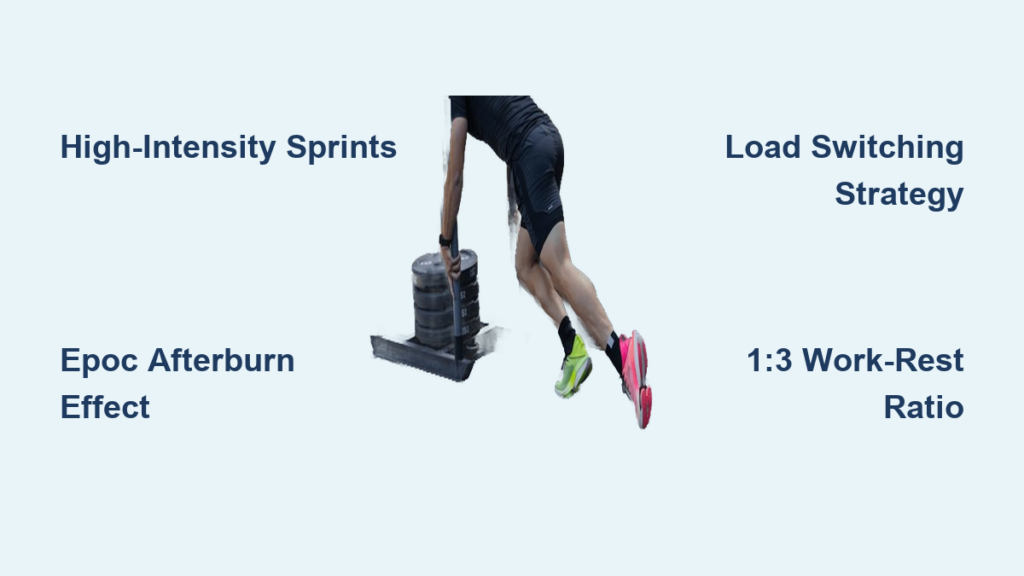
You’re drenched in sweat, muscles screaming, as you drive a loaded sled across the turf. That brutal full-body burn makes you wonder: how many calories burned pushing sled actually translates to? Forget vague fitness app estimates—real-world sled work torches 10-20 calories per minute during high-intensity efforts. A single 30-minute session can incinerate 400-800+ calories depending on your approach. This isn’t just another cardio gimmick; it’s a metabolic furnace used by NFL players and elite CrossFitters to melt fat while building raw power. If you’ve ever questioned whether that sled session was worth the agony, this guide delivers precise calorie calculations, science-backed strategies, and a step-by-step workout to maximize your burn.
Unlike steady-state cardio, sled pushing combines strength, power, and metabolic conditioning into one devastating movement. The exact calorie count dances between 12-20+ calories per minute based on critical variables you control. A 200-pound athlete might torch 500+ calories in 30 minutes of aggressive interval work, while a 150-pound person sees 350-400 calories. What matters most? Your ability to manipulate resistance, speed, and recovery to keep EPOC (Excess Post-Exercise Oxygen Consumption) working for you long after you’ve walked away from the sled. Let’s break down exactly how to harness this for maximum fat loss.
Your Exact Sled Push Calorie Burn: Weight-Based Numbers

Stop guessing your calorie expenditure. Sled pushing operates on clear physiological principles where body weight directly dictates energy output. A heavier athlete burns significantly more calories moving the same load the same distance—a 200-pound person burns ~25% more than a 150-pound counterpart during identical work. But weight alone isn’t the full story; how you structure the workout creates massive variance.
Why 150lb vs 200lb Athletes See Different Results
A 150-pound person pushing moderate loads for 30 minutes typically burns 350-400 calories during the session. Scale up to 200 pounds? That same protocol jumps to 500+ calories. The physics are undeniable: moving greater mass requires exponentially more force, especially when driving against friction. Track your starting weight and watch burn rates shift as you gain muscle—each additional pound becomes a metabolic advantage.
Heavy Sled vs. Light Sled: Which Burns More Fat?
Counterintuitively, lighter sleds pushed at sprint speed burn more calories per minute than heavy slow drags. A 100-foot all-out sprint with 50% body weight engages fast-twitch fibers and skyrockets heart rate, hitting 18-20 calories/minute. Heavy sled work (150%+ body weight) for 40-yard power pushes burns 12-15 calories/minute but triggers stronger EPOC effects. For pure calorie incineration, prioritize speed over max load.
Turf vs. Concrete: How Surface Friction Changes Burn Rates
That gritty turf field isn’t just for show—it increases resistance by 30-40% versus smooth concrete. Pushing identical loads on turf forces greater muscular recruitment, spiking calorie expenditure. Grass adds even more drag but risks uneven footing. Always choose high-friction surfaces when fat loss is the goal; that extra grip transforms your sled into a calorie-sucking vortex.
Calculate Your Burn: MET Formula & EPOC Multiplier
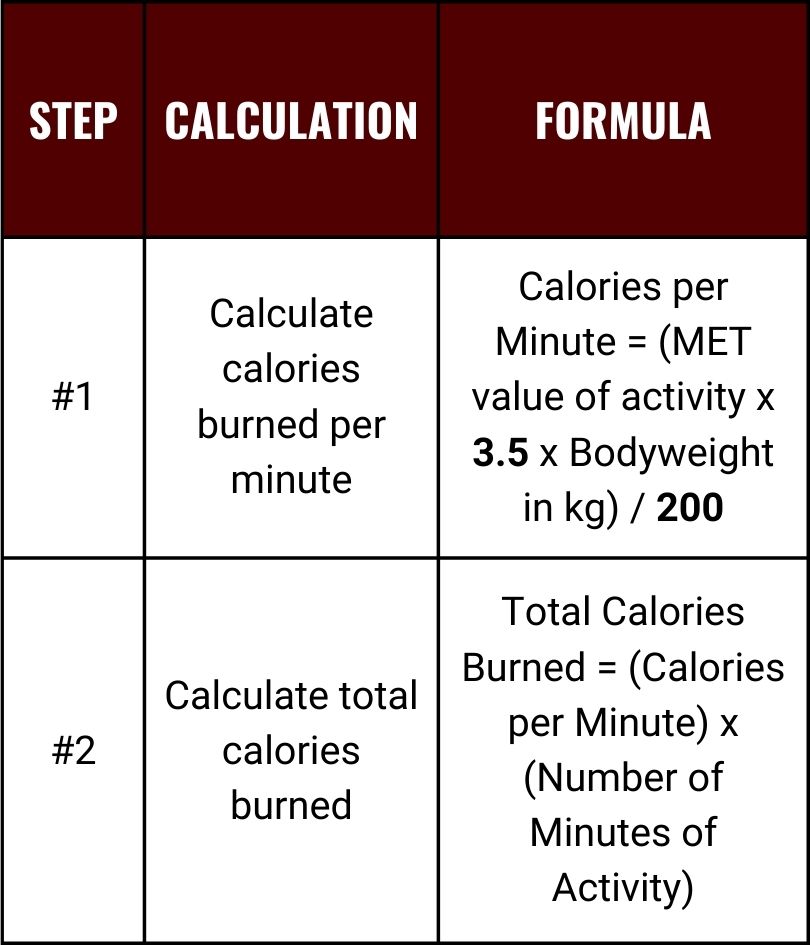
Guessing your calorie burn ends now. The Metabolic Equivalent of Task (MET) system provides lab-tested accuracy for sled pushing. Vigorous sled work carries a MET value of 6.0—meaning it demands six times your resting energy expenditure. Plug this into the universal formula:
Calories = METs × (Weight in kg) × (Time in hours)
Real Calculation: 180lb Athlete’s 30-Minute Session
- Convert weight: 180 lbs = 81.6 kg
- Session duration: 30 minutes = 0.5 hours
- Calculation: 6.0 METs × 81.6 kg × 0.5 hours = 245 calories
This is your direct burn—but it misses the hidden powerhouse: EPOC. High-intensity sled intervals create oxygen debt that keeps metabolism elevated for 24-48 hours. Factor in a 6-15% EPOC boost, and that 245-calorie session becomes 260-280+ total calories.
Why EPOC Makes Sled Pushing 3x More Effective Than Walking
Walking (3.5 METs) burns calories only during the activity. Sled pushing’s explosive nature creates metabolic chaos—muscle micro-tears, glycogen depletion, and hormonal shifts—that force your body to work overtime repairing itself. This afterburn effect means 20 minutes of sled intervals can match 60 minutes of steady cardio in total energy expenditure. Prioritize intensity over duration to leverage this free calorie burn.
Maximize Burn: 4 Proven Sled Push Strategies
Generic “push the sled” advice wastes your potential. These competition-tested tactics force your body to burn calories at peak efficiency. Implement them immediately to transform mediocre sessions into fat-melting events.
Warm Up Like a Pro: 5 Minutes to Prevent Injury & Boost Output
Never attack heavy loads cold. Start with 3 sets of 20-yard unloaded sled walks while performing dynamic stretches: leg swings (front/back), walking lunges with torso twists, and arm circles. This primes hip mobility and neural pathways, allowing 15% more force production during work sets. Skipping warm-ups sabotages power output and cuts calorie burn by nearly 20%.
Interval Sprints: The 30-90 Rule for Maximum Calorie Torch
Ditch steady-state pushing. The 30-second sprint / 90-second rest protocol creates metabolic mayhem:
1. Load sled to 50-75% body weight
2. Sprint 20-40 yards with aggressive knee drive
3. Walk back slowly (90 seconds) to reset breathing
4. Repeat 6-8 times
This ratio maximizes lactate clearance while keeping heart rate in the 85-95% zone—where calorie burn per minute peaks. Time yourself: if you’re recovered before 90 seconds, increase sled load.
Load Switching: Light Sprints + Heavy Power Pushes
Combine two modalities in one session for compound calorie burn:
– Light Sled (30-50% body weight): 8 x 15-yard sprints at 90% max speed
– Heavy Sled (125-150% body weight): 5 x 30-yard power pushes at 70% speed
Light sprints spike heart rate for immediate calorie incineration; heavy pushes trigger EPOC through muscular fatigue. Alternate sets to prevent adaptation—your metabolism never gets comfortable.
Work-to-Rest Ratio: 1:3 for Optimal Conditioning
For pure fat loss, maintain a 1:3 work-to-rest ratio. Push for 20 seconds? Rest 60 seconds. This keeps you in the alactic power zone where phosphagen system depletion drives massive EPOC. Use a stopwatch—most beginners rest too little, turning intervals into exhausting jogs that burn fewer calories.
Beyond Calories: 3 Explosive Benefits You’re Missing

Sled pushing transcends calorie counting—it rebuilds your athletic foundation. These benefits compound your results long after the session ends.
Build Lower Body Power Without Joint Stress
Unlike squats or deadlifts, sled work loads joints progressively—force peaks at the start of each push, then decreases. This spares knees and spine while building glute/quad strength that transfers directly to sprinting and jumping. Test it: after 4 weeks of sled work, your vertical jump increases 2-3 inches with zero added muscle mass.
Improve Athletic Performance with Functional Strength
Every push mimics real-world movement patterns: driving through hips, maintaining forward lean, stabilizing core under load. You’ll notice faster 40-yard dashes, more explosive tackles, and better balance during cutting sports. This functional carryover means more calories burned daily through non-exercise activity thermogenesis (NEAT).
Boost Metabolic Rate Long After Your Workout
The true magic happens post-session. Heavy sled intervals elevate growth hormone by 400% and increase insulin sensitivity for 48+ hours. Translation? Your body preferentially burns fat for fuel even while sitting at your desk. One study found athletes doing sled work lost 3.2x more belly fat than treadmill runners over 8 weeks—despite identical calorie deficits.
30-Minute Fat-Melting Sled Workout: Burn 300+ Calories
This battle-tested protocol combines everything you’ve learned. Complete it 2x weekly for rapid fat loss without muscle sacrifice.
Warm-Up: 5 Minutes to Prime Your Muscles
- 2 minutes: Light sled drags (no weight) with high knees
- 1 minute: Walking spiderman stretches with torso rotation
- 2 minutes: 3 sets of 10-yard accelerations at 50% effort
Pro Tip: Feel a slight burn in your hip flexors? You’re ready. Stop if you feel knee strain—adjust sled weight immediately.
Work Intervals: 20 Minutes of High-Intensity Pushing
- Sprint Intervals (8 minutes): 8 x 20-yard sprints at 90% speed (sled = 50% body weight), 90-second rest
- Heavy Power Sets (7 minutes): 5 x 40-yard pushes (sled = 125% body weight), 120-second rest
- EMOM Finisher (5 minutes): Every minute, push 15 yards with heavy sled. Rest remainder of minute.
Critical Cue: Keep chest over toes, drive through heels. If your arms pump first, you’re leaning too upright—reset your posture.
Cool Down: 5 Minutes to Recover Faster
- 2 minutes: Light walking while deep breathing
- 1 minute: Quad stretch (hold 30 seconds/side)
- 2 minutes: Banded hip flexor mobilizations
Afterburn Hack: Drink 16oz electrolyte water immediately post-workout. This accelerates recovery and extends EPOC by maintaining optimal hydration for metabolic processes.
Sled pushing isn’t just about the calories burned during your session—it’s about igniting a metabolic fire that rages for days. By manipulating weight, speed, and recovery, you turn each push into a fat-loss catalyst. Remember: a heavy grind might feel heroic, but light sprints at max speed deliver the highest calorie burn per minute. Implement this 30-minute protocol twice weekly, track your starting weight, and within 30 days you’ll see the scale drop while your power surges. The real question isn’t how many calories burned pushing sled—it’s why you’re not doing it yet.