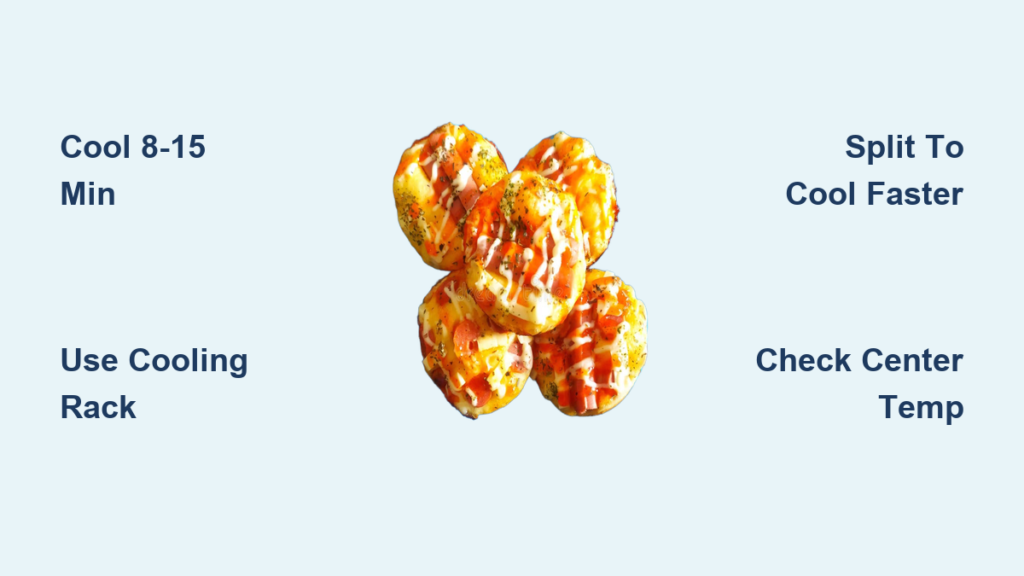
That first batch of pizza rolls fresh from the oven or air fryer is irresistible—golden-brown exteriors bubbling with molten cheese and sauce. But biting in too soon risks a painful mouth burn or ruined texture, while waiting too long turns them soggy and lukewarm. How long to let pizza rolls cool isn’t just about patience; it’s critical for safety and enjoyment. The core temperature of freshly cooked pizza rolls hits 160-180°F (71-82°C), far above the 140°F (60°C) safety threshold where burns occur. This guide cuts through the guesswork with precise timing, science-backed methods, and pro tips so you can enjoy every bite safely and at peak flavor.
Ignoring proper cooling turns a perfect snack into a hazard. The cheese and sauce retain heat 15-25% longer than the crust due to their insulating properties, creating dangerous temperature gradients. A deceptively cool exterior can hide scalding fillings that burn your mouth instantly. Worse, improper cooling invites food safety risks if rolls linger in the “danger zone” (40-140°F) too long. You’ll learn exactly how long to let pizza rolls cool based on your cooking method, quantity, and setup—plus faster techniques that prevent burns without sacrificing crispness.
How Long to Let Pizza Rolls Cool: Exact Timelines for Safety
Why Your Pizza Rolls’ Center Stays Dangerously Hot (160-180°F!)
Pizza rolls are heat traps. The dense cheese and sauce filling acts like insulation, holding temperatures 20-30°F hotter than the crust for minutes after cooking. When you pull them from the oven at 425°F, the crust cools rapidly through convection, but the center remains a burn hazard at 160-180°F. This thermal lag creates a false sense of safety—you might touch the crust comfortably while the molten core can scald your mouth instantly. The critical risk zone? Any filling above 140°F (60°C), where tissue damage occurs in seconds. Never judge readiness by the crust alone; the cheese pockets stay dangerously hot up to 5 minutes after steam stops rising.
Oven, Air Fryer & Microwave Cooling Times Compared
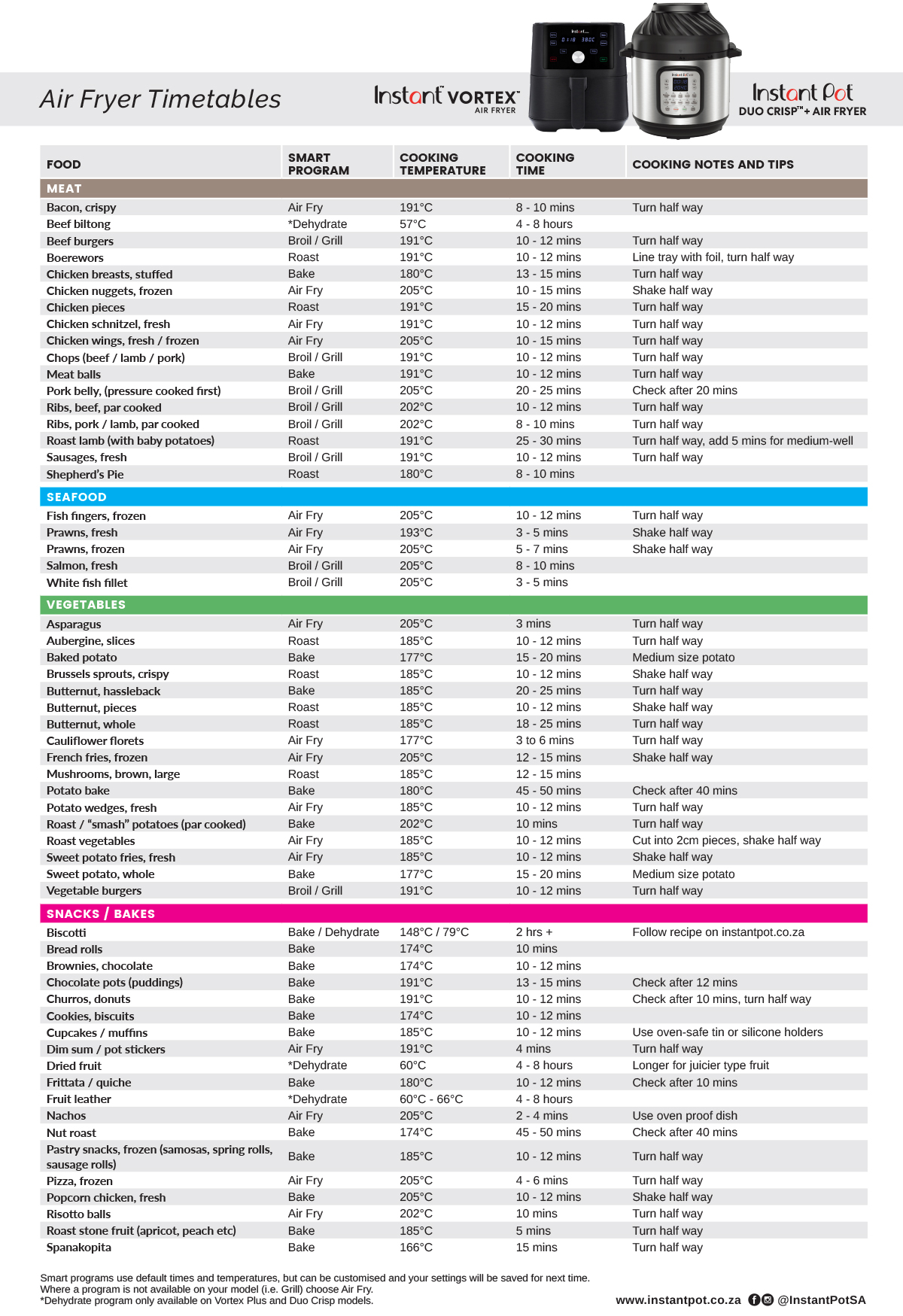
Your cooking method drastically changes how long to let pizza rolls cool. For a standard batch (6-8 rolls):
- Oven-baked pizza rolls (425°F for 15 mins): Need 15-18 minutes cooling on a ceramic tray. The thick baking sheet retains heat, slowing dissipation.
- Air fryer pizza rolls: Cool 15% faster (12-15 minutes) due to better air circulation during cooking. But stacked rolls in the basket trap heat—always spread them out.
- Microwave pizza rolls: Require only 8-12 minutes. Though they cook unevenly (creating hot spots), the reduced cooking time means less residual heat.
Single-roll exception: One pizza roll cools in just 8-12 minutes regardless of method. But a full baking sheet needs 20-25 minutes—those center rolls are insulated by surrounding heat. Always arrange in a single layer with space between rolls; stacking adds 5+ minutes per layer to safe eating time.
The 3-Minute Trick to Eat Pizza Rolls Faster
When hunger strikes immediately, skip dangerous blowing or squeezing. Instead: Slice a single pizza roll lengthwise with a knife while holding it steady with a fork. This exposes the hot filling directly to air, venting steam and accelerating cooling by 2-3x. The core drops to a safe 130°F in just 2-3 minutes—perfect for impatient snacking without burns. For batches, use a toothpick to poke 2-3 small holes in each roll’s top crust. This creates escape routes for trapped steam, cutting wait times by 40% while preserving crispness. Never submerge hot rolls in water or fridge—extreme temperature shifts make crusts soggy and trap heat internally.
5 Critical Factors That Change How Long to Let Pizza Rolls Cool
Cooking Method: Oven vs. Air Fryer vs. Microwave Cooling Differences
Oven-baked rolls cool slowest because ceramic trays retain heat 30% longer than metal surfaces. Air fryer rolls benefit from pre-cooling circulation but suffer if piled in the basket—always transfer them immediately to a cooling rack. Microwave rolls have the fastest initial cooldown (thanks to shorter cook times), but watch for uneven “hot pockets” in the sauce. Pro tip: After microwaving, let rolls stand for 1 minute in the appliance before moving them. This uses residual heat to finish cooking evenly, reducing overall cooling time by 3-4 minutes.
Why a Single Pizza Roll Cools 50% Faster Than a Full Tray

Quantity is the #1 cooling variable. A lone pizza roll on a plate hits safe temperatures in 8-12 minutes. But 10+ rolls on a tray take 25-35 minutes because center rolls are insulated by neighbors—like a mini-oven. The science? Still air around clustered rolls slows heat transfer by 50-60%. Always spread rolls with ½-inch gaps on a wire rack (not solid plates). This simple step boosts airflow, cutting cooling time by 30-40%. For parties, use multiple trays instead of overcrowding one—your guests won’t wait 30 minutes for hot rolls.
Avoiding the Food Safety Danger Zone (40-140°F)
Beyond mouth burns, improper cooling risks bacterial growth. Pizza rolls must drop from 180°F to below 140°F within 2 hours to stay safe. The real danger? Cheese filling maintains heat 15-25% longer than crust, keeping rolls in the microbial “danger zone” (40-140°F) unnecessarily. To prevent this:
– Never cover hot rolls (traps steam and heat)
– Discard rolls left over 2 hours at room temperature
– For large batches, divide into smaller portions to cool faster
– Use a food thermometer—insert into the center for accurate readings
3 Common Cooling Mistakes That Cause Burns
- The “Blow Test”: Blowing cools surfaces minimally but introduces mouth bacteria onto food. Worse, it gives false confidence—the center stays scalding.
- Stacking Hot Rolls: Creates insulation that traps heat. Center rolls stay 30°F hotter for 10+ extra minutes.
- Touching Only the Crust: The crust hits safe temps 3-4x faster than filling. If the crust feels warm but not hot, the core may still be 150°F+—enough to blister skin.
How to Cool Pizza Rolls Faster Without Ruining Texture
The Fork-and-Split Method for Instant Core Cooling
This is the single most effective speed-up technique. After cooking:
1. Place one roll on a plate
2. Hold it with a fork and slice cleanly down the middle
3. Let it rest 2 minutes—the core cools to 120-130°F (safe eating range)
Splitting doubles the surface area, allowing trapped heat to escape rapidly. For batches, use kitchen shears to snip a small slit in each roll’s top. No texture damage occurs if done immediately post-cooking—waiting until rolls cool makes crusts crack when cut.
Why a Cooling Rack Cuts Wait Time by 30%
Solid plates or trays trap bottom heat, adding 5+ minutes to cooling. A wire rack lets air circulate under rolls, pulling heat away 30-40% faster. Transfer rolls immediately after cooking—don’t let them “rest” on the hot baking sheet. Metal racks conduct heat better than ceramic, but even a simple oven rack upside-down on your counter works. For best results, combine with single-layer spacing: Rolls cool to 130°F in 10-12 minutes instead of 15-18.
The Fan Trick That Speeds Cooling by 40%
Aim a desk fan across your cooling rack on low speed. Moving air disrupts the insulating “boundary layer” around each roll, accelerating heat transfer by 40%. Rolls hit safe temps in 9-11 minutes instead of 15+. Crucial: Keep the fan 18+ inches away—strong blasts can dry out crusts. In humid climates, this method is even more effective since evaporation drives cooling. Never use hairdryers or heat guns—those add warmth!
The Perfect Pizza Roll Bite: Temperature vs. Texture Balance
Waiting 8-12 minutes isn’t just safe—it’s essential for peak quality. Below 120°F, cheese congeals into a gummy paste. Above 140°F, sauce scalds your mouth and steam erupts when bitten. The sweet spot? 120-130°F: Cheese stays smooth and sauce remains hot but not dangerous. At this temperature, crusts stay crisp 50% longer because minimal condensation forms. For proof, try the “tap test”: Gently press a roll’s top. If it’s warm but comfortable to hold for 5 seconds, the center is perfectly safe. Rushing past this point guarantees a burnt mouth or compromised texture—neither worth the 3 extra minutes.
3-Step Safety Check Before Taking Your First Bite
Don’t trust appearances—verify safety with these steps:
1. Steam check: Zero visible steam = surface is cooling, but center may still be hot. Wait 2 more minutes.
2. Touch test: Hold the roll for 5 seconds. If uncomfortable, the core exceeds 140°F.
3. Center probe: Insert a clean fork into the roll’s middle. Touch the fork tines to your lip—they should feel warm, not hot.
For kids or elderly eaters (more burn-sensitive), double cooling times. And never serve rolls straight from the fridge—they cool unevenly, with cold exteriors hiding hot centers.
Final Note: The ideal how long to let pizza rolls cool window is 8-15 minutes for safety and quality, but smart techniques like splitting rolls or using a cooling rack can cut this to 5-8 minutes. Remember: Quantity, cooking method, and airflow dictate precise timing—never guess with molten fillings. By following these science-backed steps, you’ll avoid painful burns, prevent soggy textures, and enjoy pizza rolls at their flavorful peak every time. For best results, always cool in a single layer on a wire rack with light airflow, and perform the 3-step safety check before serving.