You’re rushing out the door with greasy roots and zero time for a shower. Dry shampoo seems like magic—spray it on, brush it out, and suddenly your hair looks freshly washed. But how does dry shampoo work its oil-vanishing trick without water? The answer lies in clever chemistry, not sorcery. This spray or powder relies on microscopic oil-absorbing agents that instantly counteract scalp grease, giving you that just-washed volume and freshness. Understanding exactly how dry shampoo works transforms it from a mystery product into a strategic haircare tool you can use correctly—avoiding chalky residue and scalp issues while extending your salon-fresh style.
How Dry Shampoo Ingredients Absorb Oil Like a Microscopic Sponge
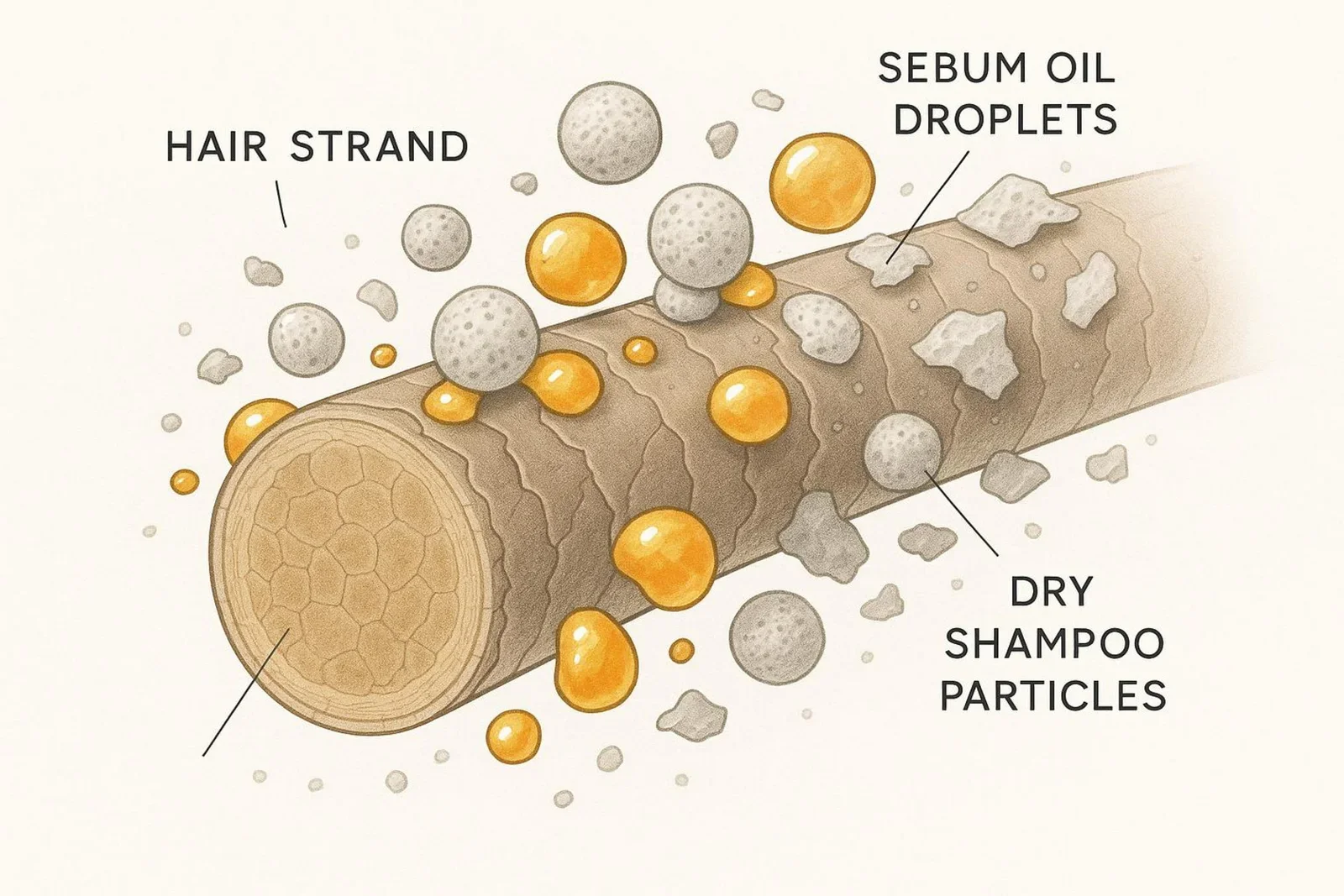
Dry shampoo doesn’t “clean” hair—it strategically absorbs excess oil through physical chemistry. Its core mechanism relies on fine powders engineered with dual molecular properties: hydrophobic (water-repelling) and lipophilic (oil-attracting). When you spray these particles onto your roots, they act like billions of tiny sponges, latching onto sebum and sweat on contact.
Why Rice Starch and Clay Target Grease So Effectively
Rice starch, kaolin clay, and silica form the backbone of most formulas because their porous structures create massive surface area for oil capture. Think of kaolin clay as a microscopic honeycomb—its nooks and crannies trap oils like a net catching fish. Silica particles go further, using electrostatic attraction to pull grease from hair strands. This isn’t chemical cleaning; it’s physical absorption where powders swell as they soak up oil, instantly reducing visible shine and clumping.
The Critical Role of Propellants in Aerosol Sprays
Aerosol dry shampoos use butane or propane as propellants that evaporate within seconds of spraying. This rapid evaporation leaves only the dry powder behind—no wet residue. If the propellant didn’t vanish instantly, you’d get greasy white streaks instead of invisible oil control. Always shake the can vigorously for 30 seconds before use; this ensures propellants and powders stay fully mixed for even dispersion.
The Step-by-Step Guide to Flawless Dry Shampoo Application
Applying dry shampoo correctly separates salon-worthy results from a chalky disaster. The magic happens in the final brushing step—not the spray itself.
Why Waiting 2 Minutes Transforms Your Results
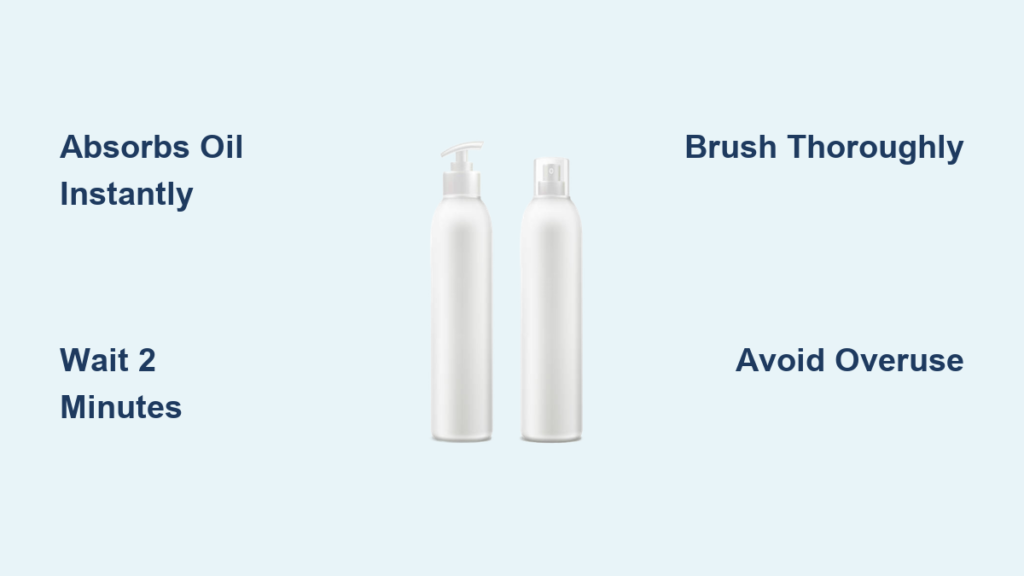
After spraying 10–12 inches from roots (focus on part lines and crown), wait exactly 1–2 minutes. This lets powders fully absorb oils before you disturb them. Rushing to brush too soon spreads undissolved powder, causing white flakes. During this wait, silica or starch particles swell 300% as they trap sebum—turning invisible once blended.
The Finger-Massage Technique That Eliminates White Cast
Forget quick scalp pats. Use fingertips to vigorously massage product into roots for 30 seconds, lifting hair at the scalp. This distributes absorbed oil evenly through hair strands while breaking up powder clumps. Follow with a boar-bristle brush to sweep residual particles down to mid-lengths where they become undetectable. Skip this step, and you’ll look like you wrestled a flour sack.
Top 4 Dry Shampoo Application Mistakes That Backfire

Spraying Too Close Creates Permanent White Spots
Holding the can under 8 inches concentrates powder into wet clumps that bake onto roots. Always maintain 10–12 inches distance—farther for dark hair. If you see immediate white patches, you’ve oversaturated the area.
Ignoring Hair Parting Zones Wastes Product
Oily buildup concentrates along part lines and near temples. Spray only where grease shows (usually 3–4 targeted zones), not your entire scalp. One 2-second spray per section suffices; extra product just increases residue.
Skipping Weekly Washes Causes Scalp Buildup
Dry shampoo leaves oil-powder complexes on your scalp. After 3–4 uses, this mixture traps dead skin cells and pollutants. Without washing, follicles clog—leading to itchiness and thinning hair. Never exceed 2 days between wet washes.
Using Wrong Shade for Your Hair Color
White powders vanish on blondes but leave gray casts on brunettes. Dark-haired users need “tinted” formulas with caramel pigments. Test shades on your wrist first—what disappears on skin may show on roots.
Why Dry Shampoo Isn’t a Replacement for Washing (Critical Limitations)
The Shocking Truth: It Leaves 70% of Dirt Behind
While dry shampoo absorbs surface oil, it ignores environmental pollutants, dead skin cells, and heavy product buildup. Traditional shampoo uses surfactants to emulsify and rinse away these impurities—dry shampoo merely masks them with powder. After 3 uses, your scalp accumulates 3x more residue than after one unwashed day.
How Buildup Triggers Scalp Damage Over Time
Trapped oil-powder mixtures create a breeding ground for bacteria. Within weeks, users report flaking resembling dandruff, follicle inflammation, and even temporary hair loss. A 2022 dermatology study linked excessive dry shampoo use to 40% higher risk of scalp dermatitis—proof it’s no long-term substitute for cleansing.
Choosing the Right Dry Shampoo for Your Hair Color
Blonde and Silver Hair: Seek Translucent Formulas
White powders turn platinum roots ashy. Opt for “invisible” aerosols with silica squalane or rice starch that disappear on contact. Avoid tinted versions—they’ll leave yellow streaks.
Brunette and Black Hair: Demand Proper Tinting
“Dark” formulas often fail on deep brunettes. Check ingredients for iron oxides (not caramel color) which blend seamlessly. Spray on palm first to test—should look like cocoa powder against your skin tone.
Selecting Dry Shampoo Based on Hair Texture and Needs
Fine Hair: Lightweight Powders Prevent Flatness
Heavy clays weigh down thin strands. Choose aerosols with silica or bamboo starch that add grit without residue. Shake can upside-down to dispense finer mist.
Curly or Coarse Hair: Targeted Powder Application Wins
Sprays often miss dense curls. Use loose powder applicators to dust product ONLY on roots, then finger-rake through coils. Look for kaolin clay formulas that define without crunch.
Color-Treated Hair: Sulfate-Free Is Non-Negotiable
Alcohol-based propellants fade dye. Prioritize “color-safe” labels listing rice starch or tapioca as primary absorbents—they’re gentler than silica on pigments.
Keeping Your Scalp Healthy: Dry Shampoo Best Practices
The 48-Hour Rule That Prevents Damage
Never use dry shampoo for more than two consecutive days. On day three, wash with a clarifying shampoo focusing on scalp massage for 60 seconds. This removes embedded powder-oil composites that cause follicle stress.
How to Wash Out Residue Without Stripping Hair
Lather shampoo twice: first wash breaks down buildup, second cleanses deeply. For stubborn residue, mix 1 tsp baking soda into shampoo—it lifts powder without sulfates. Always follow with conditioner on mid-lengths only to avoid re-greasing roots.
Final Note: Dry shampoo works by physically absorbing oil—not chemically cleaning—making it a brilliant temporary fix when used correctly. Master the 2-minute wait and vigorous brushing to avoid white residue, choose color-matched formulas, and never skip weekly washes to protect scalp health. When you understand how dry shampoo works, you transform it from a quick fix into a strategic tool that extends your fresh style safely. For best results, pair it with scalp massages between washes to stimulate natural oil regulation—your hair will stay cleaner longer, reducing dry shampoo dependency.