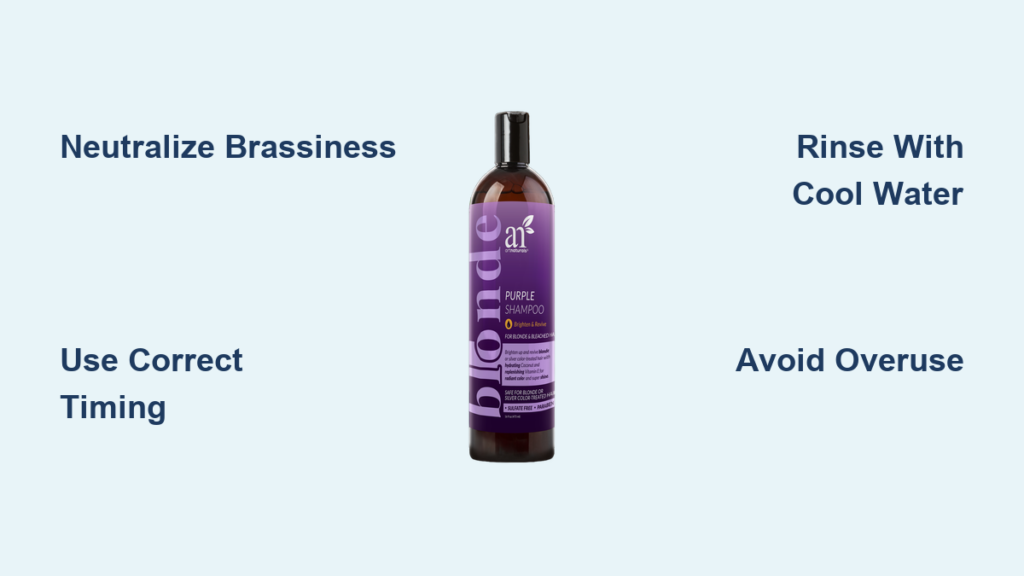
If you’ve ever watched your carefully crafted blonde or silver hair transform from cool platinum to unwanted yellow or orange tones, you’ve likely reached for purple shampoo in desperation. But how does purple shampoo work to reverse this frustrating brassiness? The answer lies in fundamental color science that transforms warm, brassy tones into cool, salon-fresh results. This violet-hued product isn’t magic—it’s applied color theory that neutralizes unwanted yellow pigments in lightened hair. When used correctly, purple shampoo deposits temporary violet pigments that counteract brassiness, restoring your desired cool tones without damaging your hair.
Understanding how purple shampoo works is essential for blondes, silver-haired individuals, and anyone with highlights who battles brassiness. The science behind this popular haircare product explains why it’s become a staple in maintaining cool-toned hair between salon visits. Whether you’re a platinum blonde, silver fox, or balayage enthusiast, knowing the precise mechanism will help you maximize results while avoiding common mistakes that can leave your hair looking more purple than perfect.
Why Your Blonde Hair Turns Brassy After Bleaching
When bleach lifts your hair’s natural pigment, it exposes underlying warm tones that become visible as yellow, orange, or copper. This happens because hair contains natural pigments at different levels—black/brown melanin at the deepest level, followed by red, then yellow. As bleach removes the darker pigments, these warmer undertones emerge. The more you lighten your hair, the more these yellow bases become exposed, especially in the mid-lengths and ends where hair is often more porous.
What Causes Different Types of Brassiness?
Yellow tones appear when hair reaches level 9-10 (very light blonde to white blonde). This is the most common brassiness issue that purple shampoo targets. Orange tones emerge at levels 7-8 (medium to light blonde) and require blue-based toners instead of standard purple formulas. Copper tones often affect previously colored hair or hair with mineral buildup, particularly from hard water or pool chlorine.
How Porosity Affects Brass Development
More porous hair—typically damaged or previously colored strands—absorbs environmental pollutants and minerals more readily, accelerating brassiness. The cuticle lifts, allowing yellow pigments to deposit more easily. This explains why the ends of your hair often turn brassy faster than the roots. Understanding your hair’s porosity helps determine how frequently you need purple shampoo and how long to leave it on for optimal results.
The Color Wheel Science That Makes Purple Shampoo Effective

Purple shampoo works because violet sits directly opposite yellow on the color wheel—making them complementary colors that neutralize each other. When violet pigments deposit onto hair strands containing yellow tones, they create a visual cancellation effect. This isn’t chemical lightening; it’s an optical illusion where the violet counteracts the yellow, making hair appear cooler and brighter.
How Violet Pigments Physically Interact With Your Hair
The shampoo contains temporary colorants like Brilliant Blue FCF (CI 42090:1) and Violet 2 (CI 14700) that temporarily bind to the hair’s cuticle. These pigments don’t penetrate the cortex or alter your hair’s natural melanin—they simply coat the outer layer. When light hits your hair, the violet pigments absorb yellow wavelengths while reflecting cooler tones, creating the perception of ashy or platinum hair.
Why Blue Shampoo Works for Orange Tones
For hair with noticeable orange or copper tones, standard purple shampoo won’t be as effective. Orange sits opposite blue on the color wheel, which is why “blue shampoo” exists for these specific brassiness issues. Some products combine both violet and blue pigments to address a broader spectrum of warm tones. If your hair has both yellow and orange undertones, you might need to alternate between purple and blue formulas.
How to Apply Purple Shampoo for Maximum Brass Neutralization
Using purple shampoo correctly separates those who achieve salon-perfect results from those who end up with ashy or purple-tinged hair. The key is understanding your specific brassiness level and adjusting application time accordingly—never treat it like regular shampoo.
Step-by-Step Application for Perfect Results
- Wet hair thoroughly before applying—never use on dry hair
- Squeeze excess water so hair is damp but not dripping
- Apply concentrated formula to the brassiest sections first (usually mid-lengths to ends)
- Massage gently for 30 seconds to distribute evenly
- Set a timer based on your brassiness level (see timing guidelines below)
- Rinse with cool water to seal the cuticle and lock in tone
How Often to Use Purple Shampoo
- Subtle brassiness: Once weekly
- Moderate yellow tones: Twice weekly
- Severe brassiness: Up to three times weekly (but never daily)
- Platinum/silver maintenance: 2-3 times weekly
Pro Tip: Start with less frequent use (once weekly) and increase only if needed. Overuse is the most common reason for unnatural ashy or purple results.
Timing Is Everything: How Long to Leave Purple Shampoo On
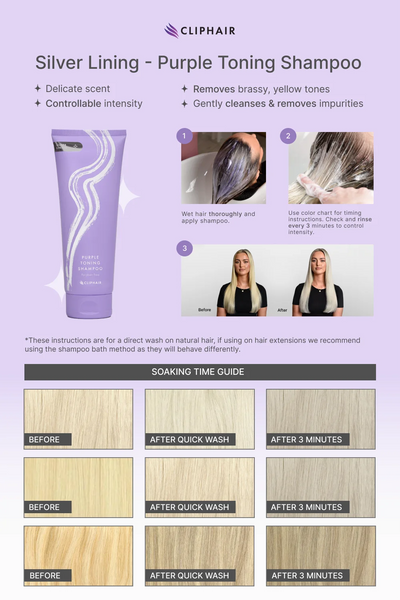
The exact duration you leave purple shampoo on determines whether you achieve perfect cool tones or unwanted lavender hues. This is where most people make critical mistakes that compromise their results.
Processing Time Guidelines by Brass Level
| Brassiness Level | Recommended Time | Visual Cue to Watch For |
|---|---|---|
| Slight yellow tones | 1-2 minutes | Hair begins to look cooler |
| Moderate brassiness | 3-4 minutes | Yellow undertones visibly fading |
| Severe orange-yellow | 5-7 minutes | Orange tones starting to neutralize |
| Very light platinum | 30-60 seconds | First signs of toning |
Critical Warning: Never leave purple shampoo on for more than 10 minutes, even for severe brassiness. Extended processing increases the risk of unnatural purple tones, especially on very light or damaged hair.
Who Actually Needs Purple Shampoo (And Who Should Skip It)
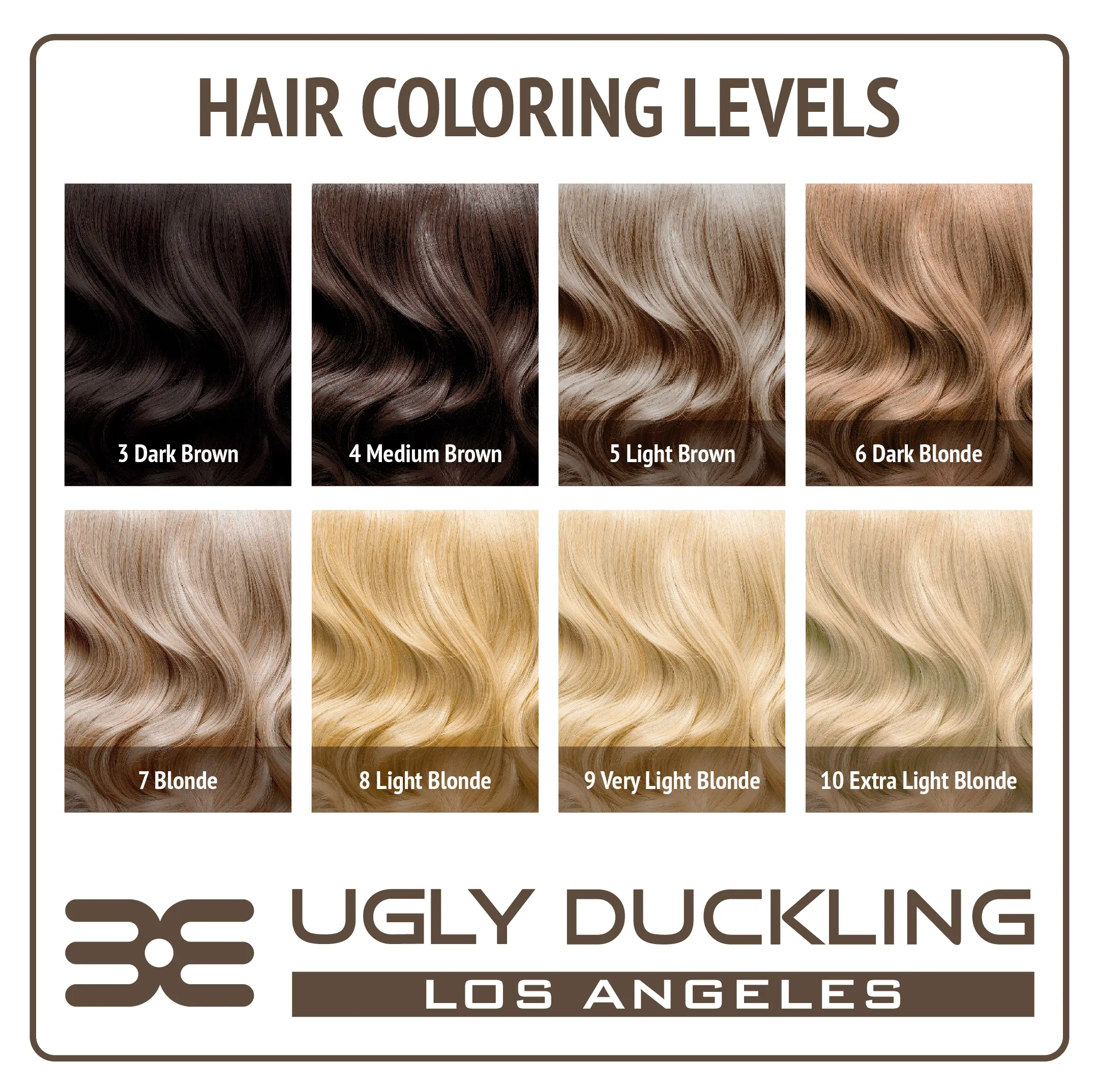
Purple shampoo isn’t a universal solution—it works specifically for hair within certain color ranges. Knowing whether it’s right for your hair type prevents wasted money and potential color disasters.
Ideal Candidates for Purple Shampoo
- Natural or bleached blondes (levels 8-10)
- Silver or gray hair developing yellow undertones
- Platinum or white blonde requiring cool maintenance
- Highlighted or balayaged hair showing brassiness
- Pastel-colored hair (lavender, silver) needing tone refresh
Hair Types That Should Avoid Purple Shampoo
- Dark brunettes (levels 1-5)
- Redheads or naturally copper-toned hair
- Vivid fashion colors (blue, green, pink)
- Hair with intense orange tones (requires blue shampoo instead)
- Freshly colored hair (wait 48 hours after coloring)
Expert Note: If your hair has never been lightened beyond level 7 (medium blonde), purple shampoo won’t provide noticeable benefits. The yellow undertones simply aren’t present at darker levels.
Avoid These 3 Common Purple Shampoo Mistakes That Cause Gray Tint
Many users accidentally create dull, ashy, or purple-tinged hair by making preventable errors. Recognizing these mistakes helps you achieve bright, cool tones without unwanted side effects.
Mistake #1: Using It Like Regular Shampoo
Treating purple shampoo as a daily cleanser leads to over-toning. Unlike regular shampoo, purple formula should be used selectively based on brassiness level—not as part of your daily routine. Solution: Keep purple shampoo separate from your regular cleanser and use only when needed.
Mistake #2: Ignoring Water Temperature
Hot water opens the cuticle excessively, allowing too much pigment to deposit. Solution: Always rinse with cool water to control pigment absorption and seal the cuticle for shine.
Mistake #3: Skipping Conditioner After Use
Purple shampoos can be drying due to their pigment concentration. Solution: Always follow with a moisturizing conditioner—your hair needs extra hydration to maintain health while toning.
How to Maintain Your Toned Hair Between Purple Shampoo Washes
Preserving your cool tones requires more than just proper purple shampoo use—it involves a complete haircare strategy that prevents brassiness from developing in the first place.
Daily Brass Prevention Tactics
- Use sulfate-free shampoos between purple washes to prevent stripping
- Apply UV protection before sun exposure (brassiness accelerator)
- Wear hats or head coverings when swimming in chlorinated pools
- Rinse hair immediately after swimming or sweating
- Use filtered water for washing if you have hard water
Monthly Maintenance Ritual
Once monthly, use a clarifying shampoo to remove mineral buildup that can interfere with toning pigments. This ensures your purple shampoo works effectively when you do use it. Follow clarifying with a deep conditioning treatment to restore moisture balance.
When to See a Professional Instead of Relying on Purple Shampoo
While purple shampoo works wonders for maintenance, certain situations require professional intervention for proper color correction.
Signs You Need Salon Help
- Persistent orange or copper tones that don’t respond to blue shampoo
- Patchy brassiness that appears uneven throughout your hair
- Sudden brass development after a professional color service
- Greenish tones (typically from chlorine exposure)
- Severe brassiness that requires toner stronger than at-home options
Professional Tip: If you’ve been overusing purple shampoo and developed a noticeable purple tint, a clarifying shampoo might not be enough. A professional color correction treatment can safely remove unwanted pigment without damaging your hair.
Understanding how purple shampoo works transforms it from a confusing beauty product into a precise tool for maintaining your perfect cool tones. By applying the color theory principles correctly—using the right timing, frequency, and technique—you can consistently achieve salon-quality results at home. Remember that purple shampoo is a maintenance product, not a permanent solution, and works best as part of a comprehensive haircare routine that includes proper cleansing, conditioning, and brass prevention strategies. When used correctly, this violet-hued hero will keep your blonde, silver, or highlighted hair looking cool, bright, and professionally toned between salon visits.