That vibrant purple bottle sitting in your shower promises salon-perfect blonde tones, but how long does purple shampoo last before it loses its magic? If you’ve ever wondered why your once-reliable toner suddenly stopped neutralizing brassiness or noticed strange changes in your purple shampoo’s texture, you’re not alone. Understanding the exact shelf life of this haircare essential is crucial for maintaining brilliant blonde, silver, or gray tones without risking hair damage. This guide reveals precisely how long your purple shampoo remains effective both in the bottle and on your hair, along with expert-backed signs that indicate it’s time for a replacement—so you can avoid wasted money and disappointing results.
Why Purple Shampoo Neutralizes Brassiness in Blonde Hair
%20neutralizing_colors.png)
Purple shampoo works through the magic of color theory—specifically, the color wheel principle where opposite colors cancel each other out. The violet pigments in these specialized formulas directly counteract yellow and orange tones that naturally develop in lightened hair. When you apply purple shampoo, those violet molecules temporarily deposit onto your hair shaft, visually neutralizing unwanted warmth without the commitment of permanent dye. This makes it indispensable for anyone with platinum, silver, gray, or highlighted blonde hair who wants to maintain cool, ashy tones between salon visits. Unlike regular shampoos that simply clean, purple shampoo actively corrects tone, but only when the product is fresh and properly formulated.
How Purple Shampoo’s Chemistry Degrades Over Time
The effectiveness of purple shampoo depends entirely on stable violet pigments suspended in the formula. Over time, exposure to air, light, and temperature fluctuations causes these pigments to break down. Oxidation alters the molecular structure of the colorants, while preservatives that prevent bacterial growth gradually lose potency. When these critical components degrade, your shampoo loses its toning power even if it still lathers. This chemical breakdown happens slowly but inevitably—making shelf life knowledge essential for maintaining your desired hair color.
Exact Shelf Life: When Your Unopened and Opened Purple Shampoo Expires
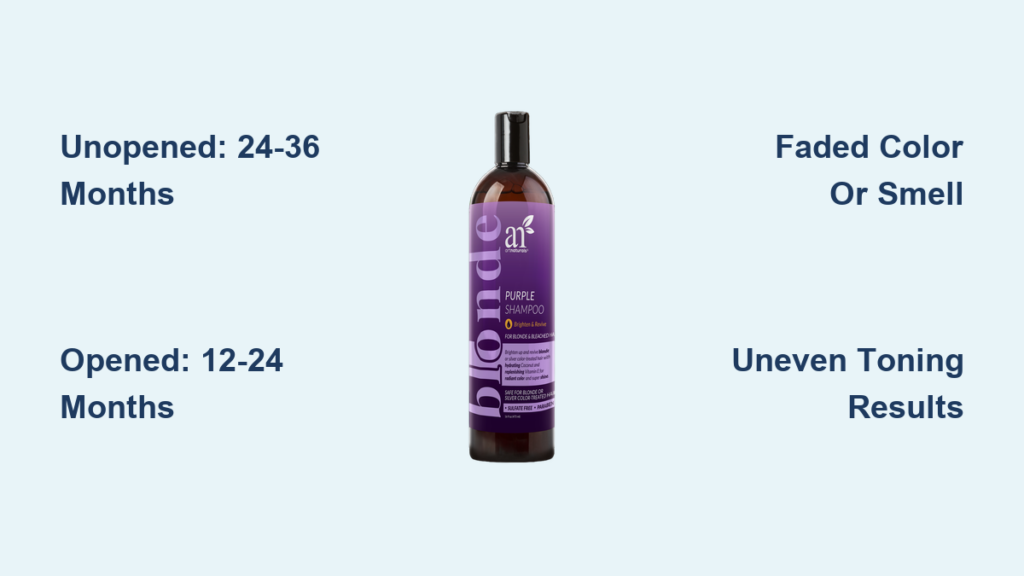
An unopened bottle of purple shampoo maintains maximum effectiveness for 24-36 months from its manufacturing date when stored properly in a cool, dark place. The sealed container protects the formula from air exposure and contaminants that accelerate degradation. Always check the manufacturing date stamped on the bottom or side of the bottle—this gives you the most accurate expiration timeline rather than relying on when you purchased it.
What the PAO Symbol Really Means for Your Toner
Once you crack open that vibrant purple cap, the clock starts ticking faster. Most purple shampoos carry a Period After Opening (PAO) symbol—an open jar icon with a number followed by “M” (like 12M or 24M). This indicates how many months the product remains effective after first use under proper storage conditions. Contrary to popular belief, the PAO symbol represents the manufacturer’s guarantee of quality, not safety—meaning your shampoo might technically be safe to use beyond this timeframe but will deliver significantly reduced toning results. For optimal performance, replace your purple shampoo within this specified window after opening.
Why Salon-Grade Formulas Last Longer Than Drugstore Versions
Professional purple shampoos typically contain higher concentrations of stable violet pigments and superior preservative systems, giving them a longer effective shelf life compared to budget-friendly alternatives. While drugstore versions may start losing potency after 12 months of opening, salon-quality formulas often maintain effectiveness for the full 24-month PAO period. The trade-off comes in initial cost versus longevity—investing more upfront often means fewer replacements needed over time.
Spotting Spoiled Purple Shampoo: 4 Critical Warning Signs
Your senses provide the most reliable indicators that your purple shampoo has passed its prime. Don’t wait until you’ve applied degraded product to your hair—check these signs before every use, especially with older bottles.
Smell Test: The Most Reliable Spoilage Indicator
A noticeable change in fragrance is your earliest warning sign. Fresh purple shampoo typically has a clean, floral, or fruity scent. If you detect sourness, vinegar-like acidity, or unfamiliar chemical odors, the formula has likely broken down and developed bacterial growth. Never use purple shampoo that smells “off”—applying compromised product can cause scalp irritation and unpredictable toning results.
Color and Texture Changes That Signal Degradation
Watch for these visual red flags:
– Faded or murky purple color instead of vibrant violet
– Separation that won’t recombine after gentle shaking
– Grainy or lumpy texture where it was previously smooth
– Excessive watery consistency indicating ingredient breakdown
These changes mean the violet pigments have destabilized and won’t deposit evenly on your hair, potentially leaving blotchy or insufficient toning.
How Long Purple Toner Actually Lasts in Your Hair
The direct toning effect from purple shampoo typically remains visible for 3-7 days on most hair types, but this varies significantly based on your specific hair characteristics and habits. Unlike permanent hair color, purple shampoo deposits temporary pigment that gradually washes out with each cleansing.
Hair Porosity: The Secret Factor in Toner Longevity

Highly porous, damaged, or bleached hair acts like a sponge for violet pigments, making the toning effect last longer—sometimes up to 10 days between applications. Conversely, healthy, low-porosity hair sheds the temporary pigment more quickly, requiring more frequent toning (every 2-3 days). If you’ve recently had a keratin treatment or use heavy conditioners that seal the cuticle, expect shorter toning duration as the closed cuticle prevents pigment absorption.
Water Temperature and Washing Frequency Impact
Using hot water during cleansing accelerates pigment removal—stick to lukewarm or cool water to extend your toning results. Every shampoo session, even with regular products, strips a small amount of violet pigment. If you wash daily, you’ll need purple shampoo 2-3 times weekly to maintain tone, whereas those who wash 2-3 times weekly might only need it once per week. Consider co-washing (conditioner-only cleansing) between purple shampoo sessions to preserve toning effects longer.
7 Proven Ways to Extend Your Purple Shampoo’s Effectiveness
Optimal Storage Techniques for Maximum Shelf Life
Store your purple shampoo upright in a cool, dark cabinet—not in your steamy shower where humidity and temperature fluctuations accelerate degradation. The ideal storage temperature is between 50-70°F (10-21°C). If you live in a humid climate, consider adding silica gel packets to your storage area to absorb excess moisture that could contaminate the product.
Precise Application Methods That Boost Results
Apply purple shampoo to damp (not soaking wet) hair for maximum pigment deposition. Work a quarter-sized amount into a rich lather and focus specifically on the most brassy areas (typically mid-lengths to ends). For stubborn warmth, apply to dry hair and leave on for up to 10 minutes before rinsing—this intensifies toning without over-processing. Always follow with a moisturizing conditioner to prevent dryness from the violet pigments.
Strategic Washing Schedule to Maintain Tone
Create a personalized purple shampoo schedule based on your hair’s needs:
– Platinum blondes: Every 2-3 washes
– Ash blondes: Every 3-4 washes
– Silver/gray hair: Every wash
– Highlights: Focus only on lightened sections
Over-toning creates unnatural lilac hues, while under-toning allows brassiness to return. Adjust frequency based on how quickly yellow tones reappear—this prevents wasting product on unnecessary applications.
When to Replace Your Purple Shampoo: 4 Critical Warning Signs
The 24-Month Hard Expiration Rule
Regardless of appearance, replace any opened purple shampoo after 24 months—even if it seems perfectly fine. Beyond this point, preservatives lose effectiveness, increasing contamination risk. Bacteria and mold growth becomes more likely, potentially causing scalp irritation or infections. Mark your purchase date on the bottle with a permanent marker to track usage time accurately.
Performance Failure: When Toning Stops Working
If you notice these issues despite proper application:
– Requires significantly longer processing time for same results
– Leaves uneven or patchy toning
– Fails to neutralize brassiness after multiple applications
– Causes unexpected color outcomes (greenish or gray tones)
These indicate degraded pigments that can’t properly deposit on your hair. Continuing to use ineffective product wastes time and money while potentially causing hair damage from over-processing.
Maintaining Perfect Blonde Between Purple Shampoo Applications
Extend your toning results between purple shampoo sessions with these professional techniques. Apply a violet-toned conditioner after regular washing to refresh cool tones without full shampoo treatment. Use color-safe, sulfate-free shampoos for regular cleansing to minimize pigment stripping. When swimming, apply coconut oil before water exposure to create a protective barrier against chlorine-induced brassiness. For travel or emergency toning, keep a small bottle of diluted purple shampoo in your bag—mix one part shampoo with two parts water in a spray bottle for quick brassiness fixes.
Final Toning Timeline Cheat Sheet
- Unopened shelf life: 24-36 months from manufacture date
- Opened shelf life: 12-24 months (check PAO symbol)
- Toning effect duration: 3-7 days depending on hair and habits
- Replacement trigger: Any sensory change or 24 months open
By understanding exactly how long purple shampoo lasts both in the bottle and on your hair, you’ll maintain brilliant, brass-free results without wasting money on expired products. Proper storage, strategic application, and timely replacement ensure your purple shampoo delivers salon-quality toning every time—keeping your blonde, silver, or gray hair looking cool, vibrant, and professionally maintained between color appointments.