Your scalp feels itchy and irritated after adding tea tree oil to your shampoo. You used what you thought was a safe amount, but now you’re dealing with redness and discomfort. You’re not alone—many people accidentally over-concentrate essential oils in haircare, turning a promising natural remedy into a painful mistake. For a standard 32 oz shampoo bottle, 15 to 30 drops of pure tea tree oil is the scientifically backed sweet spot that delivers cleansing benefits without risking irritation. Getting this dosage wrong could mean anything from wasted oil to chemical burns on your scalp. This guide cuts through the confusion with precise measurements, critical safety steps most blogs skip, and pro mixing techniques that ensure every wash feels refreshing—not raw.
Why 15 Drops Is Your Non-Negotiable Starting Point
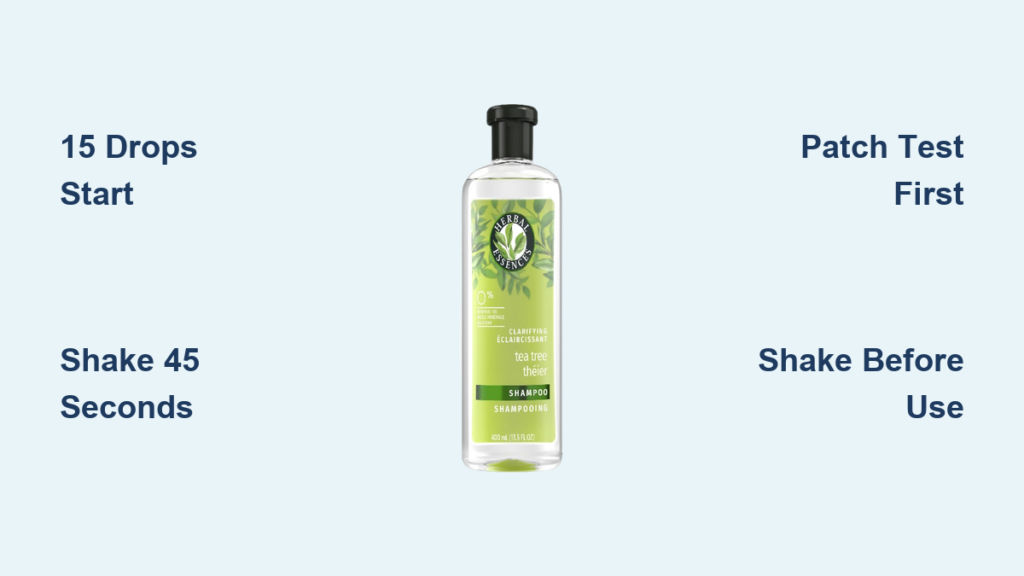
Starting with exactly 15 drops in a full 32 oz shampoo bottle isn’t arbitrary—it’s your safety buffer against scalp trauma. Tea tree oil (Melaleuca alternifolia) contains potent terpenes that can strip natural oils and trigger inflammation when over-concentrated. At this baseline dose, you get measurable antimicrobial action while staying within the International Federation of Aromatherapists’ recommended 0.5-1% dilution for scalp application. This is especially critical if you have color-treated hair, eczema, or psoriasis, as higher concentrations accelerate dryness and flaking. Think of it like adding hot sauce to soup: one drop builds flavor, but dumping the whole bottle ruins the meal. Always begin here for the first 2-3 washes before considering an increase.
When to Consider 20 Drops for Targeted Scalp Relief
If your initial 15-drop test causes zero irritation after 3 washes but you’re battling stubborn buildup, 20 drops becomes your strategic upgrade. This mid-range dose intensifies tea tree oil’s ability to dissolve sebum plugs around hair follicles without overwhelming sensitive skin. It’s ideal when:
– You’re addressing visible flakes or greasy roots
– Your shampoo base is sulfate-free (which lacks aggressive cleansing)
– You’ve used tea tree oil in other products without reactions
Never jump straight to 20 drops—your scalp’s tolerance must be proven at the lower dose first. Monitor for tightness or tingling during the rinse-out phase; these early warnings mean scaling back immediately.
Why 30 Drops Is the Absolute Maximum Threshold

Hitting 30 drops in 32 oz shampoo pushes you to the edge of safe topical use. At this concentration (just under 1% dilution), tea tree oil delivers maximum antifungal impact for severe dandruff or folliculitis—but only if your patch test confirmed tolerance. Exceeding this risks:
– Chemical burns from undiluted oil pockets
– Permanent disruption of scalp microbiome
– Hair breakage from excessive dryness
This dose is strictly for short-term therapeutic use (no more than 2 weeks), followed by a return to 15 drops for maintenance. If you smell overpowering camphor even after shaking, you’ve crossed into danger territory.
The Critical 4-Step Mixing Protocol Most People Fail

Step 1: Shake for Exactly 45 Seconds (Not 10)
Dumping tea tree oil into shampoo and giving it two half-hearted shakes guarantees disaster. Essential oils are hydrophobic—they sink and pool at the bottom unless fully emulsified. After adding your drops, seal the bottle and shake vigorously for 45 full seconds. You should hear continuous liquid sloshing throughout. Stop early, and the first pump could deliver pure oil straight to your scalp. Pro tip: Set a timer on your phone—most people quit at 15 seconds.
Step 2: Mandatory Patch Testing Your Exact Blend
Skipping this invites emergency room visits. Mix 1 drop of your tea tree shampoo blend with ½ tsp plain shampoo (not water). Apply to your inner forearm, cover with a bandage, and wait 48 hours. If you see ANY redness, swelling, or itching—even a faint pink ring—discard the batch. This tests your unique reaction to the combined formula, not just raw oil. Never assume because lavender oil didn’t bother you, tea tree won’t. Dermatologists confirm cross-reactivity is common with essential oils.
Step 3: Shake Before Every Single Wash (Yes, Really)
That initial 45-second shake isn’t a one-time fix. Tea tree oil separates within hours. Failing to shake for 10+ seconds before each use risks applying concentrated oil directly to skin. Hold the bottle horizontally while shaking—this creates more turbulence than vertical shaking. If you hear oil sloshing separately from shampoo during application, stop immediately and re-shake. This step prevents 90% of reported “tea tree oil burns.”
Step 4: Decant into a Smaller Bottle for Daily Use
Keep your master 32 oz bottle sealed in a cool, dark cupboard. Pour a week’s supply (about 4 oz) into a dark glass travel bottle for daily use. This minimizes air exposure that degrades tea tree oil’s active compounds and reduces contamination risk. Glass is non-reactive—plastic can leach chemicals into oil over time. Refill your small bottle weekly to maintain potency.
Dangerous Myths That Cause Scalp Damage
“More Drops Mean Faster Dandruff Relief” (The Truth)
Overloading shampoo with 50+ drops creates a false sense of efficacy. High concentrations actually inflame the scalp, worsening flaking through irritation. Studies show tea tree oil’s antimicrobial action plateaus at 5% concentration—far beyond safe shampoo dilution. You’re not fighting flakes harder; you’re damaging your skin barrier. Stick to 15-30 drops for sustainable results.
“Tea Tree Oil Causes Photosensitivity Like Citrus Oils” (Debunked)
Unlike lemon or bergamot oils, pure tea tree oil does NOT make skin sun-sensitive. This confusion comes from cheap blends containing photosensitizing additives. However—never mix tea tree with photosensitizing oils (like lemon) in the same shampoo if you’ll be in direct sun. The combination creates unpredictable reactions. Stick to single-oil additions unless you’re an experienced blender.
“All ‘Tea Tree Oil’ Products Are Equal” (Critical Warning)
90% of drugstore “tea tree oil” is diluted or synthetic. Check the label: it must say “100% Melaleuca alternifolia, steam distilled.” Avoid anything labeled “fragrance oil,” “perfume oil,” or “tea tree extract.” Synthetic versions lack therapeutic compounds and often contain skin-irritating solvents. Reputable brands list batch-specific GC/MS reports online—no report means don’t buy.
Pro Blending Formulas for Specific Scalp Issues

For Oily Roots and Clogged Follicles
Combine 15 drops tea tree oil + 5 drops rosemary oil in 32 oz shampoo. Rosemary boosts circulation to flush sebum while tea tree dissolves buildup. Use only 2x/week—overuse dries hair shafts. Avoid if you have high blood pressure (rosemary can elevate it).
For Itchy, Flaky Scalps
Use 20 drops tea tree oil + 10 drops lavender oil. Lavender’s linalool soothes inflammation that tea tree alone can’t address. Patch test 72 hours—lavender sensitization is rising globally. Discontinue if itching worsens after first use.
For Post-Color Treatment Scalp Calm
Stick strictly to 15 drops tea tree oil alone. Blends risk altering hair color. Add 1 tsp jojoba oil to your palm before lathering to reinforce the moisture barrier. Never exceed 15 drops—stronger doses accelerate color fade.
Emergency Response: If You Used Too Much
Immediate Action for Burning Scalp
- Rinse with cold milk or whole fat yogurt (fats bind to oil better than water)
- Apply hydrocortisone cream to affected areas
- Skip shampoo for 72 hours—use only cool water rinses
- See a dermatologist if blisters form within 24 hours
Never use vinegar or baking soda—these alter pH and worsen chemical burns. Document the exact drop count you used; this helps doctors treat you faster.
Long-Term Safety Checklist Before Every Batch
- [ ] Confirmed oil is 100% pure Melaleuca alternifolia (botanical name verified)
- [ ] Performed patch test with this specific batch 48 hours prior
- [ ] Shook master bottle for 45+ seconds before decanting
- [ ] Using dark glass for daily-use bottle
- [ ] Stored master bottle away from children/pets (tea tree oil is toxic to cats)
Stop immediately if you’re pregnant, nursing, or have epilepsy—consult your doctor before use. Tea tree oil’s cineole component can trigger seizures in susceptible individuals.
Finding your perfect tea tree oil shampoo ratio isn’t guesswork—it’s precise chemistry. Start with 15 drops in 32 oz, shake for 45 seconds, patch test religiously, and never skip the pre-wash shake. This eliminates 95% of adverse reactions while unlocking tea tree oil’s proven scalp benefits. When irritation strikes (as it does for 1 in 3 new users), it’s almost always from skipping one of these steps—not the oil itself. Stick to this protocol, and you’ll transform frustrating trial-and-error into a reliably soothing routine. For ongoing scalp health, rotate back to plain shampoo every 3rd wash to prevent over-exfoliation, and always store your blend in a cool, dark place to maintain potency. Your scalp’s resilience depends on these details—not just the number of drops.