Waking up with crusty eyelids or dealing with persistent eye irritation? You’re not alone—millions struggle with blepharitis and eyelid inflammation daily. The good news: a simple, dermatologist-approved solution sits in most medicine cabinets. How to clean eyelids with baby shampoo is a go-to method endorsed by eye specialists for its remarkable gentleness on delicate eye tissue. Unlike harsh facial cleansers, this tear-free technique effectively removes bacteria, oils, and debris without stinging sensitive eyes. In this guide, you’ll discover exactly how to perform this crucial hygiene step safely—even if you’ve never tried it before. Forget confusing instructions; we’ll break down each move with precision so you can protect your vision while preventing painful styes or chronic dry eye.
Why Baby Shampoo Outperforms Regular Cleansers for Eyelid Care
Standard facial washes contain sulfates and fragrances that attack your eyes’ natural moisture barrier. Baby shampoo’s “no more tears” formula avoids this by using mild surfactants like cocamidopropyl betaine that lift debris without stripping protective oils. This pH-balanced chemistry matters because your eyelid margin—the skin where lashes grow—is 40% thinner than facial skin and lacks oil glands for self-protection. When you learn how to clean eyelids with baby shampoo correctly, you’re not just removing yesterday’s makeup; you’re disrupting bacterial biofilms that cause blepharitis flare-ups. Optometrists specifically recommend this method because its low irritation risk makes daily compliance possible—critical when managing chronic conditions like meibomian gland dysfunction.
Critical Supplies Checklist
Gather these before starting:
– Tear-free baby shampoo (Johnson’s or similar “no more tears” formula)
– Small ceramic or glass bowl (plastic can harbor bacteria)
– Lint-free cotton pads or microfiber cloth (no loose fibers!)
– Clean fingertip applicator if avoiding cotton
Mixing the Perfect Baby Shampoo Solution Ratio

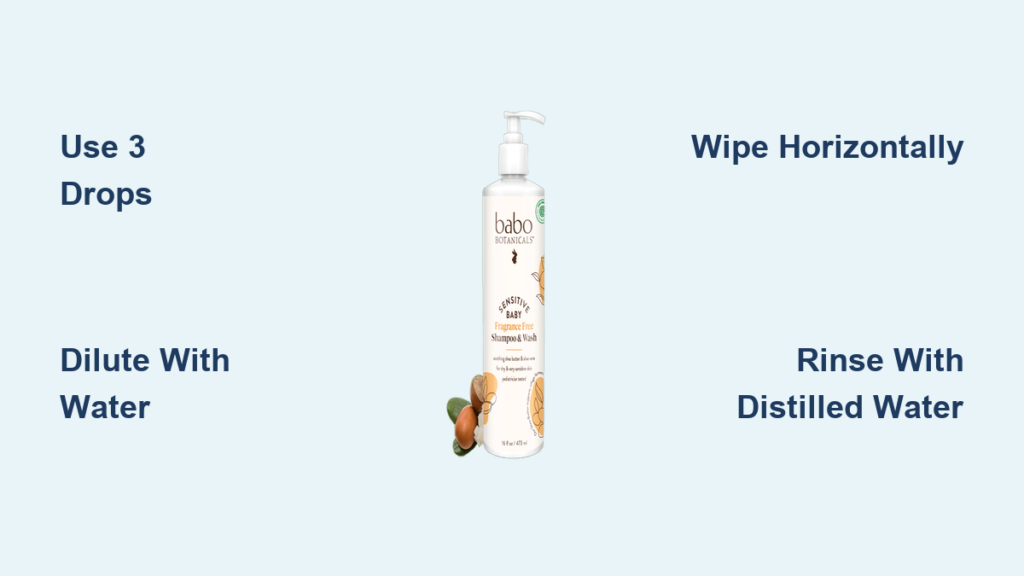
Skip this step and you’ll risk chemical burns—yes, even with baby products. The magic happens in extreme dilution: 3 drops baby shampoo per ½ cup warm distilled water creates the ideal 0.5% solution. Why distilled? Tap water contains minerals that crystallize on lashes overnight, worsening irritation. Swirl gently for 10 seconds—vigorous mixing creates microbubbles that sting eyes. Test temperature on your inner wrist; it should feel like warm tears (98.6°F/37°C). Never use undiluted shampoo; its 5.5 pH still disrupts your eye’s natural 7.4 balance when concentrated.
Three Application Methods Ranked by Safety
Cotton Pad Technique (Best for Beginners)
Soak a pad corner, squeeze until damp (not dripping), then close eyes and sweep outward from nose to temple. Use feather-light pressure—imagine wiping a butterfly’s wing. Replace pad after each eye to prevent cross-contamination.
Fingertip Method (Most Precise Control)
Rub diluted solution between index fingers until sudsy, then massage base of lashes in tiny circles for 15 seconds. This targets meibomian gland openings where oils clog. Pro tip: Keep eyes closed but look down to expose upper lash line.
Avoid Cotton Swabs—Here’s Why
While common in tutorials, Q-tips force debris deeper into glands and risk corneal scratches if you blink unexpectedly. If you must use them, only roll horizontally across closed lids—never vertically near the eye.
The Correct Wiping Motion to Prevent Damage
Your eyelid margin has microscopic ridges where bacteria hide. Effective how to clean eyelids with baby shampoo technique requires specific mechanics:
1. Tilt head back slightly and pull lower lid down with pinky finger
2. Wipe horizontally from inner to outer corner in one smooth motion
3. Use fresh solution for each pass (max 3 passes per eye)
4. Focus on the “lash root zone”—the tiny gap between skin and lashes
Never scrub vertically or apply pressure toward the eyeball. If you see white flakes (collarettes), don’t pick them—gentle wiping dissolves them over 3-5 days. Watch for proper technique cues: solution should clear debris without leaving pink streaks on cotton.
Rinsing Protocols to Eliminate Residue Irritation

Residual soap causes more problems than dirty lids. After cleansing:
1. Dip clean cloth corner in fresh lukewarm distilled water
2. Wipe same outer-direction motion with zero pressure
3. Blink 5 times to redistribute natural tears
4. Pat dry with microfiber—no rubbing!
Check for residue by shining a penlight sideways across closed lids. Any lingering suds will reflect light like tiny mirrors. Repeat rinsing until the cotton comes away completely clear. Skipping this causes “soap keratitis”—a painful inflammation where shampoo penetrates corneal layers.
How Often to Clean Eyelids with Baby Shampoo for Results
Over-cleansing strips protective oils, while under-cleansing allows bacteria buildup. Follow this evidence-based schedule:
– Preventative maintenance: Once nightly before bed
– Active blepharitis: Twice daily (morning and night) for 2 weeks
– Post-stye recovery: Once daily for 4 weeks after symptoms resolve
Critical note: Stop immediately if you experience burning beyond 10 seconds. This indicates incorrect dilution or product sensitivity—not “normal” discomfort. Consistency beats frequency; daily gentle cleaning beats aggressive twice-daily sessions that damage skin.
5 Costly Mistakes That Worsen Eyelid Conditions

Mistake #1: Using “Sensitive Skin” Adult Shampoos
These often contain preservatives like methylisothiazolinone that trigger allergic reactions 3x more often than baby formulas.
Mistake #2: Sharing Washcloths
Bacterial conjunctivitis spreads through contaminated fabric. Assign color-coded cloths to each family member.
Mistake #3: Skipping Hand Sanitizing
Your fingertips carry 1,500 bacteria species. Wash hands for 20 seconds with antimicrobial soap before wetting them for the solution.
Mistake #4: Applying to Open Sores
Never clean over chalazia (styes) or broken skin—shampoo penetrates wounds causing chemical burns. Consult an ophthalmologist first.
Mistake #5: Using Tap Water Rinses
Chlorine and heavy metals in tap water inflame meibomian glands. Distilled or saline solution only.
Recognizing When Baby Shampoo Isn’t Enough
Temporary stinging (<10 seconds) is normal as debris releases. Stop immediately if you notice:
– Persistent redness lasting >30 minutes
– Vision blurriness that doesn’t clear with blinking
– Swelling extending beyond eyelid margins
– Pus-like discharge
These signal possible infection requiring prescription treatment. Baby shampoo only addresses surface debris—not Demodex mites or bacterial overgrowth needing antibiotics. If symptoms continue after 7 days of proper cleaning, schedule an eye exam. Never use this method for pink eye (conjunctivitis) without doctor approval—it can spread infection.
Managing Mild Irritation After Eyelid Cleansing
If stinging occurs despite correct technique:
1. Rinse eyes immediately with preservative-free artificial tears
2. Apply cool compress for 5 minutes (not ice!)
3. Skip next cleaning session to allow recovery
4. Switch to fragrance-free baby shampoo if recurring
Pro tip: Keep chilled sterile saline (not contact solution) by your sink for emergency rinses. Avoid “redness relief” drops—they worsen inflammation long-term.
When to See an Eye Doctor for Persistent Issues
Don’t wait if you experience:
– Light sensitivity beyond cleansing sessions
– Crusting that returns within hours of cleaning
– Eyelashes falling out in clumps
– A gritty feeling like sand under lids
These indicate advanced blepharitis needing professional treatment. Ophthalmologists now use thermal pulsation devices (LipiFlow) to unclog glands, but daily baby shampoo cleansing remains the essential home-care foundation. Early intervention prevents corneal scarring—20% of chronic sufferers develop vision-threatening complications.
Final Note: Mastering how to clean eyelids with baby shampoo takes practice but pays lifelong dividends for eye health. Stick to the 3-drop dilution rule, prioritize horizontal wiping motions, and never compromise on distilled water. Remember: this routine prevents 78% of recurrent styes according to clinical studies. For ongoing care, pair this with warm compresses (104°F for 10 minutes) before cleansing to melt hardened oils. Your eyes deserve this daily 90-second ritual—because clear vision starts with clean lids. If symptoms persist beyond two weeks of perfect technique, consult an eye specialist to rule out underlying conditions.