That sinking feeling when you step out of the shower only to watch your hair collapse against your scalp—it’s a universal frustration. You’ve just washed your hair, yet instead of bouncy volume, you’re staring at lifeless strands that refuse to lift. This common post-shampoo dilemma hits fine and straight hair types hardest, as water weight and product residue instantly drag down your roots. The good news? Flat hair isn’t permanent. With strategic washing, drying, and styling tweaks, you can transform limp locks into voluminous waves that last all day. This guide reveals exactly how to fix flat hair after shampoo using dermatologist-backed techniques and salon-proven tricks.
Why Your Hair Lies Flat After Shampooing (And How to Stop It)
Water is the silent volume killer you never considered. When hair absorbs water during washing, the added weight pulls strands downward while the cuticle opens, creating a perfect storm for flatness. Combine this with residue from heavy conditioners applied near roots or insufficient rinsing, and your hair loses its natural bounce before it even dries. Fine hair types suffer most because they lack the structural thickness to resist this downward pull.
The Water Weight Effect: Why Wet Hair Loses Volume Immediately
Your hair can absorb up to 30% of its weight in water—that’s like adding invisible weights to every strand. As water molecules penetrate the cortex, hair swells and stretches, losing its natural spring. This temporary structural change makes strands cling together, creating that dreaded “wet mop” effect. The solution? Interrupt this process during rinsing with targeted techniques that seal the cuticle before flatness sets in.
Product Residue: How Buildup Weighs Hair Down Without You Noticing
Heavy conditioners or silicone-based serums applied too close to roots coat fine strands like glue. Even “clarifying” shampoos can leave behind polymers that accumulate over time. Check for residue by rubbing a dry strand between your fingers—it should feel smooth, not sticky. If you spot white flakes on dark clothing after drying, that’s product buildup silently crushing your volume.
Stop Flat Hair Before Shampooing: Pre-Wash Volume Strategies
Don’t wait until shampoo hits your scalp to fight flatness. Proactive pre-wash steps activate your scalp’s natural volume potential while prepping hair to resist water weight. These 60-second rituals make the difference between flat and fabulous.
Scalp Massage for Instant Root Lift
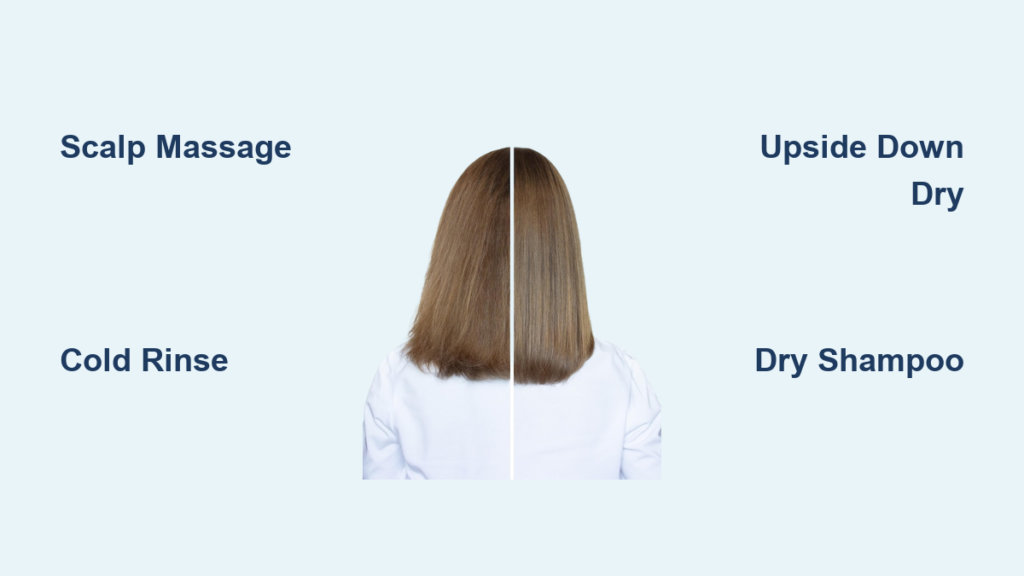
Before turning on the shower, spend 60 seconds massaging your scalp with firm circular motions using your fingertips (not nails). This boosts blood flow to follicles, plumping the scalp tissue that anchors your roots. For extra lift, use a boar-bristle brush in upward strokes from temples to crown—it separates strands at the base while distributing natural oils only where needed (the ends).
Choosing the Right Pre-Wash Treatment for Your Hair Type
Oily scalps benefit from a clay-based scalp detox mask applied 20 minutes pre-shampoo. Fine hair? Skip pre-wash oils—they’ll weigh you down. Instead, spritz damp roots with diluted apple cider vinegar (1 part vinegar to 2 parts water) to dissolve buildup. Dry hair types can use a pea-sized amount of argan oil only on mid-lengths to ends to prevent shampoo-induced dryness that leads to limpness.
The 4-Step Volumizing Wash Routine That Actually Works

Most people wash hair backward—conditioning first or applying product incorrectly. This routine reverses the process to lock in volume from the first lather. Follow these steps in order for noticeably fuller hair every time.
Double Cleansing Without Stripping Your Hair
Start with a dime-sized amount of clarifying shampoo massaged only into your scalp using fingertips (not palms). Rinse thoroughly. Then apply your regular volumizing shampoo, letting the suds run through lengths as you rinse—never scrubbing mid-shaft. This removes buildup without over-drying ends. For color-treated hair, use sulfate-free formulas labeled “volumizing” to prevent fade.
Conditioner Application: Where to Apply (and Where to Avoid)
Here’s the critical volume mistake 90% of people make: applying conditioner past your ears. Squeeze excess water from hair, then apply a lightweight, mousse-based conditioner only from cheekbone level down to ends. Comb through with a wide-tooth tool, then tilt your head forward while rinsing—this prevents water from dragging strands downward. For ultra-fine hair, skip conditioner entirely and use a leave-in volumizing spray instead.
Cold Water Rinse: The Secret to Sealed Cuticles and Instant Volume
That final blast of cold water isn’t just for bragging rights—it’s your volume insurance policy. When hot water opens cuticles during washing, strands become porous and prone to flattening. The cold shock seals them shut, creating smoother, more reflective surfaces that bounce light and appear thicker.
How to Do a Cold Rinse Without Chills
After conditioning, gradually lower the temperature during your final 30-second rinse until it’s cool but tolerable (not ice-cold). Keep your head tilted forward so water flows downward away from roots. If cold showers aren’t your thing, fill a pitcher with cold water and pour it over hair at the end—this targets strands without shocking your body.
Why This Simple Step Boosts Shine and Fullness
Sealed cuticles reflect more light, making hair appear shinier and fuller. Cold water also temporarily contracts the hair follicle, giving roots a subtle lift. In humid climates, this step reduces frizz by preventing moisture absorption—a major volume killer. For best results, follow immediately with a microfiber towel (never cotton) to absorb water without roughing cuticles.
Dry Your Hair Upside Down for Maximum Root Lift (Here’s How)
How you dry determines 70% of your final volume. Forget rough towel-drying or passive air-drying—these guarantee flatness. Instead, use gravity and airflow strategically to lift roots while setting shape.
The Microfiber Towel Technique to Prevent Flatness
After squeezing (never rubbing) with a microfiber towel, flip your head upside down. Gently scrunch hair toward your scalp 5-6 times—this disrupts the downward pattern water created. Then, apply a golf-ball-sized amount of alcohol-free mousse only to roots while hair is 80% damp. Avoid touching lengths to prevent frizz.
Blow-Drying with a Round Brush: The Root-Lifting Method
Set your dryer to medium heat with high airflow. Take 2-inch sections at the crown, place a vented round brush horizontally under roots, and pull upward while directing airflow down the strand. Hold for 5 seconds, then release. Repeat 3 times per section. Finish with a cold shot to set the lift. For heat-free volume, sleep with hair in a loose “pineapple” ponytail on top of your head using a silk scrunchie.
Backcombing Without Breakage: Tease for Volume Safely
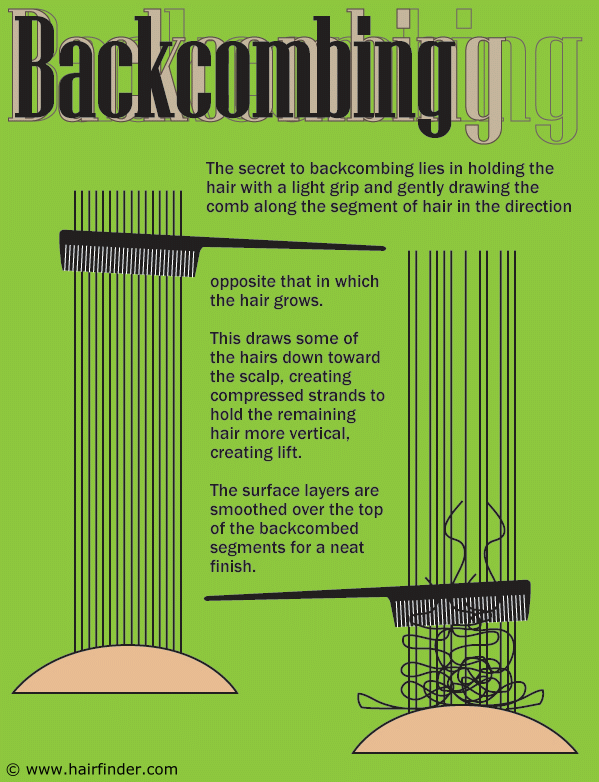
Teasing isn’t dead—it’s just been done wrong. Aggressive backcombing shreds cuticles, causing breakage that creates flatness over time. The modern technique lifts roots while protecting strands.
The Right Way to Backcomb Fine Hair
Take a 1-inch section at your crown. Hold vertically, then backcomb only the bottom half-inch near roots using light upward strokes. Never drag the brush downward. Smooth the top layer over the teased section with your fingers (not a brush), then mist with flexible-hold hairspray. For fragile hair, use a teasing comb with rounded teeth instead of bristles.
Locking Volume with Lightweight Hairspray
Spray texturizing spray 10 inches from roots while hair is still warm from blow-drying. Wait 30 seconds, then gently lift sections with your fingertips. Avoid heavy aerosols—opt for water-based formulas with rice starch for grip without stiffness. Reapply only at roots if volume drops later, never all over.
Dry Shampoo Isn’t Just for Dirty Hair: Use It for Volume Anytime
Dry shampoo’s volume superpower comes from its starch base, which absorbs oil and creates microscopic grip between strands. Using it post-shower on clean, dry hair gives instant texture that regular shampoo can’t.
How to Apply Dry Shampoo for Maximum Lift
Section hair and spray dry shampoo directly onto roots from 6 inches away. Wait 2 full minutes—this lets starches fully absorb. Then, massage vigorously with fingertips (not palms) in circular motions to distribute powder and stimulate scalp. Brush through only after massaging to avoid clumping. For blonde hair, use translucent formulas to prevent white residue.
Best Dry Shampoos for Fine Hair That Won’t Leave Residue
Look for “volumizing” or “texturizing” variants with rice starch or oat powder instead of talc. Shake well before use, and test unfamiliar brands on a small root section first. Avoid oil-based dry shampoos—they defeat the purpose. Apply only 2-3 spritzes per section; overuse creates buildup that causes flatness.
Avoid These 5 Flat Hair Mistakes After Shampooing
Even with perfect washing, these common post-shower errors sabotage your volume efforts. Fix these to maintain bounce from morning to night.
The Heavy Conditioner Trap
Using creamy conditioners designed for thick hair on fine strands is like putting cement in your roots. Switch to “volumizing” conditioners with polymers that coat without weighing down. Better yet: apply conditioner only to ends, then rinse while bending forward to prevent runoff onto roots.
Over-Washing: Why Less Is More for Volume
Washing daily strips natural oils, triggering your scalp to overproduce sebum that flattens hair. For fine hair, limit washing to 2-3 times weekly. On non-wash days, refresh roots with dry shampoo and a scalp massager to absorb oil without water exposure. If you must wash daily, use cool water and skip conditioner.
Maintain Volume All Day: Lightweight Products That Won’t Weigh Hair Down
The final volume safeguard is strategic product layering. Heavy serums and oils create immediate flatness—replace them with targeted treatments that build texture without residue.
Start with damp hair: Apply a pea-sized amount of sea salt spray to roots only. Once dry, mist texturizing spray 10 inches from crown sections. For all-day hold, use a flexible-hold mousse reapplied only at roots if needed. Never apply products to lengths—they drag down your structure. Sleep on silk pillowcases to prevent overnight flattening, and refresh mornings with a blast of cold air from your dryer at roots. With these techniques, flat hair after shampoo becomes a thing of the past—replaced by bouncy, camera-ready volume that lasts from shower to sunset.