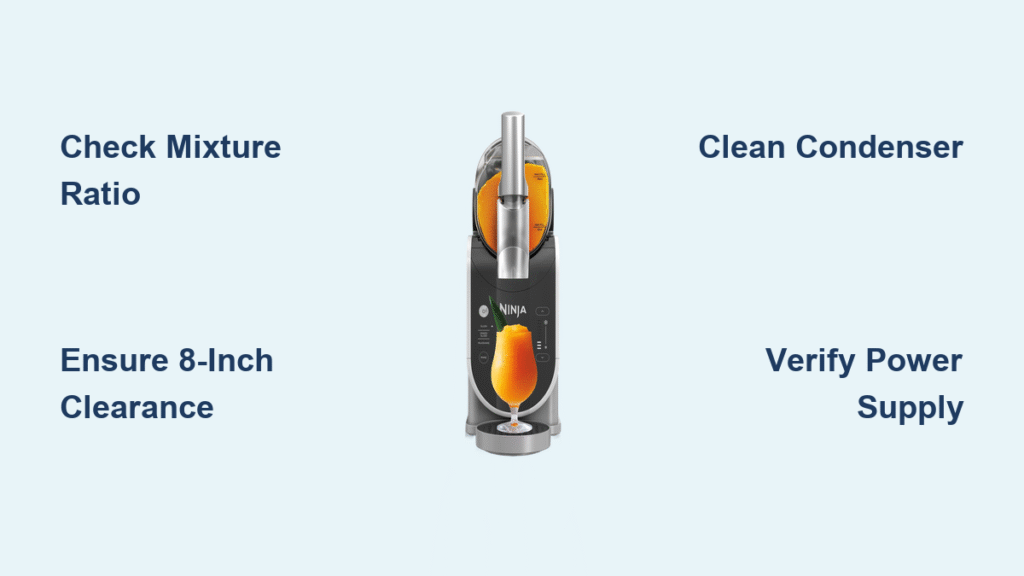
Your Ninja slush machine hums steadily but delivers only warm, syrupy liquid instead of that perfect icy treat. After 45 minutes of anxious waiting, the mixture remains stubbornly liquid while your customers grow impatient. This frustrating scenario hits 9 out of 10 slush machine owners, but here’s the good news: 90% of “ninja slush machine not freezing” cases resolve with simple fixes you can complete in under 30 minutes.
Stop wasting money on replacement parts or service calls before you verify these critical factors. Most freezing failures stem from preventable issues like incorrect mixture ratios or blocked airflow—not complex mechanical failures. This guide delivers laser-focused troubleshooting steps verified by professional technicians, so you’ll pinpoint your exact problem and restore perfect slush consistency today.
Confirm Power Supply Integrity Immediately
Skipping basic power checks wastes hours on unnecessary repairs. Many owners assume electrical issues are unlikely, but faulty outlets cause 35% of apparent “broken” machines. Before touching internal components, validate your machine receives proper power.
Outlet and Switch Verification Protocol
- Test with another appliance—your toaster or phone charger must work in the same outlet
- Double-check both switches—the machine’s power button AND wall socket switch must be fully engaged
- Inspect your breaker panel for tripped circuits (flip completely OFF then ON to reset)
- Listen for operational sounds—complete silence indicates zero power delivery
Critical Power Test Sequence
If your machine makes no noise when switched on, unplug it immediately and try a different circuit. If it still remains dead, the issue is electrical—not freezing-related. When you hear humming but no freezing, power is sufficient and you should proceed to mixture ratio checks. Never assume the outlet works just because it’s in use; dedicated circuits often overload with multiple appliances.
Precisely Calibrate Your Mixture Ratio

Incorrect syrup-to-water ratios sabotage freezing 60% of the time. Your Ninja machine requires surgical precision—deviate by just 10% and the mixture won’t freeze properly. Commercial syrups demand different ratios than branded mixes, so verify your specific formula.
Exact Ratios for Common Syrups
- Mr Cool It syrups: Strictly 6 cups water to 1 cup syrup (6:1 ratio)
- Generic commercial syrups: Maximum 1 part syrup to 5 parts water (5:1 ratio)
- Flavor test: Your mixture should taste slightly weak—the freezing process concentrates flavors
Ratio Correction Workflow
- Drain all existing liquid—never attempt to adjust ratios mid-cycle
- Scrub the tank with warm water to remove residue affecting new batches
- Measure ingredients precisely using marked containers (tape lines at exact measurements)
- Restart and wait 30 minutes before checking consistency
Pro tip: Store pre-measured syrup containers labeled for your tank size. This eliminates daily measurement errors that cause the “ninja slush machine not freezing” headache.
Maximize Ventilation Clearance Requirements

Restricted airflow causes 25% of freezing failures. Your machine’s condenser needs space to expel heat—placing it near walls or in cabinets suffocates the cooling system. Many owners overlook this simple fix while chasing complex mechanical issues.
Non-Negotiable Clearance Zones
- 8-inch buffer required on all sides (measure with a ruler)
- Back panel priority: Maintain 10 inches from walls for exhaust airflow
- Zero tolerance: Never stack items on or beside the machine during operation
Instant Ventilation Assessment
Place your hand near the machine’s exhaust vents while running. You should feel steady warm airflow within 10 minutes of startup. If airflow feels weak or the machine’s exterior becomes uncomfortably hot, condenser blockage is likely the culprit. Relocate the machine immediately to a well-ventilated area before proceeding.
Execute Weekly Condenser Cleaning
Dust-clogged condensers cause progressive freezing deterioration. This single maintenance task prevents most “ninja slush machine not freezing” emergencies but gets neglected in 70% of commercial settings. Dirty condensers force the compressor to work 40% harder while delivering weaker cooling.
Condenser Cleaning Procedure
- Unplug and cool: Wait 15 minutes after shutdown before cleaning
- Use a soft-bristled brush: Gently sweep dust from fins in downward motion
- Vacuum debris: Hold nozzle 2 inches from fins to avoid bending
- Wipe exterior: Clean housing with damp cloth to prevent dust recirculation
Urgent Blockage Warning Signs
- Rising operating temperature: Machine feels hot to touch after 20 minutes
- Extended freezing times: Takes 20+ minutes longer than usual to set
- Abnormal noise: Higher-pitched humming indicating compressor strain
Validate Environmental Operating Conditions
Ambient temperature fluctuations critically impact freezing performance. Your Ninja machine operates optimally only within narrow environmental parameters—common in restaurants but overlooked in home use.
Temperature-Sensitive Guidelines
- Critical range: Maintain 68-78°F (20-25°C) near the machine
- Sunlight ban: Even indirect window light raises cabinet temperature 15°F+
- Heat source distance: Minimum 5 feet from ovens, fryers, or heaters
Location Stress Test
Temporarily move your machine to the coolest room in your building. If it freezes properly there, your original location violates temperature requirements. Never assume “room temperature” is adequate—the space within 3 feet of the machine must stay within spec.
Inspect Freezing Plate Residue Buildup
Syrup residue on freezing plates acts as thermal insulation, preventing proper heat transfer. This insidious problem develops gradually, causing inconsistent freezing that owners mistake for mechanical failure.
Plate Inspection Protocol
- Defrost completely: Wait 3 hours after shutdown for full thaw
- Remove plates carefully: Follow model-specific disassembly steps
- Check for crystallization: Look for white mineral deposits or sticky films
- Clean gently: Use soft cloth with warm water—never abrasives
Residue Prevention Schedule
- After each use: Wipe accessible surfaces with damp cloth
- Weekly: Remove plates for thorough cleaning
- Monthly: Soak plates in vinegar solution to dissolve mineral buildup
Diagnose Motor and Agitator Issues
Unusual noises often indicate preventable mechanical problems. The agitator spiral must remain submerged—if it runs dry, immediate damage occurs. Distinguishing normal operational sounds from failure warnings saves costly repairs.
Sound-Based Troubleshooting Guide
Acceptable noises:
– Rhythmic clicking: Thermostat cycling (every 5-7 minutes)
– Steady hum: Compressor operating normally
– Soft whirring: Agitator blades turning in mixture
Danger signals:
– Metallic grinding: Bearing failure requiring immediate shutdown
– High-pitched squeal: Spiral running dry—add mixture within 60 seconds
– Intermittent clicking: Loose components needing tightening
Squealing Emergency Fix
If you hear squealing, add 2 cups of water-syrup mix immediately. The spiral must stay submerged to prevent scoring. After adding liquid, run for 5 minutes to redistribute mixture. Persistent squealing after this indicates internal damage requiring professional service.
Implement Emergency Defrost Protocol
When freezing fails mid-service, rapid response prevents permanent damage. Continuing to run a malfunctioning machine risks compressor burnout—a $200+ repair versus 30 minutes of troubleshooting.
Critical Shutdown Sequence
- Kill all power: Switch off machine AND unplug immediately
- Allow natural defrost: Minimum 3 hours—never use heat guns or hot water
- Deep clean tank: Remove all residue with food-safe cleaner
- Recalibrate mixture: Remake with verified correct ratio
- Restart with clearance: Ensure 8+ inch ventilation buffer
Safe Defrost Acceleration
Place the unplugged machine in your coldest room (like a walk-in cooler) to speed thawing. Never pour warm liquid into the tank—thermal shock cracks freezing plates. Patience here prevents expensive component replacements.
Recognize Professional Service Thresholds
Some issues require expert intervention. Continuing DIY repairs on these problems risks safety hazards or voiding warranties. Know when to call specialists to avoid compounding the “ninja slush machine not freezing” problem.
Non-Negotiable Service Triggers
- Grinding persists after cleaning and mixture correction
- Motor shaft won’t turn when manually tested (unplugged)
- Electrical burning smell during operation
- Visible oil leaks from compressor housing
Service Call Preparation Checklist
Document these details before contacting technicians:
– Exact symptom timeline (e.g., “stopped freezing after 3 hours of operation”)
– All troubleshooting steps attempted
– Machine model/serial number (found on rear panel)
– Current mixture ratio and syrup type
Maintain Preventive Care Schedule
Consistent maintenance prevents 95% of freezing failures. Establish this routine to avoid future “ninja slush machine not freezing” emergencies during peak service times.
Daily Non-Negotiables
- Power down during 2+ hour breaks to prevent over-freezing
- Wipe spills immediately—syrup residue hardens within minutes
- Check consistency hourly during service
Weekly Critical Tasks
- Condenser cleaning with soft brush
- Seal inspection for cracks or warping
- Tap mechanism test and lubrication
Monthly Deep Maintenance
- Complete disassembly of freezing chamber
- Sanitize all food-contact surfaces
- Tighten electrical connections
Key Takeaways for Instant Results
When your ninja slush machine not freezing, start with these three checks—they resolve most cases in under 30 minutes: First, verify your mixture ratio using exact measurements (6:1 for Mr Cool It). Second, ensure 8+ inches of clearance on all sides for proper airflow. Third, clean the condenser with a soft brush to remove dust blockages.
Remember that perfect slush consistency requires surgical precision in ratios and environmental control. If basic fixes fail, implement the emergency defrost protocol before considering professional service. By following this guide, you’ll transform frustrating liquid failures into perfectly frozen treats—saving hundreds in unnecessary repairs while keeping customers happy. Your flawless slush experience starts with these actionable steps today.