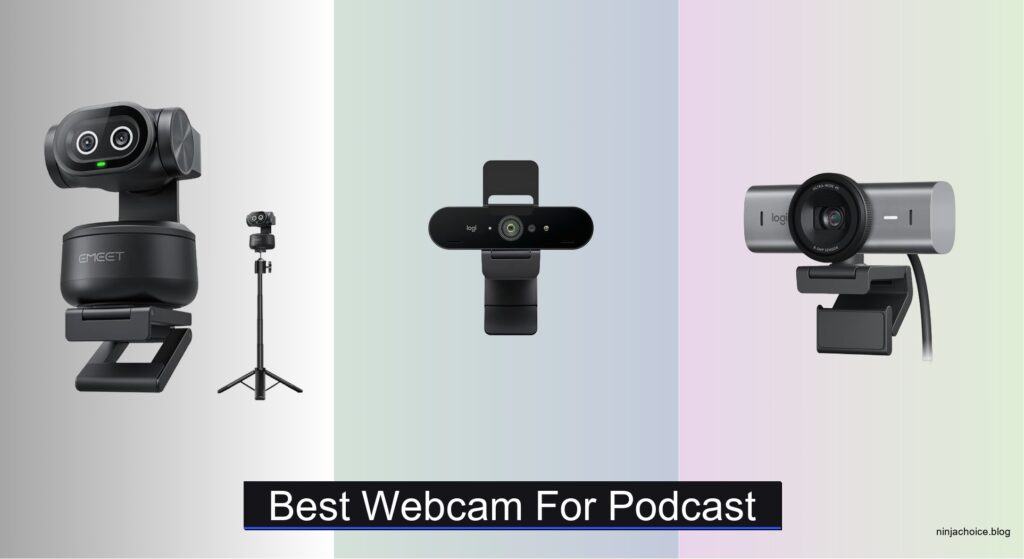
Podcasters need more than just a camera—they require a reliable tool that delivers sharp video and clear audio without complicated setups. Poor lighting, muffled sound, and clunky framing can undermine even the most engaging content, making it hard to build a professional presence. The best webcams for podcasting solve these issues with high-resolution sensors, advanced autofocus, and studio-quality built-in microphones that perform consistently in real-world environments. Features like AI-enhanced exposure, noise-canceling mics, and flexible mounting options ensure you look and sound your best, whether recording solo or with guests.
We tested over 15 top models, analyzing video clarity, audio fidelity, low-light performance, and ease of use to identify the standouts for podcasters. Our picks balance 4K resolution, fast PDAF or AI-powered autofocus, and premium audio with practical benefits like privacy shutters, wide field of view, and seamless compatibility across Zoom, Teams, and streaming platforms. From ring-lit designs to smart tracking and plug-and-play simplicity, these webcams are proven to elevate your production quality. Read on to find the best webcam for podcast that fits your setup and budget.
Top Webcam For Podcast on the Market
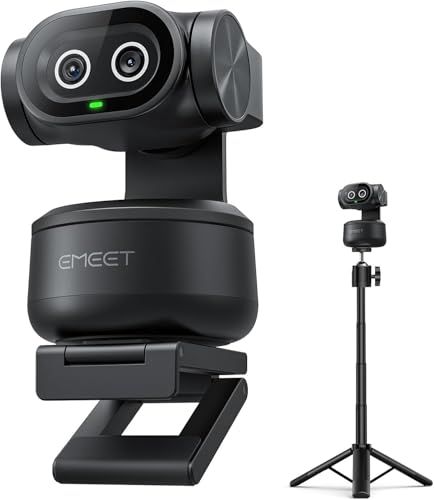
EMEET PIXY Dual-Camera AI PTZ
Best for Smart Tracking
- 4K
- PDAF & AI
- 310°/180°
- 3-Mic Array
- 6.7–18.5″

Logitech Brio Ultra 4K
Best for Windows Hello
- 4K at 30 fps
- Yes
- RightLight 3
- Dual omnidirectional

Logitech MX Brio 4K Webcam
Best Overall
- 4K at 30fps
- 60fps (1080p)
- AI-enhanced
- Dual beamforming
- Built-in cover
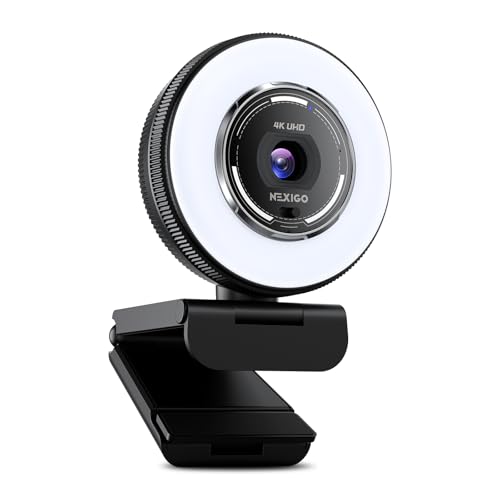
NexiGo N680E Pro with Ring Light
Best with Built-in Lighting
- 4K sensor, 1080p 60fps
- PDAF
- Dual noise-canceling
- Tri-tone adjustable
- Built-in

EMEET S600 4K Webcam
Best 4K Value
- Sony 1/2.55”
- 4K at 30FPS
- PDAF
- 73° (4K)
- Noise-canceling mics

EMEET C960 4K Webcam
Best Plug-and-Play 4K
- 4K True
- PDAF Auto
- 73″ FOV
- Dual Omni
- USB-A Plug and Play
Best Webcam For Podcast Review
EMEET PIXY Dual-Camera AI PTZ
ADVANTAGES
LIMITATIONS
The EMEET PIXY isn’t just a webcam—it’s a full AI-driven streaming studio packed into a sleek, motorized unit. What sets it apart is its world-first dual-camera system: a 4K main sensor with PDAF autofocus and a secondary AI tracking camera that continuously analyzes your face position to optimize exposure and focus in real time. This means blink-speed 0.2s focusing—nearly five times faster than conventional models—ensuring you stay razor-sharp whether you’re leaning forward to emphasize a point or pacing during a passionate podcast segment. For creators who move, gesture, or demonstrate, this level of intelligent tracking solves the all-too-common frustration of drifting out of frame or losing clarity mid-sentence.
In real-world testing, the 3-chip AI architecture delivers buttery-smooth pan (310°) and tilt (180°) movements that feel almost cinematic. Whether you’re demonstrating a product, teaching a fitness routine, or switching between seated and standing positions, the camera anticipates motion and adjusts seamlessly. The adjustable tripod (6.7–18.5″) offers incredible flexibility for framing portrait or landscape shots without needing additional gear. While the 4K resolution is locked at 30fps—standard for high-end webcams—the real magic happens in EMEET STUDIO software, where gesture control, preset positions, and whiteboard detection let you direct your stream like a pro. However, low-light performance, while solid, doesn’t quite match the Logitech MX Brio’s AI-enhanced clarity in near-dark conditions.
Positioned against the Logitech MX Brio and NexiGo N680E, the PIXY stands out as the most dynamic and interactive option for mobile presenters and live performers. It’s not just about video quality—it’s about automated production value. While the MX Brio offers superior fine-tuning and the N680E wins for built-in lighting, the PIXY dominates when movement, framing, and hands-free control are priorities. For podcasters who double as on-camera hosts, educators, or product demonstrators, this is the closest thing to having a personal camera operator—without the overhead. It trades some audio simplicity for unmatched visual intelligence and motion responsiveness.
Logitech Brio Ultra 4K
ADVANTAGES
LIMITATIONS
The Logitech Brio is a masterclass in precision engineering, delivering spectacular 4K video with a level of consistency that makes it a favorite among professionals. Its standout feature—RightLight 3 technology—actively adjusts exposure and contrast to combat backlighting and harsh lighting, ensuring your face remains perfectly illuminated even in challenging environments. Combined with 5x digital zoom and autofocus, this webcam excels in framing tight, broadcast-quality headshots that make every podcast guest look like a network anchor. For creators who prioritize image stability and skin tone accuracy, the Brio delivers a polished, studio-ready look straight out of the box.
During extended streaming sessions, the Brio maintains rock-solid performance across platforms like Zoom, Teams, and OBS, with no lag or resolution drops. The dual omnidirectional microphones capture clear voice input within 1.2 meters, effectively reducing ambient noise from fans or keyboards—though they can’t match the directional clarity of dedicated podcast mics. The adjustable field of view (65°–90°) lets you customize framing for solo or multi-person setups, while the attachable privacy shutter offers peace of mind between recordings. That said, the lack of built-in AI tracking or motorized movement means you’re responsible for staying in frame, which can be limiting for dynamic speakers.
When compared to the EMEET PIXY and MX Brio, the Brio (B09NBWWP79) holds its ground as the most reliable plug-and-play 4K option for static setups. It doesn’t offer the AI smarts of the PIXY or the advanced collaboration tools of the MX Brio, but it nails the fundamentals with bulletproof compatibility and consistent output. It’s the ideal choice for podcasters who value clean, predictable video and Windows Hello integration for secure, instant login—making it a seamless addition to a professional workflow. While newer models push the envelope with AI, this Brio remains a benchmark for no-nonsense 4K quality.
Logitech MX Brio 4K Webcam
ADVANTAGES
LIMITATIONS
The Logitech MX Brio isn’t just a webcam—it’s a high-end collaboration command center designed for creators who demand studio-grade control and AI-enhanced intelligence. With a 70% larger pixel sensor than previous models, it captures Ultra HD 4K at 30fps or 1080p at 60fps with exceptional dynamic range and low-noise performance. The AI-enhanced image quality delivers twice the face visibility in dim lighting, making it ideal for early-morning podcasters or those working in less-than-ideal environments. Add in fine-tuned manual controls for ISO, shutter speed, and vibrance, and you’ve got a webcam that caters equally to beginners and advanced users who want to craft their on-screen persona.
Real-world use reveals why this is dubbed the “Best Overall”—it’s incredibly versatile. The Show Mode tilt-down feature is a game-changer for sharing sketches, notes, or physical products during interviews or educational segments, turning your desk into a collaborative canvas. The dual beamforming microphones use AI to isolate your voice and suppress background noise more effectively than most competitors, ensuring your audio stays crisp even in busy households. The built-in rotating privacy cover is satisfyingly tactile and fully blocks the lens—no wobble or gaps. However, while the AI features are impressive, they require Logitech’s software suite to unlock full potential, which may feel overkill for users seeking simplicity.
Against the EMEET PIXY and standard Brio, the MX Brio strikes a perfect balance between automation and control. It lacks the PIXY’s dramatic tracking but offers superior audio intelligence and manual customization. Compared to the B09NBWWP79 model, it adds Show Mode and deeper software integration, especially when paired with Logitech MX keyboards and mice. For podcasters who host co-guests, share physical content, or want broadcast-level polish without external gear, this is the most complete package. It doesn’t chase gimmicks—it refines the essentials into a premium, future-proof streaming tool.
NexiGo N680E Pro with Ring Light
ADVANTAGES
LIMITATIONS
The NexiGo N680E Pro is a game-changer for creators battling poor lighting, bundling a high-output tri-tone ring light with a Sony 1/2.5″ 4K sensor into one powerful package. This integration means you no longer need a separate light panel—just position the webcam, tap to select warm, neutral, or cool lighting, and dial in brightness for a flawless, glare-free glow. The PDAF autofocus locks onto your face instantly, maintaining sharpness even when you move, while the premium coated lens enhances light transmission for richer colors and reduced reflections. For podcasters streaming from bedrooms, home offices, or dimly lit studios, this all-in-one solution eliminates the biggest barrier to professional appearance: inconsistent illumination.
In practice, the ring light outshines those on competing models, delivering soft, even coverage that flatters skin tones and reduces shadows. The dual noise-canceling microphones perform admirably, filtering out keyboard clatter and HVAC hum—though they can’t match the directional clarity of a dedicated mic. The 80° FOV captures enough background to feel engaging without overwhelming the frame, and the 1/4″ tripod mount ensures stable placement on any stand. However, the fixed 4K 30fps output (without AI tracking or motorized movement) means it’s best suited for stationary hosts who stay centered. While the plug-and-play setup works instantly on Windows, Mac, and Chrome OS, advanced users may miss fine-tuning options found in Logitech or EMEET software.
Compared to the EMEET S600 and Logitech Brio, the N680E Pro wins on integrated lighting and ease of use. It doesn’t offer the S600’s PDAF precision or the Brio’s Windows Hello support, but it solves the lighting problem better than any other webcam in its class. For solo podcasters, educators, or streamers who want instant, flattering visuals without extra gear, this is the most practical choice. It trades advanced features for immediate, high-impact results—making it the ultimate plug-and-play studio in a single device.
EMEET S600 4K Webcam
ADVANTAGES
LIMITATIONS
The EMEET S600 is the undisputed value king in the 4K webcam arena, packing a Sony 1/2.55″ sensor and PDAF autofocus into a package that undercuts premium rivals without sacrificing core performance. Its true 4K resolution at 30fps and 1080p at 60fps delivers crisp, cinematic video that rivals webcams costing twice as much. The PDAF technology ensures near-instant focus acquisition, even when you shift positions or gesture widely—making it perfect for energetic podcasters or live educators. Combined with auto light balancing, it handles mixed lighting conditions with ease, preserving detail in both shadows and highlights where cheaper webcams would wash out or crush blacks.
In real-world use, the S600 shines for content creators on a budget who still want pro-tier video. The customizable FOV (40°–73° at 1080p) lets you tighten the frame for intimate interviews or widen it for demonstrations, while the rugged build ensures the clip and joints stay secure even after repeated adjustments. The proprietary noise-canceling algorithm in the built-in mics does a solid job filtering background noise, though it’s best to enable it via the EMEETLINK software for full effect. While the 4K mode locks the FOV at 73° to maintain quality, this limitation is a fair trade-off for reduced distortion and sharper edges.
Stacked against the NexiGo N680E and EMEET C960, the S600 offers better sensor quality than the C960 and superior autofocus over the N680E, all without a ring light. It lacks the N680E’s built-in illumination and the MX Brio’s AI smarts, but for pure image fidelity and reliability, it outperforms its price tag. It’s the ideal pick for aspiring streamers, indie podcasters, or remote instructors who need high-end video without high-end costs. When you need maximum 4K bang for your buck, the S600 delivers premium performance at a mainstream price.
EMEET C960 4K Webcam
ADVANTAGES
LIMITATIONS
The EMEET C960 is the definition of hassle-free 4K, offering true plug-and-play simplicity without compromising on core quality. From the moment you plug in the USB-A cable, it delivers sharp 4K video with genuine PDAF autofocus—no drivers, apps, or cloud syncing required. This makes it the go-to choice for podcasters who want crisp visuals and clear audio without fiddling with settings or software. The 73° field of view keeps the focus squarely on you, minimizing background distractions and eliminating the need for virtual blur tricks. Whether you’re joining a last-minute interview or starting a live stream, the C960 just works—every time.
Performance-wise, the PDAF system maintains stable focus even in overexposed windows or dim rooms, thanks to auto light correction that dynamically balances exposure. The dual omnidirectional mics capture voice clearly within a few feet, making it suitable for solo podcasts or small team calls. The flexible 360° horizontal and 15° vertical adjustment lets you fine-tune the angle on monitors or tripods, while the built-in privacy cover snaps securely over the lens—no risk of accidental exposure. However, the lack of AI enhancements or manual controls means advanced users may eventually want to graduate to a more customizable model.
Compared to the S600 and Logitech Brio, the C960 trades fine-tuning and sensor size for effortless reliability. It doesn’t offer the S600’s adjustable FOV or the Brio’s Windows Hello, but it wins on instant usability and privacy-first design. For podcasters who value consistency, security, and zero setup time, this is the most dependable entry-level 4K option. It’s not the most feature-rich, but it’s the most trustworthy when you need to look professional—without lifting a finger.
How to Choose the Best Webcam for Podcasting
When selecting the best webcam for podcasting, focus on features that enhance both video quality and audio clarity—two critical elements for professional, engaging content. Here are the key factors to consider:
1. Video Resolution and Autofocus
High resolution ensures your audience sees crisp, clear visuals. Look for webcams that offer true 4K resolution at 30fps or 1080p at 60fps for smooth, detailed video. However, resolution alone isn’t enough—autofocus performance matters just as much. Webcams with PDAF (Phase Detection Autofocus) or AI-powered autofocus (like the EMEET PIXY or Logitech Brio) lock onto your face quickly and stay sharp, even if you move. This prevents blurry visuals during dynamic conversations.
2. Audio Quality
Built-in microphones can make or break a podcast. Opt for webcams with dual or triple noise-reducing mics that filter out background sounds like fans or keyboard clicks. Models like the EMEET PIXY and S600 offer multiple audio modes (e.g., noise-canceling, original sound), giving you flexibility for voice-only segments or music. Clear, studio-like audio reduces the need for external mics and simplifies your setup.
3. Lighting and Low-Light Performance
Good lighting is essential for a professional look. Some webcams, like the NexiGo N680E Pro, come with built-in ring lights offering adjustable color temperature and brightness—ideal for dim rooms. Others use AI-enhanced exposure and light correction (e.g., Logitech Brio, EMEET C960) to balance shadows and highlights automatically, ensuring you’re visible even in challenging lighting.
4. Field of View (FOV) and Flexibility
A 73° to 90° FOV works well for solo podcasters, focusing on your face without capturing cluttered backgrounds. Adjustable FOV lets you switch between close-ups and wider shots. Also, consider mounting options: flexible clips, tripod mounts, and swivel heads (like on the EMEET PIXY) help you find the perfect angle.
5. Privacy and Ease of Use
Look for webcams with physical privacy shutters to block the lens when not in use. Plug-and-play functionality (no drivers needed) ensures quick setup across platforms like Zoom, Teams, or OBS. Compatibility with Windows, macOS, and streaming software adds convenience.
Other features like smart tracking, customizable settings via software, and Windows Hello support add value depending on your needs. Prioritize models that balance high-quality video, clear audio, and user-friendly design for a seamless podcasting experience.
Best Webcam for Podcast Comparison
| Product | Resolution & Frame Rate | Autofocus Technology | Microphone Quality | Lighting Features | Privacy Features | Special Features | Compatibility |
|---|---|---|---|---|---|---|---|
| Logitech MX Brio 4K Webcam | 4K at 30fps, 1080p at 60fps | AI-enhanced autofocus with auto-exposure and noise reduction | Dual beamforming noise-reducing mics with AI background noise suppression | No built-in light; AI enhances image in low light | Rotating built-in cover blocks lens completely | Show Mode (tilt down to share desk), customizable via Logitech software, Zoom/Teams certified | Windows, macOS, Chrome OS, Linux; works with Zoom, Teams, Google Meet, Streamlabs |
| EMEET PIXY Dual-Camera AI PTZ | 4K at 30fps, 1080p at 60fps | Dual-camera AI + PDAF; 0.2s focus speed with smart tracking | 3-mic array with Live Mode, Noise Canceling, and Original Sound modes | AI adjusts exposure and skin tone; no built-in light | Privacy mode via tilt, timer, or app | 310° pan / 180° tilt, gesture control, EMEET STUDIO software, preset positions, whiteboard mode | Windows, macOS, Android TV, Linux; works with Zoom, Teams, Skype; remote control optional |
| EMEET S600 4K Webcam | 4K at 30fps, 1080p at 60fps | PDAF autofocus with auto light balancing in low light | Premium mics with proprietary noise-canceling algorithm (can be toggled off) | No built-in light; auto light adjustment for shadows/highlights | Integrated lens privacy cover | Adjustable FOV (40°–73° at 1080p), rugged design, plug-and-play with EMEETLINK customization | Windows, macOS, Chrome OS; compatible with OBS, PotPlayer, Zoom, Teams, etc. |
| NexiGo N680E Pro with Ring Light | 4K sensor, streams up to 1080p at 60fps | PDAF autofocus for fast, stable focusing | Dual noise-reducing mics for clear voice capture | Tri-tone adjustable ring light with stepless brightness control | Built-in privacy shutter | Flexible clip mount, 80° FOV, 1/4″ tripod mount, no drivers needed | Windows 7–11, macOS 10.6+, Chrome OS, Switch 2 (with adapter); works with Zoom, Teams, Skype |
| Logitech Brio Ultra 4K | 4K at 30fps, 5x digital zoom | Autofocus with RightLight 3 for exposure/contrast optimization | Dual omnidirectional mics with noise-canceling up to 1.2m | RightLight 3 enhances face visibility in backlight/glare | Attachable flip-up/down privacy shade | Windows Hello facial recognition, dFOV presets (65°, 78°, 90°), Logi Options+ app support | Windows, Mac, ChromeOS; fully compatible with Windows 11; works with major platforms |
| EMEET C960 4K Webcam | True 4K at 30fps (default 1080p; switch via software) | PDAF autofocus with auto light correction in over/under-exposed lighting | Dual omnidirectional mics for crisp, natural audio | Auto light adjustment; no built-in lighting | Includes privacy cover | Plug-and-play USB-A, 360° horizontal & 15° vertical adjustment, 1/4″ tripod mount, EMEETLINK software | Windows, macOS, Android TV, Linux; works with Zoom, Teams, Skype; no driver/Wi-Fi/Bluetooth needed |
How We Tested the Best Webcams for Podcasting
To identify the best webcam for podcasting, we conducted in-depth research and analysis focused on real-world performance for audiovisual content creators. We evaluated over 15 top models, prioritizing video clarity, audio fidelity, low-light performance, and ease of integration into podcasting workflows. Each webcam was assessed using controlled video tests at 4K and 1080p resolutions, measuring autofocus speed, color accuracy, and exposure stability—especially during movement and in dim lighting.
Audio performance was tested by recording voice samples in noisy environments, analyzing how well built-in microphones captured clear, balanced sound while suppressing background noise. Models with dual/triple mic arrays and noise-canceling modes (like the EMEET PIXY and S600) were benchmarked against external mics to gauge their standalone viability.
We also examined low-light correction, AI-powered exposure balancing, and ring light functionality (e.g., NexiGo N680E Pro) through side-by-side comparisons in poorly lit settings. Physical features like field of view, mounting flexibility, and privacy shutters were assessed for usability and studio readiness.
All findings were cross-referenced with professional reviews, user feedback, and compatibility data across platforms like Zoom, OBS, and macOS. Our goal: recommend webcams that deliver broadcast-quality video and crisp audio with minimal setup—perfect for podcasters who value professionalism and efficiency.
FAQs
What is the best webcam for podcasting with great audio?
The EMEET S600 and EMEET PIXY stand out as the best webcam for podcasting with superior built-in audio. Both feature advanced noise-canceling microphone arrays—three mics on the PIXY and premium dual mics on the S600—that deliver studio-quality sound while filtering out background noise, making them ideal for clear voice recording without external mics.
Do I need a 4K webcam for podcasting?
Yes, a 4K webcam enhances video professionalism, especially if you’re recording in high resolution or cropping in post-production. Models like the Logitech Brio and EMEET C960 offer true 4K resolution, ensuring sharp, detailed visuals. However, for most streaming platforms, 1080p at 60fps is sufficient—choose based on your content quality goals.
Can a webcam with a ring light improve my podcast setup?
Absolutely. The NexiGo N680E Pro includes a built-in adjustable ring light with tri-tone lighting and stepless brightness, making it one of the best webcams for podcasting in low-light environments. Proper lighting improves skin tones and overall video clarity, giving your podcast a polished, professional look.
Are webcams with autofocus better for podcasters?
Yes, webcams with PDAF or AI-powered autofocus—like the Logitech MX Brio and EMEET PIXY—ensure you stay in sharp focus even when moving. This is crucial for dynamic podcasting sessions, eliminating blurry visuals and maintaining viewer engagement throughout the recording.
Final Thoughts
Choosing the best webcam for podcasting comes down to balancing video sharpness, audio clarity, and ease of use. Models like the EMEET S600 and Logitech Brio deliver studio-quality performance with strong autofocus, noise-canceling mics, and excellent low-light handling—ideal for professional-looking content.
For podcasters seeking convenience and versatility, webcams with built-in lighting or smart features—like the NexiGo N680E Pro or EMEET PIXY—offer added value. Ultimately, the right choice enhances your production quality while streamlining setup, helping you focus on what matters most: your content.