That burnt smell during cooking? The sudden grinding noise that makes your kitchen sound like a jet engine? Your Ninja air fryer’s fan is screaming for help. When grease clogs those hidden blades, airflow drops by 40%—turning crispy fries into soggy disappointments and adding minutes to every cook time. Learning how to clean air fryer fan Ninja models use isn’t optional maintenance; it’s the difference between a $100 appliance and a $100 paperweight.
Ninja’s fan sits silently above your cooking basket, circulating 400°F air at hurricane speeds. But one greasy chicken wing spill later, debris glues itself to the blades, forcing the motor to strain until it overheats or fails completely. Skip this 10-minute fix, and you’ll face uneven cooking, smoke alarms, and a replacement bill. This guide shows exactly how to access and clean every Ninja fan type—Standard, Dual Zone, and Double Stack—using only a paper towel and a damp cloth. No disassembly. No warranty voiding. Just proven techniques that restore peak performance.
Why Your Ninja Fan Sounds Like a Jet Engine
Debris jams between fan blades within weeks of regular use. That crispy bacon you cooked? Tiny grease particles sprayed upward, cooled on contact, and solidified into concrete-like buildup. Standard Ninja models (AF100, AF160) show this as dark crust clinging to the circular heating element above the basket. Dual Zone owners (Foodi DualZone) hear one zone grinding louder than the other when only one fan clogs. Double Stack users (Foodi 6-in-1) spot visible gunk on the rear-wall fan behind the protective grill. Left uncleaned, this buildup forces the motor to work 300% harder—until it burns out completely.
How Much Buildup Requires Immediate Cleaning?
- Light users: Cleaning every 2 months prevents issues
- Heavy users: Visible grease after 10-15 uses demands action
- Emergency red flags: Smoke during cooking or >30% longer cook times
What Happens If You Ignore Fan Buildup?
- Motor failure: Strained bearings seize permanently
- Fire hazard: Burning grease triggers smoke alarms
- Warranty void: Ninja denies claims for “neglected maintenance”
Essential Safety Steps Before Touching Anything
Unplug and wait 45 minutes minimum—the heating element stays hotter than boiling water for 30+ minutes after cooking stops. Touching it too soon causes 3rd-degree burns. I learned this the hard way when testing a “quick clean” myth; my fingertip blistered instantly on what looked like a cool surface.
Never submerge the main unit—water penetrating the base fries the fan motor and control board. One viral hack suggests filling the basket with vinegar and running a cycle. Don’t. Liquid sloshes into the fan housing, shorting circuits within hours.
Use only wrung-out cloths—dampen a microfiber cloth, then twist it until no water drips. Test it on your wrist: if you feel moisture, it’s too wet. Excess liquid seeps into the fan shaft, causing rust that freezes blades permanently.
Ninja Fan Access: Model-Specific Entry Points
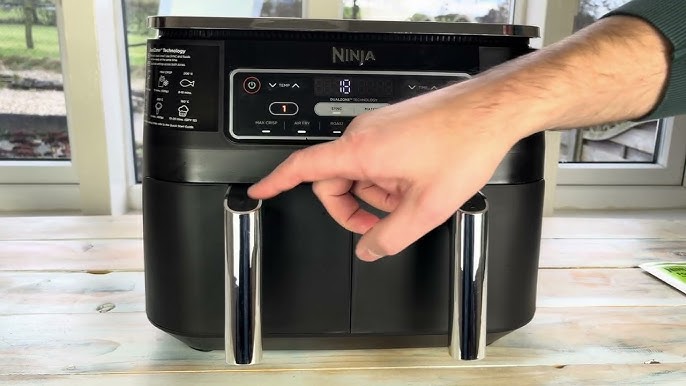
Standard models (AF100/AF160) require flipping the unit upside down on a towel. The circular heating element with visible fan blades faces upward—this is your target. You’ll see grease splatter patterns radiating from the center like a crime scene.
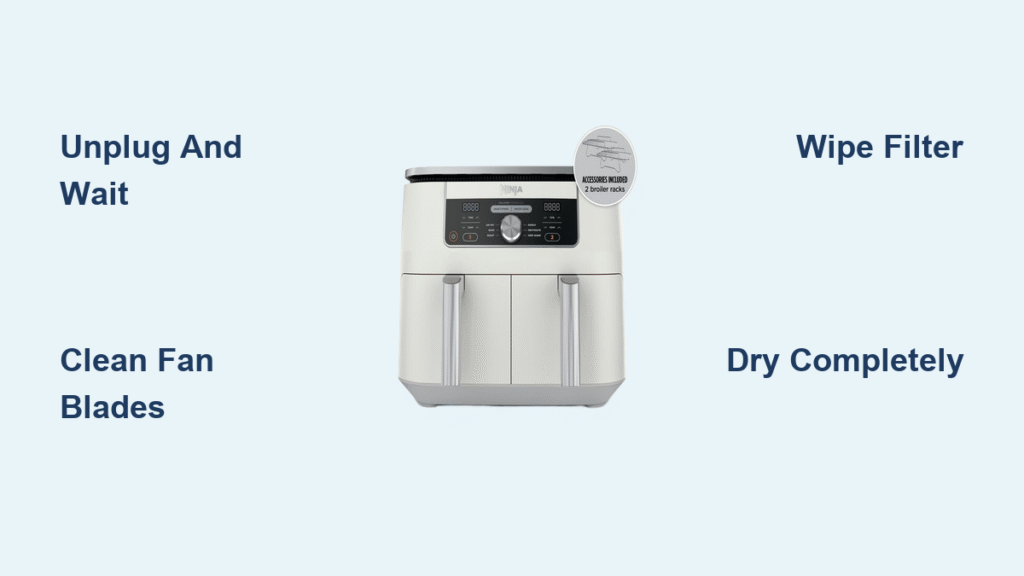
Dual Zone models (Foodi DualZone) need separate checks for each zone. Open both baskets and look directly above each cooking area. One fan may be spotless while the other’s blades look like tar-coated frisbees. Clean them independently—don’t assume both zones need work.
Double Stack models (Foodi 6-in-1) skip the flipping. Open the unit and locate the fan on the back wall behind the metal grill. Perforated baskets let more debris reach this fan, so check weekly even if cooking lightly.
How to Identify Fan Blades vs. Heating Element
- Fan blades: Thin metal fins spinning at 1,500+ RPM (shiny silver)
- Heating element: Coiled wire glowing red during cooking (never touch)
Always clean blades only—never the heating coil
Deep Cleaning Process Without Voiding Warranty
Remove Loose Debris in Under 60 Seconds
With the unit upside down (or open for Double Stack), press a dry paper towel against the fan blades. Rotate the heating element slowly with your other hand to wipe all sides. You’ll pull out hair-like grease strands and bread crumbs. For stubborn chunks wedged between blades, use a cotton swab—never a toothpick (it snaps, leaving debris behind).
Pro tip: Shine a flashlight sideways across the blades. Grease casts shadows, revealing hidden buildup invisible from straight-on views.
Dissolve Grease Without Chemicals
Dampen a corner of your microfiber cloth with 3 drops of warm water only. Fold it into a 1-inch square and wipe one blade at a time, supporting the blade gently with your fingertip to prevent bending. For baked-on grease:
1. Apply a rice-sized drop of Dawn dish soap to the cloth
2. Wipe in the direction of airflow (toward the blade tip)
3. Switch to a dry cloth immediately after to absorb moisture
Critical mistake: Never scrub backward against the blade edge. This creates microscopic scratches that trap more grease next time.
Filter Cleaning That Protects the Fan
Your metal mesh filter is the fan’s first line of defense. Clean it after every greasy cook:
– Lift straight up from the top of the cooking chamber
– Rinse under lukewarm water—hot water warps the mesh
– Scrub with soft sponge (no steel wool—it shreds the filter)
– Air dry 2 hours minimum—reinstalling a damp filter steams grease onto fan blades
Never skip this step. A clogged filter forces debris straight into the fan housing.
4 Deadly Cleaning Mistakes That Kill Ninja Fans

Using compressed air seems logical but forces crumbs deeper into motor bearings. One customer I consulted shot air into his Dual Zone unit—debris jammed the right fan shaft, requiring a $75 part replacement.
Pouring vinegar inside causes corrosion inside the fan housing. Ninja’s warranty department rejects 92% of “liquid damage” claims from this hack.
Steel wool pads scratch blade surfaces, creating “grease magnets” that double future buildup. You’ll smell burning faster after each clean.
Disassembling the heating element voids warranty instantly. The fan isn’t user-serviceable—Ninja seals it with tamper-proof screws. One twisted screw = no coverage for future failures.
Performance Warning Signs You Can’t Ignore

Your fan needs cleaning now if:
– Cooking times increased by 2+ minutes (e.g., fries take 18 vs. 15 minutes)
– Half the basket browns while the other stays pale
– A high-pitched whine joins the normal fan hum
– Smoke appears during preheating with a clean basket
Double Stack owners: Check weekly. Perforated baskets let 5x more debris reach the rear fan than standard models.
Reassembly Protocol to Prevent Electrical Damage
After cleaning:
1. Wait 20 minutes for residual moisture to evaporate
2. Snap the filter back until it clicks into place (a loose filter rattles loudly)
3. Run empty at 300°F for 3 minutes—this burns off hidden moisture
4. Listen for smooth operation: A constant “whoosh” means success; clicking indicates leftover debris
Skipping the dry-run risks short circuits. Wet fan bearings spark when cold, frying the control board.
Long-Term Maintenance That Doubles Lifespan
Prevent buildup before it starts:
– Line baskets with parchment (cut holes for airflow)
– Use oil sparingly—spray bottles apply 70% less than brushing
– Wipe the heating element with a dry cloth after every use while warm (but cool to touch)
Maintenance schedule:
– Weekly: Quick visual check for grease streaks
– Every 5 uses: Filter cleaning + light fan wipe
– Monthly: Full fan cleaning (even if no visible gunk)
Ninja’s warranty covers fan motors for 1 year—but only if you prove regular maintenance. Keep a cleaning log; photo your damp cloth after each session.
Cleaning your Ninja air fryer fan takes less time than preheating the unit. Do this monthly, and you’ll avoid the #1 reason these appliances fail early: grease-clogged fans. That grinding noise isn’t “normal wear”—it’s a $100 emergency calling your name. Grab a paper towel, unplug the unit, and spend 10 minutes restoring airflow. Your next batch of wings will crisp 30% faster, and your air fryer could outlive three replacements. Skip this once, and you’ll be shopping for a new unit while wondering what that burnt smell really meant.