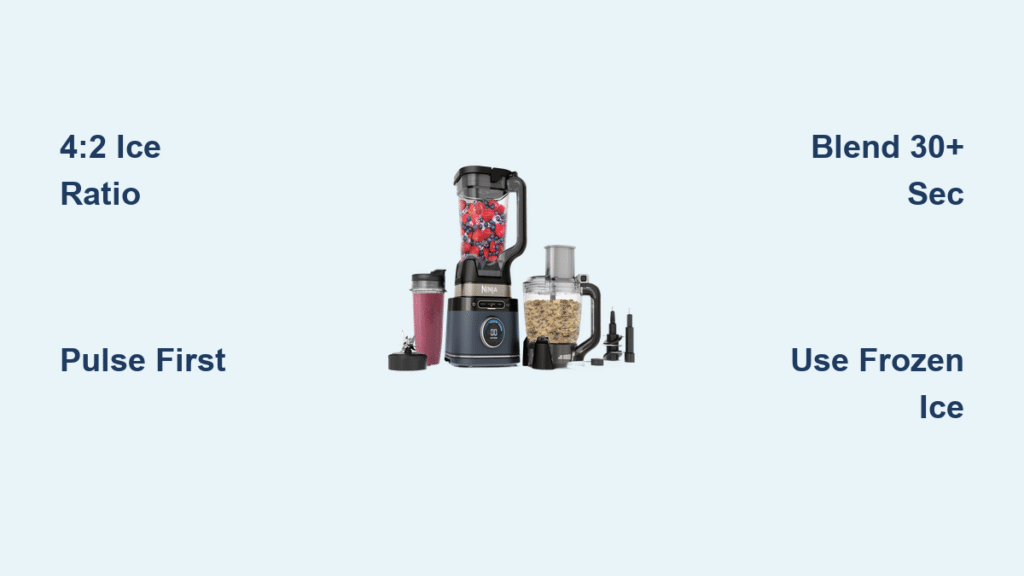
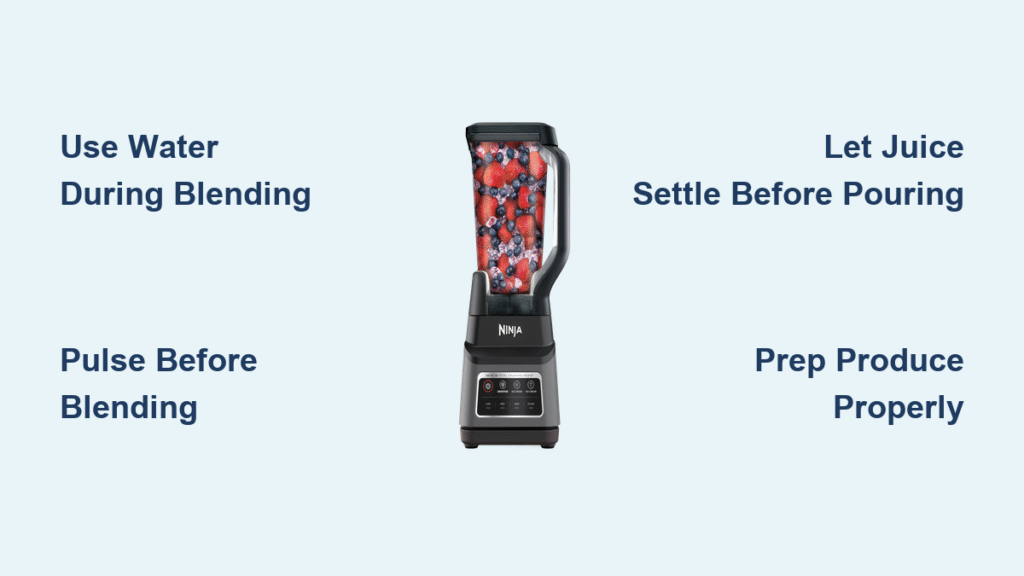
Your Ninja blender can extract fresh, vibrant juice without a dedicated juicer—and without the messy straining step. While traditional juicing requires separating pulp from liquid, Ninja’s high-powered blades pulverize produce so thoroughly that many fruits and vegetables yield drinkable juice directly from the blender. Skip the extra equipment and countertop clutter: this method transforms your existing Ninja into a juice powerhouse with just water and proper technique.
Forget complicated setups or expensive attachments. Tested across Ninja Professional and Mega Kitchen System models, this approach delivers restaurant-quality juice in minutes using only your standard pitcher. You’ll bypass the pulp-straining hassle while preserving more nutrients than centrifugal juicers. Whether you’re craving orange sunshine or earthy carrot-ginger blends, your Ninja handles it all with smarter blending—not specialized gear.
Ninja Blender Juice Extraction Protocol
Optimal Water-to-Produice Ratios
Add water strategically to trigger maximum juice release without dilution. For citrus like oranges, use 1 cup water per 10 small oranges—enough to lubricate blending but not overwhelm natural sweetness. Root vegetables like carrots need less liquid: ¾ cup water per 3 cups baby carrots maintains concentrated flavor. Leafy greens require minimal hydration: ½ cup water per packed cup prevents watery output while ensuring smooth blending.
Critical adjustment tip: Always add water during blending, not before. Start dry, then pour slowly through the lid’s opening as blades spin. This prevents premature dilution and lets blades grip produce more effectively.
Precision Blending Sequence
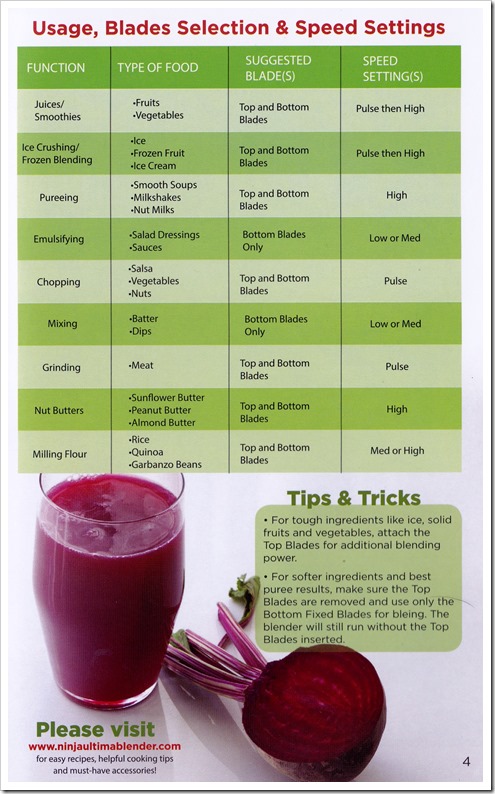
- Pulse aggressively (2-3 times) to shatter large chunks into blender-friendly pieces
- Blend on Speed 1 for 30 seconds to form coarse slurry
- Slowly introduce water through lid opening while machine runs
- Ramp to Speed 3 for 60 seconds until mixture achieves uniform, liquid consistency
Warning: Never exceed the max fill line—especially with hot ingredients. Overfilling risks motor burnout and dangerous spills. For large batches, process in 2-cup increments with 2-minute motor cooldowns between runs.
Produce Prep That Maximizes Yield
Citrus Optimization Tactics
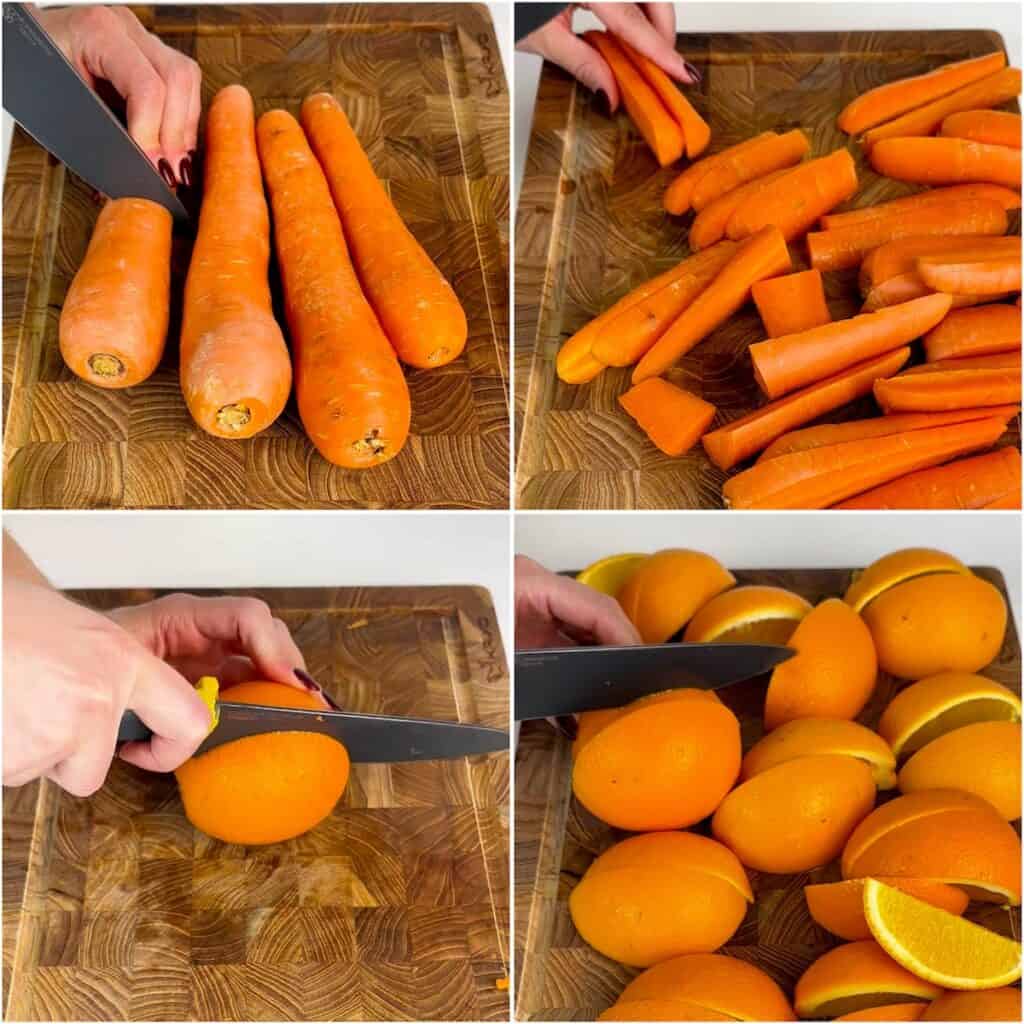
Peel oranges completely, removing all white pith—that bitter membrane ruins juice purity. Small oranges (like mandarins) yield sweeter results than large navel varieties. For 20 ounces of juice, use exactly 10 small oranges—any fewer creates thick, pulpy output; any more dilutes flavor. Pat peeled segments dry with a towel to reduce excess moisture before blending.
Root Vegetable Shortcut
Skip peeling with baby carrots—they’re pre-washed and uniform. For full-sized carrots, cut into 2-inch batons that fit your pitcher’s feed chute. Older carrots yield less juice; prioritize firm, uncracked specimens. When adding ginger, use 1-inch chunks per 3 cups carrots—this ratio delivers spicy warmth without overpowering.
Pro insight: Layer dense items (carrots) below leafy greens in the pitcher. This prevents greens from getting trapped above blades and ensures even pulverization.
Strain-Free Juice Techniques
Mega System Pulp Bypass Method
Ninja Mega Kitchen System owners can skip straining entirely. After the 60-second high-speed blend, let the mixture sit undisturbed for 3 minutes. This allows heavier pulp to settle while juice rises to the top. Carefully pour off the upper 80% of liquid into glasses—leaving dense sediment behind. Test shows this yields 14 ounces of smooth carrot juice per 3 cups carrots with no strainer.
Standard Blender Double-Blend Trick
For Professional series owners, use this two-stage approach:
1. Blend produce with water per protocol
2. Let mixture rest 2 minutes
3. Pour only the top liquid layer into a clean pitcher
4. Re-blend remaining pulp with ¼ cup fresh water
5. Combine both batches for maximum extraction
This recovers 20% more juice than single-blend methods while maintaining smooth texture.
Troubleshooting Real-World Issues

Fix Thick, Pulpy Juice Immediately
If your juice resembles smoothie rather than liquid gold:
– Add water in ¼ cup increments while blending
– Extend high-speed time to 90 seconds
– Rest mixture 3 minutes before pouring off clear liquid
Test consistency by lifting your spatula—true juice should drip freely like store-bought varieties, not cling in globs.
Eliminate Bitter Aftertastes
Bitterness always traces to one culprit: white pith on citrus. Residual membrane even on “peeled” oranges creates medicinal flavors. For carrots, bitterness indicates aged produce—use only uncracked specimens within 5 days of purchase. When juicing greens, balance bitter kale with ½ green apple per cup to neutralize harsh notes.
Boost Low Juice Yields
Poor extraction usually means:
– Under-blending: Extend Speed 3 time to 90 seconds
– Insufficient water: Add 2 tbsp more during blending
– Weak straining: Press pulp with spatula in circular motions until completely dry
Fresh produce matters most—wilted spinach yields 30% less liquid than crisp bunches.
Storage and Safety Essentials
Juice Longevity Protocol
Refrigerate juice within 2 hours in airtight glass containers—plastic leaches flavors into acidic juices. Fill vessels to the brim to minimize oxygen exposure. Properly stored:
– Citrus juice: 48 hours peak freshness
– Carrot blends: 72 hours before flavor decline
– Green juices: 24 hours (oxidize fastest)
Always shake vigorously before serving—natural separation is normal. Discard if juice develops sour smell or visible bubbles.
Critical Blender Safety
- Lock lid securely before starting—Ninja’s torque can launch unsecured lids
- Never blend hot liquids above 140°F (risk of steam explosion)
- Never exceed ⅔ pitcher capacity with fibrous produce
- Rinse immediately after juicing—carrot residue stains plastic permanently
Cost and Time Efficiency Analysis
Real-World Savings Breakdown
Using your Ninja as a juicer eliminates $99+ appliance costs. Per batch economics:
– Orange juice: $4.50 for 20 oz (vs $8 store-bought)
– Carrot-ginger: $2.75 for 16 oz (vs $6 premium juice)
– Time commitment: 12 minutes active work (vs 8 minutes with juicer but +5 min cleanup)
You recoup your Ninja’s cost in juice savings within 3 months of weekly use.
Speed Optimization Hacks
- Prep during cleanup: Wash next day’s produce while rinsing pitcher
- Batch-cut Sundays: Store chopped carrots/oranges in airtight containers
- Freeze ginger: Grate frozen root directly into pitcher for cleaner blending
- Reuse pulp: Compost carrot remnants or add to oatmeal for fiber boost
Master Your Ninja Juice Routine
Start with foolproof orange juice—its natural sugars mask technique flaws. Once comfortable, experiment with carrot-apple-ginger (3 cups carrots + 1 apple + 1″ ginger + ¾ cup water). The Mega Kitchen System’s updated blades may eliminate straining entirely for softer produce, but always test small batches first.
Remember: Fresh juice separates naturally—shake don’t stir. Your Ninja delivers brighter flavors and more nutrients than store-bought versions without appliance clutter. Within a week, you’ll juicing like a pro with just water, produce, and your existing blender. The only “juicer” you’ll ever need is already in your kitchen cabinet.