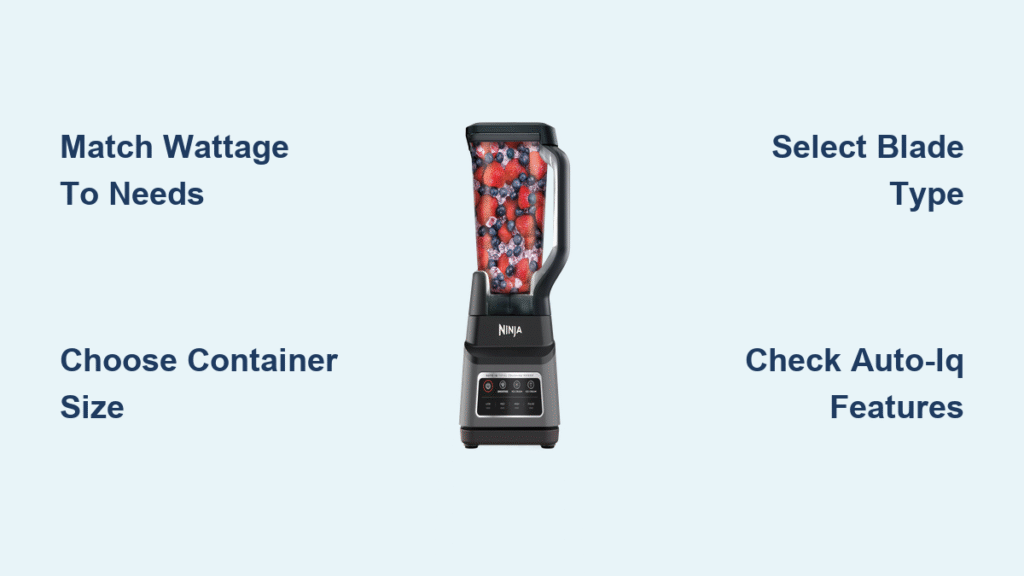
Standing in the appliance aisle, you’re overwhelmed by Ninja blenders ranging from $50 single-serve cups to $350 professional powerhouses. Each claims to crush ice effortlessly and create silky smoothies, but which model actually aligns with your kitchen habits? The wrong choice means wasted counter space, underpowered performance, or features you never use—like a 72-ounce pitcher gathering dust in a single-person household. This guide cuts through marketing fluff to show you exactly how to choose a Ninja blender based on real-world usage, not theoretical specs. You’ll learn why wattage alone is deceptive, how to match container sizes to your daily routines, and which “smart” features justify their cost. By the end, you’ll confidently select a blender that becomes your hardest-working kitchen tool—not a regrettable impulse buy.
Ninja Blender Categories Decoded
Personal/Single-Serve Models
Nutri Ninja series blenders (like the Nutri Ninja Pro) pack 900-1,000 watts into compact 16–24 oz containers, making them ideal for individual smoothies or protein shakes. Their Pro Extractor Blades pulverize seeds and frozen fruit by breaking down cellular walls for maximum nutrient extraction—no gritty residue left behind. Sip & Seal lids transform blending cups into portable containers, eliminating messy transfers. Avoid if you regularly serve multiple people; these struggle with family-sized batches.
Countertop Powerhouses
Ninja Professional series models (e.g., Ninja Professional Plus) deliver 1,000–1,400 watts through 64–72 oz pitchers with Total Crushing Blades. These stacked blades handle ice, frozen fruit, and fibrous veggies like kale without straining the motor. Multiple speed settings and pulse functions let you control texture for everything from chunky salsas to velvety soups. Critical for families needing one-blend-for-all versatility—just verify pitcher capacity matches your typical batch size.
Food Processor Hybrids
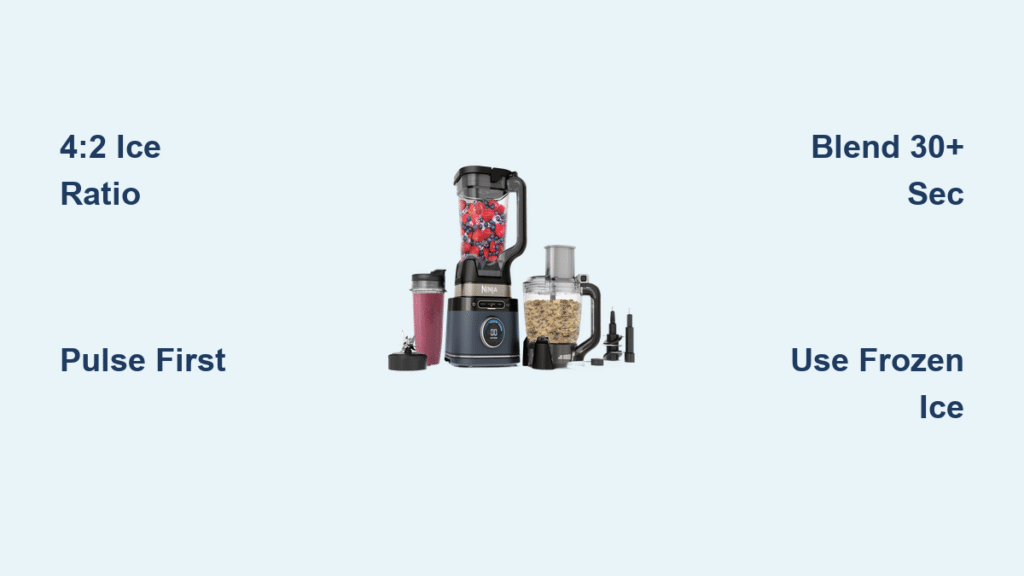
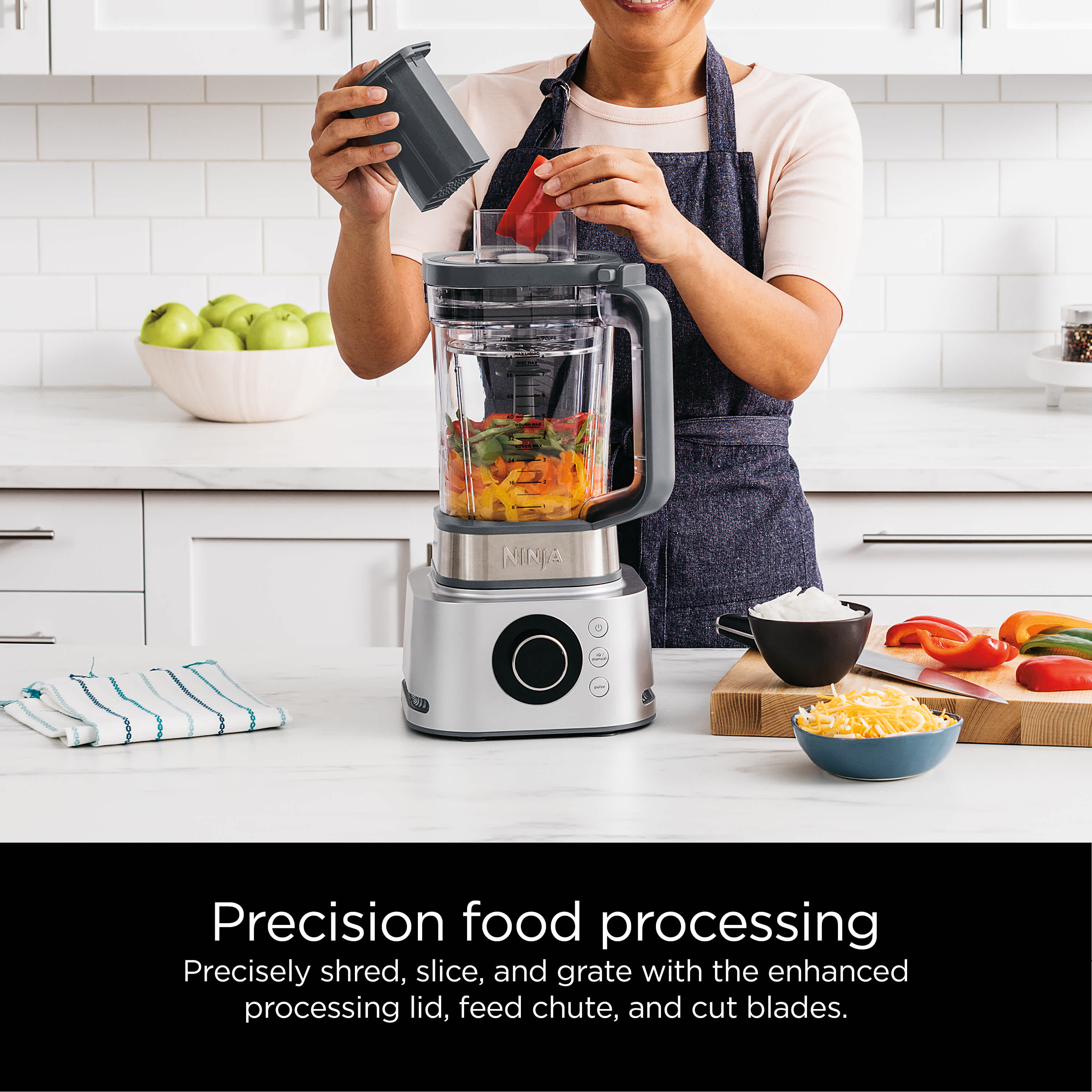
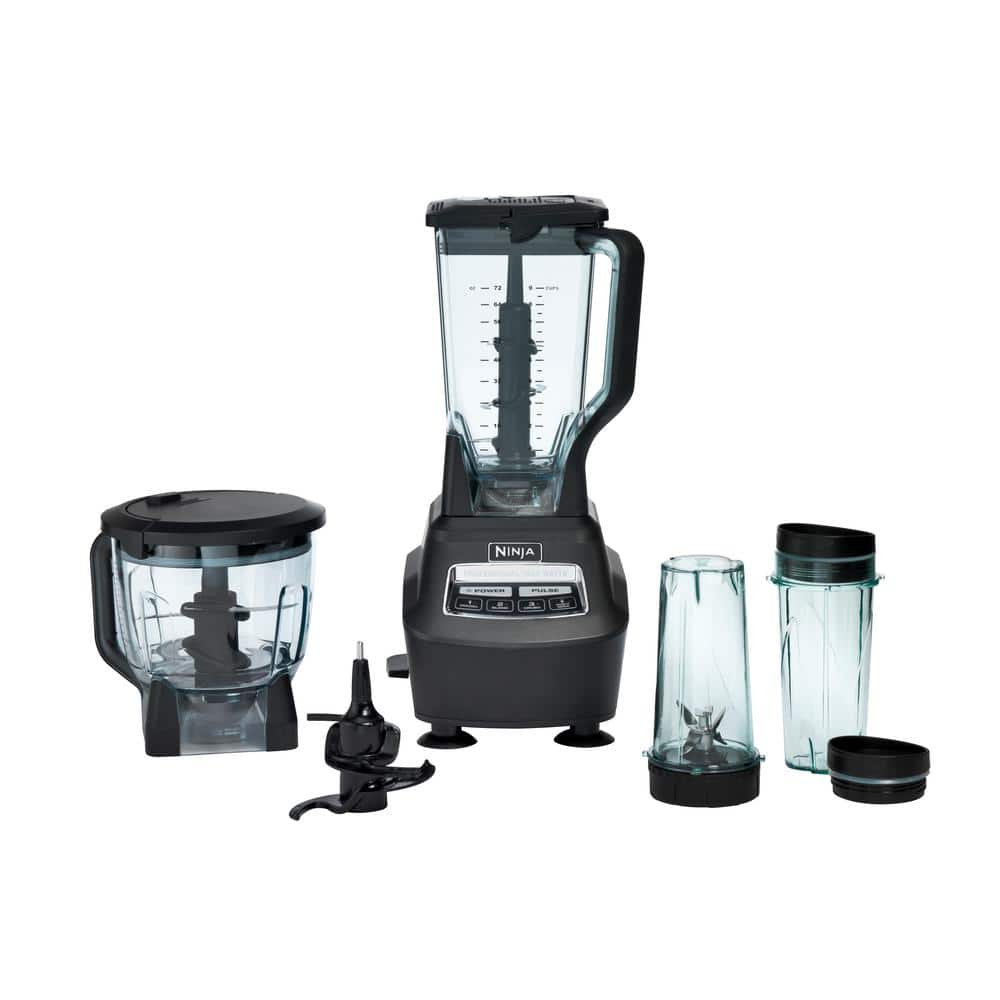
Ninja Foodi Power Blender & Processor units merge 1,400–1,600 watts with interchangeable bowls (64 oz pitcher + 24 oz processor bowl). Swap blades to chop veggies, knead pizza dough, or blend smoothies without buying separate appliances. The dough blade mimics hand-kneading motions for consistent results, while precision processor blades tackle nuts and herbs. Worth the investment if you meal-prep weekly or bake often—otherwise, skip the bulk.
High-Performance Machines
Ninja Chef series blenders boast 1,500–1,600 watts, 10 Auto-iQ programs, and manual speed control for culinary precision. The included tamper pushes thick mixtures (like nut butter) toward blades without stopping, while touchscreen interfaces guide complex tasks. Only consider if you regularly make hot soups, frozen desserts, or dense doughs; casual users won’t utilize these features.
Power Requirements by Task
Minimum Wattage Guidelines
Don’t assume “more watts = better.” Match power to your toughest ingredient:
– 900 watts suffices for soft-fruit smoothies but fails with frozen ingredients.
– 1,000+ watts is non-negotiable for consistent ice crushing (budget models under 1,000 watts stall or create slush).
– 1,200+ watts prevents motor strain during nut butter or frozen dessert prep.
– 1,400+ watts is essential for kneading dough—lower wattage risks overheating.
Blade Technology Impact
Blade design affects performance more than raw power:
– Total Crushing Blades (stacked tiers) pulverize ice and frozen fruit but struggle with leafy greens.
– Pro Extractor Blades focus on breaking down cellular structures for nutrient-rich smoothies.
– Dough Blades feature curved paddles that stretch—not tear—gluten for perfect bread texture.
Pro Tip: Never use a dough blade for ice—it dulls quickly and damages containers.
Container Size Strategy
Single-Serve Solutions
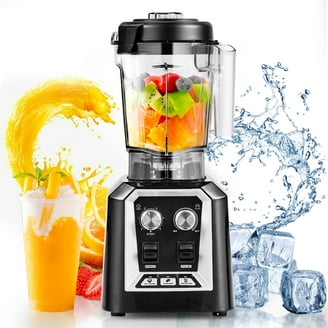
16 oz cups work for protein shakes but overflow with leafy greens. Upgrade to 24 oz cups for larger smoothies with added liquids (almond milk, yogurt). All cups use BPA-free Tritan plastic that resists clouding after dishwasher cycles. Measure your go-to recipes—if smoothies consistently exceed 20 oz, skip 16 oz models.
Family-Sized Pitchers
48 oz pitchers suit couples making single batches. 64 oz is the family sweet spot (serving 2–4 people), while 72+ oz models strain small kitchens. Critical check: Measure your cabinet depth—oversized pitchers won’t fit under standard cabinets.
Specialty Containers
Food processor bowls (24–64 oz) expand functionality but require storage space. Dough bowls include specialized blades but are useless if you never bake. Stackable storage cups streamline meal prep but add $20–$40 to your cost. Ask: Will I use this weekly? If not, skip it.
Advanced Features That Matter
Auto-iQ Programs Worth Paying For
One-touch programs eliminate guesswork for consistent results:
– Smoothie mode alternates speeds to prevent air pockets in thick mixtures.
– Ice Cream mode pulses intermittently to avoid melting during blending.
– Extract mode slowly breaks down tough ingredients (kale, ginger) for nutrient retention.
Skip models without these if you hate manual speed-juggling.
Heating Functions Reality Check
Ninja Foodi Cold & Hot blenders heat soups to 150–210°F directly in the pitcher—no stovetop needed. But they cost $100+ more, weigh 5+ pounds extra, and take 15+ minutes to heat. Only buy if you make hot soups weekly; otherwise, it’s dead weight.
Smart Technology Evaluation
Digital displays show countdown timers, but app connectivity offers minimal value (most users stick to physical controls). Recipe databases feel gimmicky—serious cooks rely on trusted sources like cookbooks. Save money by avoiding “smart” models unless you crave touchscreen precision.
Build Quality Indicators
Container Material Analysis
Tritan plastic dominates Ninja’s lineup: lightweight, shatterproof, and dishwasher-safe. Glass pitchers (on select models) resist scratches but add 3–5 pounds of weight. Stainless steel options improve hot/cold retention but cost 30% more. Prioritize Tritan for daily durability—it won’t cloud or crack.
Base Construction Details
Motor housings use ABS plastic with rubberized feet to prevent countertop sliding. Weight ranges from 5 lbs (personal blenders) to 15 lbs (high-performance models)—heavier bases vibrate less. Retractable cord storage is convenient but non-essential. Test stability by pressing the base; if it wobbles, skip it.
Cleaning Reality
Self-Cleaning Performance
Auto-clean programs work for light residue: fill with warm water + soap, run 30–60 seconds, then rinse. But they fail with sticky ingredients like nut butter or dried-on soup. Reserve this for quick daily cleanups—not deep cleans.
Manual Cleaning Process
Remove blade assemblies with a quarter-turn twist for thorough access. All containers and lids are top-rack dishwasher safe, but hand-wash blades to preserve sharpness. Never immerse the base—wipe with a damp cloth only. Use the included brush for blade crevices where residue hides.
Noise Level Expectations
Standard models hit 85–95 dB (like a garbage disposal), spiking to 95–100 dB during ice crushing. “Quiet” models (75–80 dB) use rubber dampening but cost $30+ extra. If mornings are quiet, opt for noise-reduced models—otherwise, blend after 8 AM to avoid waking others.
Price vs. Value Analysis
Budget Tier ($50–$100)
Models like Nutri Ninja Pro handle daily smoothies but struggle with frozen fruit or ice. Best for students or minimalists—avoid if you use frozen ingredients weekly.
Mid-Range Sweet Spot ($100–$200)
Ninja Professional Plus offers Auto-iQ programs, 64 oz pitchers, and 1,000+ watts—the ideal balance for families. You’ll use every feature without paying for unused tech.
Premium Investment ($200–$350)
Ninja Chef blenders justify costs only if you bake weekly or make hot soups daily. Skip heating functions unless you’ll use them 3+ times weekly—they’re rarely worth the premium.
How to Choose a Ninja Blender for Your Lifestyle
Smoothie-First User
Pick: Nutri Ninja Pro ($70)
Why: Pro Extractor Blades handle daily frozen fruit, and 24 oz cups eliminate transfer steps. 1,000 watts prevents motor strain—no need for larger pitchers.
Busy Family
Pick: Ninja Professional Plus ($130)
Why: 64 oz pitcher serves 3–4 people, Auto-iQ lets kids safely make smoothies, and Total Crushing Blades tackle frozen margarita ingredients.
Meal Prep Enthusiast
Pick: Ninja Foodi Power Blender & Processor ($190)
Why: Processor bowl chops veggies for weekly meal prep, while the pitcher handles smoothie batches. Dual functionality replaces two appliances.
Culinary Explorer
Pick: Ninja Chef ($280)
Why: 1,500 watts + tamper creates restaurant-quality nut butters, and heating expands recipe options beyond standard blenders.
Your Step-by-Step Framework for How to Choose a Ninja Blender
Step 1: Audit Your Usage
Track blending habits for 7 days: count smoothie servings, portion sizes, and toughest ingredients (e.g., “frozen mango 3x/week”). Measure counter space—don’t buy a 15-lb blender if you only have 10″ of clearance.
Step 2: Verify Critical Specs
Confirm:
– Wattage meets your toughest task (e.g., 1,200+ for nut butter)
– Pitcher size matches typical batches (e.g., 64 oz for families of 3)
– Blades match needs (Pro Extractor for smoothies, dough blade for bakers)
Step 3: Research Current Models
Check Ninja’s official site for latest specs—avoid third-party listings with outdated info. Read 20+ verified reviews focusing on long-term reliability (“stopped working after 6 months”). Compare prices: Amazon often lists models 10–15% below MSRP.
Step 4: Avoid Common Pitfalls
- Never skip warranty checks: Register within 30 days for full coverage.
- Verify included accessories: Some “bundles” sell basic models with cheap add-ons.
- Buy from authorized retailers (Best Buy, Walmart)—gray-market units void warranties.
Red Flags to Avoid
Oversized pitchers create daily cleaning hassles for singles—match capacity to actual usage, not “just in case” scenarios. Underpowered models (<1,000 watts) fail with frozen ingredients, causing motor burnout. Heating functions or app connectivity add cost without value if unused weekly—prioritize core performance.
Final Selection Tips
Start with your #1 use case: a single person making smoothies needs a Nutri Ninja Pro, not a $300 Chef model. Families gain the most from Ninja Professional Plus’ 64 oz pitcher and Auto-iQ. Serious cooks justify Foodi hybrids only if they’ll use processing functions 3+ times weekly. Remember—the best how to choose a Ninja blender outcome isn’t the most features, but the one you’ll use daily without frustration. Prioritize power, capacity, and blade types that align with your real kitchen habits, and you’ll own a tool that earns its counter space for years.