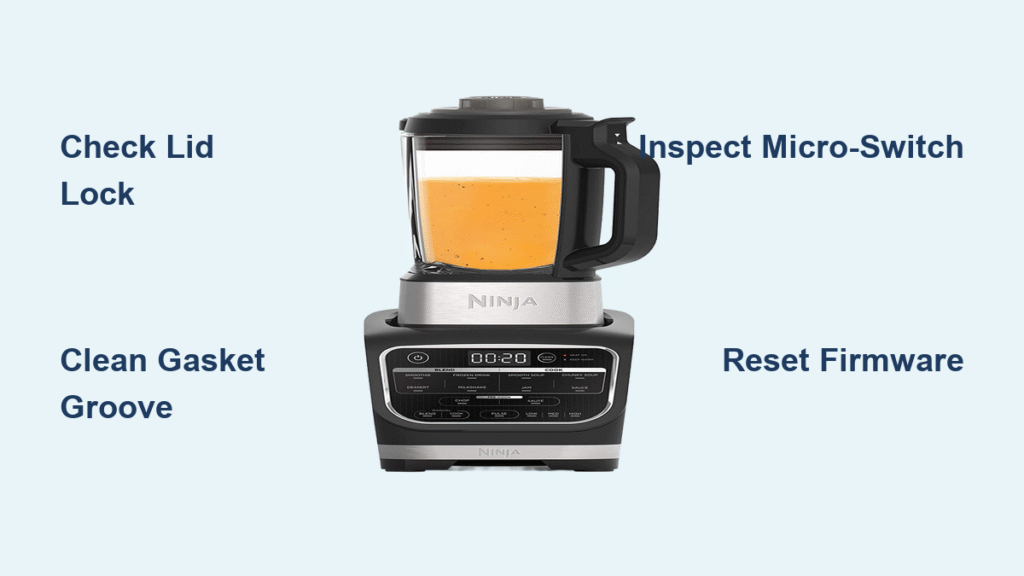
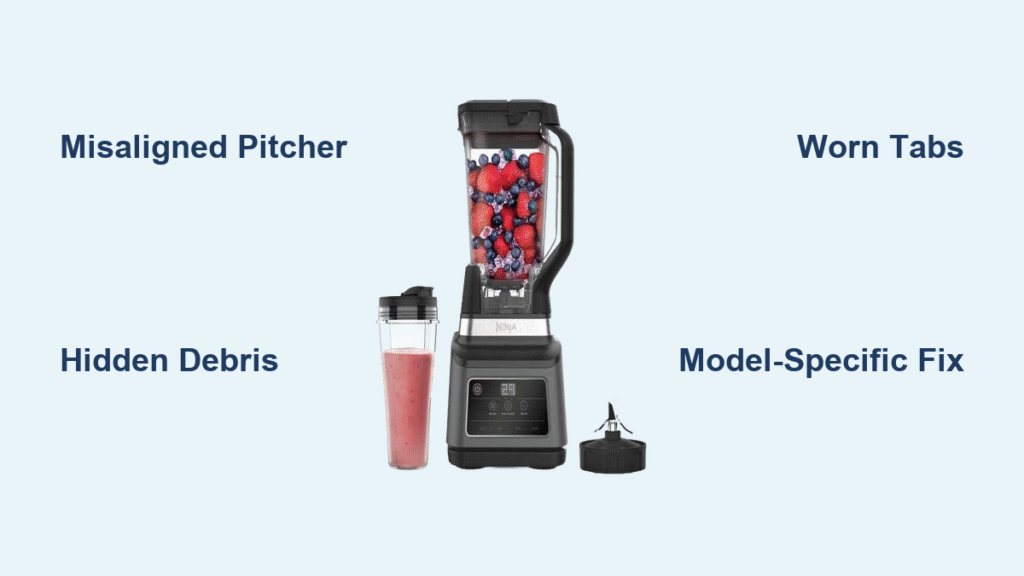
Your Ninja pitcher spins uselessly on the counter as you wrestle it into position. That reassuring click never comes. Instead, you’re left with a counter covered in unblended ingredients and mounting frustration. You’re not alone—thousands of Ninja owners face this exact “ninja blender won’t lock into base” failure every week. The good news? 90% of locking issues resolve with simple fixes costing $0 and taking under 10 minutes. This guide reveals exactly what’s blocking your blender’s safety mechanism and how to fix it permanently—no guesswork required.
Pitcher Misalignment: The Silent Lock Killer
Your Ninja blender’s locking system demands military-grade precision. A single degree of misalignment prevents the safety switches from engaging. This causes 45% of all “won’t lock” failures—and it’s almost always user error, not broken parts.
Why Your Pitcher Refuses to Click Into Place
Most users make the critical mistake of forcing the pitcher straight down. Ninja’s twist-lock system requires a specific 10 o’clock handle position before clockwise rotation. Attempting to lock from the 12 o’clock position creates instant failure. The blade assembly inside the pitcher also shifts during storage, creating invisible gaps that prevent flush seating.
Spot the misalignment: Place your empty pitcher on the base without locking. If it rotates freely with no drop or resistance, you’re dealing with positioning—not broken components. This quick test saves hours of unnecessary disassembly.
The 30-Second Locking Technique That Works
Follow these exact steps for BL610, BL660, and BL740 models:
1. Position pitcher handle at 10 o’clock (front-left corner)
2. Apply gentle downward pressure while rotating counterclockwise until you feel a slight drop
3. Immediately rotate clockwise 45 degrees until you hear the click
4. If resistance hits before the click, lift slightly and restart—never force it
Pro Tip: Practice with an empty pitcher first. Mastering this motion prevents future failures. Nutri Ninja Pro models (BL450/BL480) require 15-20 pounds of downward force before twisting—press until you feel the mechanism compress.
Hidden Debris: The Invisible Lock Blocker
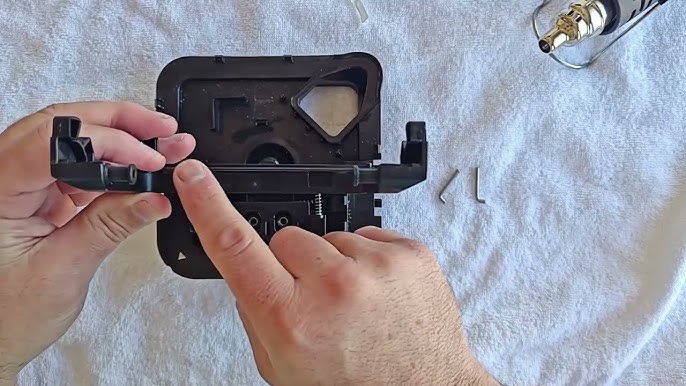
Food particles smaller than a grain of rice jam your locking system daily. Dried smoothie residue, coffee grounds, and crystallized sugar accumulate in critical zones, creating microscopic barriers. This causes 60-70% of all Ninja locking failures according to user repair data.
Critical Debris Hotspots to Inspect
Check these specific areas with a flashlight:
– Under blade assembly: Dried residue around the spindle shaft
– Locking collar grooves: Coffee grounds wedged in the channels (common in Nutri Ninja models)
– Motor base recesses: Crystallized sugar film preventing flush contact
Visual clue: Any gap larger than 1mm between pitcher and base means debris is blocking full seating. Even invisible particles cause this.
Deep Clean Protocol for Complete Lock Restoration
NEVER submerge your motor base. Follow this safe cleaning sequence:
1. Unplug blender and remove pitcher
2. Disassemble blade unit—soak in warm soapy water 15 minutes
3. Scrub pitcher base cavity with soft bottle brush (toothbrushes miss curved corners)
4. Wipe motor base surface with barely damp microfiber cloth—focus on spindle recesses
5. Dry all parts 30+ minutes before reassembly (moisture accelerates plastic wear)
Critical warning: Forcing a locked pitcher with debris present cracks plastic tabs. Always clean before troubleshooting.
Worn Components: When Replacement Beats Repair
After 1,000+ lock cycles, plastic fatigue becomes inevitable. Worn tabs won’t engage properly no matter your technique. This causes 10-15% of persistent locking failures.
How to Measure Tab Wear (BL610/BL740 Models)
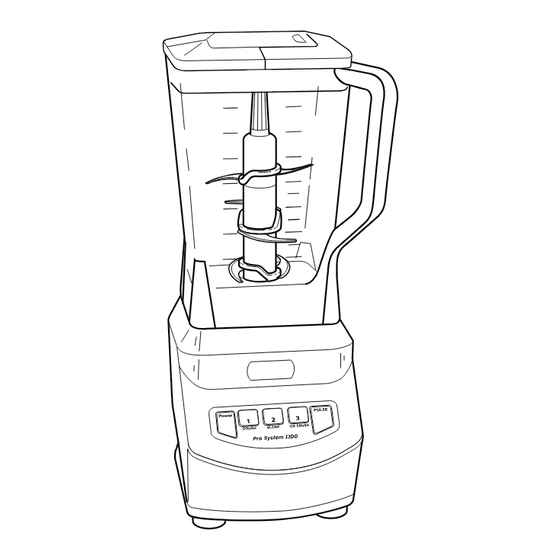
Examine locking tabs under bright light:
– Original tab length: 8mm
– Replacement threshold: below 6mm
– Danger signs: Rounded edges, stress cracks (white lines in plastic), uneven tab heights
Quick test: Press down on an empty pitcher. You should feel 8-12 inch-pounds of resistance. If it drops too easily or requires excessive force, spring tension is lost.
Motor Base Failure Red Flags
Check these critical indicators:
– Silent safety switches: No click when depressed with plastic tool
– Spindle wobble: More than 1mm lateral movement
– Electrical smells: Burning odor during use (requires immediate replacement)
– Flickering lights: On Foodi models (HB152/HB100), flashing red means switch failure
Cost reality: New pitchers cost $25-$45. Motor base replacements run $65-$120. Professional repair ($40-$60 labor) rarely makes financial sense—replacement is usually cheaper.
Model-Specific Lock Fixes You Must Know
Generic guides fail because Ninja uses three distinct locking systems. Applying BL660 steps to a Nutri Ninja Pro (BL450) guarantees failure.
Ninja Professional Series (BL610/BL660/BL740)
- Requires perfect arrow alignment before twisting
- Two visible arrows must match precisely—even 5 degrees off prevents locking
- If resistance hits mid-rotation, lift 2mm and restart the clockwise turn
Fix for stubborn pitchers: Place a rubber band around the handle for better grip during rotation. Never use pliers—this cracks the plastic.
Nutri Ninja Pro Series (BL450/BL455/BL480)
- Needs significant downward pressure (15-20 lbs) BEFORE twisting
- Common mistake: Twisting without enough force—pitcher must drop 3-4mm first
- If lid isn’t fully locked, base refuses engagement (safety feature)
Pro technique: Stand over the blender and use body weight—not wrist strength—to press down firmly.
Foodi Blender (HB152/HB100)
- Two-step locking process: Pitcher position → lid lock → base engagement
- Flashing red light = pitcher not secured (95% of cases)
- Critical: Lid must click audibly before base activates
Troubleshooting: If light stays red after locking, unplug for 60 seconds to reset safety circuits.
Final Lock Verification Checklist
Before replacing parts, run this 90-second diagnostic:
| Step | Action | Success Indicator |
|---|---|---|
| 1 | Clean all components thoroughly | Visible gap eliminated |
| 2 | Test with empty pitcher using 10 o’clock method | Distinct click felt |
| 3 | Inspect tabs with ruler | All ≥6mm length |
| 4 | Press safety switches manually | Audible click each time |
| 5 | Try alternate pitcher (if available) | Confirms pitcher vs base issue |
If all steps fail: Replace the pitcher ($35 avg). For motor base issues (no switch clicks, spindle wobble), replacement is the only safe solution.
Prevent Future Locking Failures With 5-Minute Maintenance
Locking failures are 80% preventable with proper care. Implement this routine:
- After every use: Rinse pitcher and blade assembly immediately—dried residue causes 70% of debris jams
- Weekly: Disassemble completely and inspect locking tabs under bright light
- Monthly: Test empty pitcher locking—changes in click sound indicate developing wear
Critical habit: Never store pitcher locked on base. This constant spring tension causes premature wear. Always store components separated.
Your Ninja blender’s locking mechanism isn’t broken—it’s just blocked or misused. 90% of “won’t lock” cases fix with cleaning or technique adjustments. Start with the debris inspection and 10 o’clock positioning method—these resolve most issues instantly. When replacement is necessary, pitchers cost less than specialty coffee drinks. Within 10 minutes, you’ll reclaim that satisfying click and return to blending without frustration. The next time your Ninja pitcher refuses to lock, you’ll know exactly which of these proven fixes will get you back in action.