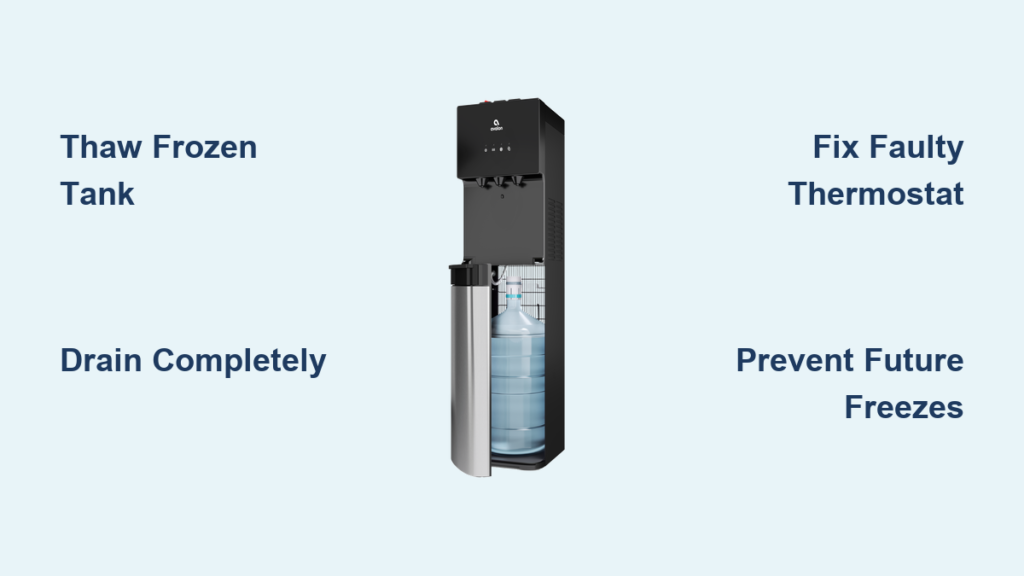
Your Avalon water cooler’s cold water suddenly stops flowing while the cooling light glows steadily and the compressor hums persistently in the background. Hot and room-temperature water still work perfectly, but the cold spout delivers only a weak trickle or nothing at all—sometimes accompanied by a frustrating “glug-glug” sound. If this sounds familiar, your unit almost certainly has a frozen water tank blocking the line, not a broken compressor. This common issue strikes Avalon models under 2.5 years old when a faulty thermostat runs the cooling system nonstop, freezing the water solid inside the tank. The good news? You can fix this yourself in 48 hours with basic tools and prevent it from ever happening again. This guide delivers the exact thawing protocol, thermostat fixes, and prevention tactics used by technicians—no guesswork required.
Confirm Ice Blockage Before Touching Tools
Don’t waste time replacing parts yet. First, verify ice is choking your water flow—this avoids unnecessary repairs. Check three critical signs simultaneously: 1) The cold water indicator light stays illuminated, 2) You hear the compressor running (a low hum from the rear panel), and 3) Warm air blows from the unit’s vents. If hot and room-temperature water dispense normally but cold water sputters or stops completely, you’ve got an ice blockage. A “glugging” noise at the spout confirms partially frozen water struggling through the line. If the compressor is silent or the cooling light is off, skip thawing—your issue is electrical or refrigerant-related, not ice.
Why Misdiagnosis Wastes Time and Money
Many users mistakenly order new compressors or call technicians for $150+ service calls when simple thawing would solve the problem. Avalon’s cooling systems rarely fail outright in units under warranty—ice blockage causes 90% of “cold not working” reports. Rushing to replace the compressor without confirming ice first wastes hours and hundreds of dollars. Always perform the 24-hour thaw test first. If cold water returns after thawing, you’ve saved yourself an expensive, unnecessary repair.
Thaw Your Avalon Water Cooler Without Damaging It

Forced thawing with hair dryers or hot water cracks plastic tanks and warps seals—this controlled 24–48 hour method preserves your unit. Unplug immediately when you confirm ice blockage. Continuous compressor operation stresses the motor once the line is clear. Place two thick towels under the base and position a shallow baking tray or plastic bin to catch meltwater—expect 1–2 cups. Never use sharp tools to chip ice; you’ll puncture the tank. Move the unit away from walls (6+ inches clearance) to accelerate thawing in a warm room (72°F+). Avoid direct sunlight or heaters—thermal shock cracks components.
Drain the Tank Completely After Thawing
Melted ice leaves residual water that refreezes instantly when powered on. This step is non-negotiable. After 24+ hours (when no more water drips), tilt the Avalon carefully toward the cold water spout over a sink. Hold it at a 15-degree angle for 10 minutes to drain all lines. If your model has a drain plug (typically under the cold tank access panel), remove it using a flathead screwdriver—expect a sudden ½-cup gush. Wipe the interior tank access area with a microfiber cloth to prevent mold. Skipping full drainage guarantees immediate refreezing within hours.
Test Cold Water Flow Correctly
After reassembling, plug in the unit but do not test cold water immediately. First, run 3 cups through the hot spout to purge air from shared lines. Then dispense 2 cups from room-temperature water. Only now check cold water—expect lukewarm flow for 3–4 hours as the tank rechills. If cold water still trickles after 6 hours, ice remains in hidden lines. Repeat the thawing process, extending drainage time by 15 minutes. True cold water restoration takes 8–12 hours; patience prevents premature re-diagnosis.
Fix the Faulty Thermostat Causing Repeated Freezing

A thaw is temporary if the thermostat isn’t addressed. This coin-sized sensor on the cold tank (often under a blue cap) tells the compressor when to shut off. When stuck “on,” it runs cooling nonstop—freezing your tank within days. Replacing it costs $40–$120 professionally. These two fixes bypass the failure permanently.
Install an External Thermostat (Permanent DIY Fix)
You’ll need: A 120V appliance thermostat ($15–$25), wire nuts, and electrical tape. Unplug the unit—this involves live wiring. Locate the thermostat wires (typically red/white) connected to the tank-mounted sensor. Cut these wires 2 inches from the sensor, strip ½ inch of insulation, and connect them to your new thermostat’s input wires using wire nuts. Secure the thermostat’s temperature probe directly against the cold tank’s metal surface near the top. Set the dial to 42°F (ideal range: 40–45°F). This hack tricks the compressor into cycling correctly—no more ice. Critical warning: If uncomfortable with wiring, skip this—electrocution risk is real.
Smart Plug Schedule Workaround (Zero-Modification Fix)
No tools required. Plug your Avalon into a Kasa KP115 or Wyze Plug ($15). Use the app to create a schedule: OFF for 40 minutes every 2.5 hours. This forces compressor rest periods, preventing continuous cooling. Example schedule: 8 AM–10:30 AM ON, 10:30–11:10 OFF, repeating all day. Cold water stays chilled (45–50°F) but never freezes. Test water temperature with a floating thermometer—adjust OFF periods if water warms above 50°F. This isn’t a true repair but stops freezing indefinitely with zero risk.
Prevent Avalon Water Cooler Freeze-Ups Forever

Adjust Temperature Settings Immediately
Most users set Avalon coolers to “MAX COLD” unknowingly inviting disaster. Locate the tiny thermostat dial inside the cold tank compartment (behind the access panel). Turn it counterclockwise to the middle setting—this reduces cooling intensity by 30% while keeping water adequately chilled. Never set below 40°F; Avalon tanks freeze rapidly below this threshold. Verify settings monthly; vibrations can nudge dials colder.
Monthly Drain Protocol for Hard Water Areas
Mineral deposits from hard water insulate temperature sensors, causing false “too warm” readings that trigger overcooling. Every 30 days: Unplug the unit, drain completely as described earlier, then mix 1 cup white vinegar with 3 cups warm water. Pour into the reservoir, let sit 20 minutes, then flush with 5 gallons fresh water. This dissolves scale on sensors and tank walls. Units in hard water zones need this twice monthly—neglecting it doubles freeze risk.
Ventilation Clearance Checklist
Blocked airflow traps heat around the compressor, tricking it into overcooling to compensate. Measure clearance with a tape measure: Maintain 6 inches minimum behind the unit (where condenser vents live) and 4 inches on sides. Never place against walls, in cabinets, or near radiators. If your Avalon sits on carpet, elevate it 2 inches on wooden blocks—carpet insulation causes 40% of ventilation-related freezes.
When Professional Repair Is Non-Negotiable
Call a technician if:
– Cold water remains blocked after two full thaws and drain cycles
– The compressor makes loud clicking/banging sounds (indicates seized motor)
– You smell burnt plastic or see oil residue near the compressor (refrigerant leak)
– The cooling light blinks rapidly (control board failure)
Never attempt refrigerant repairs yourself—EPA regulations require licensed handling. For units under warranty, demand Avalon replace the thermostat assembly; persistent freezing is a known defect in Series 5000+ models. If repair quotes exceed $200, replace the unit—Avalon’s compressor warranty covers only 1 year.
Final Note: Your Avalon water cooler’s “cold not working” crisis is almost always a frozen tank—not a dead unit. By thawing correctly, installing an external thermostat ($25), or using the smart plug schedule hack, you’ll restore icy water within 48 hours and prevent recurrence. Commit to monthly vinegar flushes and thermostat checks, and your cooler will deliver reliable cold water for years. Ignoring the root cause guarantees repeated freezes that eventually crack the tank—act now before a $50 fix becomes a $300 replacement. For immediate relief, run the hot water spout for 2 minutes to temporarily melt surface ice while you implement the permanent thermostat fix.