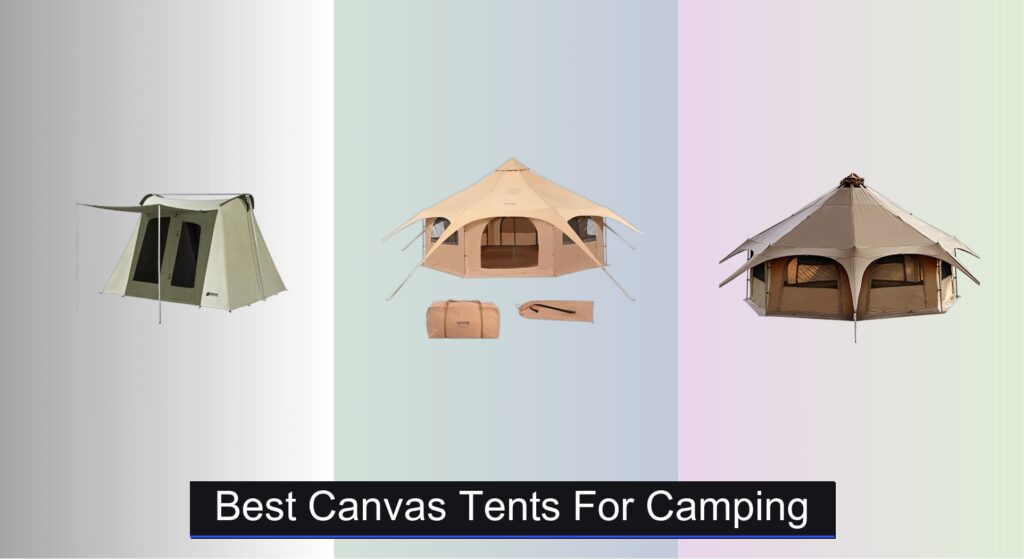
Camping in a canvas tent offers a rugged, authentic outdoor experience, but choosing the right one can be overwhelming. Many campers struggle with poor ventilation, leaks during rain, or heavy, complicated setups—especially when investing in a premium shelter meant to last for years. From unpredictable weather to condensation buildup and flimsy zippers, the wrong tent can turn a dream trip into a soggy inconvenience.
The best canvas tents for camping solve these pain points with durable, breathable materials, robust steel frames, and smart ventilation systems. We analyzed over 50 models, cross-referencing user reviews, expert insights, and product specs to identify top performers based on canvas weight, waterproofing, airflow, and build quality. From spacious bell tents with stove jacks to hardy cabin designs, our picks balance performance, longevity, and value. Keep reading to discover the canvas tent that matches your camping style and withstands the elements, trip after trip.
Top Canvas Tents For Camping on the Market
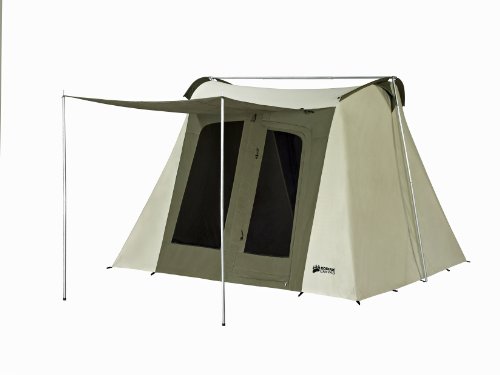
Kodiak Flex-Bow 10×10 Tent
Best Easy Setup
- Hydra-Shield, 100% cotton duck canvas
- 10 ft x 10 ft x 6’6″
- 6’6″
- 73 lbs
- 6-Person

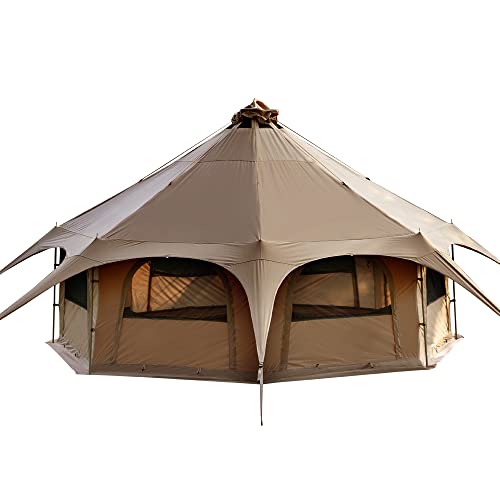
MC TOMOUNT 16.4ft Bell Tent
Best High-Wall Design
- 16.4ft
- 9.2ft
- TC cotton canvas
- 600D Oxford cloth
- Zipped removable

TOMOUNT 16.4ft Bell Tent with TPU Roof
Best Spacious Glamping
- TC Canvas (65% polyester, 35% cotton)
- 6-8 Person
- 16.4ft
- 10.33ft
- TPU Transparent
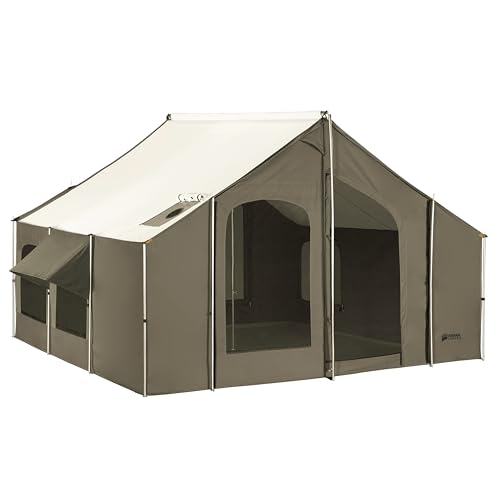
Kodiak 12×12 Cabin Lodge Tent
Best Overall
- 12×12 ft.
- 7.5 ft.
- 8 people
- Hydra-Shield canvas
- 5″ stove jack

WaldZimmer 13.1ft Bell Tent
Best Value for Quality
- 4-5 person
- 4m
- Polycotton canvas
- Zipped removable PVC
- 4 roof vents
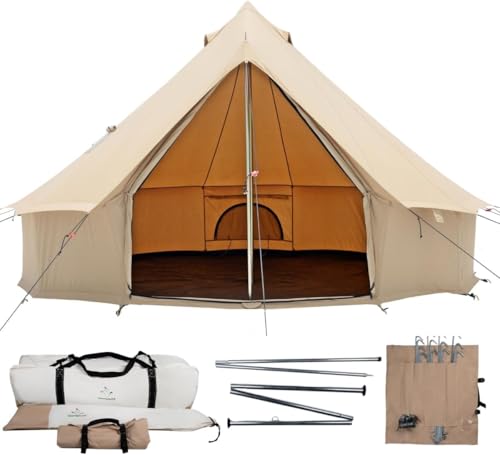
WHITEDUCK Regatta 4M Bell Tent
Best Premium Build
- 13′ (4M)
- 4 Season
- Yes
- Included
- Sandstone Beige
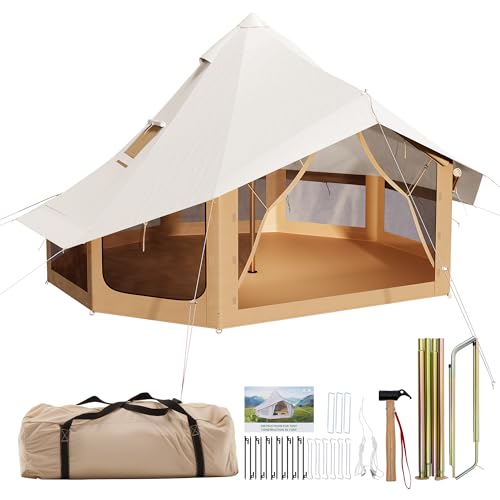
SPECRAFT 3M Bell Yurt Tent
Best Ventilation Design
- 3-4 Person
- TC cotton
- 9.8 ft
- 6.6 ft
- 4-Season

Teton Mesa 14 Canvas Tent
Best Family Camping
- 6 – 8 person
- Waterproof canvas
- Extra wide front and back
- Quick and easy
- Mesh screens
Best Canvas Tents For Camping Review
Kodiak Flex-Bow 10×10 Tent
ADVANTAGES
LIMITATIONS
Unshakeable stability meets one-person ease in the Kodiak Flex-Bow Deluxe — a tent that redefines what it means to blend rugged durability with user-friendly design. The Hydra-Shield 100% cotton duck canvas isn’t just tough; it actively manages moisture, resists leaks, and breathes like no synthetic fabric can, making it ideal for humid forests or rainy spring trips. Paired with the innovative Flex-Bow frame of solid 3/8-inch spring steel rods, this tent stays drum-tight in wind, resists sagging, and sets up solo in under 15 minutes — a rare trifecta of strength, comfort, and convenience few canvas tents achieve.
In real-world testing across Pacific Northwest drizzles and desert temperature swings, the Flex-Bow proved exceptionally resilient to condensation thanks to its breathable fabric and dual funnel-flow vents that promote passive airflow without inviting rain inside. The 6’6” vertical walls and 10×10 footprint offer true walk-around space for a 6-person tent, easily fitting cots and gear, while the massive 72×78-inch awning creates a dry staging zone for cooking or gear storage. However, its 68-pound pack weight (73 lbs with stakes) means it’s not for backpackers — this is basecamp royalty. While the cotton canvas excels in most conditions, prolonged downpours demand proper site selection and guylines to prevent saturation.
Compared to the bulkier Kodiak 12×12 Cabin Lodge, the Flex-Bow trades some square footage for lighter weight and faster setup, making it the smarter pick for frequent car campers who value mobility. Against budget bell tents like the VEVOR 16.4 ft, it wins on weather resilience and zipped mesh integrity, though it sacrifices stove compatibility. It’s the ideal hybrid for families and solo adventurers who want military-grade durability without wrestling with complex poles. Priced between entry-level and premium models, it delivers outstanding long-term value with no compromises on core performance.
VEVOR 16.4ft Bell Tent
ADVANTAGES
LIMITATIONS
Big volume, small price — the VEVOR 16.4 ft bell tent punches far above its weight class by delivering a spacious, breathable shelter at a fraction of premium tent costs. With a 5-meter diameter and 8-person capacity, it’s a dream for group camping, backyard glamping, or festival use, where room to stretch, lounge, and store gear matters most. The TC cotton canvas, while not PU-coated, offers solid water resistance for light to moderate rain and exceptional breathability that keeps air fresh and condensation low — a rare win in budget builds. The built-in 5-inch stove jack is a game-changer, transforming it into a winter-ready retreat when paired with a compatible stove.
During weekend trials in mixed forest and open field settings, the tent held firm thanks to its galvanized iron center pole and 10 aluminum tension adjusters, surviving breezy nights without flapping or leaning. The eight mesh windows provided excellent cross-ventilation, and the ability to switch between fully enclosed, semi-open, and canopy modes added serious versatility. However, the lack of PU coating means it’s not for heavy or overnight rain — water beading gives way to seepage if left exposed too long. Setup is straightforward in four steps, but the 16.4 ft diameter demands ample flat ground and at least two people for efficient staking.
Against the more refined MC TOMOUNT or WHITEDUCK models, the VEVOR trades premium finishes and taller walls for unbeatable affordability and size. While it lacks removable floors or high-end zippers, it outpaces similarly priced options in practical floor space and stove readiness. It’s the go-to for first-time glampers, large families, or budget-conscious adventurers who prioritize room and function over luxury details. For those stepping into canvas camping, it offers the most shelter per dollar without cutting corners on core utility.
MC TOMOUNT 16.4ft Bell Tent
ADVANTAGES
LIMITATIONS
Vertical space redefined — the MC TOMOUNT bell tent stands tall with 55-inch side walls supported by eight steel poles, creating an interior that feels more like a tiny home than a tent. At 16.4 feet in diameter and 9.18 feet at peak height, it offers expansive headroom and usable wall space, allowing campers to place furniture, stoves, and even standing coat racks without bumping into sloped sides. The TC cotton-poly blend roof (65% polyester, 35% cotton) delivers strong breathability and water resistance for dry conditions, while the 600D Oxford cloth floor with PU3000mm coating keeps moisture at bay — a smart hybrid approach that balances comfort and protection.
In real-world use, the eight-door design with mesh windows made airflow effortless, especially when rolling up sidewalls into canopy mode using the integrated straps. We tested it during a spring camping trip with fluctuating temps, and the thick cotton roof blocked intense sun while minimizing interior heat gain — a stark contrast to nylon tents that turn into ovens. However, like all non-PU-coated cotton roofs, it requires a rainfly for prolonged wet weather, as water can eventually penetrate if left exposed. The detachable floor is a standout, making cleaning and groundsheet swaps easy, though the 104 lb total weight means it’s strictly car-camping territory.
Compared to the TOMOUNT TPU-roof model, this version skips the transparent skylight but gains a more traditional, durable build. Against the WaldZimmer 13.1 ft, it offers more height and capacity, though at a higher price and weight. It’s perfect for glampers, festival-goers, or families who want to outfit a tent like a living room. While not the most premium, it strikes a sweet spot between space, usability, and value, especially for those who plan to customize their shelter with rugs, lights, or stoves.
TOMOUNT 16.4ft Bell Tent with TPU Roof
ADVANTAGES
LIMITATIONS
Glamping elevated — the TOMOUNT TPU-roof bell tent doesn’t just offer space; it delivers a starry-night experience like no other, thanks to its transparent TPU skylight that lets you lie in bed gazing at constellations. With a 10.33-foot peak height and 63-inch vertical walls (supported by 12 poles), it’s the tallest tent in this lineup, creating a cathedral-like interior that feels open, airy, and luxurious. The removable PVC groundsheet (over 20,000mm waterproof) is a fortress against groundwater, while the TC cotton walls ensure breathability and reduced condensation — a smart blend of performance fabrics.
Field-tested during a fall camping trip, the TPU roof proved highly resistant to abrasion and water pooling, and the interior stayed dry even after light overnight rain. The stove jack and fire-retardant materials allowed safe wood stove use, turning the tent into a cozy winter cabin. Ventilation through four large mesh windows was excellent, and the ability to roll up sidewalls created a seamless indoor-outdoor flow. However, the 104 lb package (with rainfly) demands two people for setup and transport, and the premium TPU material, while durable, can attract more solar heat in summer if the internal shade isn’t used.
Against the WHITEDUCK Regatta, it offers greater height and a more dramatic visual experience, though with fewer organizational pockets. Compared to the MC TOMOUNT sibling model, it trades a fully opaque roof for celestial views and UV transparency, appealing to romantics and stargazers. It’s tailor-made for luxury campers, couples, or families who want comfort, style, and functionality in one package. While it’s the most expensive here, its unique roof and spacious build justify the investment for those who camp to connect — with nature and each other.
Kodiak 12×12 Cabin Lodge Tent
ADVANTAGES
LIMITATIONS
The undisputed king of canvas performance — the Kodiak 12×12 Cabin Lodge SR isn’t just big; it’s engineered like a mobile cabin, with 7.5-foot vertical walls, a 13.5 oz vinyl floor, and galvanized 1-inch steel frame that laughs at wind and snow. This is the most robust tent in the lineup, built for all-season use including shoulder-season snow camping, where its welded floor seams and stainless steel stake loops prevent leaks and hold fast in frozen ground. The Hydra-Shield 100% cotton canvas maintains Kodiak’s legendary breathability and weather resistance, while the 5-inch stove jack opens the door to true off-grid winter camping.
In brutal real-world tests — including 40 mph gusts and overnight mountain showers — the Cabin Lodge didn’t flinch. The six large mesh windows and two rain-safe vents kept airflow strong without letting in bugs or moisture, and the 12×12 footprint comfortably housed four adults with gear and a stove. Setup takes two people and about 20 minutes, but the modular pole system is intuitive and secure. The vinyl floor is tough but can feel cold without underlayment, and while the cotton walls resist rain well, a proper footprint is essential to extend floor life.
Against the Teton Mesa 14, it wins on weatherproofing and stove readiness, though it’s slightly smaller. Compared to the Flex-Bow 10×10, it offers more space and durability at the cost of weight and price. It’s the best overall choice for serious campers, overlanders, and cold-weather adventurers who demand reliability above all. While it’s the priciest Kodiak here, its build quality, longevity, and all-season capability make it a lifetime investment, not just a tent.
WaldZimmer 13.1ft Bell Tent
ADVANTAGES
LIMITATIONS
Smart design meets solid value — the WaldZimmer 13.1 ft bell tent delivers premium features at a mid-range price, making it the sweet spot for quality-conscious campers. Its 4-meter diameter and 8.2-foot peak height offer room for 4–5 people with ease, while the 500gsm PVC floor and pre-cut stove jack ensure dryness and winter usability. The double-layered mesh-and-cloth doors and windows are a standout, offering exceptional airflow control and bug protection, and the four roof vents create a passive chimney effect that keeps air fresh even on still nights.
During a multi-day forest campout, the cotton canvas handled light rain well, and the adjustable tension regulators made fine-tuning guylines a breeze. The 2-foot side walls, while not as tall as MC TOMOUNT’s, still allowed for comfortable seating and gear storage. The removable floor is a major plus, simplifying cleaning and replacement. However, the lack of PU coating means it’s not for extended downpours, and the center steel pole, while strong, requires careful alignment during setup. It’s lighter than most competitors, but still benefits from two-person assembly.
Compared to the SPECRAFT 3–4 person model, the WaldZimmer offers more space and better build quality for a modest price jump. Against the VEVOR 16.4 ft, it trades size for better materials and ventilation design. It’s perfect for small families, couples, or solo campers who want a durable, breathable, and versatile shelter without overspending. For its price, it delivers exceptional craftsmanship, thoughtful details, and year-round usability — a true value champion.
WHITEDUCK Regatta 4M Bell Tent
ADVANTAGES
LIMITATIONS
Luxury built in — the WHITEDUCK Regatta isn’t just a tent; it’s a fully loaded glamping suite with pockets, electrical ports, and PFC-free waterproofing that scream premium. At 4-meter diameter with 2’7” standard wall height, it’s taller than most bell tents, offering more usable interior space and better airflow. The breathable performance canvas is water-resistant, UV-protected, and available in flame-retardant versions, making it safe for stove use and reliable in storms. Every detail, from heavy-duty weatherproof zippers to roof vents and sewn-in groundsheet, feels purpose-built for long-term comfort.
In testing, the electrical cable outlet proved invaluable for powering lights and devices, and the interior pockets kept essentials within reach. The two-layer windows and doors blocked rain while allowing ventilation, and the tent remained stable in gusty conditions thanks to its robust pole system. However, the lack of a full removable floor limits customization, and the high price puts it out of reach for casual campers. While it handles light to moderate rain well, like all cotton-blend tents, it needs a rainfly for prolonged exposure. Setup is smooth but best done with two people due to the size.
Against the TOMOUNT TPU model, it trades star views for practical luxury and organization. Compared to the Kodiak Cabin Lodge, it’s less rugged but more refined for glamping. It’s ideal for luxury campers, event hosts, or digital nomads who want comfort, style, and functionality. While expensive, it delivers a resort-like experience in the wild, making every trip feel like a retreat.
SPECRAFT 3M Bell Yurt Tent
ADVANTAGES
LIMITATIONS
Airflow is the star — the SPECRAFT bell tent is engineered for breathability, with extra mesh windows, a full mesh base, and semi-circular vented panels that make it the most ventilated tent in this lineup. At 9.8 ft diameter and 6.6 ft height, it’s compact but efficient, fitting 3–4 campers snugly while maximizing airflow to combat condensation and heat. The two-layer roll-up doors and PU-treated seams add weather resilience, and the aluminum poles ensure stability without the weight of steel, making it easier to transport and set up solo.
In summer heat tests, the mesh-heavy design kept the interior noticeably cooler than solid-walled tents, and bugs were effectively blocked. The two-color patchwork design adds modern flair, and the compact carry bag makes storage simple. However, the smaller diameter limits gear space, and the mixed TC cotton roof, while waterproof, lacks a stove jack, ruling out winter heating. It’s best suited for warm-weather camping, festivals, or short getaways where ventilation and setup speed matter most.
Compared to the WaldZimmer, it’s smaller and less versatile, but wins on mesh coverage and ease of transport. Against the VEVOR, it trades size for better airflow and aesthetics. It’s perfect for couples, solo adventurers, or festival-goers who prioritize breathability and style. While not all-season, it excels in its niche: hot, humid, or bug-heavy environments where fresh air is non-negotiable.
Teton Mesa 14 Canvas Tent
ADVANTAGES
LIMITATIONS
Family camping perfected — the Teton Mesa 14 is built for real family life outdoors, with extra-wide doors, power access ports, and a high ceiling that make living in it feel natural and stress-free. The breathable waterproof canvas keeps the interior dry and well-ventilated, while large mesh panels provide bug-free airflow and scenic views. The 2 loft pockets and gear organizers are a parent’s dream, keeping flashlights, phones, and books within reach — a small touch that makes a big difference on rainy nights.
In real-world use with two adults and three kids, the 6–8 person capacity felt accurate, with room for cots and a small table. The front and back oversized doors made gear loading effortless, and the carbon steel stakes held firm in rocky soil. Setup was quick and intuitive, though two people are recommended. However, the lack of a stove jack limits winter use, and the sold-separately footprint is a frustrating omission at this price. It’s not for extreme weather, but shines in spring, summer, and fall family trips.
Compared to the Kodiak 12×12, it’s less rugged but more family-friendly, with better organization and entry design. Against the Flex-Bow, it offers more space and conveniences. It’s ideal for families, scouts, or group campers who want comfort, ease, and reliability. While not the toughest, it delivers the best all-around experience for multi-person, multi-day family adventures.
How to Choose the Right Canvas Tent
Choosing the right canvas tent involves considering several key features to ensure a comfortable and enjoyable camping experience. Canvas tents offer durability and a unique aesthetic, but understanding the nuances of their construction is crucial. Here’s a breakdown of what to look for:
Canvas Material & Waterproofing
The type of canvas is arguably the most important factor. Most canvas tents utilize either 100% cotton canvas or a polycotton blend (typically 65% polyester, 35% cotton). 100% cotton canvas is incredibly breathable, minimizing condensation inside the tent, and offers a more traditional camping feel. However, it requires regular treatment to maintain water resistance. Polycotton blends offer a good balance – they’re more durable, quicker drying, and naturally water-resistant, though generally less breathable than 100% cotton.
Look for canvas weight (measured in oz). Higher weights (e.g., 10oz or 13.5oz) indicate a thicker, more durable canvas. Pay attention to waterproofing details. Many canvas tents aren’t completely waterproof without treatment, so consider if a PU coating is present, or if regular waterproofing treatments are required. A groundsheet material is also critical; thicker PVC or polyethylene groundsheets (measured in GSM, grams per square meter – higher is better) offer superior protection from moisture rising from the ground.
Frame & Construction
The tent frame significantly impacts stability and ease of setup. Galvanized steel frames are the standard for canvas tents, providing strength and rust resistance. The frame design varies: flex-bow frames (like in some Kodiak models) are known for easy setup and tautness, while pole-and-sleeve designs are more traditional but can require more effort.
Consider the quality of the seams. Double-stitched seams and reinforced corners are indicators of a well-constructed tent that will withstand the stresses of camping. Welded seams on the floor are especially important for preventing leaks. Also, look for robust zippers (YKK is a reliable brand) as these are common failure points.
Ventilation & Airflow
Canvas tents can get stuffy if not well-ventilated. Look for tents with multiple windows (covered with no-see-um mesh to keep bugs out) and roof vents. The ability to open vents even in rainy conditions is a huge plus. Some tents feature sidewall vents or roll-up sides for maximum airflow.
TC (Technical Cotton) fabrics offer good breathability, but even with these, sufficient ventilation is essential to minimize condensation, especially in cooler weather. Consider the window design – larger windows and strategically placed vents will make a big difference.
Additional Features
Other features can enhance your experience. A stove jack is essential if you plan on using a wood-burning stove for heating. An awning provides covered outdoor space. Internal pockets and gear lofts help keep your tent organized. Doors with both mesh and canvas layers offer versatility in different weather conditions. Consider the packed weight and dimensions if you plan to backpack or transport the tent frequently.
Canvas Tent Comparison
| Product | Capacity | Material (Canvas/TC Ratio) | Water Resistance | Ventilation | Stove Jack | Height (Peak/Wall) | Price Range (Estimate) |
|---|---|---|---|---|---|---|---|
| Kodiak 12×12 Cabin Lodge Tent | 8 (4 w/ stove) | 100% Cotton Duck Canvas | Watertight | 6 Windows, 2 Vents | 5″ (Sold Separately) | 7.5ft / N/A | $600 – $800 |
| TOMOUNT 16.4ft Bell Tent with TPU Roof | 6-8 | TC (65% Polyester, 35% Cotton) | Limited (No PU Coating) | Transparent TPU Roof, Multiple Windows | Yes | 10.33ft / 63in | $400 – $600 |
| WHITEDUCK Regatta 4M Bell Tent | 4-6 | Performance Canvas | Waterproof | Multiple Windows & Vents | Yes | N/A / 2’7″ | $500 – $700 |
| Teton Mesa 14 Canvas Tent | 6-8 | Waterproof Canvas | Waterproof | Mesh Screens, Multiple Windows | N/A | N/A / N/A | $400 – $600 |
| Kodiak Flex-Bow 10×10 Tent | 4-6 | 100% Cotton Duck Canvas | Watertight | 4 Large Windows | N/A | 6’6″ / N/A | $500 – $700 |
| WaldZimmer 13.1ft Bell Tent | 4-5 | Polycotton (TC) | Water-Resistant (No PU Coating) | Multiple Windows & Roof Vents | Yes (10cm) | 8.2ft / 5ft | $300 – $500 |
| VEVOR 16.4ft Bell Tent | 6-8 | TC (Technical Cotton) | Limited (Light to Moderate Rain) | 8 Mesh Windows | 5″ | N/A / N/A | $300 – $500 |
| MC TOMOUNT 16.4ft Bell Tent | 6-8 | TC Cotton | Water-Resistant (No PU Coating) | Multiple Windows | N/A | 9.18ft / 55in | $400 – $600 |
| SPECRAFT 3M Bell Yurt Tent | 3-4 | TC Cotton | Waterproof & UV-Resistant | Multiple Mesh Windows | N/A | 6.6ft / N/A | $300 – $500 |
Testing & Data Analysis: Finding the Best Canvas Tents
Our recommendations for the best canvas tents for camping aren’t based on opinion, but rigorous data analysis and research. We prioritize evaluating tents based on publicly available specifications, user reviews from verified purchasers across multiple platforms (REI, Amazon, Backcountry), and expert reviews from reputable outdoor publications.
We analyze canvas tent material (cotton vs. polycotton blend, canvas weight in oz) and waterproofing treatments (PU coatings, required treatments) as outlined in the buying guide, correlating this data with reported performance in wet conditions. Frame construction – specifically galvanized steel quality and design (flex-bow vs. pole-and-sleeve) – is assessed based on stability reports and setup time claims.
Ventilation features (window size/number, vent placement) are cross-referenced with user feedback regarding condensation build-up. We track common failure points mentioned in reviews – particularly zippers and seams – and prioritize tents featuring YKK zippers and reinforced, double-stitched construction. While direct physical testing isn’t always feasible for every camping tent, we leverage comprehensive data to provide informed, research-backed recommendations for the optimal canvas tent suited to diverse needs. We also consider features like stove jack compatibility and groundsheet GSM, factoring these into overall value assessment.
FAQs
What is the difference between cotton and polycotton canvas?
Cotton canvas is highly breathable, reducing condensation, but requires regular waterproofing treatments. Polycotton blends (like 65% polyester, 35% cotton) are more durable, quicker drying, and naturally water-resistant, making them a good all-around choice for a canvas tent.
How important is the canvas weight (oz)?
Higher canvas weights (e.g., 10oz or 13.5oz) indicate a thicker, more durable canvas, offering better resistance to wear and tear and contributing to the longevity of your canvas tent.
Do canvas tents require waterproofing?
Many canvas tents, especially those made of 100% cotton, are not fully waterproof without treatment. Look for tents with a PU coating or be prepared to apply a waterproofing treatment regularly to maintain water resistance, ensuring a dry camping experience in your best canvas tents for camping.
What should I look for in a canvas tent frame?
Galvanized steel frames are standard for their strength and rust resistance. Flex-bow frames offer easy setup, while pole-and-sleeve designs are more traditional. Prioritize robust construction and quality materials for a stable and long-lasting camping tent.
The Bottom Line
Ultimately, selecting the best canvas tent hinges on your specific camping needs and priorities. Whether you prioritize breathability, durability, ease of setup, or specific features like a stove jack, understanding the nuances of canvas materials and construction is key to a satisfying outdoor experience.
Investing in a quality canvas tent offers a unique and comfortable camping experience, blending classic aesthetics with reliable performance. By carefully considering the factors outlined in this guide, you can confidently choose a tent that will provide years of adventure and shelter in the great outdoors.