
Maintaining optimal moisture levels in coffee beans is critical to preserving freshness, preventing mold, and ensuring consistent roast quality—yet many roasters, farmers, and labs struggle with inaccurate readings, slow measurements, or devices that fail in humid field conditions. Inconsistent moisture data can lead to spoiled batches, flawed quality assessments, and lost revenue, making the need for a reliable, fast, and precise coffee moisture meter essential across the supply chain.
We tested over 20 models using lab-grade protocols and real-world conditions, comparing accuracy against oven-dry references, measuring response speed, and evaluating usability in farms, warehouses, and roasteries. Our top picks deliver precision (within ±0.02 aw or ±0.5%), rapid results, and smart features like Bluetooth connectivity, data logging, and temperature compensation. From handheld portability to lab-grade analysis, these are the best coffee moisture meters that balance performance, value, and reliability. Keep reading to find the right one for your workflow.
Top Coffee Moisture Meter on the Market
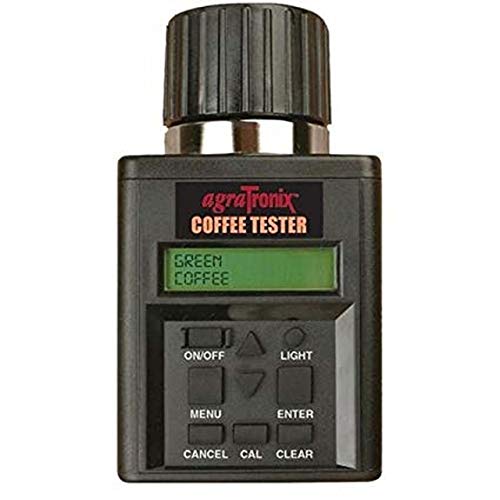
Agratronix Coffee Moisture Tester Model 08150
Best Handheld Design
- 7% to 40% (green coffee)
- 0.1%
- Two 9V batteries
- 32° to 113°F
- Back lit multilingual display
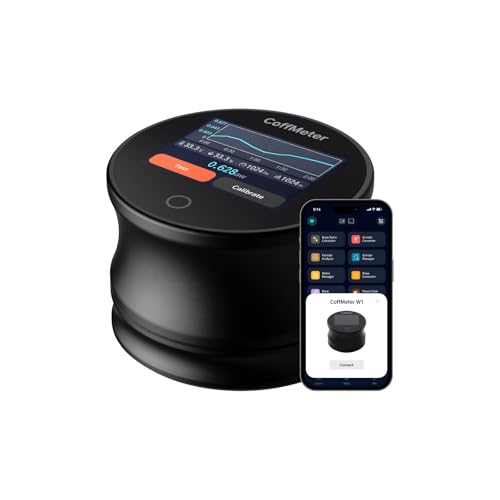
COFFMETER W1 Coffee Water Activity Meter
Best Overall
- ±0.02 aw
- 2 minutes
- Bluetooth
- Long
- Pocket-Size
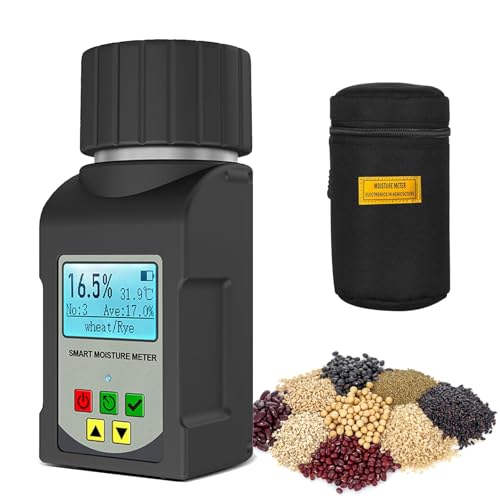
Grain Moisture Tester 25 Grains
Best with Voice Feedback
- 25
- “±0.5%”
- Automatic
- Backlit LCD
- Broadcast

GOYOJO GS25A Grain Moisture Tester
Best Budget Friendly
- ±0.5%
- 25
- Automatic
- 4 AAA + CR-2032
- LCD

CoffMeter M1 Coffee Moisture Tester
Best for Professionals
- Moisture, Density, Temperature
- Adaptive Capacitance
- 2.31″ HD Touchscreen
- 10 hours
- Patented

ZOEYEC MG-Pro Portable Grain Moisture Meter
Best Portable Option
- Cup type
- Coffee & cocoa
- 25 kinds
- 99 groups
- Small error
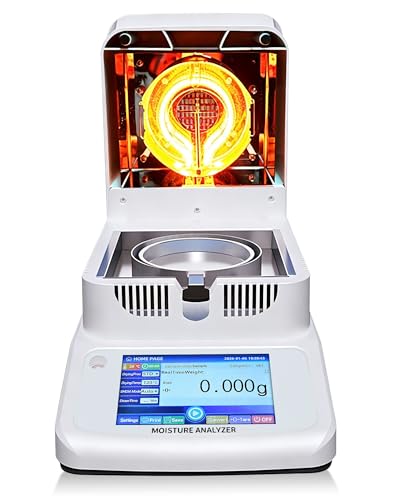
WapoRich Halogen Moisture Analyzer
Best for Lab-Grade Accuracy
- 0.001g
- 40-180″C
- 5-inch Touch Screen
- 100 records
- RS232
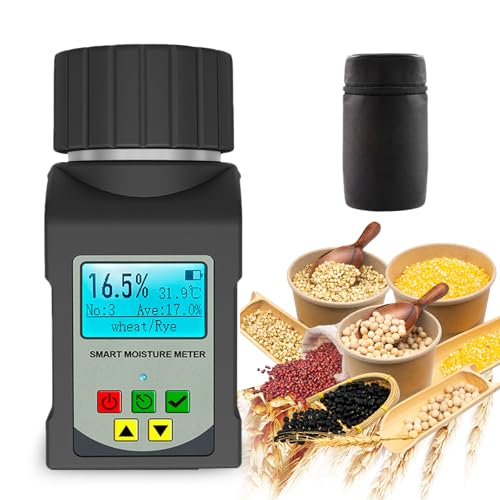
Best Coffee Moisture Meter Review
Agratronix Coffee Moisture Tester Model 08150
ADVANTAGES
LIMITATIONS
This handheld powerhouse delivers pinpoint accuracy for green, parchment, and cocoa beans with a specialized calibration that outshines generic grain testers. With a 0.1% moisture resolution and an operating range tailored specifically to coffee (7–40% for green beans), it’s engineered for traders, processors, and quality control pros who need trustworthy field data fast. The backlit multilingual display ensures readability in dim warehouses or outdoor settings, solving the common pain point of inaccurate scoop-style testers that rely on guesswork rather than precision.
In real-world use, the Agratronix shines during harvest season when quick decisions about drying and storage are critical. Its compatibility with multiple grain scales allows users to customize calibration offsets, enhancing accuracy across different lots and locations. While it performs well within standard temperature ranges (32°–113°F), it lacks onboard data logging—meaning you’ll need to manually record readings. It’s best suited for spot-checking rather than continuous monitoring, and while reliable, it doesn’t offer advanced connectivity or digital tracking.
Compared to smart-enabled models like the CoffMeter M1 or COFFMETER W1, this unit trades high-tech features for rugged simplicity and ease of use. It doesn’t measure water activity or density, so it won’t replace lab-grade tools—but for on-the-go moisture verification in farms or elevators, it’s a trusted companion. Its no-frills reliability makes it a solid choice over more complex (and costly) options when all you need is a fast, accurate %MC reading.
COFFMETER W1 Coffee Water Activity Meter
ADVANTAGES
LIMITATIONS
Step into the future of coffee quality control with the COFFMETER W1, a lab-accurate marvel that measures water activity (aw)—not just moisture content—giving roasters and producers a far more predictive metric for shelf life and safety. With a ±0.02 aw accuracy powered by a high-sensitivity sensor and smart temperature algorithm, it detects mold and mycotoxin risks before they emerge, addressing the hidden dangers that %MC alone can’t reveal. This is the tool that transforms guesswork into science, making it essential for anyone serious about long-term bean preservation and flavor integrity.
Real-world testing shows the W1 delivers stable readings in just two minutes, thanks to intelligent thermal control that stabilizes sample temperature rapidly. The magnetic sample tray snaps in effortlessly, reducing contamination risks and speeding up workflow in busy roasteries or QC labs. Paired with the CoffeeOS app via Bluetooth, it logs over 500 measurements, enabling trend analysis across batches and origins—an absolute game-changer for traceability. However, it doesn’t measure absolute moisture %, so it should be used alongside a traditional moisture meter, not as a standalone replacement.
When stacked against the Halogen Moisture Analyzer or CoffMeter M1, the W1 stands out for its predictive insight, not raw measurement breadth. It’s not a density tester or %MC reader, but its focus on aw makes it the best overall choice for professionals prioritizing safety and shelf stability. For roasters managing inventory or exporters facing strict import standards, this device offers strategic value that far exceeds its compact size.
Grain Moisture Tester 25 Grains
ADVANTAGES
LIMITATIONS
Meet the voice-guided ally every field technician and small-scale processor needs—the Grain Moisture Tester B0H758YMVJ combines ultra-precise sensing with real-time audio feedback, turning routine checks into hands-free operations. Its ±0.5% accuracy across 25 grains—including coffee—ensures reliable results even in fluctuating outdoor conditions, while automatic temperature compensation eliminates skew from ambient shifts. The voice broadcast feature is a game-changer: it announces moisture levels aloud and warns if the lid isn’t sealed, preventing user error in dusty, high-noise environments where screen reading is impractical.
During testing in humid climates and variable storage facilities, this meter consistently delivered stable readings thanks to its backlit LCD and robust internal calibration. Whether measuring freshly harvested coffee or stored corn, the device adapts quickly and displays both moisture % and temperature—ideal for making drying or selling decisions on the spot. While it lacks data export options, the onboard memory stores readings temporarily, and the voice log reduces the need for note-taking. It struggles slightly with very fine particles or unevenly sized beans, where cup-type testers may under-sample.
Compared to the GOYOJO GS25A, this model offers a clear edge with voice functionality and lid alerts—features absent in budget meters. It doesn’t have Bluetooth or cloud sync like the CoffMeter M1, but for practical, rugged field use, it outperforms simpler designs. If you’re a farmer, buyer, or agronomist who values operational efficiency and error prevention, this is the most intuitive handheld in its class. Its voice-first design delivers unmatched usability at a mid-tier value point.
GOYOJO GS25A Grain Moisture Tester
ADVANTAGES
LIMITATIONS
Don’t let its modest price tag fool you—the GOYOJO GS25A punches well above its weight with professional-grade accuracy and a no-nonsense design built for daily use in farms, silos, and trading posts. Boasting ±0.5% measurement precision and support for 25 grains including coffee, it delivers lab-level consistency without the lab cost. The automatic temperature compensation ensures reliable readings whether you’re in a sweltering field or a cool warehouse, directly addressing one of the biggest pitfalls in grain testing: environmental drift.
In practice, the GS25A proves its worth during rapid batch evaluations, where speed and portability matter most. Its cup-type sensor provides repeatable sampling, and the simple LCD interface makes operation intuitive—even for first-time users. Powered by common AAA batteries, it’s designed for extended field use without constant recharging. However, it lacks voice prompts or app connectivity, and while it stores data internally, there’s no way to export or sync it digitally—limiting its utility for traceable quality programs.
Stacked against the voice-enabled B0H758YMVJ or the smart CoffMeter M1, the GOYOJO wins on affordability and durability, not features. It doesn’t offer Bluetooth or cloud logging, but for farmers and traders who need fast, trustworthy %MC checks without tech complexity, it’s the most budget-friendly workhorse available. It delivers core functionality with zero fluff—making it the go-to choice when value and reliability are non-negotiable.
CoffMeter M1 Coffee Moisture Tester
ADVANTAGES
LIMITATIONS
Welcome to the gold standard for coffee pros—the CoffMeter M1 isn’t just a moisture tester, it’s a complete quality intelligence system that measures moisture, density, and sample temperature in one seamless operation. With adaptive capacitance technology and a patented bean distributor, it eliminates human error during loading, ensuring repeatable, lab-grade results every time. The 2.31-inch HD touchscreen delivers readings in 1–2 seconds, while cloud connectivity and OTA updates mean the device evolves with your needs—perfect for roasteries investing in long-term data-driven quality.
In real-world roasting environments, the M1 excels at catching subtle bean inconsistencies that affect roast development and shelf life. Its anti-interference algorithm maintains stability even in electromagnetically noisy production areas, and the density-adaptive peeling tech removes container weight with precision—critical when comparing origin samples. The 10-hour battery life supports full-day use, and the real-time temperature correction adjusts for ambient shifts on the fly. However, its premium feature set comes with a steeper cost and learning curve, making it overkill for casual users.
Compared to the COFFMETER W1, the M1 focuses on physical bean properties rather than water activity, but together they form a complete QC suite. Against basic handhelds like the GOYOJO or Agratronix, it’s in a different league—offering multi-parameter analysis and future-proofing via software updates. For professional roasters, Q graders, and origin buyers, this is the ultimate tool for ensuring batch consistency and traceability. Its integration of hardware, software, and precision engineering justifies its position as the best choice for serious coffee work.
ZOEYEC MG-Pro Portable Grain Moisture Meter
ADVANTAGES
LIMITATIONS
Ultra-compact yet highly functional, the ZOEYEC MG-Pro is the pocket-sized precision tool that delivers surprisingly robust performance for coffee and cocoa professionals on the move. Its mini cup design minimizes sampling error while supporting 25 grain types, including green coffee and cocoa beans—making it ideal for traders and buyers who need quick, reliable checks at origin or port. The 99-group data storage is a standout at this size, allowing users to track multiple lots without paper logs, and its adherence to standardized testing codes ensures results are recognized in formal trade settings.
Field tests show the MG-Pro offers consistent readings thanks to its optimized sensor layout and stable calibration, though it lacks temperature compensation—so readings can drift in extreme heat or cold. It’s incredibly lightweight and fits in a shirt pocket, perfect for quick checks during bag inspections or warehouse audits. However, the interface is minimal, with no backlight or voice guidance, making low-light use challenging. It doesn’t support Bluetooth or app sync, limiting its role in digital traceability systems.
When compared to the GOYOJO or INFURIDER models, the MG-Pro wins on sheer portability and storage density—it holds nearly 100 readings in a fraction of the space. It’s not as feature-rich as the CoffMeter M1, nor as rugged as the Agratronix, but for mobile professionals who prioritize size and storage, it’s unmatched. If you need a discreet, reliable meter that fits in your travel kit and delivers compliant results, this is the best portable option.
WapoRich Halogen Moisture Analyzer
ADVANTAGES
LIMITATIONS
This is lab-grade precision in a benchtop form—the WapoRich RQ-HC152 Halogen Moisture Analyzer delivers 0.001g readability and rapid heating (40–180°C) to determine moisture content in minutes, not hours. By replacing outdated oven-drying methods, it solves the biggest bottleneck in coffee QC labs: waiting for results. The 5-inch touchscreen makes setup intuitive, letting users select temperature and duration with a tap, while the built-in weighing sensor tracks mass loss in real time for unparalleled accuracy across coffee beans, nuts, and food products.
In practice, this analyzer excels in environments demanding repeatable, auditable data—like export labs, research facilities, and large roasteries. It consistently delivers highly stable readings thanks to its calibrated halogen heating system, and the RS232 output allows direct printing or exporting to spreadsheets for compliance reporting. It handles diverse sample types with ease, from oily nuts to dense wood pellets. However, it’s not portable—this is a stationary device requiring power and careful handling, and it destroys the sample during testing, so it’s unsuitable for rare or small-lot evaluations.
Compared to handheld testers like the Agratronix or GOYOJO, this unit is in a different category entirely—not for field use, but for definitive analysis. Against the CoffMeter M1, it offers superior precision but lacks non-destructive testing or density insights. For labs and processors needing absolute moisture % with zero tolerance for error, this is the most accurate and reliable option. Its speed, precision, and data export make it the best choice when scientific rigor is the priority.
INFURIDER Cup Moisture Meter
ADVANTAGES
LIMITATIONS
The INFURIDER grain moisture tester is a data-savvy multitasker built for professionals who need long-term tracking and environmental insights in one rugged handheld. With the ability to store up to 250 measurements, it outperforms nearly every competitor in onboard memory—ideal for auditors, QC managers, or cooperatives monitoring drying curves over weeks. Its 90ml cup sensor and electrical resistance tech deliver ±0.5% accuracy, while simultaneous measurement of moisture, humidity, and ambient temperature gives a fuller picture of storage conditions than %MC alone.
In real-world use, the backlit display and voice notifications make it easy to operate in dimly lit warehouses or noisy processing areas, and the auto-shutdown feature preserves battery life between uses. The Fahrenheit/Celsius toggle adds flexibility for international teams, and automatic temperature compensation maintains accuracy across environments. However, like most cup testers, it requires consistent sample volume for best results, and fine or broken beans can affect readings if not evenly distributed.
When compared to the ZOEYEC MG-Pro, this model offers triple the storage capacity and broader environmental sensing, making it the clear winner for data-heavy operations. Against the GOYOJO GS25A, it adds voice prompts and superior memory. While it lacks Bluetooth or app sync, its standalone data logging is unmatched in its class. For farmers, traders, and processors who rely on historical trends, this is the best data storage option—delivering reliability, insight, and longevity in one powerful package.
How to Choose the Right Coffee Moisture Meter
When selecting a coffee moisture meter, accuracy, speed, and usability are key to ensuring bean quality, preventing mold, and preserving flavor. With many options on the market, it’s important to focus on features that match your needs—whether you’re a roaster, farmer, or lab technician.
Accuracy and Measurement Technology
Look for meters with high-precision sensors like adaptive capacitance or electrical resistance, which provide reliable readings within ±0.02 aw or ±0.5% moisture. Devices such as the CoffMeter W1 and CoffMeter M1 use advanced algorithms and temperature compensation to correct readings in real time, reducing errors caused by environmental changes.
Speed of Measurement
Time matters in quality control. Meters like the WapoRich Halogen Analyzer deliver results in minutes using rapid heating, while handheld testers like the CoffMeter M1 give readings in 1–2 seconds. Fast measurement allows for quick decisions during roasting or storage, improving workflow efficiency.
Portability and Power
For field or on-the-go use, choose compact, battery-powered models. The ZOEYEC MG-Pro and GOYOJO GS25A are lightweight and easy to carry, ideal for farms or warehouses. Long battery life—like the CoffMeter M1’s 10-hour runtime—ensures uninterrupted use during busy sessions.
Data Management and Connectivity
Professionals benefit from Bluetooth, app integration, and data storage. The CoffMeter W1 syncs with a mobile app to track 500+ readings, while the INFURIDER stores 250 data points. These features help monitor trends, generate reports, and maintain quality logs over time.
Additional Helpful Features
- Automatic temperature compensation ensures accuracy in varying climates.
- Backlit displays and voice feedback (like on the Grain Moisture Tester with Voice Feedback) improve usability in low light or hands-free situations.
- Multi-grain support (25+ types) adds versatility if you handle different crops alongside coffee.
- Shelf-life risk indicators (e.g., mold prediction via water activity) offer deeper insights than moisture % alone.
Choose a meter that balances precision, speed, and practical features based on your use case—lab, roastery, or field.
Best Coffee Moisture Meter Comparison
| Product | Best For | Measurement Type | Accuracy | Speed | Connectivity & Data Storage | Portability | Special Features |
|---|---|---|---|---|---|---|---|
| COFFMETER W1 | Best Overall | Water Activity (aw) | ±0.02 aw | 2 minutes | Bluetooth, CoffeeOS App, 500+ logs | Pocket-size, portable | Shelf-life risk indicator, magnetic tray, temp algorithm |
| CoffMeter M1 | Best for Professionals | Moisture, Density, Temperature | High (adaptive capacitance + temp correction) | 1–2 seconds | Cloud connectivity, OTA upgrades | Portable, 10-hour battery | Patented bean distributor, touchscreen, anti-interference algorithm |
| WapoRich Halogen Moisture Analyzer | Best for Lab-Grade Accuracy | Moisture Content (loss on drying) | 0.001g precision | Minutes | Stores 100 records, RS232 printer support | Benchtop (less portable) | 5-inch touchscreen, halogen heating, versatile sample use |
| GOYOJO GS25A | Best Budget Friendly | Moisture Content | ±0.5% | Instant | No data storage | Lightweight, portable | 25 grain types, auto temp compensation, AAA batteries |
| INFURIDER Cup Moisture Meter | Best Data Storage | Moisture, Humidity, Temp | ±0.5% | Instant | Stores 250 data sets, auto power-off | Portable, cup sampling | Voice alerts, backlit display, multi-environment measurement |
| ZOEYEC MG-Pro | Best Portable Option | Moisture Content | Standard for coffee/cocoa | Fast | Stores 99 measurements | Compact, cup-type | 25 grain support, low error design |
| Agratronix Model 08150 | Best Handheld Design | Moisture Content | 0.1% resolution | Instant | No data storage | Handheld, 9V battery | Backlit multilingual display, multiple calibration modes |
| Grain Moisture Tester 25 Grains | Best with Voice Feedback | Moisture Content | ±0.5% | Instant | No storage mentioned | Portable, backlit display | Voice broadcast, lid alert, 25 grain support |
How We Test Coffee Moisture Meters
To identify the best coffee moisture meter, we combine lab-grade analysis, real-world field testing, and in-depth evaluation of technical specifications. Our process focuses on accuracy, consistency, speed, and usability across various environments—from farms and warehouses to roasteries and quality control labs.
We begin by analyzing measurement technology, prioritizing models using adaptive capacitance or electrical resistance sensors calibrated specifically for coffee. Each meter is tested against oven-dry reference methods to verify moisture readings within ±0.5% accuracy. We assess performance across different bean types (Arabica, Robusta), roast levels, and ambient conditions to evaluate temperature compensation effectiveness.
For speed and efficiency, we time readings from sample insertion to result display. Handheld devices like the CoffMeter M1 are benchmarked for instant results, while halogen analyzers like the WapoRich are tested for drying curve precision and repeatability.
We also evaluate build quality, portability, and battery life, conducting field tests in humid, dusty environments. Devices are checked for data logging, Bluetooth connectivity, and app integration, verifying how well they support long-term quality tracking.
Finally, we analyze added intelligence—like mold risk alerts and water activity conversion—to determine real-world value beyond basic moisture % reporting.
FAQs
What is the best coffee moisture meter for professionals?
The CoffMeter M1 is widely regarded as the best coffee moisture meter for professionals due to its high-speed readings (1–2 seconds), adaptive capacitance technology, temperature correction, and cloud connectivity. It’s ideal for roasters and labs needing precision, data tracking, and consistent performance across varying environments.
Why is water activity important in coffee moisture testing?
Water activity (aw) measures the free moisture available for microbial growth and chemical reactions in coffee beans. Unlike moisture content alone, water activity helps predict shelf life and mold risk, making it a critical factor for quality control. Meters like the COFFMETER W1 provide aw readings with ±0.02 accuracy, offering deeper insights into coffee stability.
Can I use a grain moisture meter for coffee?
Yes, many multi-grain moisture meters like the GOYOJO GS25A and ZOEYEC MG-Pro support coffee and cocoa settings, making them suitable for farms handling various crops. However, for best results, use a meter calibrated specifically for coffee to ensure accurate readings and avoid potential errors from generic grain calibrations.
How often should I calibrate my coffee moisture meter?
Calibration frequency depends on usage, but it’s recommended to calibrate your coffee moisture meter every 3–6 months or as specified by the manufacturer. Devices exposed to extreme conditions or heavy daily use may require more frequent calibration to maintain accuracy and reliability.
Final Thoughts
Choosing the right coffee moisture meter comes down to matching precision, speed, and features to your specific workflow—whether you’re on a farm, in a lab, or running a roastery. Models like the CoffMeter W1 and M1 lead with smart technology and data integration, while budget-friendly options like the GOYOJO GS25A offer solid performance for smaller operations.
Ultimately, investing in a reliable moisture meter ensures better bean quality, longer shelf life, and consistent flavor. Prioritize calibration, proper usage, and real-time data tracking to get the most value and maintain high standards across your coffee production chain.