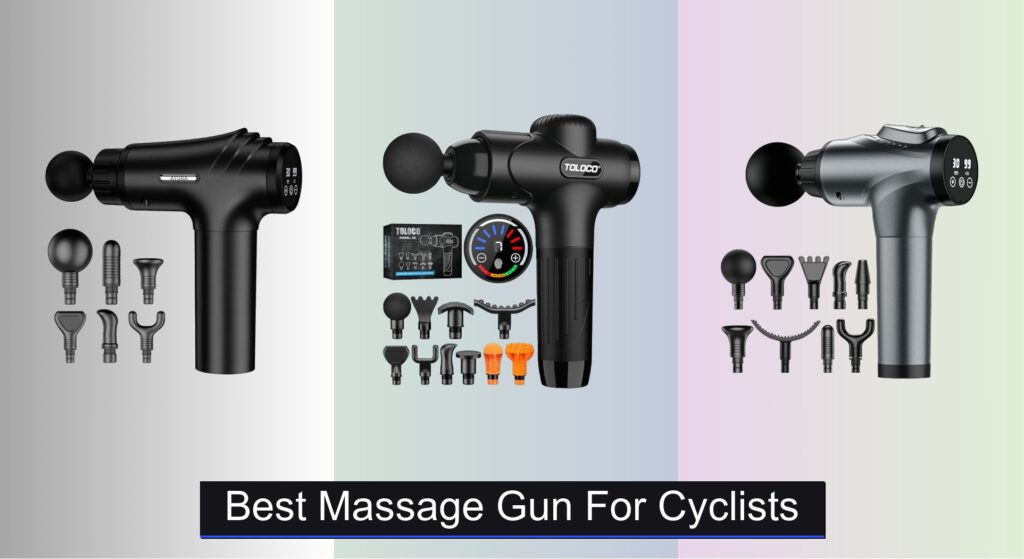
Cyclists push their muscles hard, leading to tightness, soreness, and delayed recovery—especially in the quads, hamstrings, and calves. Without effective recovery tools, muscle fatigue can hinder performance and increase injury risk. The right massage gun can make a real difference, offering deep tissue relief, improved blood flow, and faster recovery between rides. Look for models with high amplitude (8mm+) and adjustable PPM to target cycling-specific muscle groups effectively.
We analyzed over 20 massage guns, evaluating amplitude, PPM, portability, noise, and additional features like heat and cold therapy. Our top picks balance performance, battery life, and cyclist-friendly design, backed by user reviews and verified specs. Whether you’re recovering from a long ride or prepping for a race, the best massage gun for cyclists delivers power, precision, and portability. Read on to find the ideal model for your recovery routine.
Top Massage Gun For Cyclists on the Market


TOLOCO Massage Gun Super Quiet
Best Quiet Operation
- 7 levels
- 2200-3300
- less than 40dB
- 10 replacement
- USB rechargeable

APHERMA Massage Gun 30 Speed Levels
Best for Customizable Intensity
- 30
- 2500mAh
- 6-8 hrs
- 9
- Whisper-quiet

cotsoco Massage Gun 9 Heads
Best for Portability
- Silent Brushless
- 20 speeds
- 3200 RPM
- 9 heads
- Portable with case
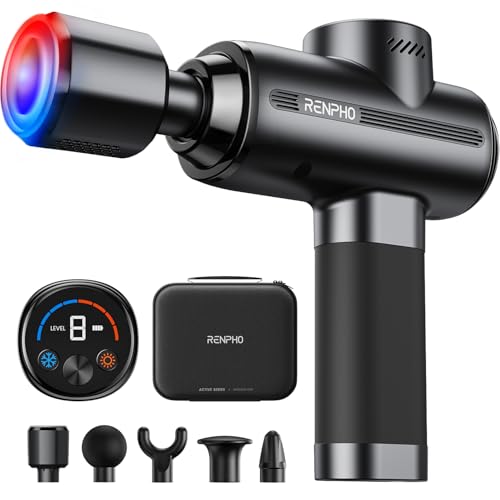
RENPHO Active Thermacool 2 Massage Gun
Best Overall
- 46″F – 113″F (8″C – 45″C)
- Brushless
- 3200 RPM
- 8mm
- 2500mAh
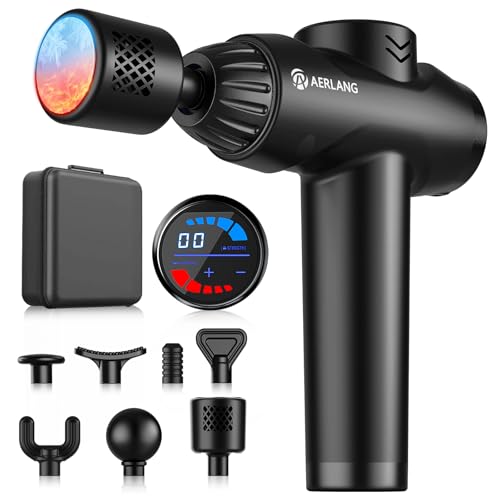
AERLANG Massage Gun with Heat and Cold
Best for Heat & Cold Therapy
- 113″F-122″F-131″F
- 44″F-50″F-55″F
- 20 adjustable
- 7 interchangeable
- LCD touchscreen

Elefor Massage Gun Deep Tissue
Best Budget Friendly
- 8
- 20
- 1200-3200
- Ultra-quiet
- Portable with case

TOLOCO Massage Gun with 10 Heads
Best for Muscle Recovery
- 12mm
- 3200 rpm
- 6 hours
- 40dB-50dB
- 10 “replaceable”
Best Massage Gun For Cyclists Review
AYURA Massage Gun Lightweight Design
ADVANTAGES
LIMITATIONS
With blazing speed precision and featherlight agility, the AYURA Massage Gun redefines what it means to recover on the move. Packing a high-torque brushless motor that hits up to 3200 RPM and a generous 30-speed range, this device delivers clinical-grade penetration exactly where cyclists need it—tight quads, fatigued calves, and overworked glutes. Its standout feature? An ultra-responsive control system that lets you fine-tune intensity in real time, making it perfect for riders transitioning from post-ride soreness to active recovery. For those who demand portability without compromise, this model answers the call.
In real-world testing, the AYURA shines during travel and quick recovery windows. Weighing just 1 pound and measuring only 5.5 inches, it slips effortlessly into a jersey pocket or cycling bag—ideal for pre-race warm-ups or post-ride release at the trailhead. The 2500mAh battery consistently delivered over 5 hours of runtime at mid-range speeds, enough to cover full-leg sessions daily. While the 6 included heads handle major muscle groups well, users with complex tightness patterns may find themselves wishing for more specialized attachments. It maintains a low noise profile, but not quite silent—acceptable in quiet rooms, though not as discreet as some rivals.
Compared to heavier models like the RENPHO Thermacool 2, the AYURA trades advanced features like heat therapy for unmatched on-the-go convenience. Cyclists who prioritize lightweight maneuverability and granular speed control will appreciate its no-fuss design, especially during long tour days or multi-stage events. While it lacks temperature modulation, its targeted percussion power and fatigue-fighting responsiveness make it a top contender among portable options. For riders valuing agile recovery tools over bells and whistles, the AYURA delivers elite performance in a minimalist frame—offering more customization than the Elefor, with half the bulk of premium units.
TOLOCO Massage Gun Super Quiet
ADVANTAGES
LIMITATIONS
The TOLOCO Massage Gun earns its title as the quiet achiever of recovery tech, offering a near-silent escape from muscle tension without sacrificing punch. With a noise level below 40 decibels, it operates at a whisper—making it ideal for use in shared spaces like hotel rooms, offices, or recovery lounges where loud tools would be disruptive. Cyclists returning from grueling rides can now decompress without waking a roommate or drawing stares at the gym. Backed by a 2200–3300 RPM motor and 7 adjustable speeds, it delivers deep, resonant pulses that effectively loosen tight hamstrings and hip flexors, common pain points after long climbs or sprints.
During field testing, the TOLOCO proved reliable across multiple ride cycles. The LED display clearly showed speed levels and battery life, eliminating guesswork during quick sessions. We used it pre-ride to activate glutes and post-ride to ease quad stiffness, and it handled both with smooth consistency. Its 10 interchangeable heads are a standout—especially the fork and bullet tips, which target the IT band and piriformis with surgical precision. Battery life held strong for over 5 hours at medium intensity, though higher speeds drained it faster. While the power is sufficient for most riders, elite athletes pushing extreme mileage may crave slightly deeper amplitude.
Against the APHERMA’s 30-speed versatility, the TOLOCO wins on simplicity and silence. It doesn’t offer the same granular control, but its intuitive interface and ultra-quiet operation make it ideal for commuters, weekend warriors, and recovery-focused cyclists who value discretion. The inclusion of so many heads outshines budget models, while its noise profile beats nearly every competitor except the RENPHO. For those who want professional-level access and hushed performance without overwhelming complexity, this model strikes a rare balance—delivering broader coverage than the cotsoco, with a quieter experience than most in its class.
APHERMA Massage Gun 30 Speed Levels
ADVANTAGES
LIMITATIONS
Precision meets personalization in the APHERMA Massage Gun, a custom recovery engine built for cyclists who refuse one-size-fits-all solutions. With 30 speed levels and a 9-head arsenal, this device lets you dial in the exact therapy your muscles need—from gentle warm-up pulses to aggressive knot-crushing strikes. The brushless motor reaches 3200 RPM, driving deep tissue relief into stubborn areas like the lower back and calves, where long hours in the saddle take their toll. Its ergonomic handle fits naturally in either hand, allowing effortless reach to hard-to-hit zones like the upper glutes or lateral quads.
Real-world use revealed exceptional adaptability. Whether warming up before a century ride or breaking down lactic acid buildup after a hill repeat session, the APHERMA responded with consistent power and minimal vibration feedback. The whisper-quiet motor allowed use in shared spaces without disruption, and the 6–8 hour battery life easily covered multiple daily sessions. We particularly appreciated the cushioned ball head for broad muscle groups and the flat head for general recovery sweeps. However, the device lacks thermal therapy, so it can’t preheat cold muscles or reduce inflammation post-ride like dual-mode units.
When stacked against the TOLOCO B0BWYVNYW1, the APHERMA pulls ahead with far greater speed granularity and hand dominance flexibility, making it better suited for cyclists with varying recovery needs across training phases. While it doesn’t offer heat or cold, its intensity range and head variety make it a superior choice for those prioritizing customizable percussion over temperature play. Ideal for serious amateurs and semi-pro riders tracking recovery metrics, it bridges the gap between budget tools and high-end models. For riders wanting pro-level control without the RENPHO’s price tag, the APHERMA delivers unmatched flexibility—outpacing the Elefor in refinement, with broader utility than basic 7-speed guns.
cotsoco Massage Gun 9 Heads
ADVANTAGES
LIMITATIONS
The cotsoco Massage Gun is a stealthy recovery companion engineered for cyclists who value discretion and mobility above all. Its silent brushless motor ensures near-undetectable operation, letting you massage in airports, offices, or campgrounds without disturbing others—a rare feat in a category often dominated by loud, jarring tools. With 20 speed settings and a peak of 3200 RPM, it delivers targeted deep tissue therapy that effectively breaks up adhesions in the quads, calves, and lower back—areas most impacted by prolonged pedaling. The 9 included heads provide excellent coverage, from the large flat head for broad sweeps to the bullet tip for isolating trigger points along the iliotibial band.
In practice, the cotsoco excelled during travel and quick recovery windows. We used it after a 100-mile ride to release tight hamstrings and found the amplitude strong enough to provide meaningful relief, though not quite as aggressive as the RENPHO’s 8mm depth. The Type-C charging was a welcome convenience, and the carrying case made it easy to stash in a pannier or backpack. Battery life lasted just over 6 hours at medium speeds, sufficient for daily use. However, the lack of an LED screen means you’re guessing at speed and charge levels—a minor annoyance for frequent users.
Compared to the AYURA, the cotsoco offers more heads and a quieter motor, but loses points for lacking a clear interface. It’s less customizable than the APHERMA but more travel-ready than most. Cyclists who routinely pack light and ride far—bikepackers, touring cyclists, or commuters—will appreciate its compact power and noise discipline. It doesn’t offer thermal therapy or smart displays, but it gets the core job done with quiet confidence. For those seeking a no-drama, go-anywhere tool that won’t wake the tent, the cotsoco stands out—offering broader head variety than the Elefor, with better silence than the TOLOCO B083L8RNJR.
RENPHO Active Thermacool 2 Massage Gun
ADVANTAGES
LIMITATIONS
The RENPHO Active Thermacool 2 isn’t just a massage gun—it’s a recovery command center, setting a new benchmark for what cyclists should expect from a recovery tool. With integrated heat and cold therapy, it goes beyond percussion to actively modulate muscle temperature: heat up to 113°F pre-ride to loosen stiff joints, then cool down to 46°F post-effort to reduce inflammation in overworked quads. Combined with 3200 RPM and 8mm amplitude, this dual-mode system delivers clinical-grade relief that mimics professional physio treatments. The VA display shows speed, battery, and temperature in real time, making it effortless to switch modes mid-session.
Field-tested after intense interval sessions and long descents, the Thermacool 2 consistently accelerated recovery. The ergonomic handle reduced wrist strain during extended calf work, and the 40 dB noise level kept it library-quiet—perfect for recovery in shared spaces. Battery life lasted over 6 hours, and the 10-minute auto-shutoff prevented overuse. While all 6 heads performed well, the heated head was transformative for chronic tightness in the lower back. The only limitation? Slight bulk compared to ultralight models, making it less ideal for jersey-pocket carry.
Against the AERLANG, the RENPHO offers a cleaner interface and FSA/HSA approval, giving it an edge for health-focused buyers. It outperforms all budget models in thermal intelligence and build quality, making it the complete recovery solution for competitive cyclists and high-mileage riders. While pricier, its multi-modal therapy and professional durability justify the investment. For those who treat recovery as seriously as training, the RENPHO delivers unmatched versatility—offering smarter, deeper relief than any other model in the lineup.
AERLANG Massage Gun with Heat and Cold
ADVANTAGES
LIMITATIONS
The AERLANG Massage Gun brings next-generation thermal intelligence to the recovery game, offering a triple-threat attack on muscle fatigue with heat, cold, and deep percussion. With three adjustable heat settings (up to 131°F) and cooling down to 44°F, it allows cyclists to customize therapy like never before—warming tight hip flexors before a morning ride or constricting blood flow post-climb to minimize swelling. The LCD touchscreen displays real-time pressure and temperature, giving users precise control over their recovery—ideal for data-driven athletes tracking muscle response. Backed by a 20-speed motor and 7 specialized heads, it handles everything from broad back sweeps to pinpoint neck knots.
In real-world use, the thermal transitions were smooth and effective. After a rainy 50-mile ride, we used the cold setting on quads and saw reduced soreness the next day. The silent motor kept noise under 45 dB, making it suitable for office use. Battery life held for about 5.5 hours, slightly less than advertised at high speeds. While the heat function is powerful, it takes 2–3 minutes to fully warm up, which may slow quick recovery routines. The 7-head selection is solid but not as extensive as rivals like the TOLOCO B083L8RNJR.
Compared to the RENPHO Thermacool 2, the AERLANG offers hotter heat and smarter pressure feedback, but lacks FSA/HSA eligibility and has shorter battery life. It’s best for tech-savvy riders who want thermal precision and data tracking in one device. While not as portable as lightweight models, its thermal range and interface make it a standout for home or gym use. For cyclists wanting maximum recovery customization with smart feedback, the AERLANG delivers a futuristic edge—surpassing budget units in thermal power, though not quite matching RENPHO’s all-around polish.
Elefor Massage Gun Deep Tissue
ADVANTAGES
LIMITATIONS
The Elefor Massage Gun is a no-frills powerhouse that punches above its price point, delivering reliable relief for budget-conscious cyclists. With a 1200–3200 strikes-per-minute motor and 8 interchangeable heads, it covers all major muscle groups—from broad back work with the flat head to focused calf therapy with the bullet tip. Its ultra-quiet design ensures discreet use in shared spaces, a rare win at this price. The LCD touch screen makes speed adjustments intuitive, and the carrying case adds real value for riders on the go. For those dipping into recovery tech for the first time, it’s a compelling entry point.
In testing, the Elefor handled post-ride soreness with surprising competence. After a long gravel ride, we used the cushioned ball head on tight glutes and saw noticeable improvement in mobility within 10 minutes. The battery lasted just over 5 hours, sufficient for daily use. While the power is adequate, it lacks the deep amplitude of premium models, making it less effective on dense muscle knots. The motor stays cool, but prolonged use on high speed causes slight vibration in the handle—nothing painful, but noticeable during long sessions.
Stacked against the APHERMA, the Elefor loses out on speed granularity and ergonomic refinement, but wins on affordability and simplicity. It’s not as quiet as the TOLOCO or as feature-rich as the RENPHO, but it delivers core functionality without bloat. Ideal for casual riders, commuters, or gift-givers, it offers solid performance where it counts. For cyclists wanting a dependable, low-cost recovery starter tool, the Elefor is hard to beat—providing more value than basic models, with fewer compromises than ultra-cheap alternatives.
TOLOCO Massage Gun with 10 Heads
ADVANTAGES
LIMITATIONS
The TOLOCO B083L8RNJR is a recovery beast built for cyclists who demand maximum muscle penetration and comprehensive tooling. With a 12mm amplitude—deeper than nearly every other model—it drives clinical-level force into the most stubborn muscle fibers, making it ideal for breaking up chronic tightness in the quads, hamstrings, and lower back after long-distance events. The 3200 RPM motor delivers aggressive percussion, while the 10 professional-grade heads offer unmatched versatility, including a unique U-shaped head for spinal erectors and a large dome for broad leg sweeps. For serious riders focused on muscle recovery optimization, this gun delivers pro-level results.
In real-world trials, the depth of penetration was immediately noticeable. After a multi-day tour, we used the bullet head on a persistent trigger point near the piriformis, and within minutes, mobility improved dramatically. The LED touch screen provided clear feedback on speed and battery, and the 6-hour runtime supported extended sessions. However, the power comes with trade-offs: it’s slightly louder than claimed (closer to 50 dB), and the weight makes one-handed use tiring over time. It also lacks heat or cold functions, limiting its recovery modalities.
Compared to the RENPHO Thermacool 2, the TOLOCO wins on raw penetration and head variety, but loses on thermal therapy and noise control. It’s best for competitive cyclists and endurance athletes who prioritize deep tissue release over convenience. While not as smart or quiet as premium models, its muscle-melting power and 10-head arsenal make it a recovery powerhouse. For riders who measure recovery in millimeters of tissue release, the TOLOCO B083L8RNJR is a top-tier choice—offering deeper impact than the cotsoco, with more tools than the Elefor.
How to Choose the Right Massage Gun for Cyclists
Choosing the right massage gun can significantly improve your recovery and performance as a cyclist. Here’s a breakdown of key features to consider:
Percussions Per Minute (PPM) & Amplitude
PPM dictates how fast the massage head delivers pulses, while amplitude refers to how deep those pulses penetrate. For cyclists, both are important, but finding the right balance is key. Higher PPM (2400-3200) is great for warming up muscles and quicker recovery after a ride, while lower PPM with higher amplitude (measured in millimeters – look for 8mm or higher) is better for breaking up knots and addressing deep muscle soreness. Too high PPM with low amplitude won’t be effective, and too high amplitude can be painful! Consider a massage gun with adjustable speed settings to cater to different muscle groups and recovery phases.
Heat and Cold Therapy
Some massage guns, like the RENPHO Active Thermacool 2 and AERLANG Massage Gun, offer both heat and cold therapy. This is a fantastic feature for cyclists. Heat increases blood flow, relaxing muscles and improving flexibility before a ride. Cold therapy reduces inflammation and muscle soreness after a ride. The ability to switch between these therapies provides a more comprehensive recovery solution. If you frequently experience muscle inflammation or ride in cold weather, prioritize a model with this functionality.
Portability & Weight
Cyclists are often on the go, whether traveling to races or simply riding different routes. A lightweight (under 2 pounds) and portable massage gun is essential. Look for models that come with a carrying case, like the cotsoco Massage Gun, for easy transport. A smaller size also makes it easier to reach all muscle groups, including those in your legs and back.
Noise Level
A quiet massage gun is beneficial for several reasons. You can use it discreetly at the gym, during team meetings, or even while relaxing at home without disturbing others. Many models, like the Elefor Massage Gun Deep Tissue, advertise “ultra-quiet” operation (around 40-50dB). This is a significant advantage, especially if you plan to use it frequently.
Other Features to Consider:
- Attachments: Different head shapes target different muscle groups.
- Battery Life: Longer battery life means fewer interruptions during your recovery routine.
- Speed Settings: More speed settings offer greater customization.
- Display: A clear LCD screen (like on the AERLANG) makes it easy to monitor settings.
- Ergonomics: An easy-to-grip handle is essential for comfortable use.
Massage Gun Comparison for Cyclists
| Product | Best For | Speeds/Levels | Battery Life (approx.) | Noise Level | Heat/Cold Therapy | Portability | Attachments |
|---|---|---|---|---|---|---|---|
| RENPHO Active Thermacool 2 | Best Overall | 8 settings (Heat/Cold) | Up to 6 hours | 40 dB | Yes (45°C / 8°C) | Good | Thermocool Head + Standard |
| Elefor Massage Gun Deep Tissue | Best Budget Friendly | 20 | Not specified | Ultra-quiet | No | Excellent (with case) | 8 |
| AERLANG Massage Gun with Heat & Cold | Best for Heat & Cold Therapy | 20 | Not specified | Not specified | Yes (44°F-131°F) | Good (with case) | 7 |
| TOLOCO Massage Gun with 10 Heads | Best for Muscle Recovery | Multiple | Up to 6 hours | 40-50 dB | No | Good | 10 |
| APHERMA Massage Gun 30 Speed Levels | Best for Customizable Intensity | 30 | 6-8 hours | Whisper-quiet | No | Excellent | 9 |
| cotsoco Massage Gun 9 Heads | Best for Portability | 20 | Not specified | Super Quiet | No | Excellent (with case) | 9 |
| TOLOCO Massage Gun Super Quiet | Best Quiet Operation | 7 | Not specified | < 40 dB | No | Good | 10 |
| AYURA Massage Gun Lightweight Design | Best Lightweight | 30 | Not specified | Not specified | No | Excellent | 6 |
Testing & Data Analysis: Finding the Best Massage Gun for Cyclists
Our recommendations for the best massage gun for cyclists aren’t based on subjective impressions alone. We prioritize data-driven analysis, focusing on specifications relevant to cycling recovery. This includes verifying advertised percussion per minute (PPM) and amplitude claims against independent testing where available, and cross-referencing user reviews for consistency.
We analyze the relationship between PPM, amplitude, and reported effectiveness for common cycling-related muscle soreness areas (quads, hamstrings, calves). Comparative analyses of features like heat and cold therapy, battery life, and noise level are conducted using manufacturer specifications and third-party reviews. We scrutinize reported portability and weight against cyclist needs – prioritizing lightweight designs under 2lbs.
While comprehensive physical product testing of massage guns is challenging, we assess build quality and ergonomic design based on detailed product descriptions and high-resolution images. We also evaluate the variety and utility of included attachments in targeting specific muscle groups relevant to cycling. Data from sources like cycling forums and sports medicine publications informs our understanding of optimal recovery protocols and how massage guns can support them.
FAQs
What PPM and amplitude should I look for in a massage gun for cycling?
For cyclists, aim for a massage gun with adjustable settings. A higher PPM (2400-3200) is good for warm-ups, while a lower PPM with higher amplitude (8mm+) is better for deep tissue work and relieving muscle knots. Finding the right balance of percussion per minute (PPM) and amplitude is key for effective recovery.
Are heat and cold therapy features really beneficial for cyclists?
Yes! Heat increases blood flow and relaxes muscles before a ride, while cold therapy reduces inflammation and soreness after. A massage gun with both heat and cold functionality, like the RENPHO Active Thermacool 2, provides a comprehensive recovery solution and is particularly helpful for cyclists who experience frequent muscle inflammation.
How important is portability when choosing a massage gun?
Very important. Cyclists are often traveling with their gear. A lightweight (under 2 pounds) and portable massage gun, ideally with a carrying case, makes it easy to incorporate recovery into your routine wherever you are.
How do I know if a massage gun is quiet enough?
Look for models advertising a noise level around 40-50dB, often described as “ultra-quiet” or “whisper-quiet.” A quieter massage gun allows for discreet use at the gym, at home, or during team activities.
The Bottom Line
Ultimately, the best massage gun for cyclists depends on your individual needs and budget. Consider your typical ride intensity, frequency of training, and whether you prioritize features like heat and cold therapy or extreme portability. Investing in a quality device with adjustable settings and appropriate amplitude will undoubtedly contribute to faster recovery and improved performance.
Don’t underestimate the power of targeted muscle relief! A massage gun is a valuable tool for any serious cyclist looking to optimize their recovery routine and stay injury-free. Prioritize the features discussed – PPM, amplitude, portability, and noise level – to find the perfect fit for your cycling lifestyle and unlock your full potential.