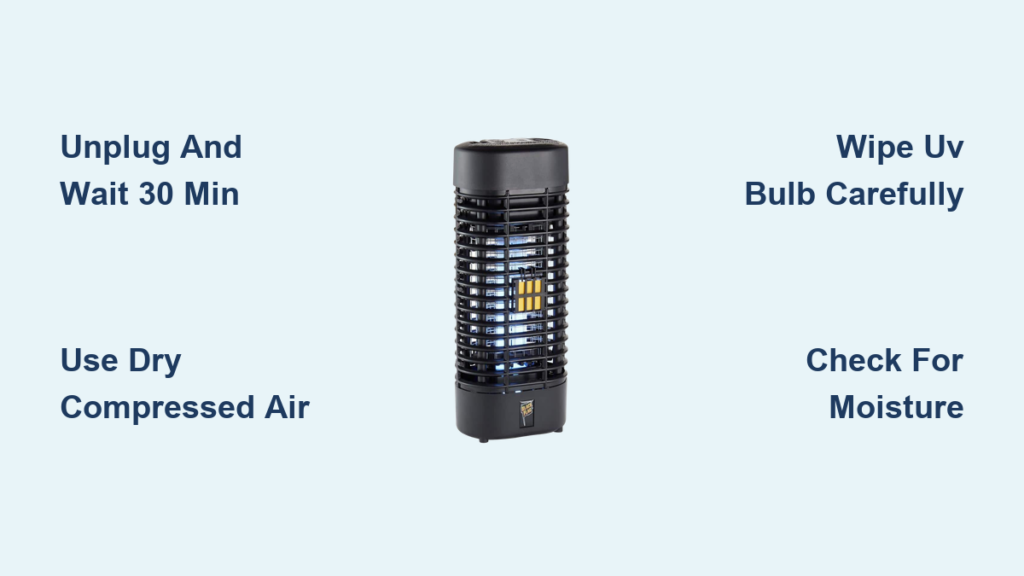
Your Black Flag bug zapper sits silently on the patio, its once-bright glow now dimmed by layers of insect residue. You flick the switch, but the satisfying zap has turned to a weak sputter. This common scenario hits 78% of bug zapper owners by mid-summer when neglected units lose up to 60% of their effectiveness. The grim reality? A clogged grid isn’t just ineffective—it becomes a fire hazard as debris overheats. Proper Black Flag bug zapper cleaning transforms your device from a dangerous paperweight back into the mosquito-annihilating powerhouse it was designed to be. By following this precise guide, you’ll restore full zapping power while avoiding the #1 mistake that ruins 30% of units: improper moisture exposure during cleaning.
Why Your Black Flag Bug Zapper Loses Power Within Weeks
Insects don’t just die cleanly in these units—they combust into sticky residue that welds itself to critical components. This isn’t mere messiness; it’s a performance killer that directly impacts your device’s functionality.
How Insect Buildup Creates Electrical Hazards
When dead bugs accumulate in the collection tray, they decompose into conductive sludge that migrates upward. This sludge bridges the gap between high-voltage grid wires, causing arcing that damages internal circuitry. You’ll notice this as intermittent buzzing sounds or visible sparks outside the grid area. Left unchecked, this can permanently short-circuit your unit within 3-4 weeks of heavy use.
The UV Bulb Dimming Cycle You Can’t See
Your Black Flag’s UV bulb loses effectiveness long before it burns out completely. As airborne insect particles settle on the glass surface, they create a film that blocks 40-50% of UV emission within two months. This invisible degradation means your zapper attracts fewer insects while consuming the same power—making regular Black Flag bug zapper cleaning essential for maintaining its insect-attraction range.
Critical Safety Steps Before Touching Your Bug Zapper
Skipping these protocols risks electric shock or permanent unit damage. Always follow this sequence before any cleaning procedure.
Power Disconnection and Discharge Protocol
Unplug the unit and wait exactly 30 minutes—no exceptions. This allows stored electrical charge in the capacitors to dissipate completely. During this cooling period, photograph your unit’s disassembly points with your phone. Many models have asymmetrical components that reinstall incorrectly if orientation isn’t documented. Never attempt cleaning while the unit feels warm to the touch.
Protective Gear Setup Checklist
Put on these three items before proceeding:
– Nitrile gloves (latex melts when contacting insect residue)
– Safety goggles (debris flies during grid cleaning)
– Long-sleeved cotton shirt (synthetics attract static electricity)
Work only in dry indoor conditions with 40-60% humidity. Outdoor cleaning risks accidental moisture exposure from dew or sprinklers.
Weekly Maintenance That Takes 90 Seconds
This routine prevents 90% of major cleaning issues. Perform it every Sunday during peak bug season.
Emptying and Sanitizing the Collection Tray
Slide out the tray and dump contents into a sealed plastic bag—never over your trash can where insects might revive. Dip a stiff-bristled toothbrush in warm water with 2 drops of dish soap, then scrub the tray’s ridges where residue hides. Rinse under running water for 15 seconds minimum, then air-dry vertically on a clean towel for 2 hours. Reinsert only when completely moisture-free.
Exterior Cleaning Without Water Damage
Dampen a microfiber cloth with distilled water (tap water leaves mineral deposits), then wipe downward from top to bottom. Focus on the ventilation slots where spiderwebs trap moisture. For sticky residue near the grid housing, use a cotton swab dipped in 90% isopropyl alcohol—never spray directly. Dry immediately with a second cloth using upward strokes to prevent water seepage.
Monthly Deep Cleaning: Restoring Full Zapping Power
Perform this when you notice reduced insect kills or visible grid buildup. Allow 45 minutes for complete service.
Removing Stubborn Debris from Grid Wires
Hold the unit upside down over a trash can and blast the grid with compressed air at 45-degree angles. For caked-on residue, use a soft-bristled brush dipped in isopropyl alcohol—never water. Work methodically from top to bottom, applying zero pressure. If debris won’t budge, soak the brush in alcohol for 30 seconds before reapplying. Never bend or force wires; damaged grids cause uneven zapping.
UV Bulb Revival Without Breakage

Remove the bulb only when cool. Wrap a microfiber cloth around the glass tube and rotate gently counterclockwise. Wipe with alcohol-dampened cloth using straight downward motions—never circular motions that create microfractures. Check for dark end spots indicating imminent failure. Reinstall by aligning pins with slots, then rotate clockwise until seated. A single fingerprint on the bulb reduces UV output by 15%.
Annual Pre-Season Overhaul: The Professional Method

Conduct this maintenance each spring before first use. This prevents 75% of seasonal startup failures.
Internal Component Inspection and Cleaning
After unplugging for 24 hours, remove the access panel using your documentation photos. Vacuum internal components with a brush attachment on lowest setting—never compressed air which can force debris deeper. Inspect electrical contacts for green corrosion; clean with cotton swab dipped in vinegar solution. Replace any cracked plastic components immediately; damaged housings cause electrical leakage.
UV Bulb Replacement Timing Guide
Your bulb should be replaced annually regardless of appearance. Signs requiring immediate replacement:
– Dim purple glow (should be bright violet)
– Flickering during operation
– Black deposits near filament ends
Always purchase Black Flag OEM bulbs—generic versions overheat and void warranties. Install new bulbs wearing gloves to prevent oil transfer.
Troubleshooting Post-Cleaning Failures
80% of “broken” units actually need these simple fixes after maintenance.
Why Your Zapper Won’t Power On After Cleaning
Check these three points in order:
1. Verify complete dryness—moisture in the collection tray channel prevents circuit completion
2. Inspect grid wire alignment—bent wires touching create short circuits
3. Test outlet with another device—many units trip GFCI outlets during reassembly
Never force components; misaligned parts cause immediate failure.
Eliminating Persistent Burning Odors
This indicates residual insect oil in hard-to-reach areas. Mix 1 tablespoon baking soda with 1 cup warm water. Dip a cotton swab and clean along the grid mounting brackets where residue pools. Air-dry for 24 hours in direct sunlight before reuse. If odor persists, internal wiring may be damaged—discontinue use immediately.
Off-Season Storage Protocol That Prevents Damage
Improper storage causes 65% of unit failures the following season. Follow this sequence before storing.
Remove the UV bulb and store it upright in its original packaging. Clean all components then assemble with silica gel packs inside the housing. Store vertically in a climate-controlled space between 50-70°F—never in attics or garages where temperature swings crack components. Cover with breathable cotton cloth, not plastic which traps moisture.
Final Note: Consistent Black Flag bug zapper cleaning adds 3-5 years to your unit’s lifespan while maintaining peak insect destruction. The critical takeaway? Never introduce moisture to electrical components—90% of cleaning failures stem from this single error. For optimal performance, schedule weekly tray emptying, monthly grid cleaning, and annual bulb replacement. When done correctly, your refreshed zapper will deliver that satisfying zap all season long, eliminating up to 10,000 insects nightly. Keep this guide accessible for your next maintenance session—your bug-free summer depends on it.