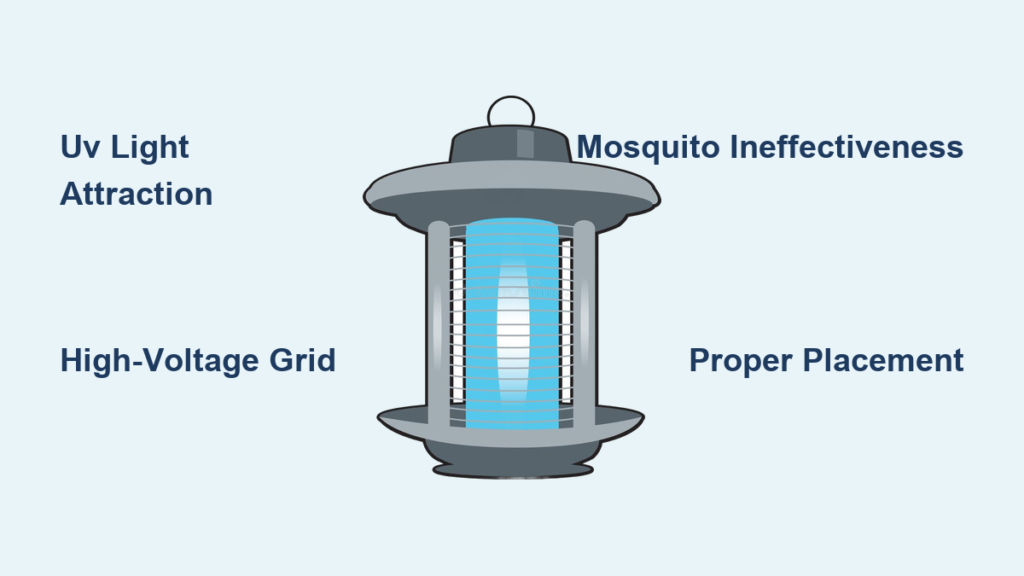
That distinctive zap sound and blue flash on your patio isn’t just satisfying—it’s science in action. When your bug zapper dispatches another unwelcome flying visitor, you’re witnessing a precise interplay of ultraviolet light attraction and high-voltage electrocution. But how exactly does this backyard pest control device work, and more importantly, does it actually target the insects bothering you? Understanding bug zapper mechanics reveals why these devices excel against some pests while being nearly useless against others like mosquitoes. In the next few minutes, you’ll discover the exact process that turns flying insects into harmless ash and learn whether this common solution should be part of your pest control strategy.
Why That Blue Light Lures Mosquitoes, Flies, and Moths (but Not All Bugs)
The UV Spectrum Insects Actually See
Your bug zapper’s blue glow isn’t just for show—it’s emitting ultraviolet light in the 350-400 nanometer wavelength range that most flying insects detect far better than humans. While you see a soft blue light, insects perceive an intensely bright beacon that triggers their natural navigation instincts. Many species use moonlight and starlight for orientation, and the artificial UV light disrupts this system, causing them to spiral toward the source. This phototaxis response explains why moths, flies, and beetles swarm around your zapper even when they’d normally avoid your patio area.
Why Mosquitoes Ignore the Light Trap
Despite what manufacturers claim, your bug zapper likely isn’t solving your mosquito problem. These bloodsuckers primarily navigate using carbon dioxide emissions and body heat from potential hosts, not visual cues. Scientific studies show mosquitoes respond weakly to UV light compared to their powerful attraction to human breath and sweat compounds. You might hear frequent zaps on summer evenings, but research indicates less than 1% of insects killed by standard zappers are actually biting mosquitoes. If you’re battling relentless mosquito bites, you’re better off with solutions targeting their actual attraction triggers.
Inside the Grid: How 4,000 Volts Instantly Electrocutes Flying Pests
Three-Layer Grid Design Creates a Deadly Pathway
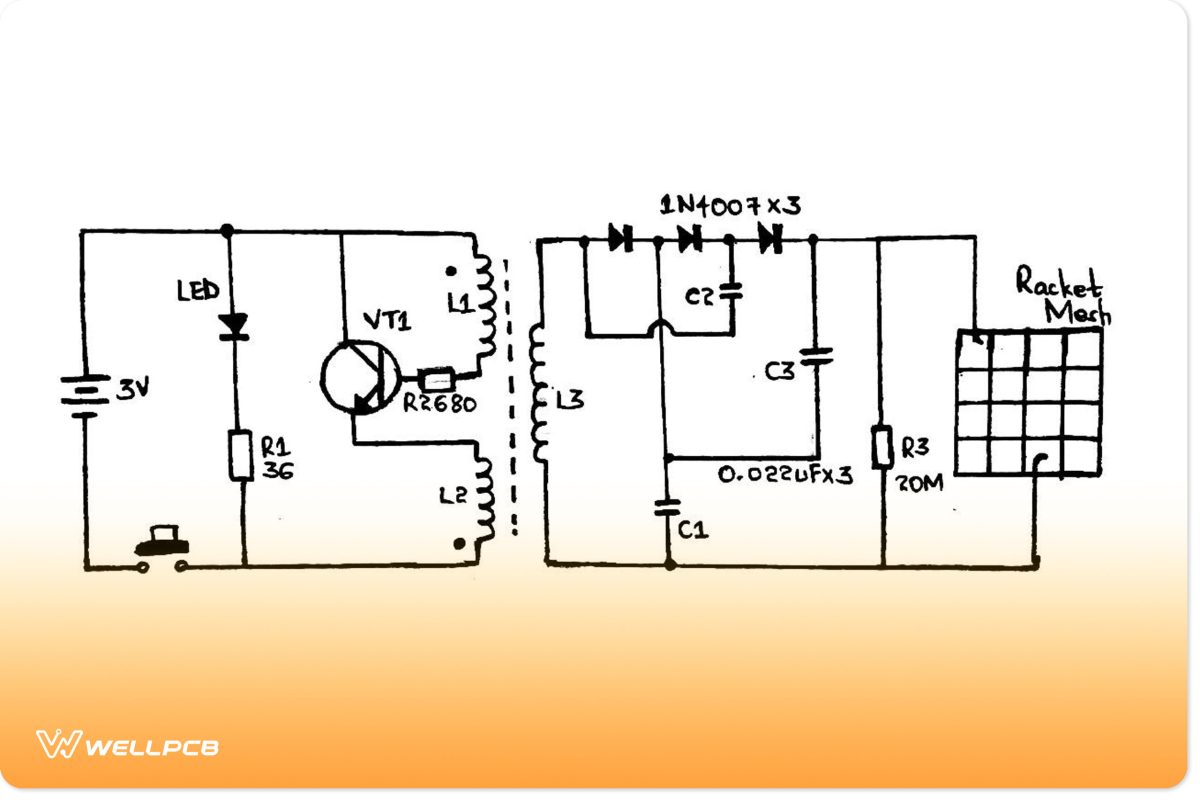
The business end of your bug zapper features a precisely engineered electrical sandwich that ensures instant insect termination. Two outer metal grids maintain a neutral charge while the central grid carries a lethal 2,000-4,000 volts of electricity. When an insect bridges the gap between the charged inner grid and either grounded outer grid, it completes an electrical circuit through its body. This specific arrangement maximizes the likelihood of contact completion—unlike simpler two-grid systems where insects might avoid completing the circuit.
The 0.2-Second Electrocution Sequence Explained
When a fly enters the grid zone, the fatal process happens faster than you can blink:
1. The insect contacts both the high-voltage inner grid and grounded outer grid simultaneously
2. Electricity surges through the bug’s body at approximately 4,000 volts but only 2-8 milliamps
3. Internal tissues instantly overheat, causing cellular explosion and charring
4. The distinctive “zap” sound results from superheated air expanding rapidly around the insect
This low-amperage, high-voltage design ensures the shock is lethal to insects but generally harmless to humans and pets who might accidentally touch the grid—though it’ll still deliver an unpleasant surprise.
Bug Zapper Limitations: Why Mosquitoes Often Avoid the Zap
The Unintended Consequences of Non-Selective Zapping
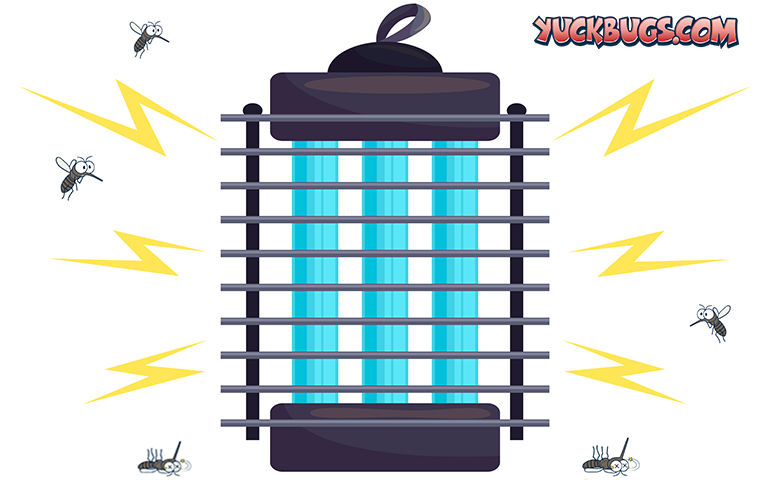
While your bug zapper effectively eliminates nuisance flies and moths, it indiscriminately kills beneficial insects too. Night-flying pollinators like moths and beetles fall victim alongside pests, potentially disrupting local ecosystems. Studies show that standard zappers kill significantly more harmless or beneficial insects than actual pest species. If you’re trying to protect your garden, this collateral damage might outweigh the benefits. For targeted pest control, consider solutions that specifically address your problem insects rather than blanket electrocution.
Weather and Placement Factors That Reduce Effectiveness
Your bug zapper’s performance dramatically decreases during rainy or humid conditions when moisture creates alternative electrical pathways. Even moderate humidity can cause “arcing” between grids without insect contact, wasting energy. Placement matters critically—you’ll catch far fewer insects if your zapper sits near competing light sources like porch lights or under eaves where rain can penetrate the housing. For maximum effectiveness, position your unit 20-30 feet from gathering areas but away from other lights, at the optimal 4-6 foot height where most flying insects travel.
Safety First: Protective Features That Prevent Accidents
How Modern Designs Keep Children and Pets Safe
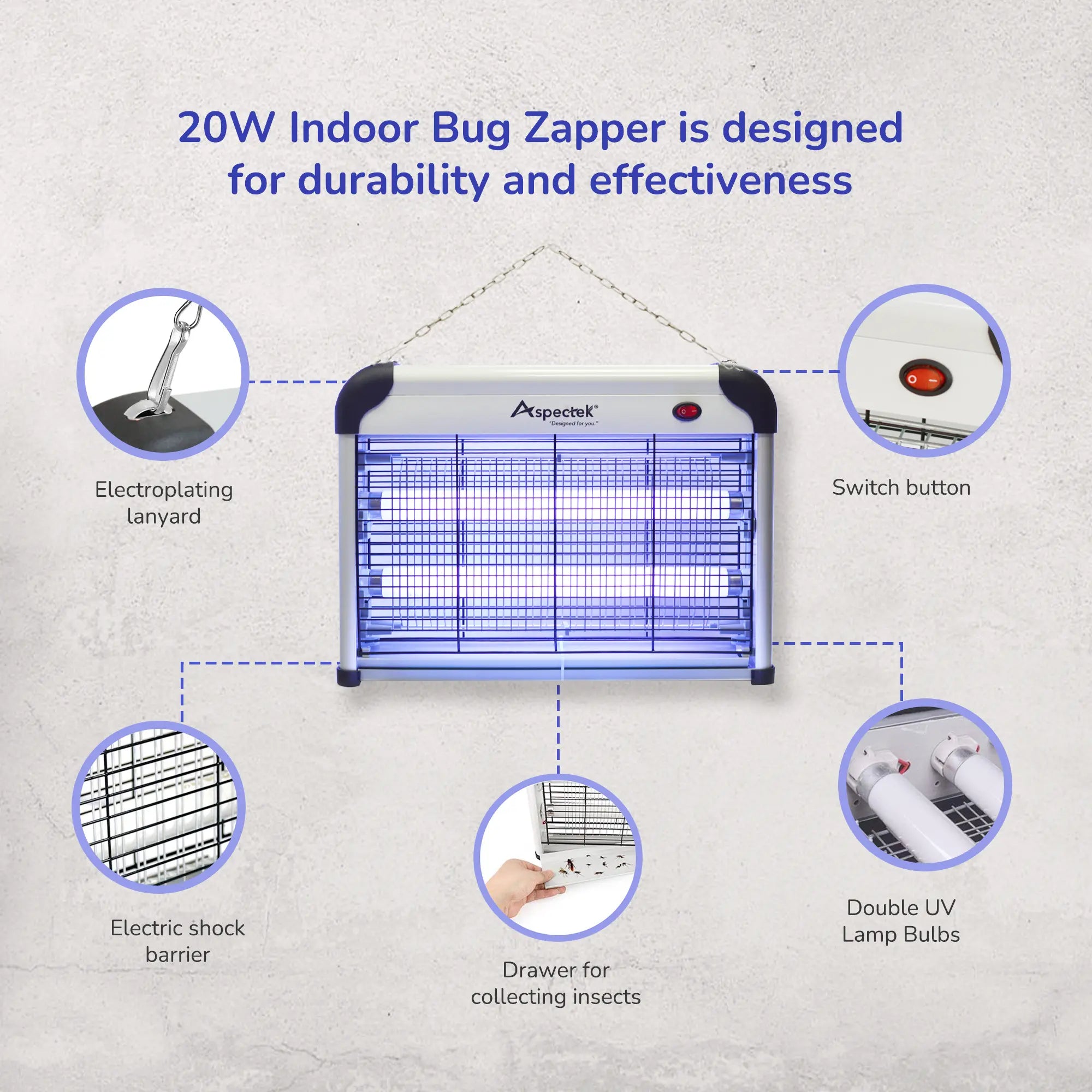
Quality bug zappers incorporate multiple safety layers that prevent accidental shocks. A robust outer cage maintains at least a 1/2 inch gap between accessible surfaces and the electrified grids—too wide for small fingers or paws to penetrate. Internal circuitry automatically shuts off power if the housing is opened, and weather-resistant seals prevent moisture from creating external conductive paths. Look for models with certification from recognized safety organizations (UL, ETL) that verify these protective features actually work as designed.
Why That Accidental Touch Won’t Harm You (But Still Hurts)
The high voltage in bug zappers uses extremely low current (2-8 mA) specifically to prevent dangerous shocks while maintaining insect-killing power. This design follows the principle that current (amperage), not voltage, determines shock severity. While the 4,000-volt jolt will make you jump and might leave a small burn, it lacks sufficient current to stop your heart or cause serious injury. Still, always unplug your unit before cleaning and keep it away from standing water to eliminate even this minimal risk.
Placement Secrets for Maximum Bug-Zapping Efficiency
Strategic Positioning That Doubles Your Catch Rate
Place your bug zapper upwind of your seating area so insects get zapped before reaching you. Position it at the perimeter of your yard rather than in the center of your patio—this creates a protective barrier. Crucially, keep it at least 15-20 feet from competing light sources including deck lights and indoor windows, as these can draw insects away from your zapper’s UV lure. For best results, install multiple units around larger properties rather than relying on a single powerful model.
Height Matters: Why 5 Feet Off Ground Catches More Bugs
Most flying insects travel at specific heights depending on species and purpose. General nuisance flies typically cruise at 4-6 feet above ground level—the perfect height for patio-mounted zappers. Mosquitoes often fly lower (2-4 feet), while moths and beetles may fly higher. Adjust your zapper height based on your primary pest: lower for mosquitoes (though effectiveness remains limited), standard height for general flying insects. Never place your unit directly above food preparation areas since insect remains can contaminate surfaces.
Cleaning and Maintenance: Keeping Your Zapper Operating at Peak Performance
Weekly Grid Cleaning That Doubles Effectiveness
Dead insect carcasses accumulate on grids within days of heavy use, creating insulating barriers that reduce electrical conductivity. A simple weekly maintenance routine keeps your zapper operating at maximum efficiency:
– Unplug and let cool completely
– Use a small brush (an old toothbrush works perfectly) to dislodge debris
– Wipe grids with a damp cloth (never spray water directly)
– Check for bent wires that create dead zones
This 5-minute task prevents performance degradation—units with clean grids can kill up to twice as many insects as neglected models.
Bulb Replacement Schedule: When UV Output Drops Below Effective Levels
UV bulbs gradually lose intensity even when they still appear to glow blue. Most manufacturers recommend replacement every 3,000-5,000 hours of use (about one season of nightly operation). As UV output diminishes, your zapper becomes significantly less effective at attracting insects. Test your bulb by comparing its brightness to a new one—if it appears noticeably dimmer, replace it immediately. Some models feature indicator lights that signal when UV output falls below effective levels.
Beyond the Classic Grid: Solar, Vacuum, and Smart Bug Zapper Innovations
Solar-Powered Zappers for Remote Area Protection
Modern solar bug zappers solve the problem of limited electrical access in gardens and patios. High-efficiency solar panels charge internal batteries during daylight, powering the UV light and grid through the evening. Look for models with at least 6 hours of battery life and weatherproof construction. While they typically deliver slightly lower voltage than plug-in models (1,500-3,000 volts), they remain highly effective for standard pest control without increasing your electricity bill.
Silent Kill Technology: Vacuum and Glue Trap Alternatives
Newer designs address two common zapper complaints: the loud zap sound and messy insect remains. Vacuum models use quiet fans to suck insects into a removable collection tray, while glue board variants trap pests silently on adhesive surfaces. These alternatives work particularly well for indoor use or noise-sensitive environments. Some advanced units combine UV light with CO² lures or octenol attractants specifically for mosquitoes, though their effectiveness remains debated among entomologists.
When you understand how a bug zapper works, you can make smarter decisions about pest control. These devices excel at eliminating UV-attracted nuisances like flies and moths through their precise combination of ultraviolet attraction and high-voltage electrocution. However, they fall short against mosquitoes and other biting insects that navigate by scent rather than light. For best results, position your zapper strategically away from competing lights and human activity zones, maintain it weekly, and replace bulbs annually. If mosquitoes are your primary concern, supplement your zapper with CO² traps or personal repellents for comprehensive protection. By matching your pest control method to the specific insects you’re targeting, you’ll enjoy more peaceful evenings without wasting money on ineffective solutions.