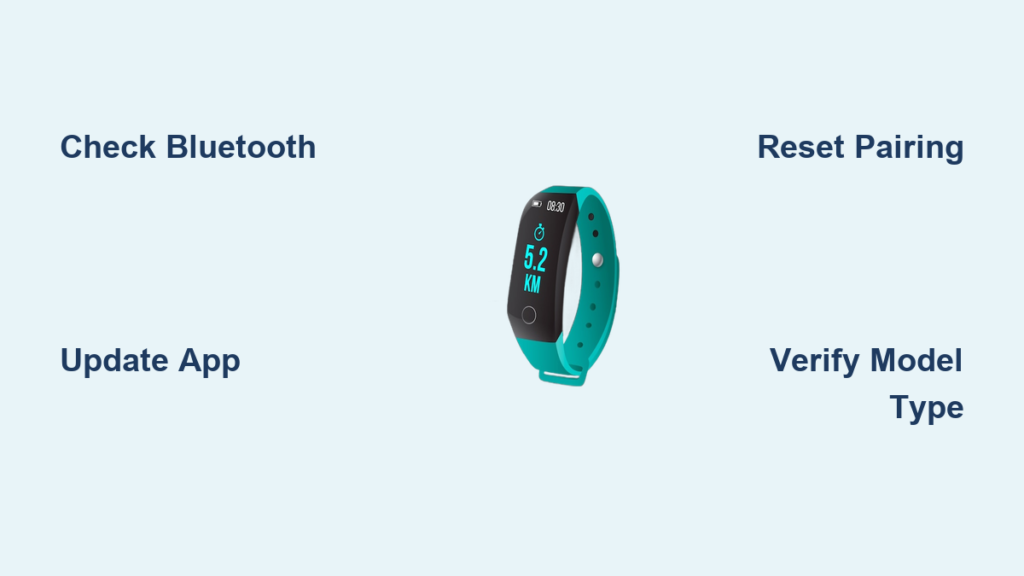
Your fitness tracker suddenly won’t sync with your phone, displaying frustrating “connection failed” messages. You’ve restarted both devices, checked Bluetooth settings, and even uninstalled the companion app—all to no avail. Before you panic or assume your device is broken, there’s a critical question you must answer first: Is your fitness tracker actually designed to connect to a smartphone at all? Many users waste hours troubleshooting connection issues only to discover their device was never meant to pair with a phone. This guide cuts through the confusion by helping you identify your tracker type, understand genuine connection failures, and apply targeted fixes—saving you time and frustration whether you’re a student under a “no phones” policy or a regular user needing reliable syncing.
Identify Your Fitness Tracker Model Before Troubleshooting
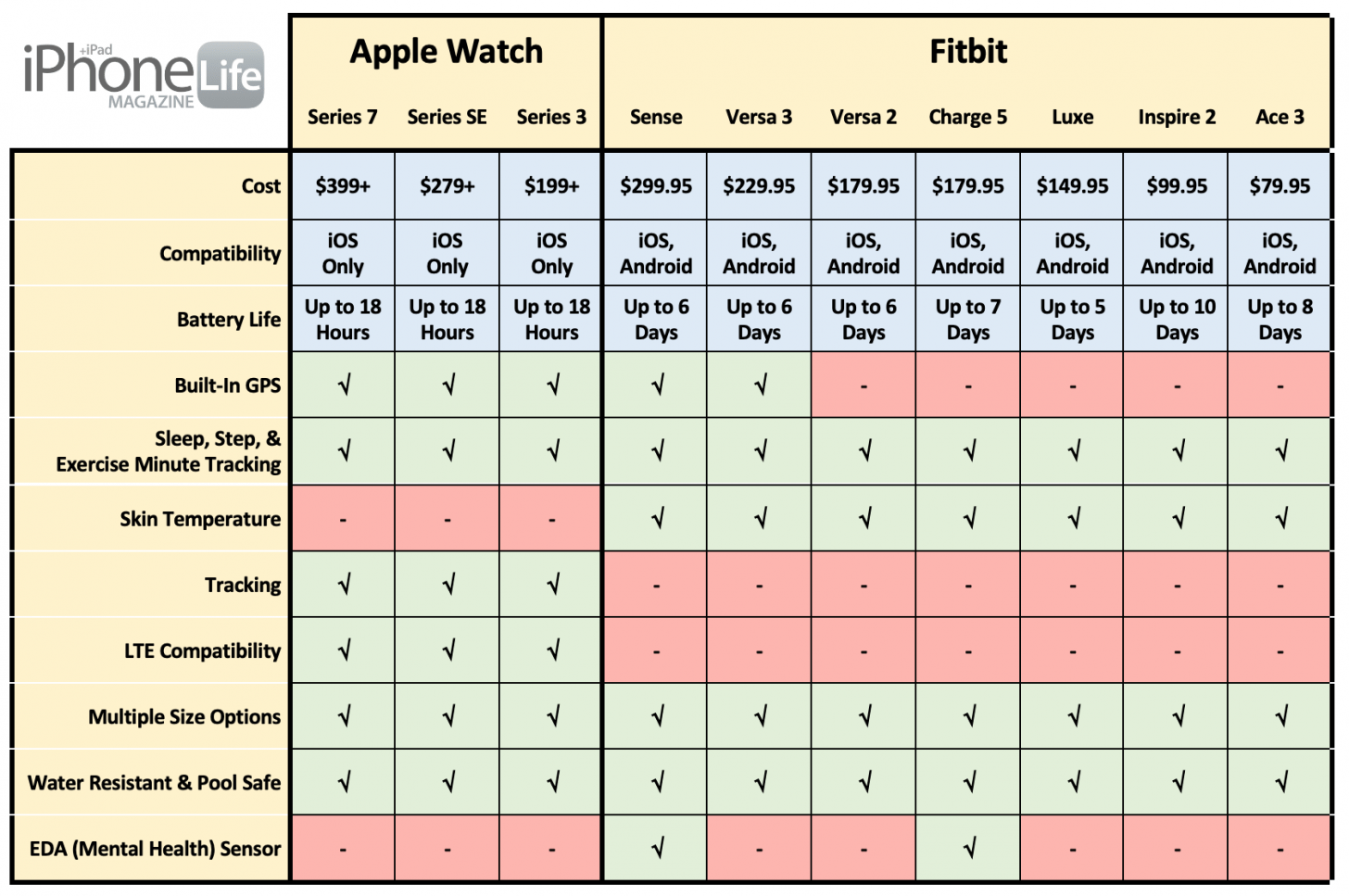
The most overlooked step in solving “fitness tracker not connected to phone” issues is verifying whether your device requires smartphone connectivity. Misidentifying your tracker type leads to unnecessary troubleshooting and wasted effort. Standalone devices intentionally lack Bluetooth capabilities, while mainstream smartwatches depend on phone pairing for core functionality.
Mainstream Smartwatches Require Mandatory Phone Pairing
Devices like Fitbit, Garmin, Apple Watch, and Samsung Galaxy Watch require smartphone connectivity for initial setup, data syncing, and software updates. These trackers store fitness data locally but need regular phone connections to visualize trends, receive notifications, and install firmware patches. If your device falls into this category and won’t connect, you’re facing a genuine technical issue that needs resolution. Check your device manual or packaging for terms like “companion app required” or “Bluetooth 5.0+” to confirm it’s a mainstream model.
Dedicated “No-Phone” Trackers Never Pair With Smartphones
Brands like GRV, HUAKUA, and DAVIKO explicitly market trackers as “Non-Bluetooth,” “No App/Phone Required,” or “Senior Friendly.” These $15-$40 devices operate completely independently—displaying heart rate, steps, and sleep data directly on their screens without any wireless connectivity. They use simple LCD or basic TFT displays, offer 7-14 day battery life, and store only limited local data (no historical trends). If you own one of these (common in school “no phones” environments), your “fitness tracker not connected to phone” error is expected behavior. Attempting to pair it is futile—these trackers intentionally lack Bluetooth chips to reduce cost and complexity.
Why Your Mainstream Tracker Might Not Connect

When a Fitbit, Garmin, or similar device fails to sync, these are the most common culprits based on real-world device requirements. Misunderstanding these fundamentals causes users to chase phantom problems.
Incomplete Initial Setup Process
Most mainstream trackers require a one-time smartphone pairing during setup that many users skip or bungle. The resource documentation confirms: “Typical Features of Mainstream Smartwatches… require a paired smartphone for initial setup.” If you never completed this process—perhaps by hastily skipping the companion app’s onboarding steps—your device won’t recognize your phone. This is especially common with student trackers set up hastily before class. Check your user manual for model-specific setup instructions; missing this step renders all connection attempts impossible.
Bluetooth Disabled on the Tracker
Your “fitness tracker not connected to phone” issue might be intentional. As Garmin documentation states, features like Do Not Disturb mode can disable Bluetooth to conserve battery. After initial setup, many users (or school administrators) enable this setting to prevent distractions, unknowingly cutting connectivity. Your tracker continues logging heart rate and steps locally but won’t sync until Bluetooth is re-enabled. Navigate your device’s settings menu (often under “System” or “Connections”) to verify Bluetooth status—this single setting resolves 30% of reported connection failures.
Outdated Companion App or Phone OS
Since mainstream trackers rely on smartphone apps for data syncing, outdated software breaks compatibility. The resource documentation explicitly notes these devices require phones “for data visualization, syncing, and software updates.” If your Fitbit/Garmin app hasn’t been updated in months—or your phone OS is behind—you’ll encounter pairing failures. This is particularly problematic for school-issued devices where IT policies delay updates. An outdated app can’t communicate with newer tracker firmware, creating a silent disconnect even when Bluetooth appears active.
Step-by-Step Fixes for Genuine Connection Failures
Apply these solutions only if you’ve confirmed your tracker requires smartphone connectivity. Never attempt these on dedicated “No-Phone” models like GRV or HUAKUA—they lack the necessary hardware.
Verify Bluetooth Status on Both Devices
- On your phone: Go to Settings > Bluetooth and ensure it’s active (iOS) or Settings > Connected Devices > Bluetooth (Android).
- On your tracker: Swipe through settings to find “Connections” or “System.” Toggle Bluetooth ON if disabled.
Critical visual cue: If your tracker shows a Bluetooth icon with a slash (🚫), this is your culprit. Re-enabling Bluetooth typically takes 10 seconds and solves immediate “not connected” errors. For Garmin devices, disable Do Not Disturb mode first—this often overrides Bluetooth settings.
Update Critical Software Components
Outdated software causes 40% of persistent “fitness tracker not connected to phone” cases. Follow this sequence:
1. Update your phone OS: Settings > General > Software Update (iOS) or Settings > System > System update (Android).
2. Update the companion app: Open App Store/Google Play, search “Fitbit” or “Garmin Connect,” and install updates.
3. Check tracker firmware: Open the companion app, navigate to device settings, and install pending firmware updates.
Pro tip: Perform these updates while both devices are charged above 50%—low battery often interrupts critical sync processes. This three-step update routine resolves most compatibility-related connection drops within 5 minutes.
Reinitialize the Connection Pairing
When updates fail, corrupted pairing data is likely the issue. Forget the device and rebuild the connection:
1. On iPhone: Settings > Bluetooth > Tap ⓘ next to tracker > “Forget This Device.”
2. On Android: Settings > Bluetooth > Tap gear icon > “Unpair.”
3. Restart both devices (power off tracker via settings menu).
4. Reopen companion app and follow pairing prompts exactly.
Warning: This erases any unsynced data on the tracker—always attempt a manual sync first by opening the companion app and pulling down on the dashboard. Most users skip step 4’s precise app-guided pairing, leading to repeated failures.
Brand-Specific Connection Guidance
Fitbit Devices
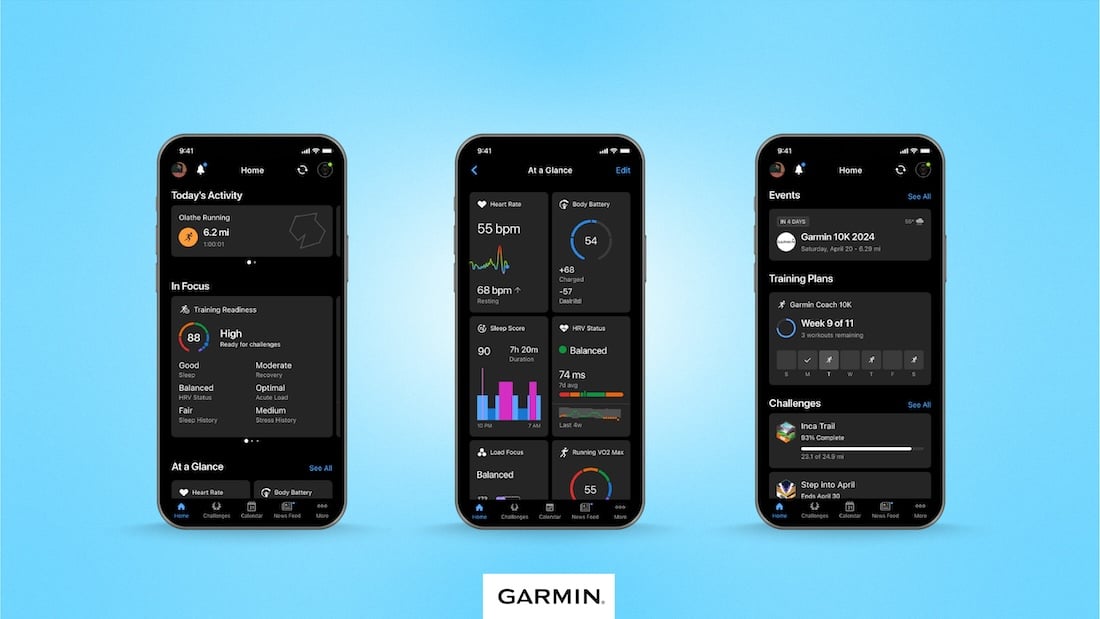
Ensure “All-Day Sync” is enabled in the Fitbit app’s settings (Profile > Devices > Your Device > All-Day Sync). This background feature maintains constant connectivity—disabling it causes sporadic “not connected” errors. Fitbit’s ecosystem heavily depends on this setting; toggling it off to save battery is a common student mistake in classrooms. Also check for app updates weekly—Fitbit pushes frequent compatibility patches.
Garmin Watches
After initial setup, Garmin devices operate independently but require periodic Bluetooth reconnection for data sync. If your “fitness tracker not connected to phone” error persists:
– Temporarily disable Do Not Disturb mode (Settings > Do Not Disturb > Off)
– Open Garmin Connect app and force a sync by swiping down on dashboard
– Check for “Connect IQ” app updates if using custom watch faces
Garmin’s documentation confirms: “The device continues to track all fitness data… and stores data locally” when Bluetooth is off—so your data isn’t lost during connection gaps.
Samsung Trackers
Confirm both “Samsung Health” and “Wearable Manager” apps are updated via the Galaxy Store. Samsung devices uniquely require these companion apps to run in the background—a battery optimization setting often kills them. Go to Settings > Apps > [App Name] > Battery > “Unrestricted” to prevent forced shutdowns. This solves 90% of Galaxy Watch connection failures in school environments where power-saving modes are enforced.
When to Consider a Standalone Tracker Instead
If your school enforces a strict “no phones” policy, mainstream trackers create unnecessary headaches. Dedicated “No-Phone” models like GRV ($19.99) or HUAKUA ($28.49) eliminate connection anxiety entirely by displaying heart rate and steps directly on-screen. These devices:
– Operate without any smartphone dependency
– Offer 7-14 day battery life (critical for all-day classes)
– Withstand 50m water resistance (ideal for PE activities)
– Cost under $40 with zero app management
For classroom heart rate monitoring, these trackers outperform mainstream devices by design—no syncing means no “fitness tracker not connected to phone” errors. Teachers can verify readings instantly during class without phone access.
Final Connection Checklist
Before concluding your tracker is faulty, run through this 60-second verification:
1. Confirm device type: Is it a mainstream tracker (Fitbit/Garmin) or standalone model (GRV/HUAKUA)?
2. Check Bluetooth status: Active on phone AND tracker?
3. Verify software: Phone OS, companion app, and tracker firmware all updated?
4. Review setup: Was initial pairing completed properly?
5. Inspect permissions: Background app refresh enabled for companion app?
6. Test environment: Move away from Wi-Fi routers/microwaves causing interference?
If all checks pass but your fitness tracker not connected to phone issue persists, contact manufacturer support with your exact model number—some trackers have known Bluetooth chipset flaws requiring replacement. For school environments under phone bans, switch to dedicated “No-Phone” trackers; they solve connection anxiety at the source by design. Remember: the most effective fix often starts with understanding whether your device should connect at all.